
Cargo e-bikes have quickly become one of the most practical segments of the electric bicycle world, offering car-replacing utility at a fraction of the cost of owning and operating a vehicle. But while they’re cheaper than cars, they’re still not exactly cheap.
Most decent cargo e-bikes tend to start around $1,500 and can easily climb past $4,000 or more, especially when including higher end components, larger batteries, and from brand names known for longer-lasting bikes. So with cargo e-bikes nearly always costing well into the four digits, an unassuming entrant from Buzz Bikes now seems particularly eye-catching, with the company touting its affordable Beekeeper cargo e-bike at a shockingly low price of just US $799.
At that price point, the Buzz Beekeeper may be one of the most affordable cargo e-bikes we’ve seen from a recognizable brand.
Sure, Buzz is no Trek or Xtracycle or even Lectric, but the company has been around for years and has proven itself as a budget source without falling into the fly-by-night territory of the typical riskier suspects on Amazon and eBay.
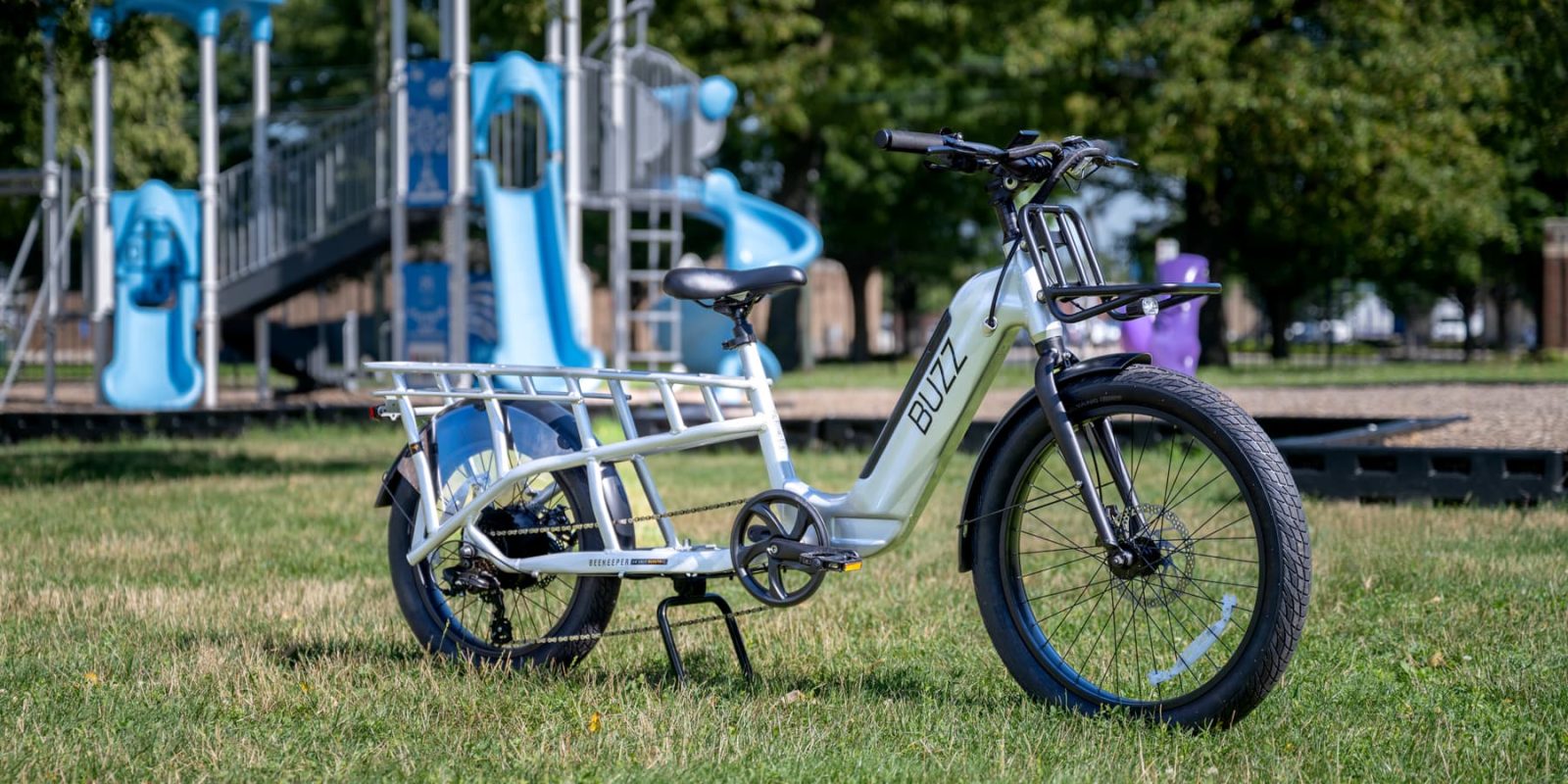
The Buzz Beekeeper is built around a compact cargo-style frame with a mixed wheel setup – featuring a 24-inch front wheel and a smaller 20-inch rear wheel. That design helps keep the rear cargo area lower to the ground for easier loading and improved stability, a somewhat common approach in utility-focused bikes.
Power comes from a 500W rear hub motor paired with a UL-compliant 48V 10.4Ah battery, giving the bike around 500Wh of total capacity. Buzz claims a range of up to 40 miles (64 km), though as always that will depend heavily on rider weight, terrain, cargo load, and how much pedal assist is used. I’d wager that the real world range would be a bit less than the 40 miles they claim, but with enough help from your own legs pedaling, you could conceivably reach close to that figure.
The bike is configured as a Class 2 e-bike, meaning it includes both pedal assist and a throttle, with a top speed capped at 20 mph (32 km/h).
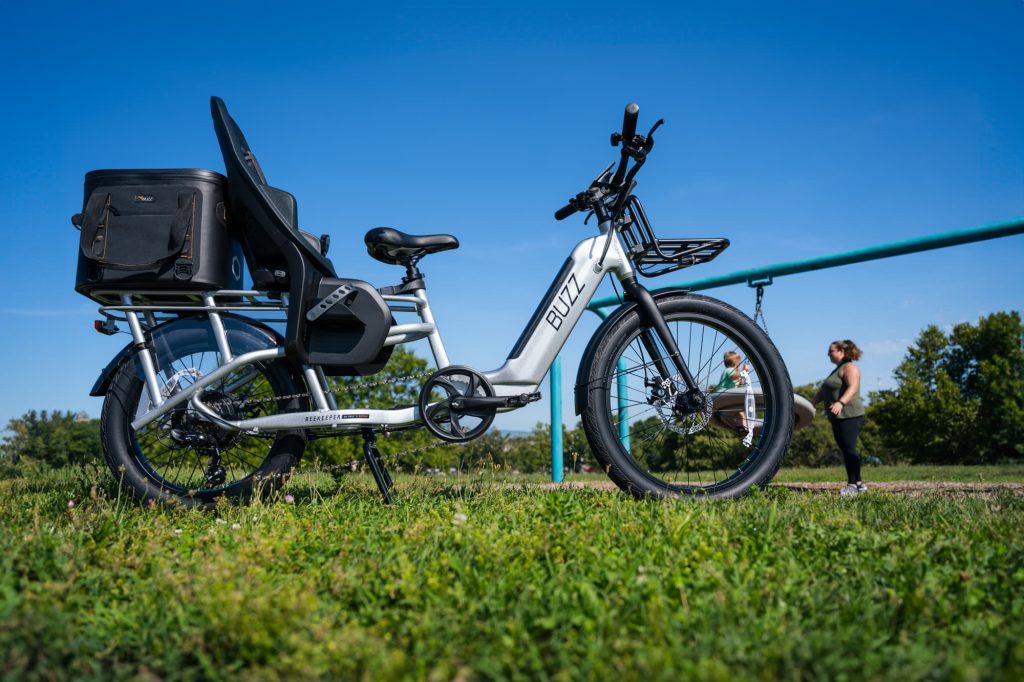
The Beekeeper is also designed to be adaptable for a variety of uses. Whether riders are hauling groceries, carrying gear, or even managing light-duty work tasks, Buzz says that the Beekeeper is ready for action. Riders can add panniers, baskets, and other accessories to expand the cargo capacity even further.
Despite the low price, the bike includes a fairly standard set of components for the category. There’s a Shimano 7-speed drivetrain, mechanical disc brakes, and a center-mounted LCD display that shows speed, battery level, and assist settings, and even a dropper seat post, which is a convenient yet rarely seen feature on such budget-minded bikes. The Beekeeper also features fat 3-inch-wide tires, which should help with comfort and traction across a variety of surfaces.
At 72 lbs (32.6 kg), it’s not exactly lightweight, but that’s fairly typical for cargo e-bikes, especially those built to handle heavier loads. The step-through frame design should make it more approachable for a wider range of riders, and Buzz says it’s designed to fit most heights.

Electrek’s Take
At $799, the Buzz Beekeeper is entering territory that’s usually reserved for low-cost commuter e-bikes, not cargo haulers. That alone makes it noteworthy.
Of course, there are real trade-offs here that need to be considered. Mechanical brakes instead of hydraulic, a relatively small-sized battery, and a somewhat lower power 500W rear hub motor instead of a mid-drive system all point to a budget-focused build. But for many riders, especially those just getting into cargo e-bikes, those compromises may be perfectly acceptable. And if you typically ride on flat ground and don’t need to travel more than 20 miles (32 km) at a time, the motor and battery are likely sufficient for modest performance.
While I typically tell budget-minded cargo e-bike shoppers to consider a Lectric XPedition 2.0 for its high quality to cost ratio, you can’t ignore that bikes like the Beekeeper here come in at half the price. The hidden cost is likely longevity, in addition to the aforementioned performance cuts, but not everyone can afford more than $799 for a cargo e-bike, and so it’s great to see modest performance entrants joining the fray at even more affordable prices.
The bigger picture here is what this kind of pricing represents. Cargo e-bikes have long been one of the best arguments for replacing short car trips, but their higher upfront cost has been a barrier for many people. Seeing models dip this low could open the door for a much wider audience.


FTC: We use income earning auto affiliate links. More.


Comments