
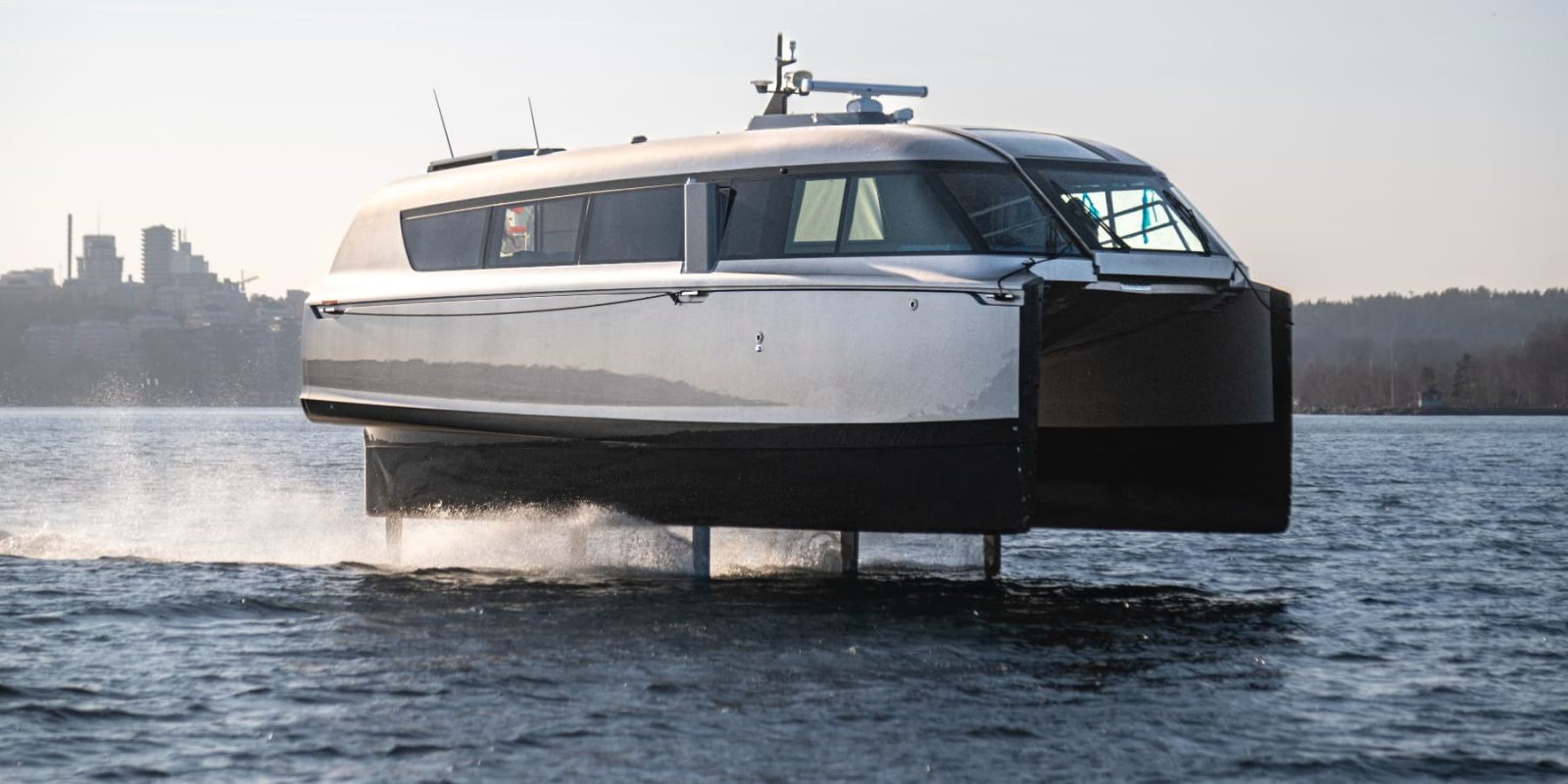
Swedish electric boat maker Candela has just unveiled its latest vessel, the P-12 Business, and it’s aiming to do something that’s long felt overdue: make getting to your destination on the water just as enjoyable as the destination itself.
The new ferry builds on Candela’s already impressive P-12 platform, but adds a premium, business-class interior designed for high-end transport routes like resort transfers and urban commuter links. And if you’ve ever stepped off a smooth flight only to be tossed into a loud, wave-slamming speedboat to reach the last leg of your coastal adventure, you’ll immediately understand the problem Candela is trying to solve.
Flying above the water, not crashing through it
What sets Candela apart from nearly every other electric boat company isn’t just that it uses batteries instead of fuel – it’s how it fundamentally rethinks how boats move through water.
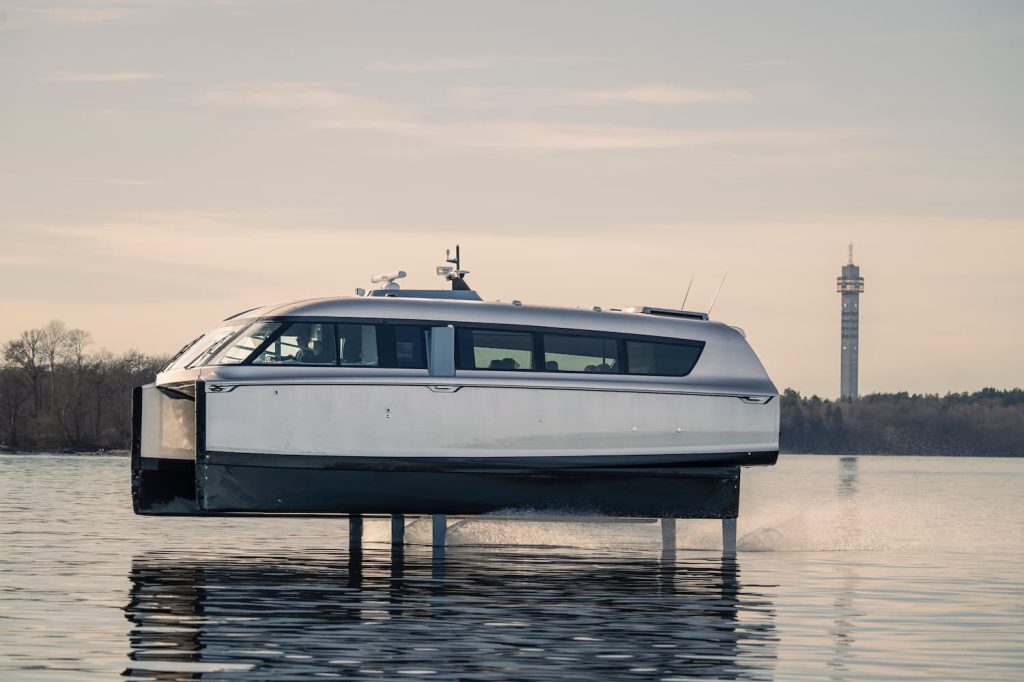
Instead of plowing through waves, the P-12 uses a computer-controlled hydrofoil system with underwater wings that lift the hull above the surface. Once up on foil, the boat essentially “flies” over the water, dramatically reducing drag, noise, and motion.
I’ve had the chance to test multiple Candela electric boats myself, and the experience really is unlike anything else on the water. The ride is incredibly smooth – more like gliding than boating – and the near silence makes it feel almost surreal. There’s no engine roar, no vibration, just a quiet hum and the sensation of effortlessly skimming above the water. It’s efficient, sure. But it’s also genuinely fun.
That efficiency is still a big deal, though, due to its economic advantages. Candela says the P-12 can use up to 80% less energy than conventional vessels when foiling, which translates to lower operating costs and longer range. In fact, the P-12 Business can travel up to 40 nautical miles at a cruising speed of 25 knots, making it one of the longest-range electric vessels in its class.
A quieter, cleaner kind of ferry
The benefits go beyond merely comfort and efficiency. Noise levels in the cabin are measured at around 63-64 dB while traveling at top speed – closer to a quiet conversation happening the next row over – compared to the 85–90 dB typical of traditional speedboats.
For context, passenger areas on conventional car ferries often land around 65-75 dB, while a high-speed express train typically operates at around 70–75 dB. First class cabins on aircraft are louder still. Because decibels are logarithmic, a 10 dB reduction is around half as loud, meaning the P-12 Business cabin, to the human ear, is more akin to a quiet lounge than to any conventional mode of transport.
That’s a massive difference, both for passengers and for marine ecosystems. Reduced underwater noise and minimal wake mean less disruption to wildlife and fragile coastal environments like coral reefs.
And Candela has already gone beyond simply building cool tech, since they’re now deploying it globally.
The first P-12 Business vessels are heading to high-demand transport routes in places like the Maldives, Saudi Arabia, and India, where they’ll replace diesel-powered boats currently used for everything from resort transfers to urban commuting.
That global rollout builds on Candela’s growing track record. The company’s earlier P-12 ferries have already been adopted in Stockholm’s public transport system, and it’s clear that operators are taking notice of both the performance and the economics.
Premium travel, reimagined
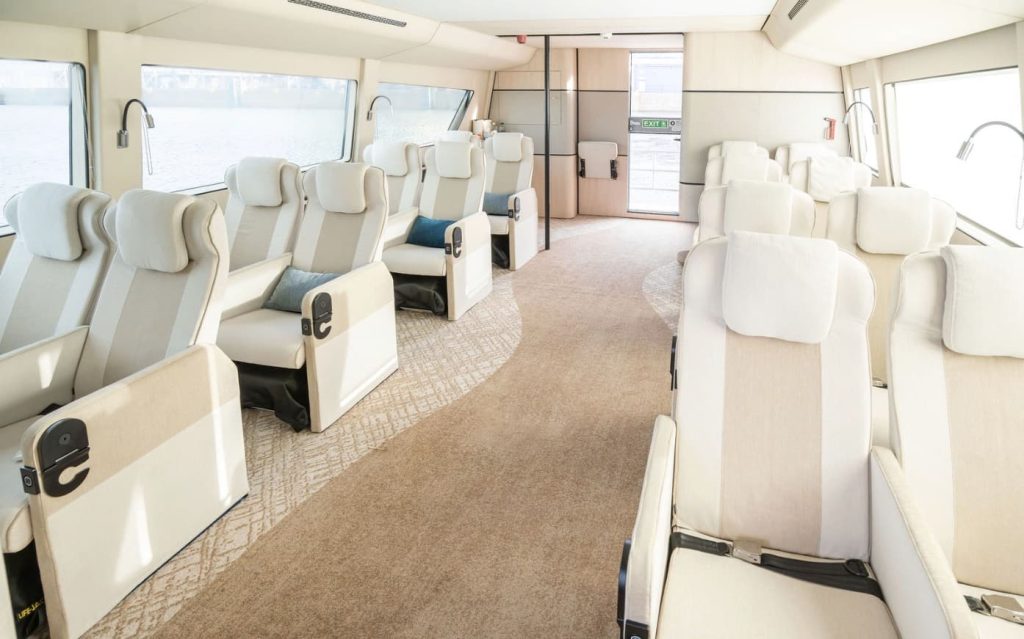
The “Business” version leans heavily into passenger experience, with features like plush seating, Wi-Fi, USB-C charging, a coffee bar, and even a “star ceiling” lighting system for nighttime trips. There’s also full accessibility via a wide boarding ramp, making it usable for a broader range of passengers.
And of course, Candela has multiple trims of less sheikh-level comfort, including the basic trim already in use by Stockholm’s public transportation system in the city’s ferry network.
But the real luxury here isn’t the carpet or the coffee, but rather the ride itself.
Candela has managed to take something that’s traditionally been loud, bumpy, and unpleasant, and turn it into a smooth, quiet, and efficient experience. And based on my own time aboard their boats, I can attest to their ability to actually deliver that experience.
If this is where electric marine transport is heading, then the days of white-knuckle speedboat transfers or slow, smelly diesel ferries might finally be numbered.


FTC: We use income earning auto affiliate links. More.


Comments