
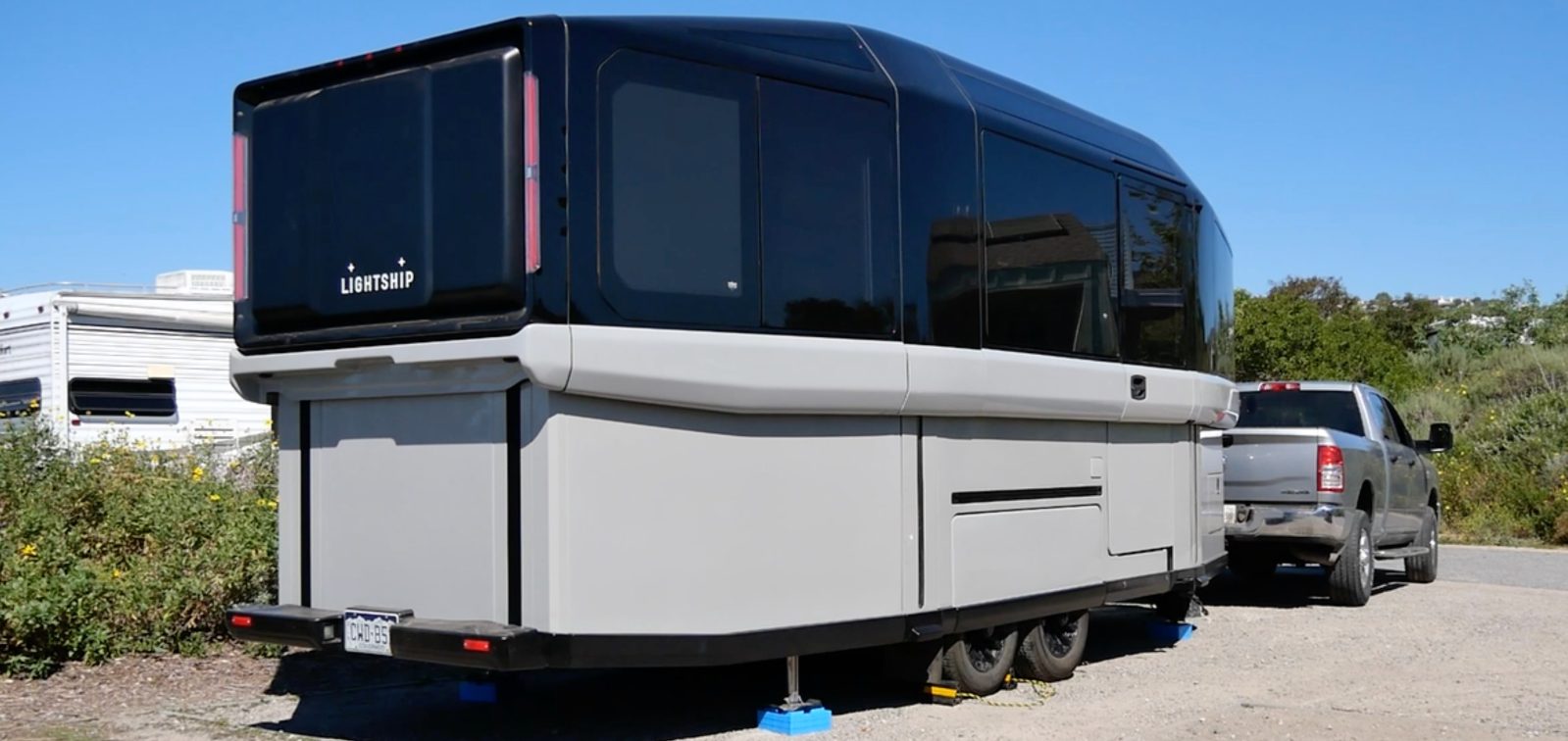
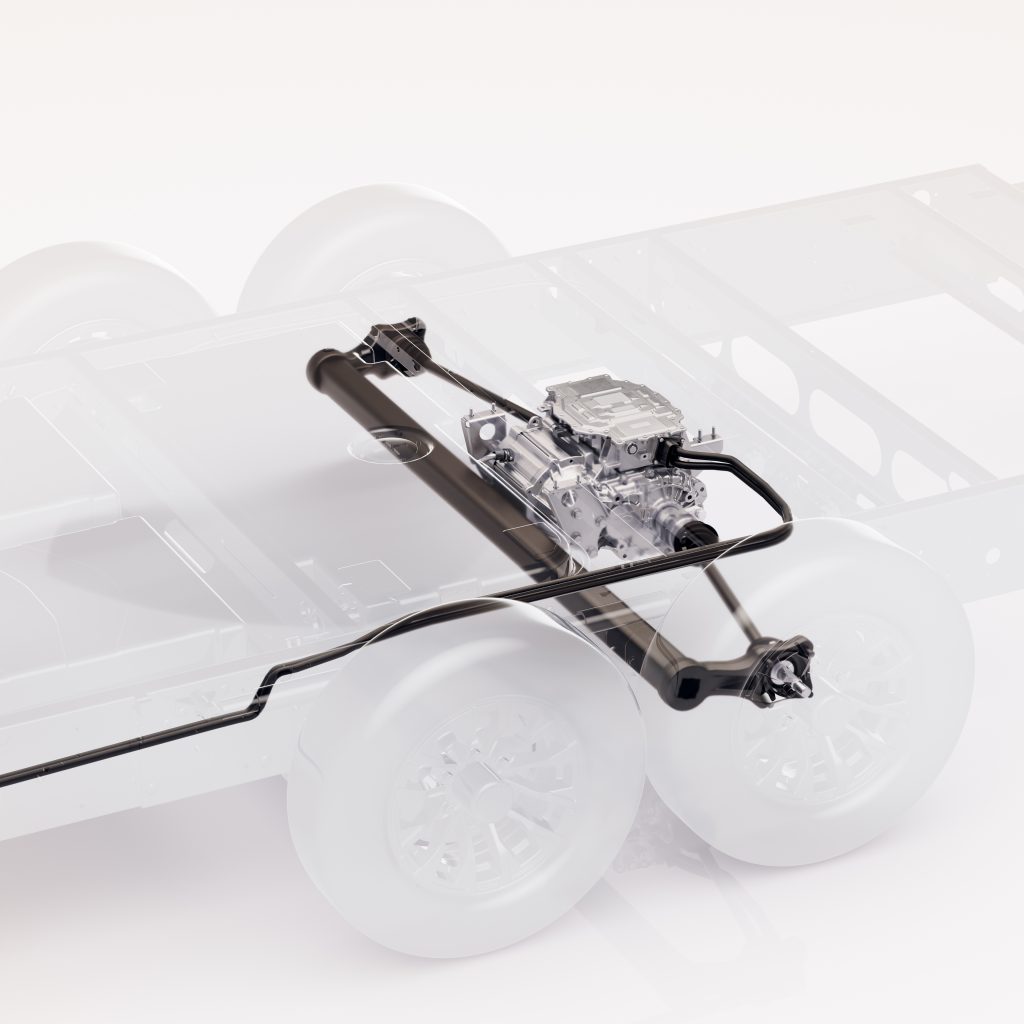
We took a tour around the Lightship AE.1 electric RV trailer, with an open, airy interior and lots of neat features. It also has its own motor and batteries, which means it won’t drain your range while towing – whether you use a gas or electric tow vehicle.
The Lightship AE.1 is one of several electric RV trailers on or coming onto the market, utilizing large batteries and electric motors to account for the energy loads of RV living and offset the large energy use of towing a trailer.
There are a lot of possibilities in this space, and we got to see some of them in action with a tour of the production version of the Lightship AE.1 at a campground in California.
The Lightship AE.1 is available in two trim levels: the 77kWh Atmos, which starts at $184k, and the 44kWh Panos, which starts at $151k. A later model, the Terros, will start at $125k. We toured the Atmos.
As is often the case, the highest-specced model is available first. Both the Atmos and Panos are available for ordering now, with Atmos starting deliveries this quarter and Panos coming later this year. The Terros comes in 2027. A Cosmos Founder’s Edition was previously available, but is sold out and started deliveries late last year.
A huge battery opens up a lot of options
Those are some pretty steep prices, but not out of the question in the RV world. Plus, the Lightship comes with a lot of features that you wouldn’t necessarily expect out of every RV, thanks to the overwhelming amount of power available onboard.
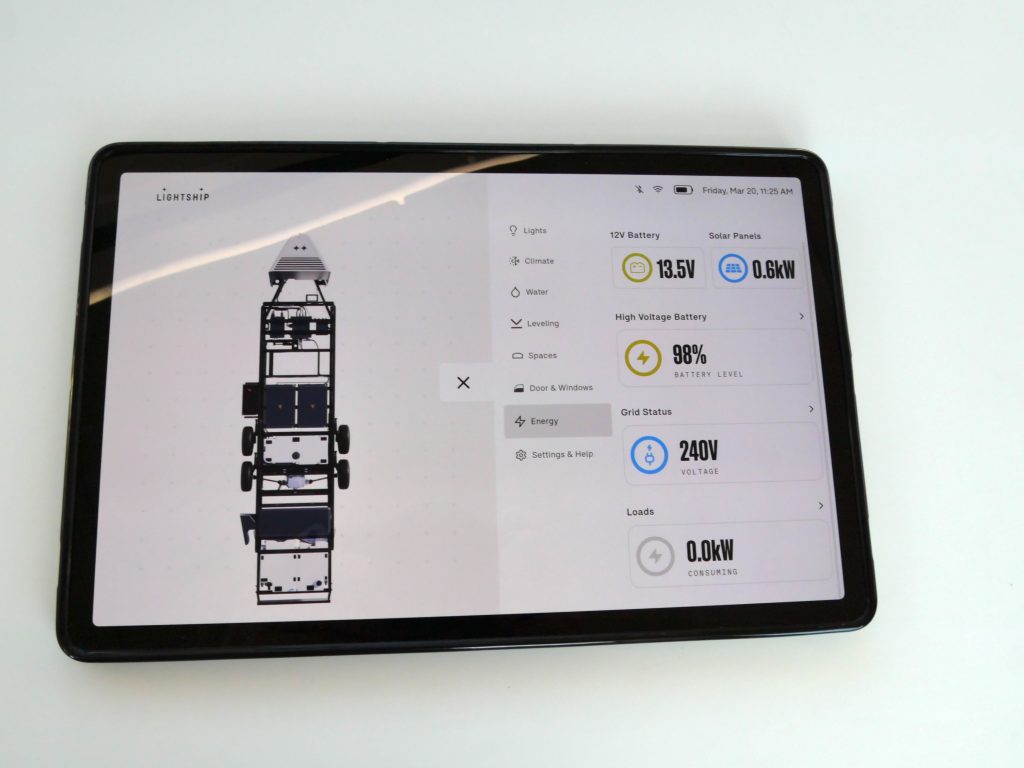
A 77kWh battery opens up a lot of options, allowing a lot of devices to be used simultaneously and for long periods of time. The RV has an induction cooktop, microwave, HVAC, fridge, freezer, shower, water heater, dishwasher (this is actually a water-saving feature), and plenty of USB and 120V power plugs inside and out.
Lightship says under normal use, its battery will last for a week of off-grid operation. And best yet, you won’t have to hear a gas generator blaring or deal with propane fumes killing you when you’re just trying to get some fresh air and experience nature.

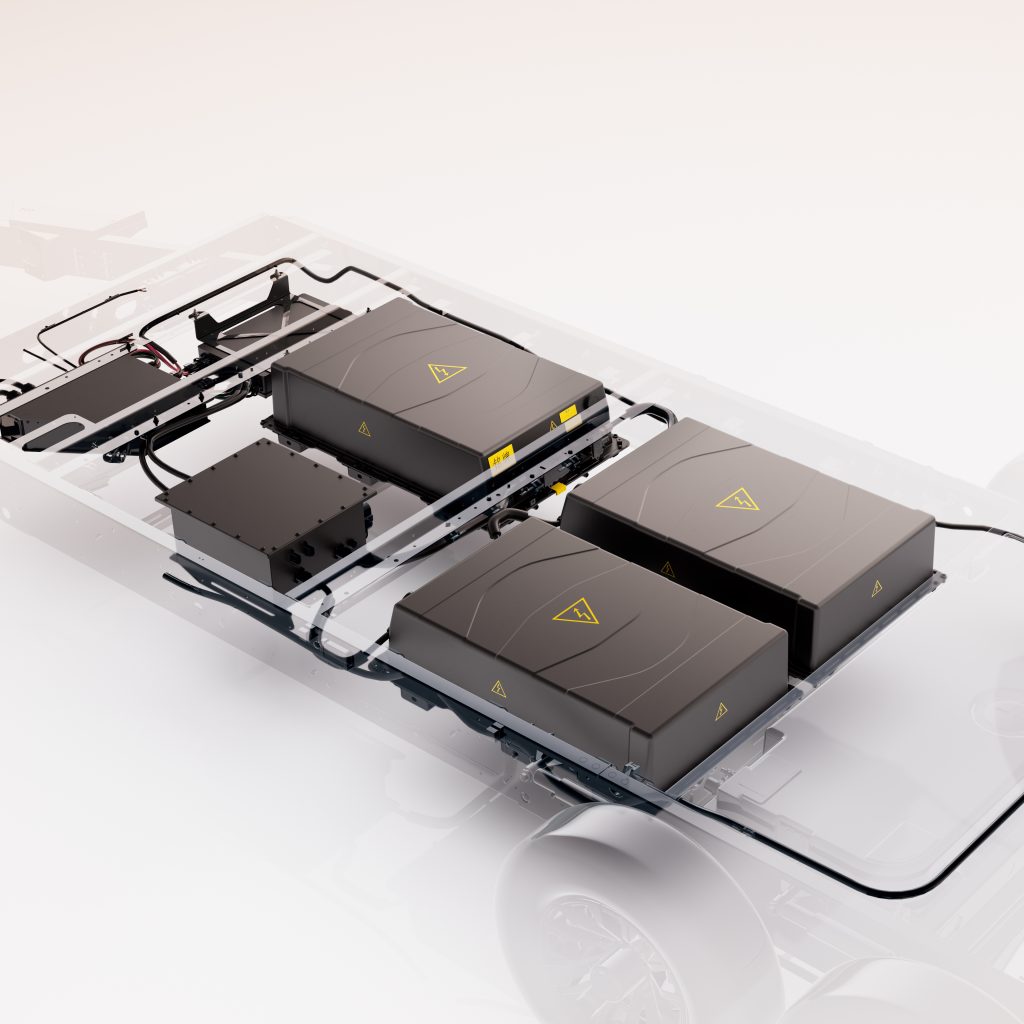
But it also has 1.8kW of solar panels on the roof to help power your loads off-grid. I’m guessing that if you have light electricity needs (a couple hours of nighttime lights, cooking for a couple people, no HVAC usage), you could run off of a 77kWh battery for much longer than a week.
If you have access to electricity, as most RV campgrounds do, you can just plug into an RV hookup and use this to charge your battery at up to 9kW (assuming a 50A hookup – 30A will charge slower). You can even discharge the battery through a 240V outlet and charge your EV from the RV at up to 9kW.
And finally, the AE.1 is even DC-charge capable, able to take in up to 155kW of DC power through an included native NACS port.
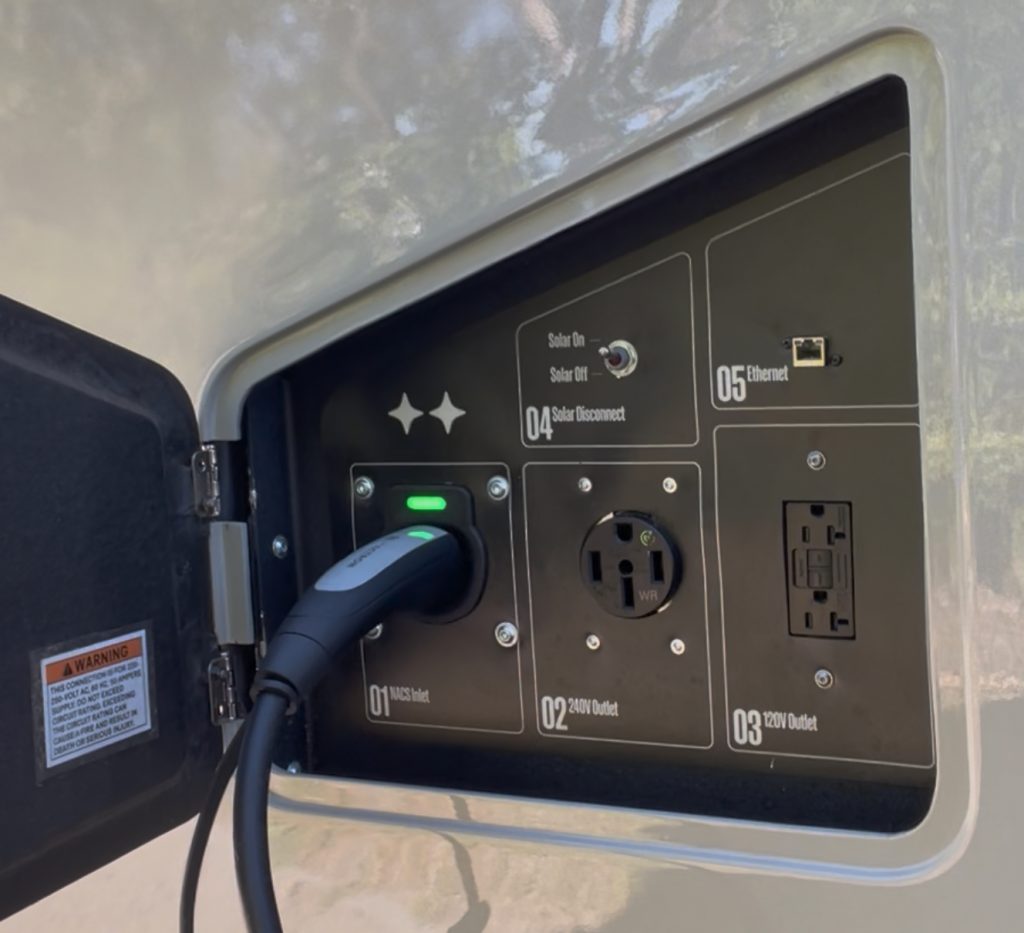
You also might notice an ethernet port – that’s for satellite internet, and the trailer has a built-in WiFi router.
The airy interior feels much bigger than it is
All these RV features are crammed into an interior which actually feels quite spacious. While RVs are often cramped due to packing lots of stuff into a small space, the AE.1 doesn’t feel that way. Windows that wrap around the entire cabin give an airy feeling – and they can all be opened too (bug screens included), to give you plenty of fresh air.
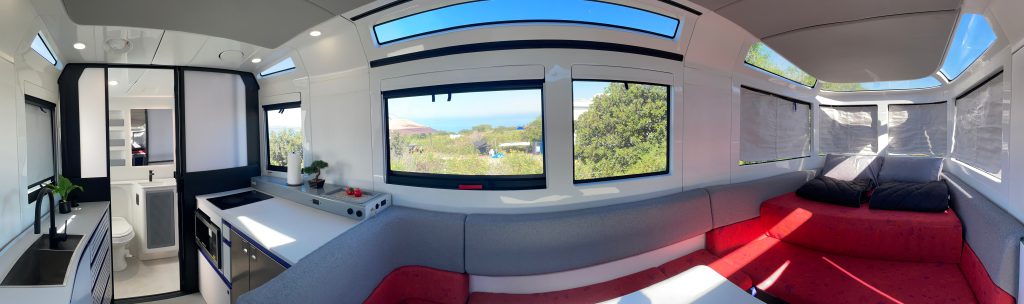
There are storage cubbies all around the vehicle, with additional attachments planned, like overhead storage or a projector screen for movie-watching (there’s also exterior pass-through storage for dirty/wet things).
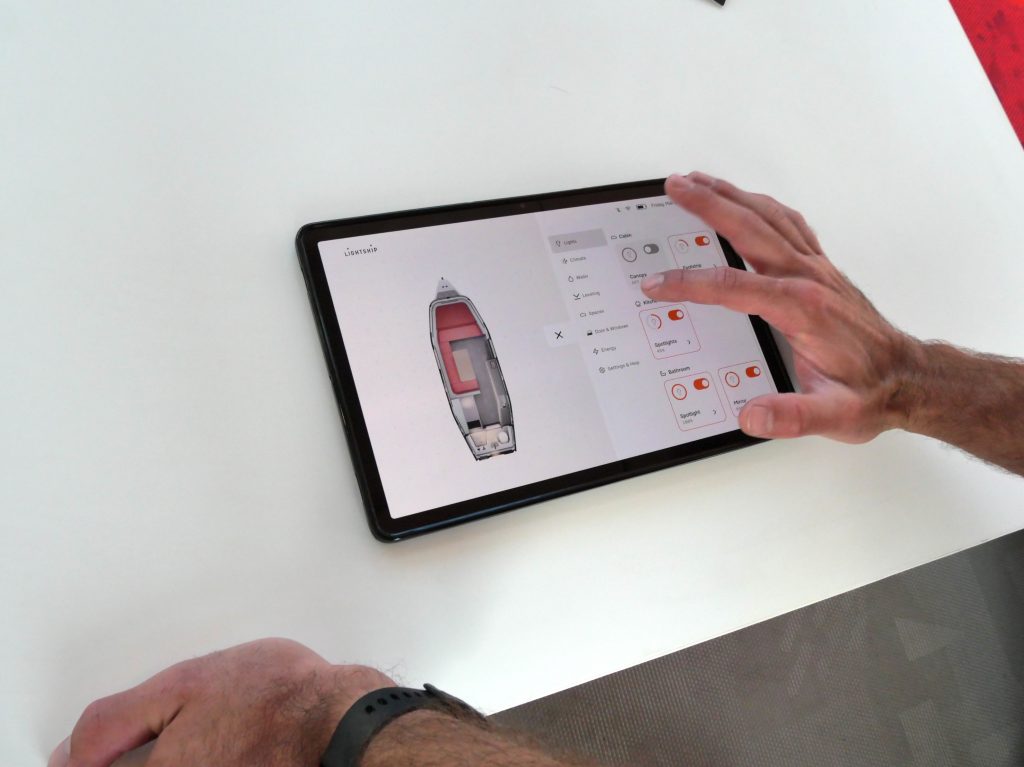
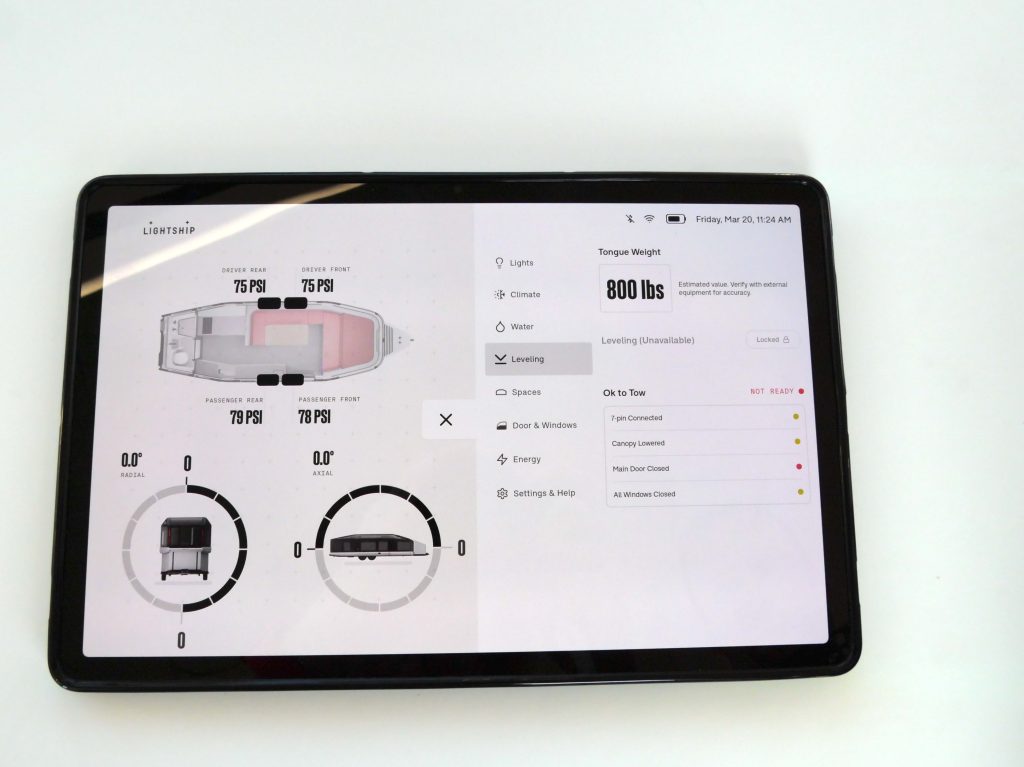
Everything in the trailer is controlled through a companion app, which you can get to through your own phone or an included tablet device that tucks into a slot near the door.
The table in the center sits four, and lowers down – electrically, of course – allowing the daybed and seating area to fold out into a sleeping area that Lightship says can sleep 4, or 5 with an optional bunk bed that drops down from the ceiling (we weren’t able to see the 4-person configuration, though… it does seem like it could be a little tight).
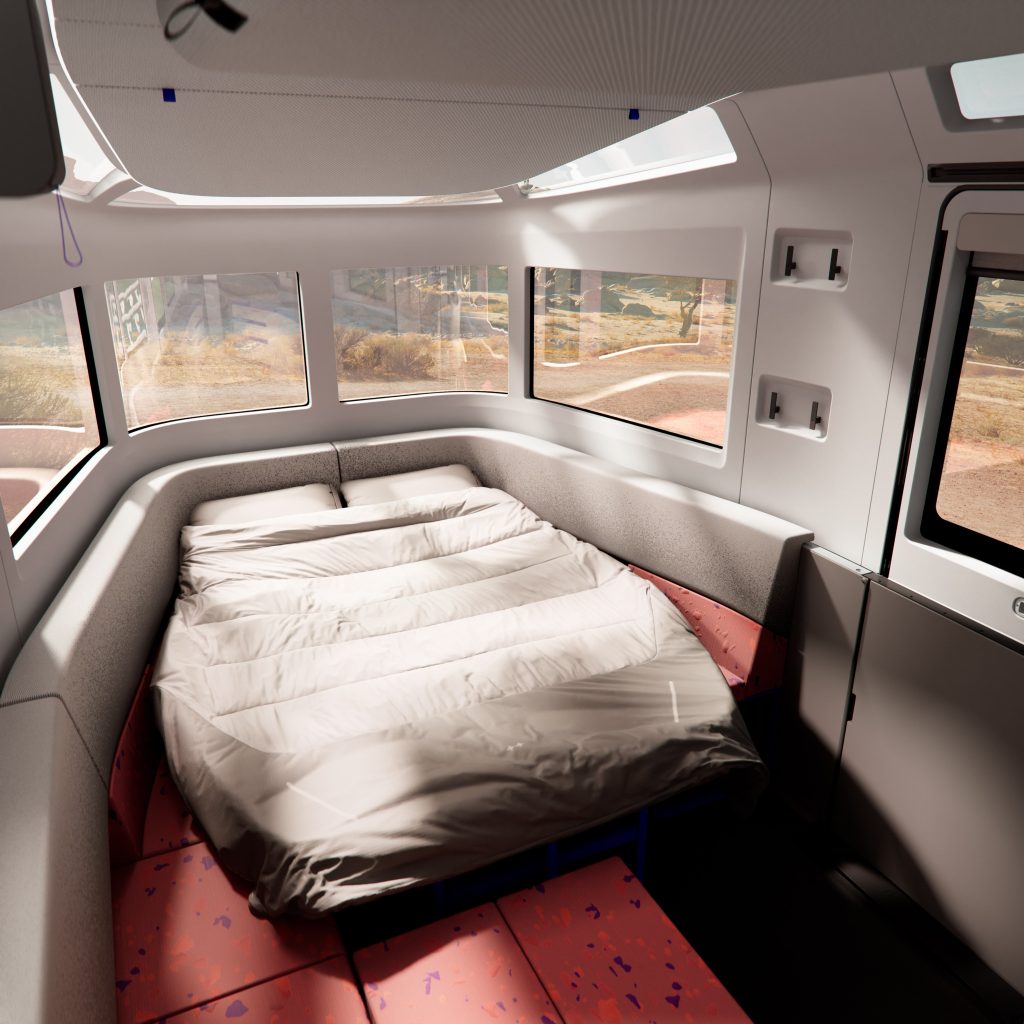
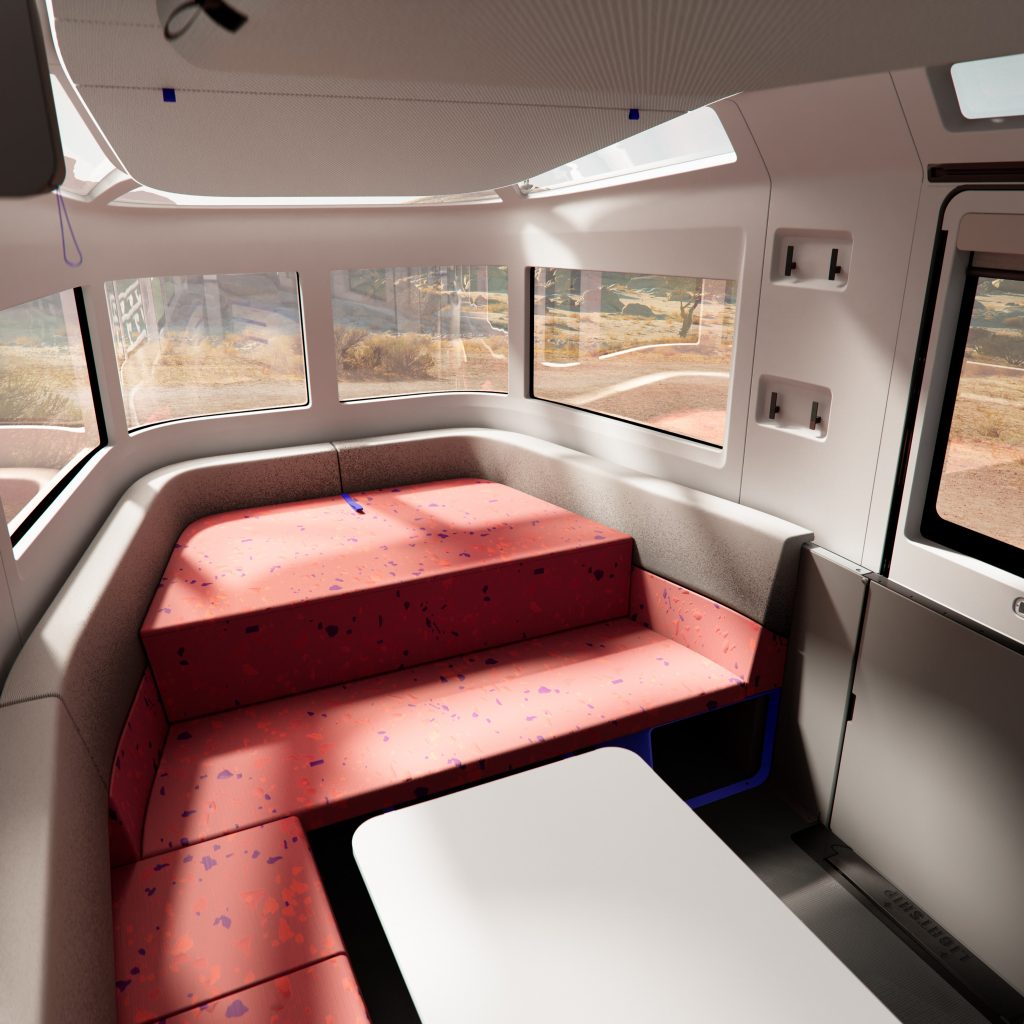
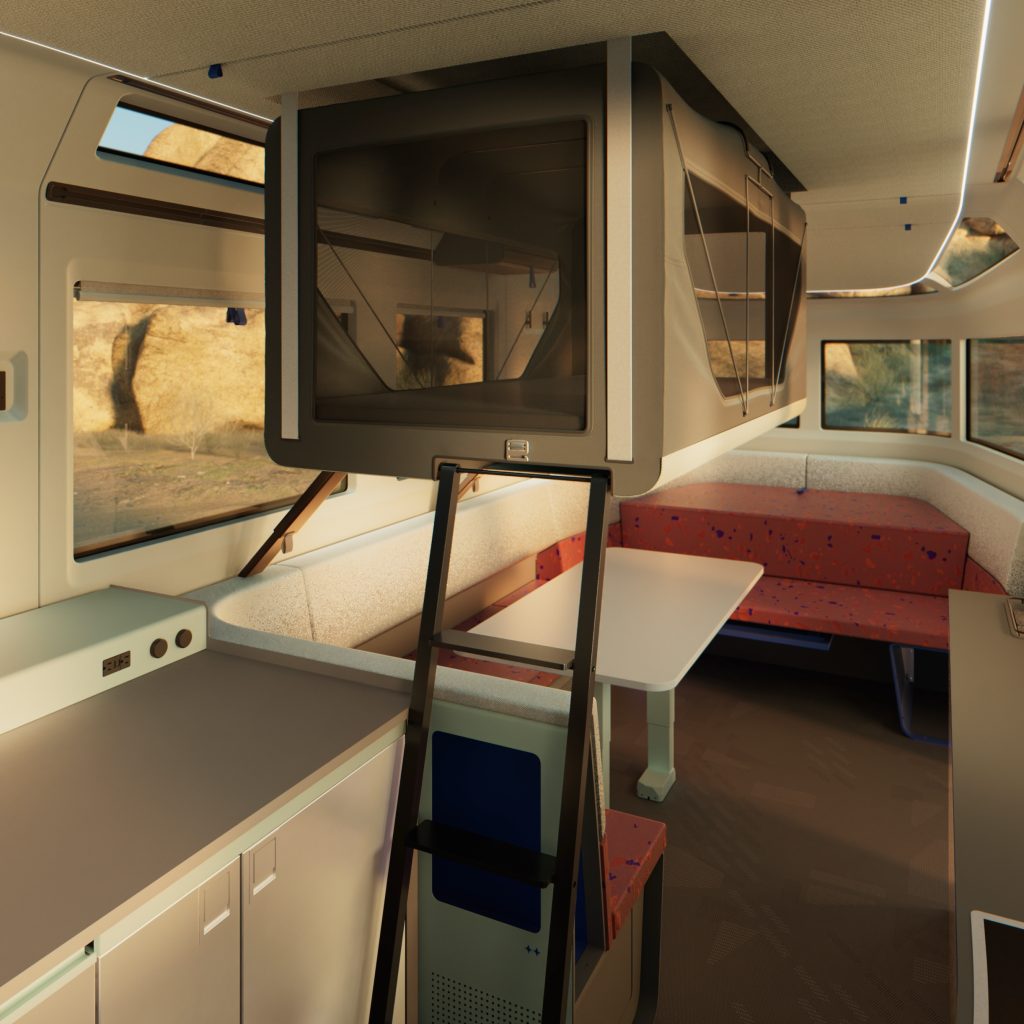
It altogether has a very social feeling to it, with the openness of the interior seeming like it would invite conversation and a party-like atmosphere (which we experienced once in a pre-production model at a trade show).
I really like the interior of the AE.1. It doesn’t just look modern for the sake of it, but feels like a different design philosophy from other RVs, which feel more cramped and dark compared to the Lightship’s openness.
What’s it like to tow an electric trailer?
We even got a chance to take it out for a quick tow, and see what it feels like to have a self-driven electric trailer. Unfortunately, our tow vehicle wasn’t electric – Lightship’s R1T was being serviced, so we had to slum it in a Ram 2500 (also marking the only fossil-powered vehicle I’ve driven in more than a decade…).
We just took the trailer for a quick drive up and down a long hill, and it was interesting both how different and how similar it was to towing a normal trailer.
At a dry weight of 7,200lbs, the Ram 2500 chugged a bit when towing the trailer up a light hill… until we turned on Lightship’s “TrekDrive” mode, where the trailer’s motors help push it along.
TrekDrive uses sensors attached to the tow hitch to detect when the trailer is being pulled, then activates the motors to provide assist (see a cool demo of a similar system in our coverage of Range Energy’s electric semi trailer). It can also provide regenerative braking through a standard trailer brake connection.
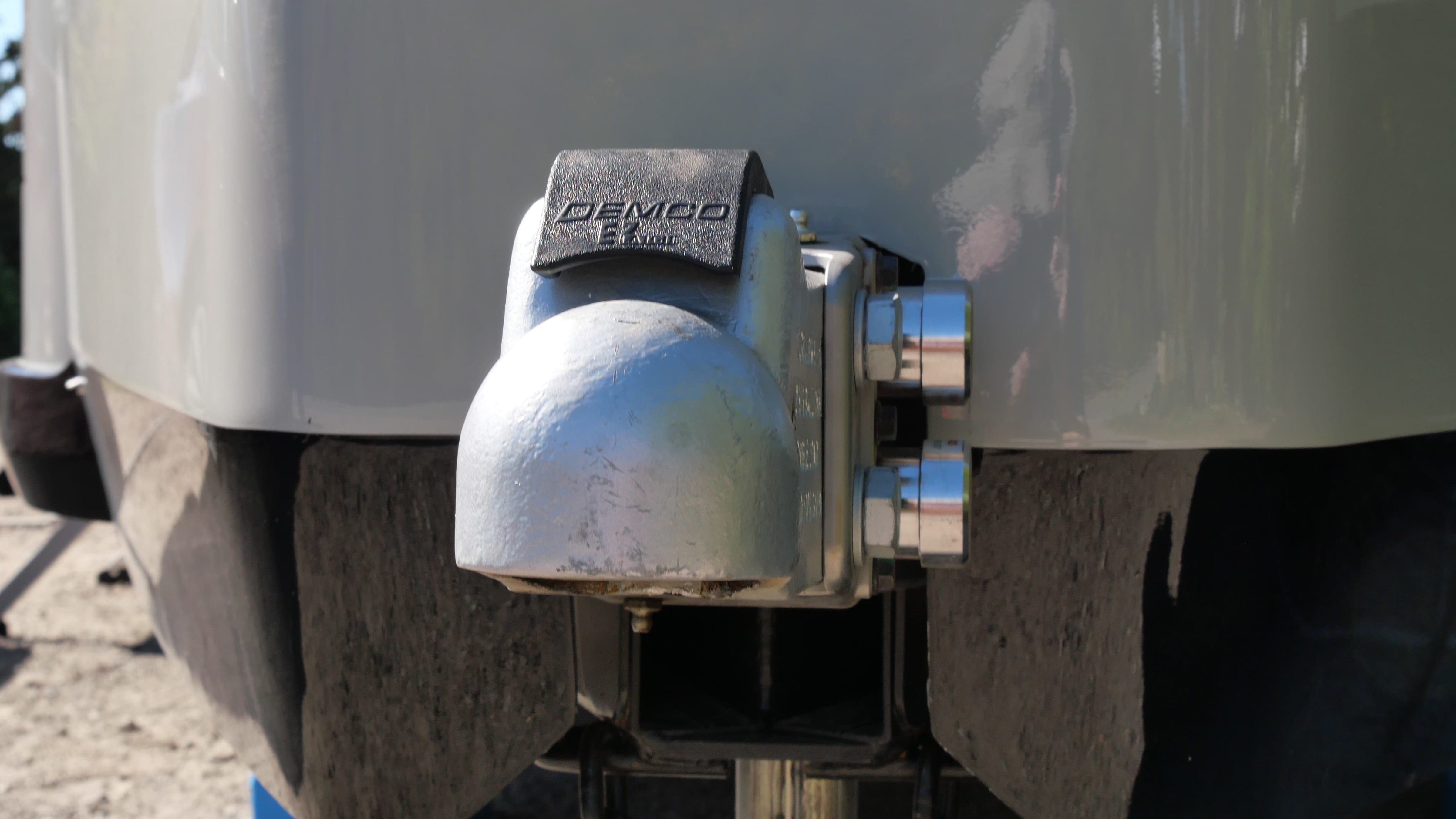
This did make towing up the hill significantly easier, but you could still very much feel the weight behind the truck. This is probably a good thing – you wouldn’t want the experience to be so effortless that you forget you’re towing an extra four tons behind you.
It doesn’t just help with hills, it also helps with range. Towing a trailer takes a lot of energy, both due to the extra weight and the aerodynamic drag of pulling a big brick behind you. It can take 2-2.5x as much energy to tow a large RV trailer, whether you’re using a gas or electric tow vehicle. That means half as much range between fueling stations and twice as much cost of fuel.
But Lightship says that if you have TrekDrive turned on, you should see negligible loss in efficiency – almost as if you aren’t towing at all. Independent testing confirmed that a tow vehicle got almost exactly the same mileage with or without towing the trailer, though as always this can be highly dependent on conditions.
You’ll still have to keep the trailer charged, though, to get these efficiency gains – after its ~300 miles of range are up, it just acts like a normal trailer, and will start affecting the efficiency of the tow vehicle. You can set TrekDrive to automatically turn off at a certain battery level, in order to conserve energy for camping use.
Lightship’s collapsing design helps with aerodynamic drag while towing. When parked, the roof lifts up to give standing space inside, and when driving, the entire thing collapses down to be more aerodynamic.
While the AE.1 is quite a chunky trailer, Lightship wants its next one to be much smaller and lighter, enabling a Tesla Model Y-class vehicle to tow it. For this one, you’ll need a Rivian R1T, Ford Lightning or the like.
And if you do have a vehicle capable of towing this beast, it’s available to order now, with delivery to follow in the spring quarter.
Charge your electric vehicle at home using rooftop solar panels. Find a reliable and competitively priced solar installer near you on EnergySage, for free. They have pre-vetted installers competing for your business, ensuring high-quality solutions and 20-30% savings. It’s free, with no sales calls until you choose an installer. Compare personalized solar quotes online and receive guidance from unbiased Energy Advisers. Get started here. – ad*


FTC: We use income earning auto affiliate links. More.



Comments