
EV enthusiasts and evangelists are always ready to answer their friends’ questions about going electric. Sometimes, they even get it right! In this series, we’re taking a look at some next-level EV questions that don’t always have easy answers, starting with: I drive my EV for work, but charge at home — how do I track charging costs?
Tracking fuel costs for work vehicles is easy enough. In most cases, you can just submit your gas station receipts for reimbursement, but when you drive an EV for work and charge at home, things get a little murkier. Suddenly, you’re trying to separate what it costs to charge your car from what it costs to keep the lights on, and your utility doesn’t make that much easier.
If that sounds like something you’re dealing with, here are three solid ways to track your electric vehicle’s charging costs, and get properly reimbursed.
Option 1: get a smart charger
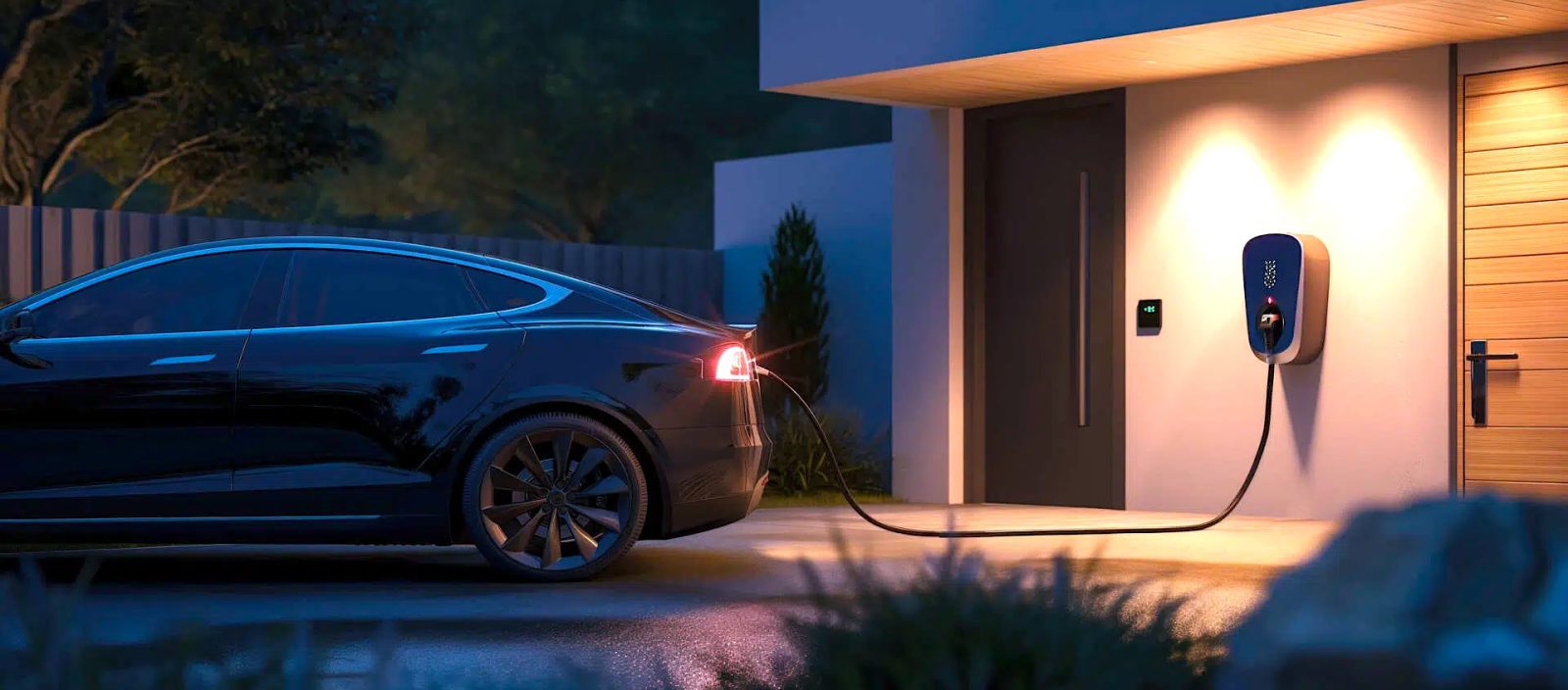
Modern “smart” chargers with 5G or WiFi connections can monitor precisely how many kWh are flowing into your into your car during each charging session. And, because your utility is billing you by kWh, multiplying the number of kWh by your utility’s rates – even if those rates are variable – is one of the cleanest ways to track charging costs.
As my friend, Emily, at EnergySage explains, “modern home chargers don’t just deliver power,” I’m paraphrasing here. “They often manage and monitor your charging and energy usage, including session-level data and app-based tracking.”
In practice, these systems can log every charging session automatically, with some even taking the next step of multiplying kWh by your electricity rate to generate a clean, defensible cost record for reimbursement.
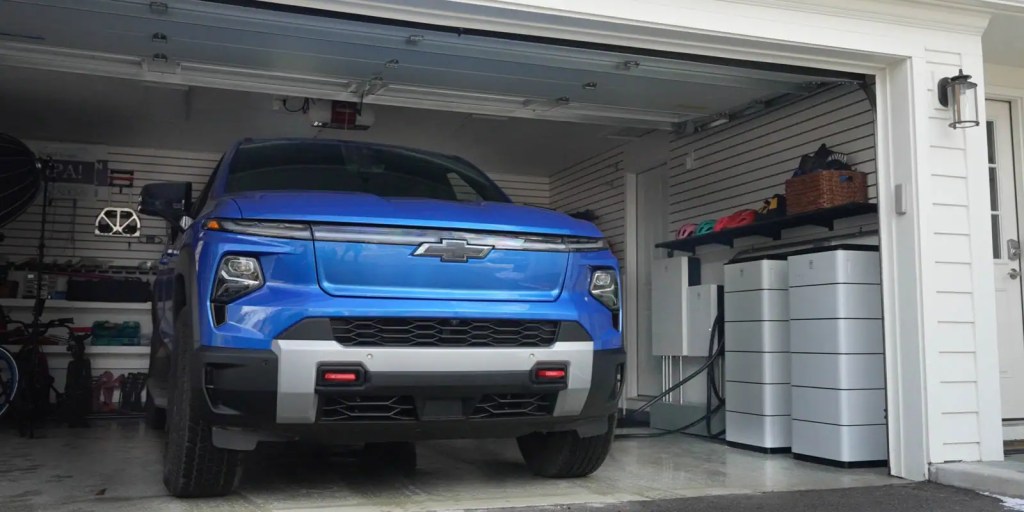
Chargers like the Autel MaxiCharger, ChargePoint Home Flex, and EvoCharge iEVSE are all solid options, while more advanced systems (like those from GM Energy and Tesla) can integrate with home solar panel and home battery systems to help drive down energy costs and deliver V2H and V2G functionality as well. Brands like BMW, Ford, GM, and Tesla partneer with Qmerit on home charger installation, and their installers can walk you through the costs and options.
Option 2: use an app
If you already have a home charger that works for you, but it isn’t a “smart” or connected model, all is not lost.
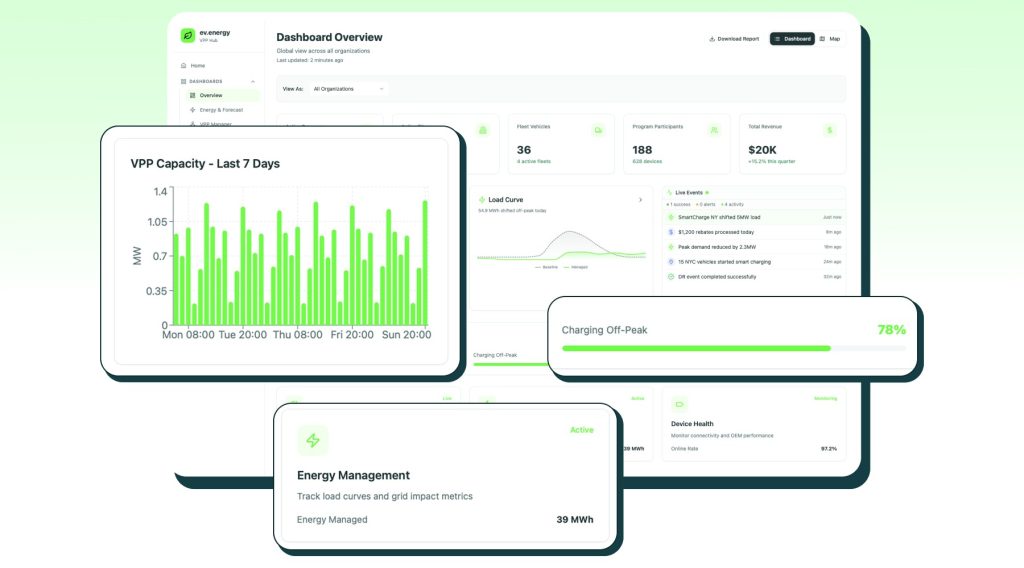
Apps like ev.energy can link directly to your car using the factory telematics system, connecting to your vehicle account to see battery level, plug-in status, and track charging activity. On some vehicles, the app can even start and stop charging remotely, helping ensure you’re only pulling power during off-peak hours when electricity is cheapest.
Because these apps are pulling data from the vehicle, and not the wall, they’re estimating kWh use rather than measuring them directly. Still, for many drivers, that’s often more than accurate enough to get a reasonable cost-per-mile and keep defensible records.
Note, too, that while I assume there are other apps that can do this, I’ve never used any of those. That said, ev.energy is one of the more established options, is widely used by utilities, VPPs, and smart charging programs, and presents a solid example of how vehicle-based energy tracking can fill the gap if you (or, more likely, your company) don’t want to upgrade your EVSE.
Option 3: don’t do any of that

“No, I’m not doing any of that” has become a bit of a catchphrase for me in my fifth decade as a frightened monkey clinging to a mossy rock hurtling through space at 60,000 miles an hour. And, honestly, it’s working out great.
Applied here, it means not tracking your kWh at all. Instead, you can simply track your miles driven for work and multiply them by IRS standard mileage rate already bundles together fuel costs (gas or electricity), maintenance, depreciation, and all the other costs of operating a vehicle. For 2026, that rate is $0.725 per mile, regardless of your fuel choice.
Miles driven * 0.725 is the number. Submit it, and move on with your life.
Of course, as with anything involving taxes or reimbursement, you’ll want to check with your accountant (or your company’s accountant and reimbursement specialist) to make sure this method works for your scenario – but, for a lot of drivers, skipping the kW calculus entirely is most definitely the way to go.
Original content from Electrek.

If you’re considering going solar, it’s always a good idea to get quotes from a few installers. To make sure you find a trusted, reliable solar installer near you that offers competitive pricing, check out EnergySage, a free service that makes it easy for you to go solar. It has hundreds of pre-vetted solar installers competing for your business, ensuring you get high-quality solutions and save 20-30% compared to going it alone. Plus, it’s free to use, and you won’t get sales calls until you select an installer and share your phone number with them.
Your personalized solar quotes are easy to compare online and you’ll get access to unbiased Energy Advisors to help you every step of the way. Get started here.


FTC: We use income earning auto affiliate links. More.




Comments