
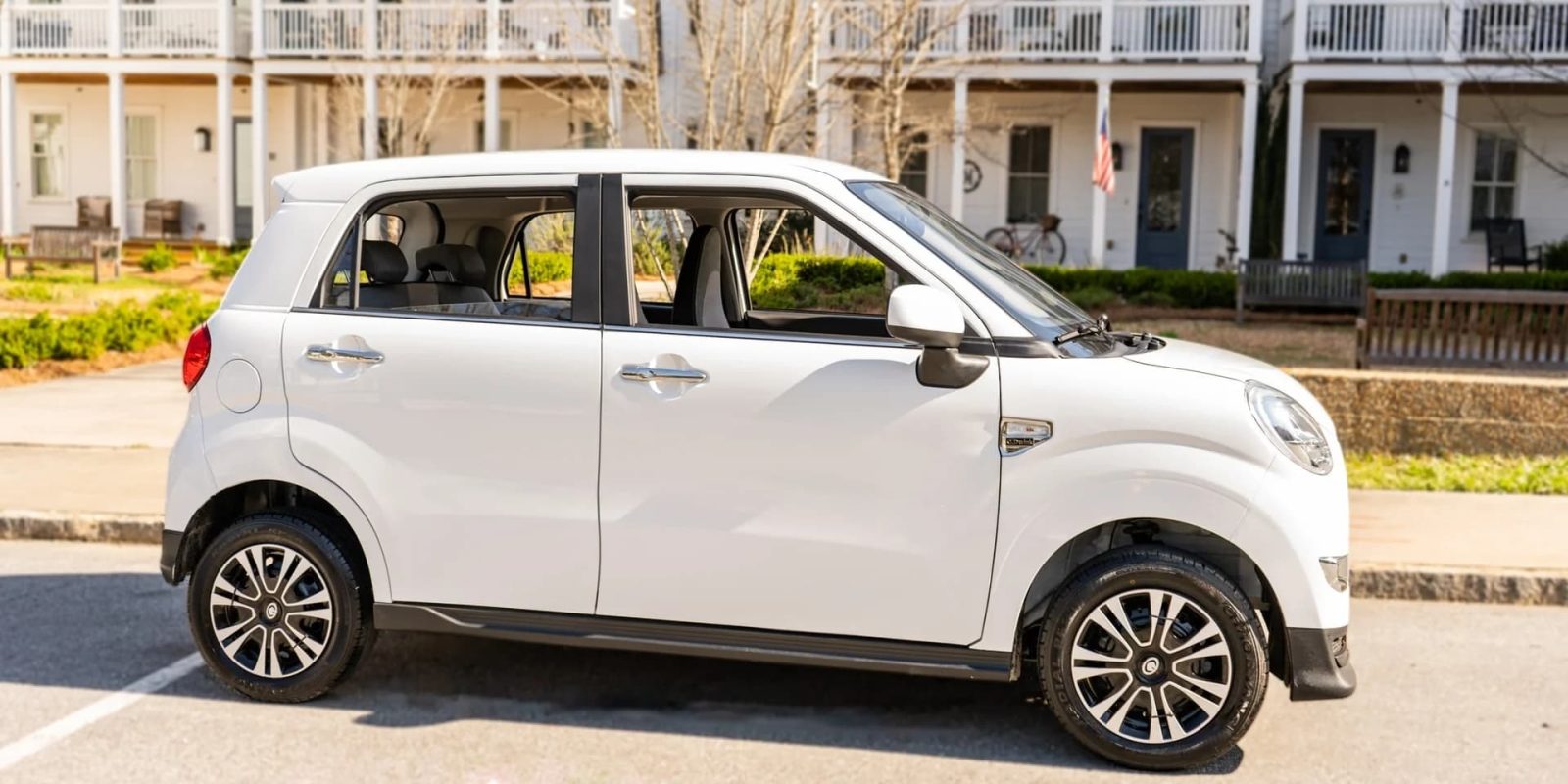
There’s a growing push in the US to rethink what a “car” really needs to be, as more Americans than ever embrace alternatives from e-bikes to golf carts, among other car alternatives. Wink Motors is the latest company betting that smaller, slower, and cheaper might actually be the smarter answer for a lot of drivers.
But Wink has a different approach, focusing on those who want to retain the benefits of a traditional car without all the extra cost or hassle.
The company just announced the launch of its Wink Mark3 electric microcar, a fully enclosed, street-legal vehicle designed specifically to meet and exceed US federal low-speed vehicle (LSV) regulations.
And unlike many low-cost EVs that hide key features behind pricy options lists, Wink is positioning this one as fully loaded out of the box.
A tiny car built for real streets
Microcars are still a foreign concept in the US, but they aren’t a new concept globally. In many European and Asian cities, ultra-compact EVs have been quietly doing the job of short-distance transportation for years.
What’s different here is that Wink has engineered its vehicle specifically for US regulations and expectations, making it an American-centric take on a concept that has been proven elsewhere.
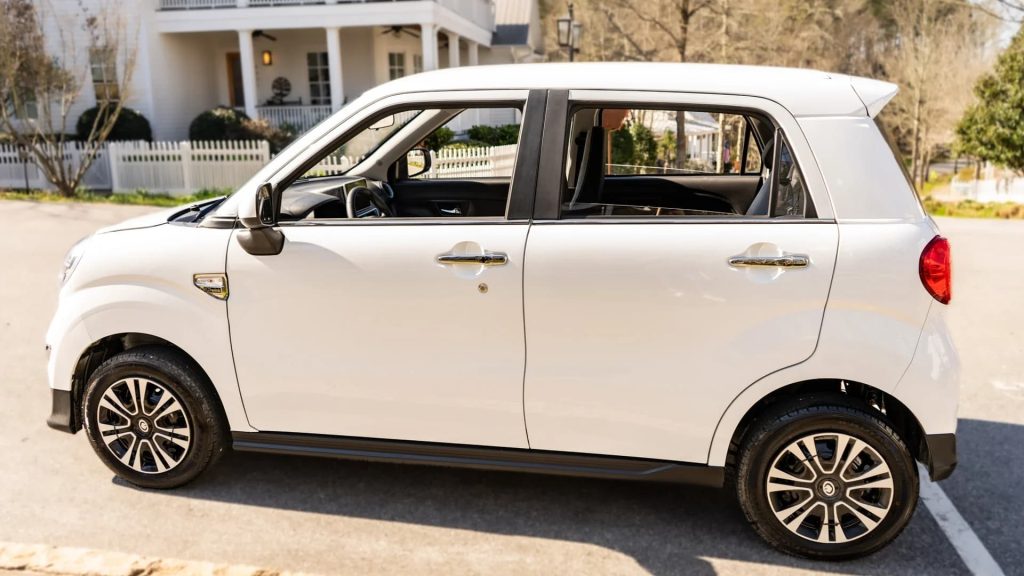
The Wink is legal for use on most public roads with posted speed limits up to 35 mph (56 km/h) and can be registered, insured, and plated in 49 states (with New York currently the only exception). That puts it squarely in the same regulatory category as what are often referred to colloquially as neighborhood electric vehicles (NEVs), but with a more “car-like” execution.
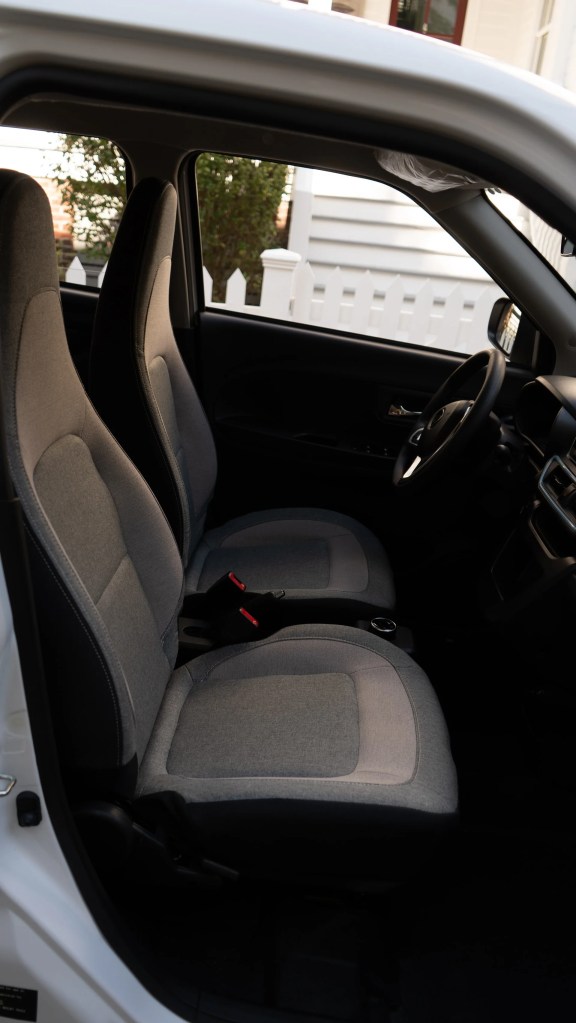
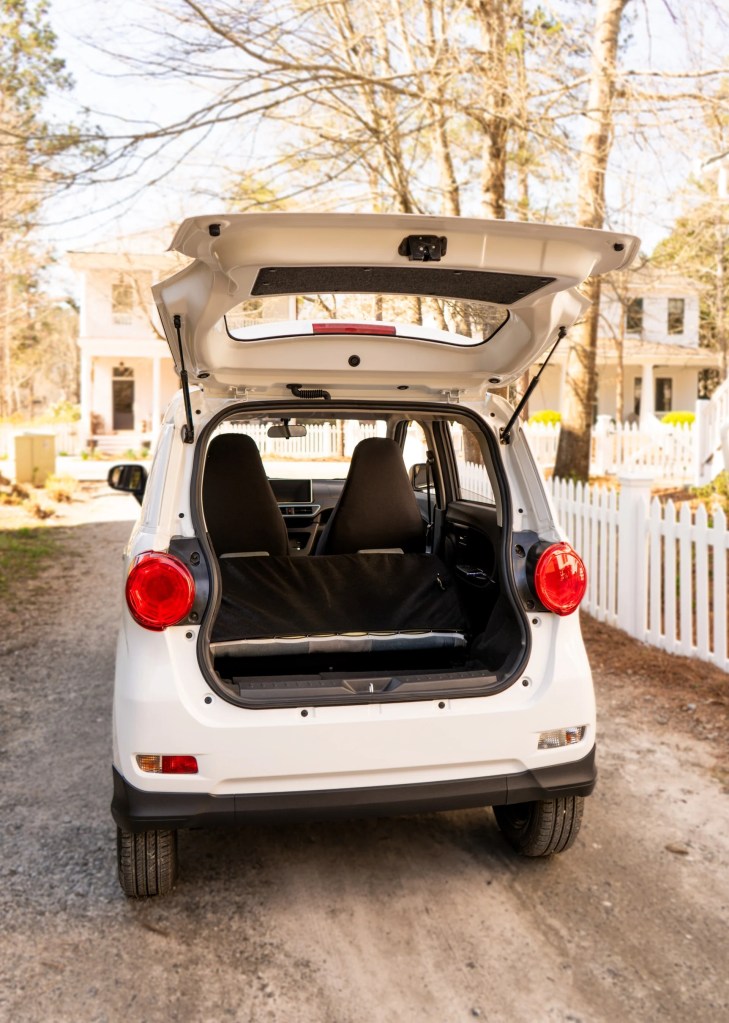
Despite its compact footprint, the company claims the five-door hatchback can seat four full-size adults, even accommodating taller and larger occupants than you might expect from something this small.
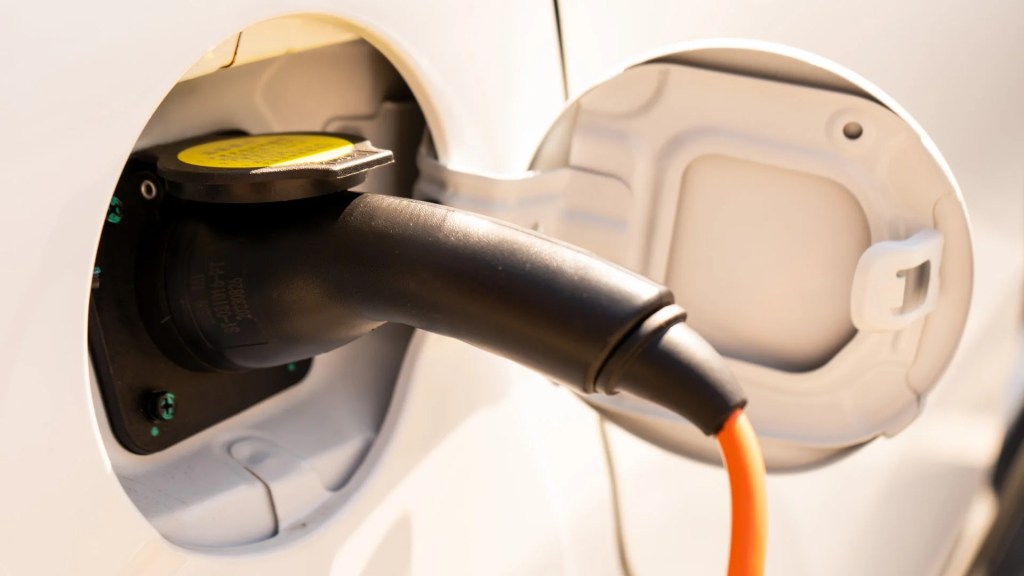
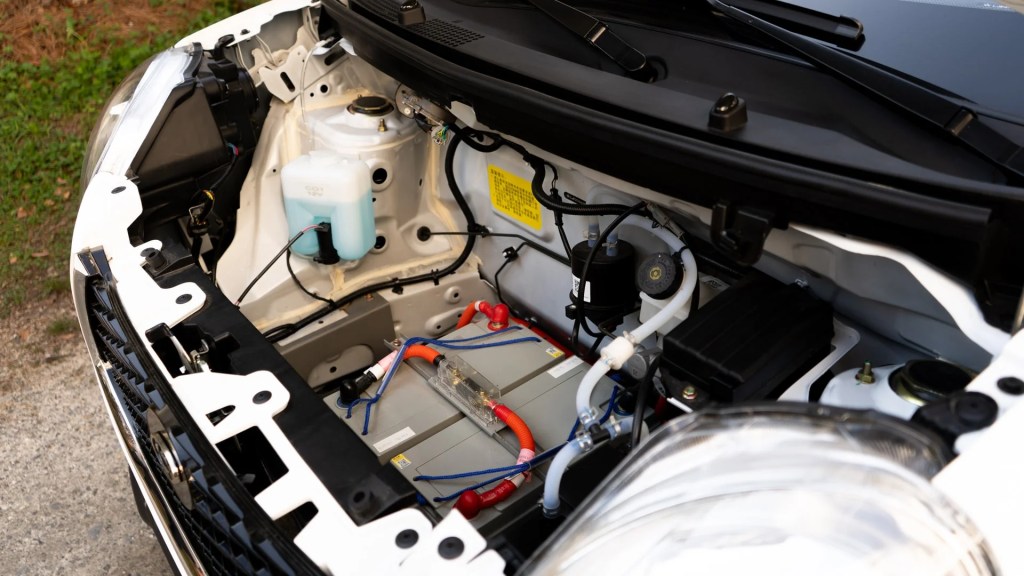
The relatively large 11.5 kWh LiFePO4 battery is rated for a range of up to 85 miles (137 km), and can be charged on either a home electrical outlet or via a Level 2 electric car charger. There’s also an optional roof-mounted solar charger option, though it would likely take several days to fully recharge the battery, and instead would function more like a trickle charger to recharge the battery after short, local trips.
More features than you’d expect
If you’re picturing a stripped-down golf cart with doors, that’s not really what Wink is going for.
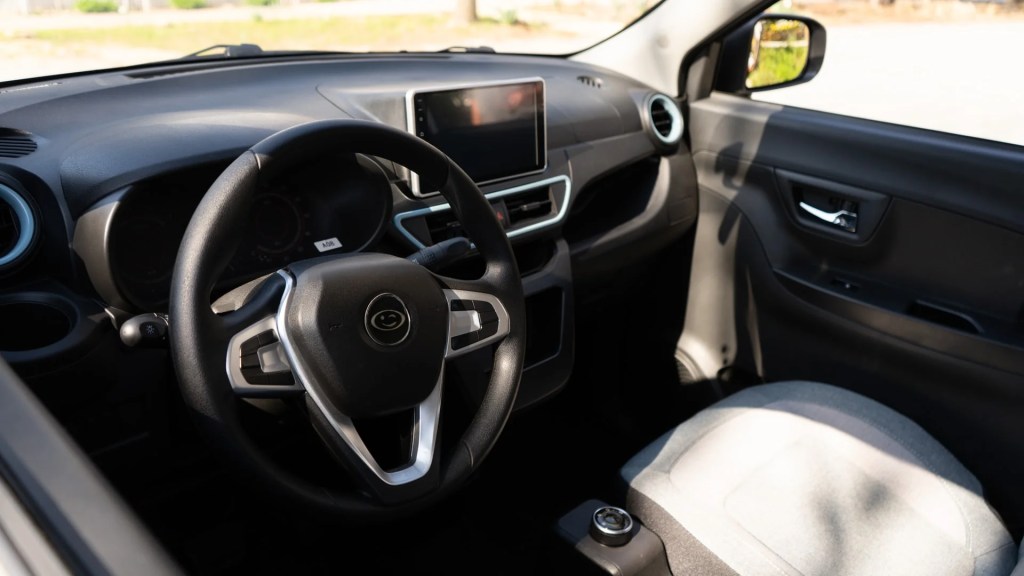
The microcar comes standard with air conditioning and heat, power windows and locks, Bluetooth connectivity, and a backup camera – features that push it closer to a conventional car experience than many LSVs on the market today.
Under the skin, the Wink Mark3 is built around a reinforced steel unibody structure with a focus on safety. Wink says the vehicle includes more than 30 safety features, including three-point seatbelts, a dual-circuit braking system for redundancy, and multiple visibility upgrades like a high-mounted brake light and door-exit warning alerts.
Other features include child-safety locks on windows and doors, inertial-reel seat belts, dash indicators for passengers who forget to fasten their seat belts or close their doors, and other nods to safety that go beyond the minimal federal regulations for LSVs in the US. In fact, much of the vehicle exceeds the federal safety requirements for LSVs, which is why Wink refers to them as microcars instead of merely LSVs.
It’s still not a highway-capable vehicle due to its federally-mandated 25 mph (40 km/h) speed cap, but it’s clearly designed to feel more substantial and offer better safety than typical NEVs or golf carts.
Wink is also trying to rethink the ownership experience. In addition to some traditional dealerships that offer in-person test drives in the Northeast as well as Florida, the company offers remote demos via video calls and supports owners through a nationwide network of over 10,000 independent mechanics.
Warranty repairs are handled locally with factory-backed support, which could make ownership more accessible for buyers outside major metro areas.
Spare parts are overnighted to local mechanics who have access to Wink’s trained mechanics to support quick repairs and servicing close to owners’ homes.
The Wink Mark3 is priced at US $19,995, which the company notes includes total tariffs of 145%. Over the last few years, US-based LSV makers, including Polaris and WAEV, who produce popular LSVs like the GEM carts, successfully lobbied for heavy tariffs on imported golf carts and LSVs that have in some cases reached up to 400%.
Electrek’s Take
We’ve been talking for years about how the US needs more right-sized vehicles, and this is exactly what that looks like. It’s a shame that LSV laws still limit manufacturers to 25 mph, but Wink seems to be showing that, despite the limited speed, other more car-like features can still be obtainable in a microcar format.
Not everyone needs a 4,000 lb SUV to drive a few miles to work, grab groceries, or shuttle around town. But until recently, the alternatives have been either too limited (like golf carts) or too expensive (like full-size EVs).
The Wink looks to sit right in that gap. I previously tested Wink’s first models a few years ago, and while the fit and finish left something to be desired, it was a fascinating experience driving those tiny cars around Manhattan and Brooklyn. While I haven’t tested the new Mark3 yet, I can already tell that it is far and above the production level of the first-generation vehicles I saw a few years ago.
At $19,995, it’s still not “cheap” in an absolute sense, but compared to the average price of a new car in the US, it’s significantly more accessible. And if you compare it to other LSVs like the popular GEM carts, it’s still significantly less expensive when you add accessories to those other models such as doors, lithium batteries, etc. I’d tell you how much less, but GEM appears to have removed the pricing from their “Build your GEM” section of the website. If you have to ask how much extra it costs to add the doors, sun visors, and windshield washer fluid pump, then I guess you can’t afford them.
So sure, $20k is still a ton of money for a microcar, and I bet dollars to donuts that someone will comment “Just buy a used Nissan Leaf” below, but that’s missing the point (and issues like getting a new vehicle under warranty, reduced regulatory issues, lower cost of ownership, easier parking, etc). And my hope is that as Wink’s volume increases, the company will be able to take advantage of economies of scale to reduce prices.
We’re seeing more cities warm up to smaller vehicles, more consumers looking for affordable alternatives, and more companies willing to challenge the assumption that bigger is always better. If Wink can deliver on build quality and real-world usability, this could be another step toward a future where not every trip requires a full-size car – and where microcars finally get their moment in the US.


FTC: We use income earning auto affiliate links. More.


Comments