
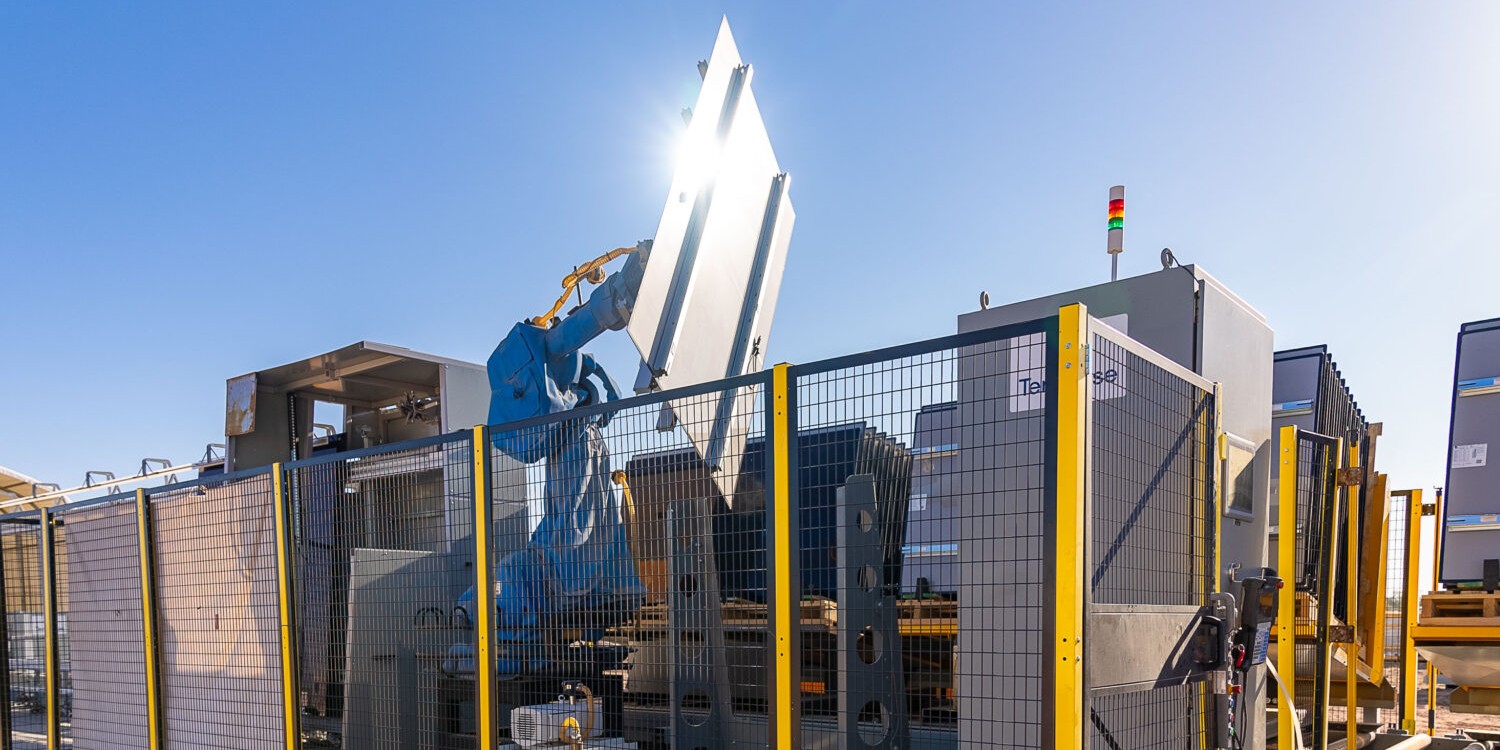
The US needs a lot more electricity fast, and one company thinks robots can help build it quicker.
Berkeley, California-based Terabase Energy says its next-gen Terafab automated solar construction system has finished field testing and is now ready to ship commercially. Terafab V2 brings autonomous robotics and AI into the way massive solar farms are built.
Why this matters: speed to power
Electricity demand in the US is rising again, largely because of data centers and AI. Tech giants are building massive server farms and need power around the clock.
Utility-scale solar paired with battery storage is still one of the fastest and cheapest ways to add new electricity. But building those projects isn’t simple. Solar farms can stretch across thousands of acres and require millions of panels and components, much of which is still installed by hand.
That creates bottlenecks. Labor shortages, delays, and rising costs are slowing projects down at the exact moment the grid needs more power.
Terabase says its Terafab solar robot system is designed to fix that by automating construction, tightening quality control, and speeding up the timeline from groundbreaking to grid connection.
CEO and co-founder Matt Campbell put it this way: “Every week we shave off a construction schedule means earlier revenue for project owners, lower financing costs, and faster delivery of clean electrons to the grid.”
A solar factory in the field
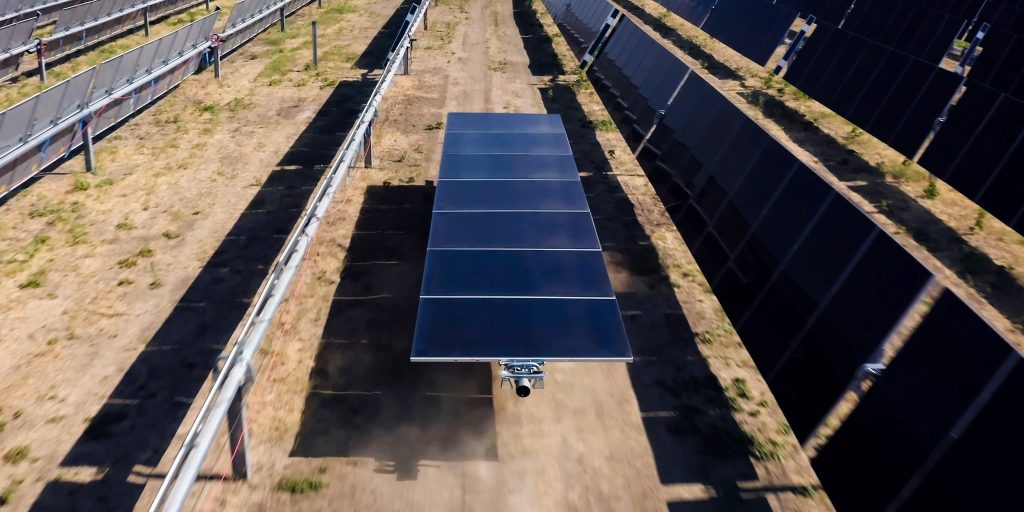
Automation is nothing new in factories, but construction sites are a different story. They’re messy, unpredictable, and exposed to the elements.
Terabase says it spent years developing a system that can handle real-world conditions – from desert dust and extreme heat to wind, rain, and mud – while still delivering factory-level precision.
The result is Terafab V2, which combines robotics, real-time decision-making, and autonomous operation to build solar farms quickly and efficiently.
A single Terafab line can install solar equipment on a two-minute cycle. Running continuously, that adds up to more than 20 megawatts installed per week – or around 1 gigawatt per factory year.
Flipping how solar gets built
The biggest change is how the system approaches installation.
Normally, crews install steel torque tubes first, then manually attach heavy solar panels one by one. Terafab flips that process.
Instead, panels are pre-assembled onto the torque tubes with built-in quality checks at every step. That means defects can be caught immediately instead of later in the field.
It also eliminates the need for workers to lift heavy glass and steel components, improving safety and making it easier to keep working in extreme heat.
Once assembled, specialized rovers move the completed units into place. Terabase says it expects those rovers to become fully autonomous in the near future.
Terafab’s Manufacturing Execution System (MES) software continuously manages and optimizes the entire build using AI.
Early deployments and growing demand
Terabase says its Terafab V1 system has already been used on five solar projects, and claims developers reported higher productivity, better build quality, and improved safety.
That matters because labor shortages are one of the biggest constraints on scaling solar right now. If construction speeds up, developers can take on more projects at once.
Scaling up US manufacturing
The company is now ready to scale.
Over the next year, Terabase plans to build out factory capacity at its Northern California facility, which can support up to 10 GW of installations annually.
The solar robot system is designed and manufactured in the US, positioning it as both a clean energy and domestic manufacturing play.
Campbell summed it up: “The companies building the AI-powered future need electricity at a scale and speed that the construction industry has never delivered before. We’ve developed Terafab to close that gap.”
Read more: The world added a record 814 GW of wind + solar – reshaping energy fast
If you’re looking to replace your old HVAC equipment, it’s always a good idea to get quotes from a few installers. To make sure you’re finding a trusted, reliable HVAC installer near you that offers competitive pricing on heat pumps, check out EnergySage. EnergySage is a free service that makes it easy for you to get a heat pump. They have pre-vetted heat pump installers competing for your business, ensuring you get high quality solutions. Plus, it’s free to use!
Your personalized heat pump quotes are easy to compare online and you’ll get access to unbiased Energy Advisors to help you every step of the way. Get started here. – *ad


FTC: We use income earning auto affiliate links. More.



Comments