
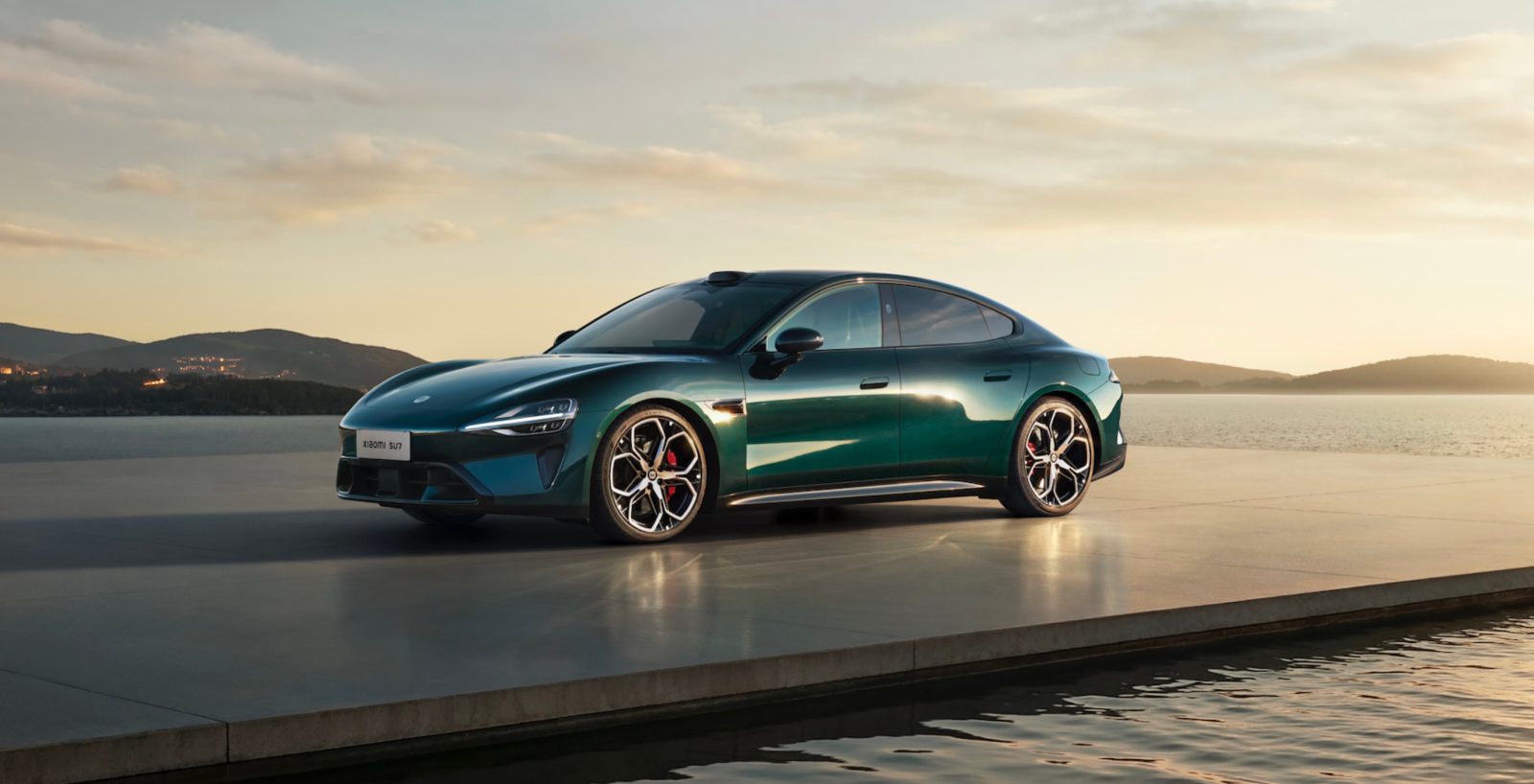
Xiaomi is officially launching the next-generation SU7 electric sedan today with a sweeping set of upgrades — up to 902 km of CLTC range, standard LiDAR across all trims, and an 897V charging architecture on the top model.
The updated sedan starts at 229,900 yuan (~$33,000), still undercutting the Tesla Model 3 in China by about 5,600 yuan (~$800) despite a price increase of 10,000-14,000 yuan over the outgoing model. Xiaomi racked up nearly 89,000 pre-orders in the first 24 hours when reservations opened in January.
The original SU7 launched two years ago and quickly became one of the best-selling premium EVs in China. Xiaomi outsold the Tesla Model 3 in the Chinese market for the first time in late 2025, and the company has now delivered over 360,000 SU7s in roughly 21 months. The next-gen model aims to widen that gap.
Bigger battery, higher voltage, much faster charging
The headline upgrade is the platform. The Standard and Pro trims jump from the original 400V architecture to 752V with silicon carbide inverters, while the Max moves from 871V to 897V — approaching a true 900V system.
That translates directly into charging speed. Xiaomi says the Max model can now add 670 km of range in 15 minutes, up from 510 km on the outgoing version. The company claims 5C supercharging capability, with a 10% to 80% charge completing in about 11 minutes.
Range gets a meaningful bump across the board:
- Standard: 720 km CLTC (up from 700 km)
- Pro: 902 km CLTC (up from 830 km — a 72 km increase)
- Max: 835 km CLTC (up from ~800 km)
The Pro model’s 902 km figure is the standout. To put it in perspective, that’s roughly 560 miles on the Chinese test cycle, which typically translates to around 400+ miles of real-world range — comfortably above what any Tesla currently offers.
More power, upgraded chassis
All trims now get Xiaomi’s V6s Plus motor as standard, bumping the single-motor Standard and Pro trims from 299 hp to 320 hp. The dual-motor Max jumps from 673 hp to 690 hp.
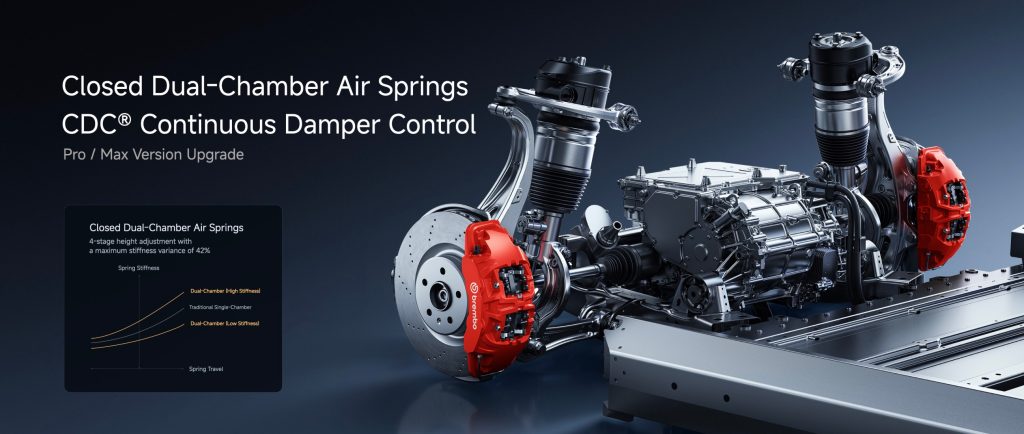
The chassis gets significant attention. The Pro model now inherits the dual-chamber air suspension with Continuous Damping Control (CDC) that was previously exclusive to the Max trim. All models get wider staggered tires — 245 mm front, 265 mm rear — and four-piston fixed front brake calipers. The Max variant upgrades further to Brembo calipers with drilled, vented discs.
Aerodynamics also improve slightly, with the updated body achieving a 0.21 drag coefficient.
LiDAR and 700 TOPS standard on every trim
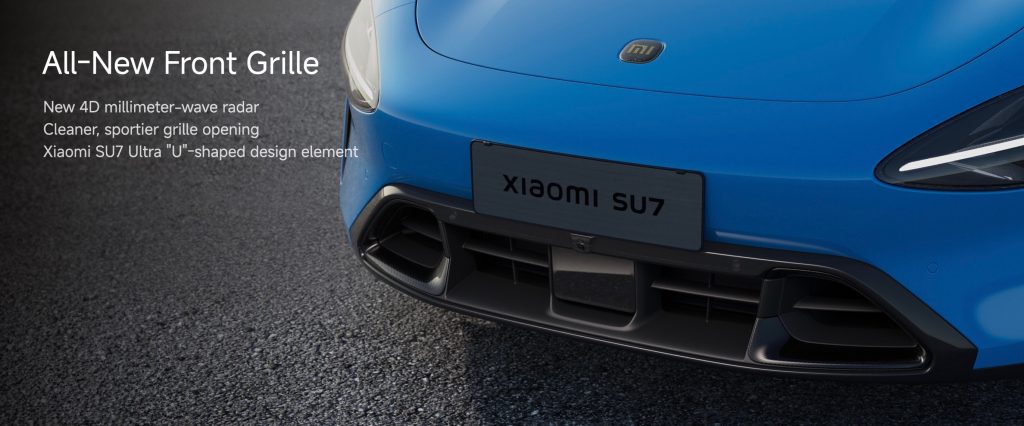
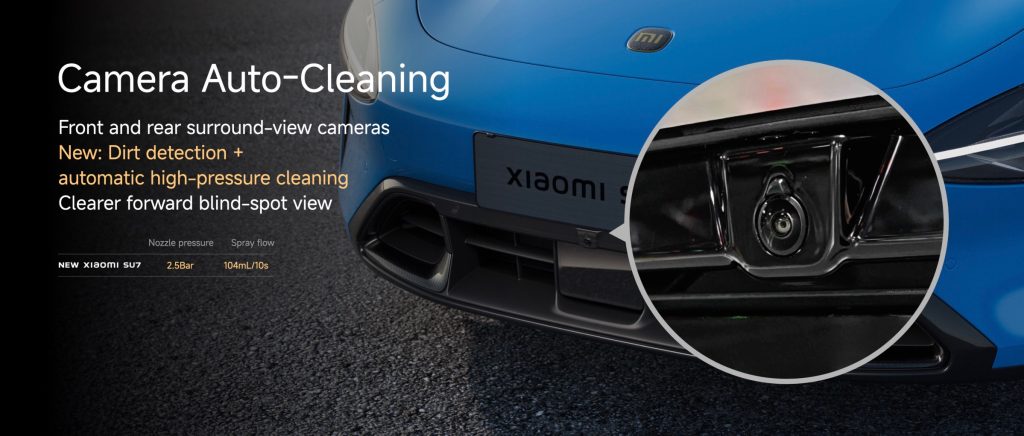
This is arguably the most aggressive move. The outgoing SU7 reserved LiDAR for the top trim. The next-gen model makes it standard across all three variants, along with 4D millimeter-wave radar and a unified computing platform delivering 700 TOPS of processing power — up from 508 TOPS max on the previous model.
Xiaomi’s HAD (Highway Autonomous Driving) system now comes on every SU7, giving even the $33,000 base model hardware that most competitors charge a premium for.
Safety overhaul
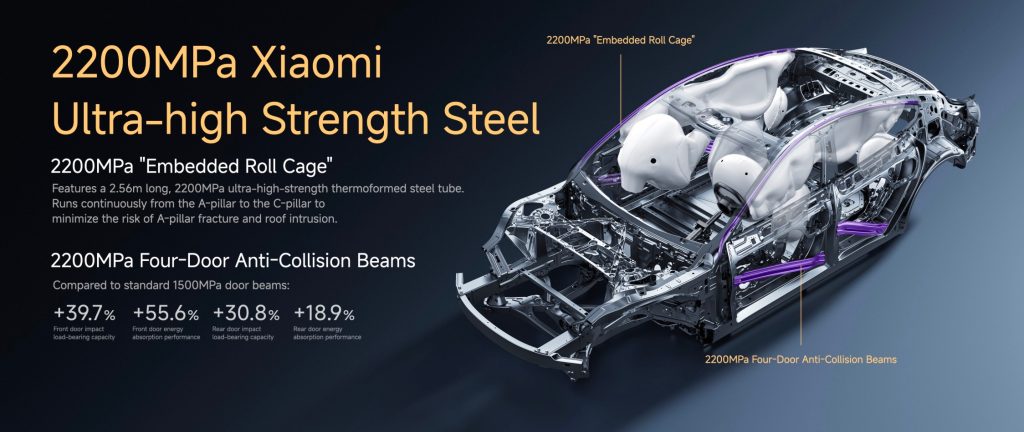
Xiaomi clearly addressed the safety concerns that followed a series of high-profile incidents involving the original SU7. The body structure now uses 2,200 MPa ultra-high-strength steel in critical areas (up from 2,000 MPa), and the battery pack gets a 1,500 MPa steel crossbeam with a reinforced scratch-resistant coating on the underside.
Airbag count increases from 7 to 9 across all models, with new rear-passenger side airbags. The flush door handles — previously a point of criticism — now feature a triple-redundant system with a mechanical backup that works without power.
Interior and exterior refinements
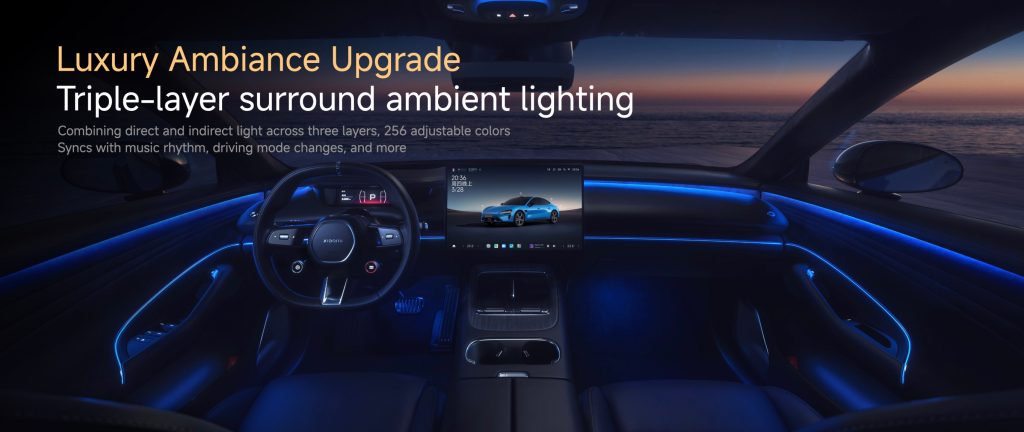
The visual changes are subtle. Outside, there’s a new Capri Blue color option, refreshed headlight graphics, and new 20-inch wheel designs. Inside, Xiaomi added a “Dark Night Black” interior theme, a redesigned dual-tone steering wheel, an updated center console, and dynamic ambient lighting.
The changes aren’t dramatic, but they don’t need to be — the SU7’s design was already well-received. Xiaomi focused its investment where it matters most: under the skin.
Pricing
Here’s how the lineup shakes out compared to the outgoing model:
| Trim | New Price (yuan) | Old Price (yuan) | Increase |
|---|---|---|---|
| Standard | 229,900 (~$33,000) | 219,900 | +10,000 |
| Pro | 259,900 (~$37,100) | 245,900 | +14,000 |
| Max | 309,900 (~$44,300) | 299,900 | +10,000 |
For context, the base Tesla Model 3 RWD in China starts at 235,500 yuan with a CLTC range of 634 km. The base SU7 offers 720 km of range and LiDAR for 5,600 yuan less.
Mass deliveries are expected to begin immediately following today’s official launch event, with Xiaomi targeting over 16,000 units in March production alone.
Electrek’s Take
Xiaomi is doing something that almost no other EV startup has managed: iterating quickly and improving meaningfully. Two years after launching its first car ever, the company is already delivering a next-gen version that addresses virtually every criticism of the original — safety concerns, charging speed, driver-assistance hardware — while actually increasing the value proposition.
It is also bringing many of its improvements introduced in the YU7 to the updated SU7.
The decision to make LiDAR and 700 TOPS of compute standard on the $33,000 base model is particularly notable. Most automakers treat advanced driver-assistance hardware as a premium upsell. Xiaomi is treating it as table stakes, which puts pressure on Tesla and every other competitor in the segment.
We should note that CLTC range figures are generous compared to EPA ratings — that 902 km Pro number is probably closer to 400-420 miles in the real world. Still, it’s a massive improvement over the outgoing model and comfortably above what Tesla offers at any price.
Xiaomi is targeting 550,000 EV deliveries in 2026, and upgrades like these are how it gets there. The SU7 is already the best-selling sedan above 200,000 yuan in China, and this refresh should only widen that lead.


FTC: We use income earning auto affiliate links. More.



Comments