
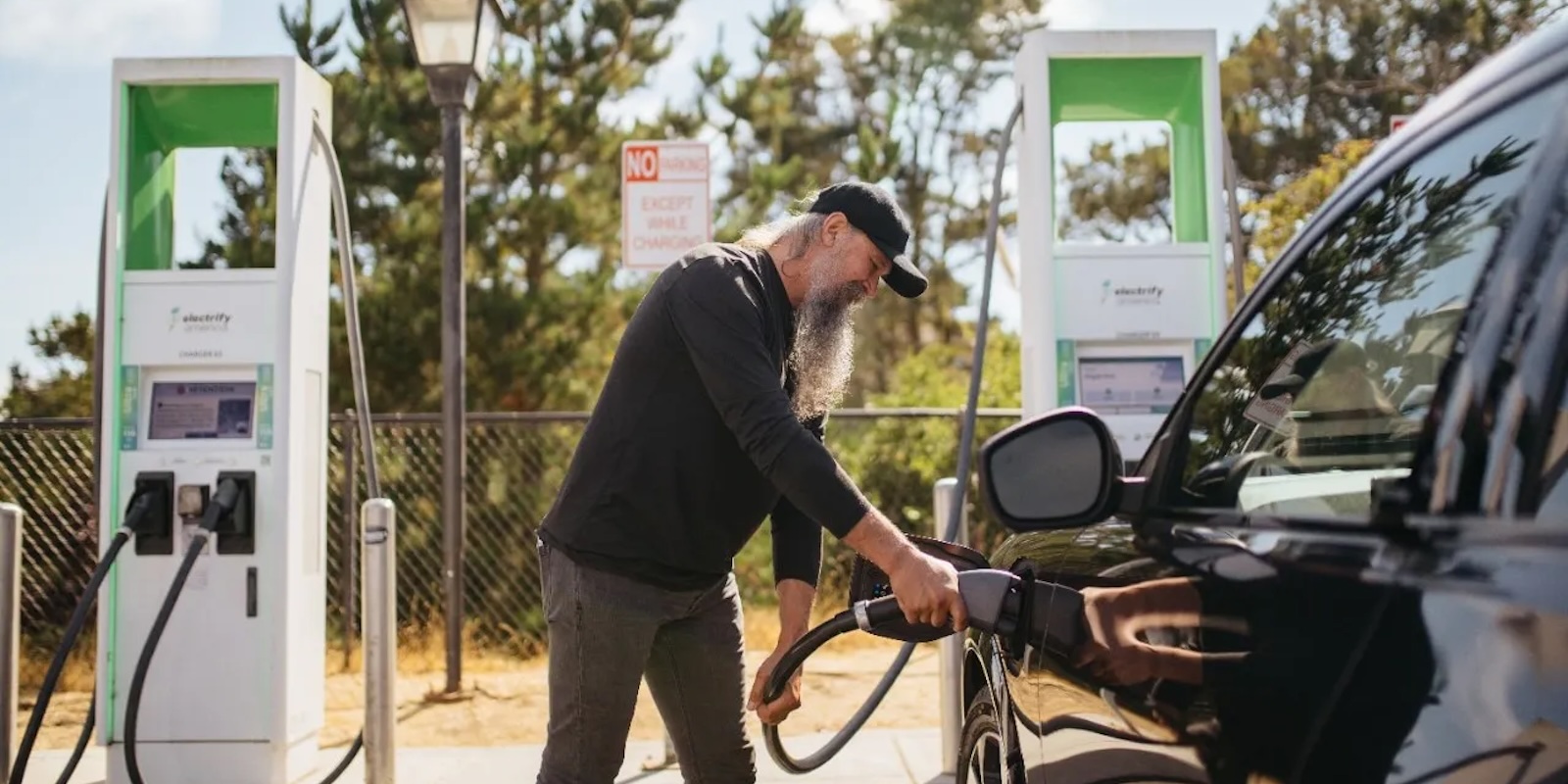
The price of gas is rising almost as fast as the price of new cars, pushing more shoppers toward the cheapest low-mile used options on dealer lots: off-lease EVs. But while the deals look good, first-time EV buyers still have concerns. Here’s what used EV buyers need to know about batteries, warranties, and real-world ownership.
If you’re acting as the resident EV evangelist or go-to “car guy person” that’s fielding questions about EVs for friends and neighbors, it’s important to understand that first-time EV buyers’ concerns aren’t coming out of nowhere. In addition to willful misinformation coming out of mainstream media outlets like Fox News, EV ownership whole new set of questions about longevity, repairs, and refueling that aren’t being answered by dealers.
The good news? They’ve got you, and you’ve got Electrek. Here’s some great, high level, and 100% factual information to share with first-time EV buyers hesitant to take the plunge.
How long do EV batteries last?
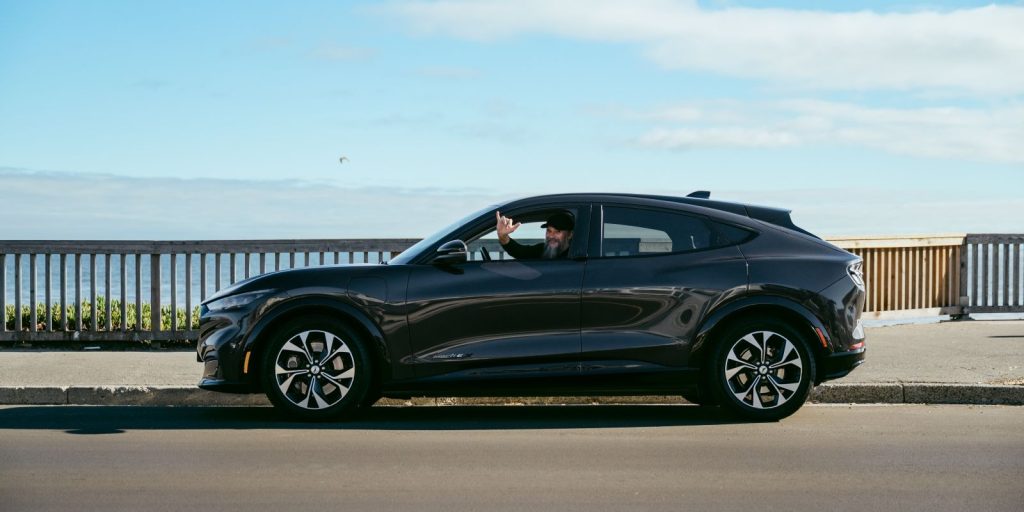
The unbelievers are still hoping against hope that electric cars won’t be as durable as ICE cars — but after more than 250,000 miles of driving in just three years as a full-time rideshare driver, David Blenkle’s Ford Mustang Mach-E isn’t just still going, it’s still going strong with more than 90% of its original battery capacity.
Those 250,000-plus miles were validated by Mustang Mach-E Chief Product Engineer Matthew Gabrielli, who says that Blenkle’s use case offers compelling evidence that modern electric vehicles are engineered for exceptional longevity and reliability, and that this example provides a clear perspective on long-term electric vehicle ownership.
Blenkle’s Mustang isn’t a unique case, either. Here’s an article about a Hyundai IONIQ 5 that put 360,000 miles, and 87% capacity, on its original battery before being bought back by Hyundai for teardown and research. Here’s a Tesla with 400,000 miles on it. Or own Jamie Dow is driving an 18 year old EV with first-generation tech that’s still got about 80% of its battery life left.
TL;DR: that low-mile electric lease return you’re thinking of driving home this weekend? It’s got plenty of life left in it.
What if MY battery doesn’t last?
Sure, a small number of obsessively well-maintained cars have always been able to rack up big miles – Irv Gordon’s 3 million mile Volvo P1800 is probably the most famous example – but there’s always outliers and edge cases, good and bad. If something does go wrong, first time used EV buyers will be glad to know there’s a safety net built right in: nearly every new EV sold in the US comes with an 8-year, 100,000 mile factory warranty covering the battery and charging system.
The EV that don’t have 8 year warranties are from Hyundai, Genesis, Kia, Toyota, Lexus, and Subaru. They have 10 year warranties.
Buyers of older EVs with higher miles or buyers who want even more protection have options, too – including extended factory warranties or 3rd party warranties like the XCare warranty offered by Xcelerate Auto. “Although EV battery failures are rare, when they do occur they can be devastating for your finances,” says Brent Seavey, VP of business development at XCelerate Auto. “XCare Premium and XCare Battery and Drive Unit Only coverages have full replacement for the HV Battery, not only for failure but also for excess degradation. The purchase must take place before the vehicle goes over 7 model years old (currently 2019s or newer) and before the vehicle goes over 100k miles, and can even be financed for 12 to 18 months at 0%.”
TL;DR: used EVs aren’t a gamble. Most come with 8–10 year battery warranties, and extra coverage is always available if you want it.
What does it cost to charge an EV?

A lot of EV enthusiasts have a favorite charging app and a well-developed understanding of kilowatts, charging ports, and more, but EV newbies who have spent decades living with the confidence that their car will be compatible with any gas station they drive to can be easily overwhelmed by NACS, CCS, CHAdeMO, navigating adapters, and even the idea that plugging into a 350 kW dispenser won’t necessarily mean that their car will charge up any faster. For them, I always recommend Chargeway.
A lot of EV charging apps can tell you where the plugs are, and Chargeway tells you that, too — along with everything else. From your EV’s state of charge, to the best charging strategy to get you from point A to point B, to real-time charger availability, and more, it’s simply the best tool I’ve found to help new EV drivers understand how an EV fits into their busy lives today, and (as of October) the app includes answers to another frequently asked EV question: how much does it cost to charge?
“Our mission at Chargeway from day one has been to simplify ‘electric fuel’ for every driver to help accelerate EV adoption,” said Matt Teske, Chargeway’s Founder and CEO. “Now with one tap on the Chargeway station map drivers can easily see what we in the industry know the public must learn: Can I connect my car here? How long will charging take? How many chargers are available? How much will my charge session cost? With our latest update to Chargeway users can now see ‘electric fuel pricing’ for thousands of stations at a glance.”
Those prices obviously vary wildly between charging at home, public level 2 chargers, and for-profit DC fast charging efforts from BP Pulse, Electrify America, and Tesla itself. The best apps out there know what vehicle you’re driving, what your battery capacity is (think: the size of your fuel tank), and do the math for you. On average, that works out to about $0.05 per mile on most EVs, compared to $0.10-0.15 per mile in a gas vehicle.
TL;DR: about half as much, per mile, as a gas car.
Finally, whether you’re reading this to educate yourself about a used EV or you’re just checking this out to fight with me in the comments, remember that not all technologies will work for everyone, and that you can’t help someone who doesn’t want to be helped, either. Let the first timers do their own research, be there with answers they can’t find, and don’t make them feel bad about their choice … unless they decide to buy a Fisker Ocean or something.
Let me know if there’s anything else you’d like to see added to this list, or if you have a better answer than mine, in the comments.
Original content from Electrek.

If you’re considering going solar, it’s always a good idea to get quotes from a few installers. To make sure you find a trusted, reliable solar installer near you that offers competitive pricing, check out EnergySage, a free service that makes it easy for you to go solar. It has hundreds of pre-vetted solar installers competing for your business, ensuring you get high-quality solutions and save 20-30% compared to going it alone. Plus, it’s free to use, and you won’t get sales calls until you select an installer and share your phone number with them.
Your personalized solar quotes are easy to compare online and you’ll get access to unbiased Energy Advisors to help you every step of the way. Get started here.


FTC: We use income earning auto affiliate links. More.




Comments