
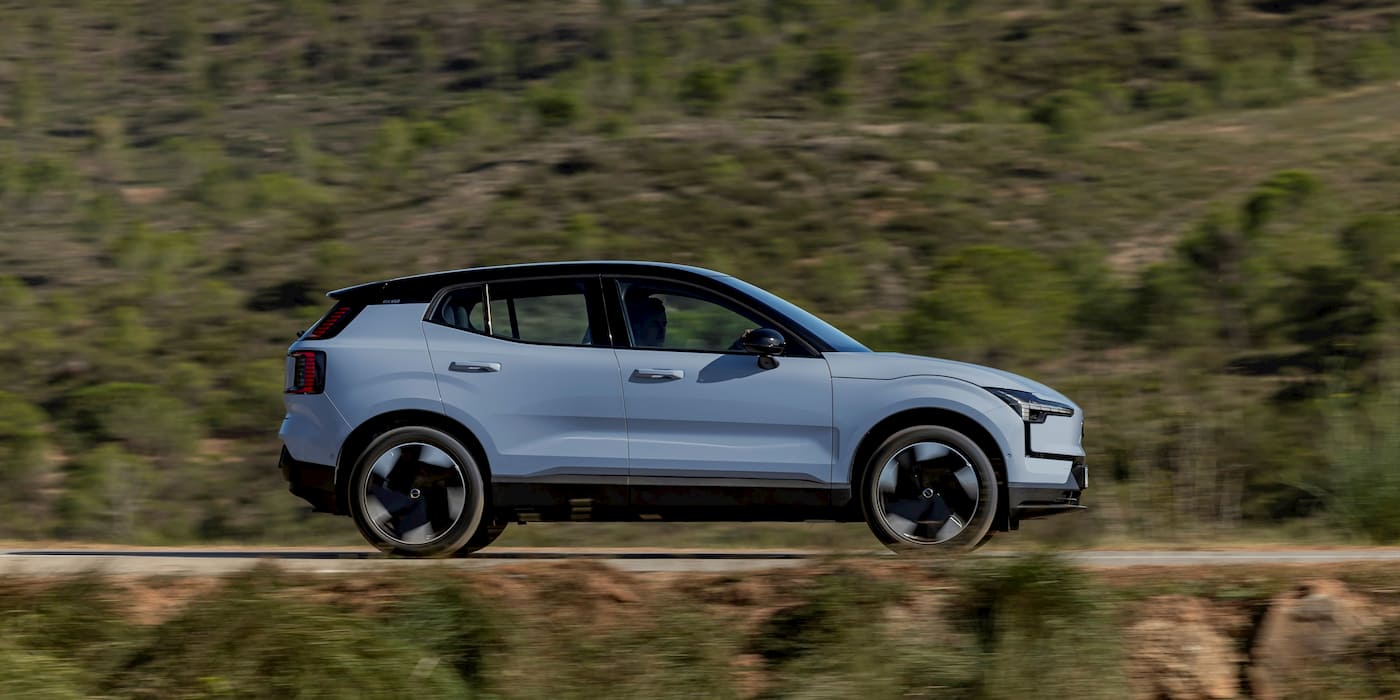
Volvo will pull its smallest, most-affordable EV from the US market at the end of this model year, reports The Drive.
The Volvo EX30 is one of the most affordable, and the second-smallest (behind the Fiat 500e), EV in America.
It also happens to be the quickest car Volvo has ever made, but despite its small size and good performance, it’s still got a good amount of space due to its small SUV/hatchback characteristics.
We at Electrek think Volvo knocked it out of the park with this one, though there are certainly some quibbles – but many of those have been fixed with software updates since the car came out, too.
One of those software updates includes adding V2L capability, which all EX30s will get via over-the-air update soon. That information came along with the announcement of a new lower-priced trim – though Volvo didn’t tell us whether that trim was coming to the US or not.
Perhaps that should have been seen as prelude, as Volvo is now announcing that the US won’t get the car anymore at all.
Volvo told dealers on Friday that the EX30 will be pulled from the US market at the end of the 2026 model year, and that dealers have until the end of this week to place orders, both for the EX30 and EX30 Cross Country off-road variant, said The Drive.
We reached out to Volvo to confirm, and were handed this statement:
Volvo Car USA has decided to end sales of the EX30 and EX30 Cross Country in the US market after the 2026 model year. The EX30 will remain available in other markets globally, including Canada and Mexico. Volvo Cars’ commitment to electrification and our customers remains unchanged, and we look forward to continuing to bring exciting new electrified options to our customers in the US, including the all-new EX60 and upgraded EX90.
Volvo cited “market conditions and financial factors,” which is standard nonspecific corporate speak. Though Volvo told The Drive that it’s always monitoring market conditions, so it’s conceivable that the EX30 could see a return at some point.
We also asked about Volvo’s plans for software updates, and Volvo told us “all Volvo owners—whether their model is still on sale or not—continue to receive support as well as service, parts, warranty, and software.” Given the model will continue being sold overseas, US owners should be fine.
Production, part of which had been shifted from China to Volvo’s factory in Ghent, Belgium in part to avoid tariffs, will continue to feed Volvo’s markets in the rest of the world, including Canada and Mexico.
The EX30 previously took its time coming to the US, due to it originally being produced in China, and the US imposing unwise tariffs on every EV coming from that country. While the rest of the world got it in the 2024 model year, the US had to wait until 2025. Now, it looks like the US will only get two total model years of the EX30.
Volvo will still sell its other EVs in the US – its EX40 SUV (formerly XC40), its huge EX90 three-row electric SUV, and its upcoming large-but-two-row EX60 can all still be bought by Americans. But the smallest, most affordable, and quickest one will be going away soon – so reach out to your local dealer (preferably this week, so they can get an order in) if you’re interested.
Electrek’s Take
While Volvo didn’t say this, this move is likely a reaction to republicans inflating the price of every EV by $7,500, which disproportionately hit lower-end EVs.
That caused a pull-forward of demand before the price hike happened, and has depressed EV sales in the subsequent months. We expect they’ll go back to growth in the coming months, but automakers have been quick to react.
I think the timing on this decision is unwise, because republicans have also just started an(-other) unnecessary and illegal oil war which seems to be getting worse by the day, causing gas prices to spike in the US. EVs are a solution to this sort of conflict, and smaller, more efficient EVs doubly so.
Its a shame, because the US needs small and affordable cars. With oil prices spiking, some Americans are waking up to the ills of oil dependency, and as the country is deep inside an affordability crisis, it would be nice to have some cheaper vehicles available.
Plus, the US is at an all-time high for pedestrian fatalities, and ballooning vehicle sizes are a major influence on that. The US EPA, when it had competent leadership, recognized this to be a problem and was finally signaling a shift to smaller vehicles – but under republicans, the EPA is now back to killing Americans on purpose, at the direction of the lying oil shill squatting in its head office.
As the second smallest EV in America (and the smallest with a usable amount of space for a family, since the 23-inch shorter Fiat 500e really doesn’t fit that criterion), the 166-inch-long EX30 really could have helped us push in the direction we need to go in terms of ballooning vehicle sizes. But, alas, Americans are being deprived of something the rest of the world gets, likely due to dumb policy, yet again.
I guess we’ll just be waiting for the 161-inch-long Rivian R3, then, to strike that blow. Or The 169-inch Chevy Bolt, which is available now, but also only for a limited time.
Use our links to contact your local dealers about the 2026 Volvo EX30. If you know you’re interested, you might want to reach out before the end of the week, so the dealers can know what kind of orders to put in before dealer orders close on Friday.


FTC: We use income earning auto affiliate links. More.




Comments