
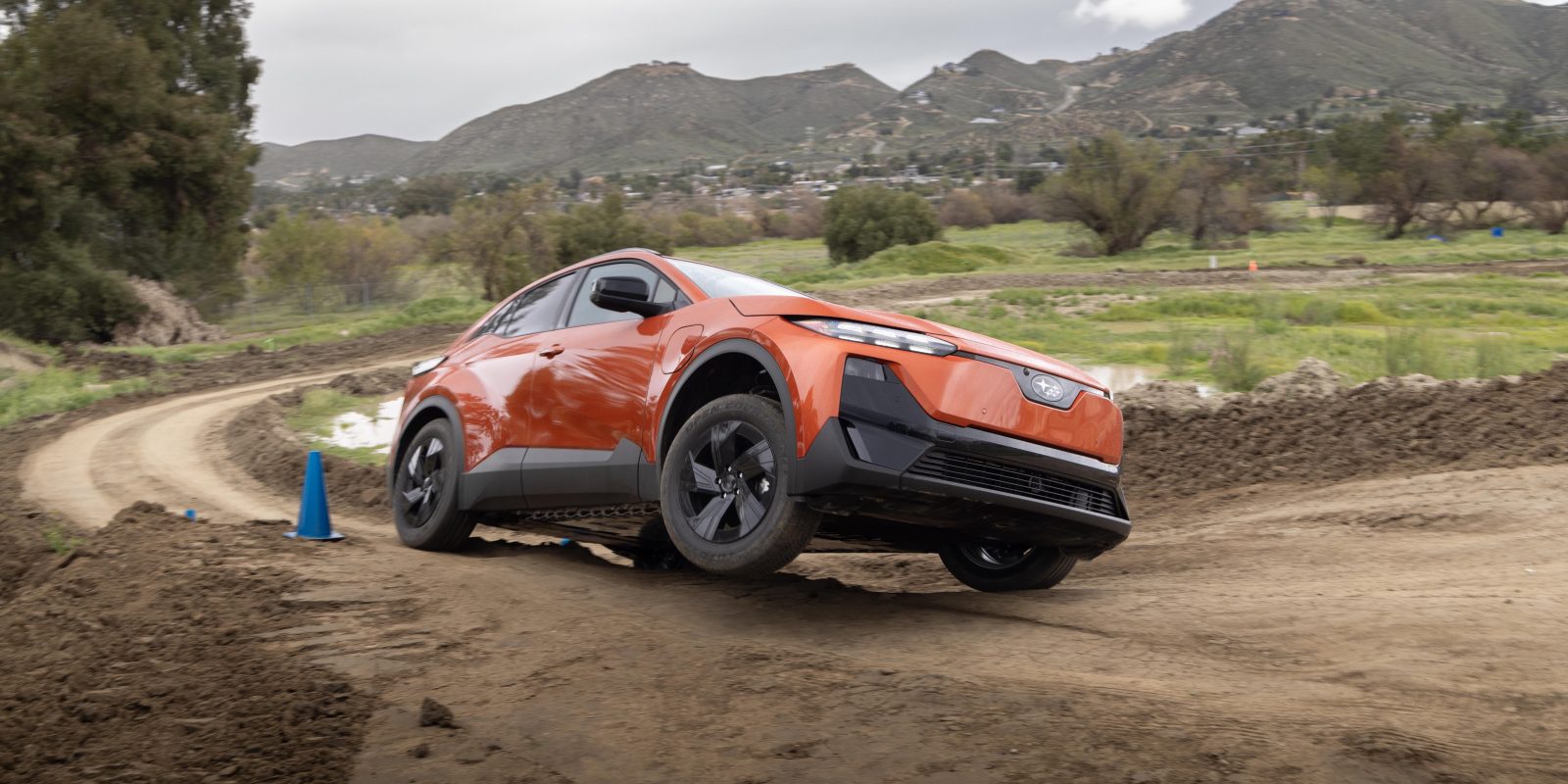
Subaru invited us out on a (rare) rainy California day to experience its new EV and see just what it can do off-road. But beyond it’s off-road abilities, how does it stack up to the rest of the market today?
The Subaru Uncharted is Subaru’s new mid-size electric SUV, intended as an entry-level “right-sized” offering, but still boasting an ample list of features.
It’s intended to sit in the same class as the gas-powered Crosstrek, and is within an inch or two in each dimension to that vehicle.
As for electric comparisons, it sits right alongside the Toyota C-HR… which stands to reason, as Toyota and Subaru worked alongside each other in development of the two vehicles, and the Uncharted is actually built in Toyota’s factories.
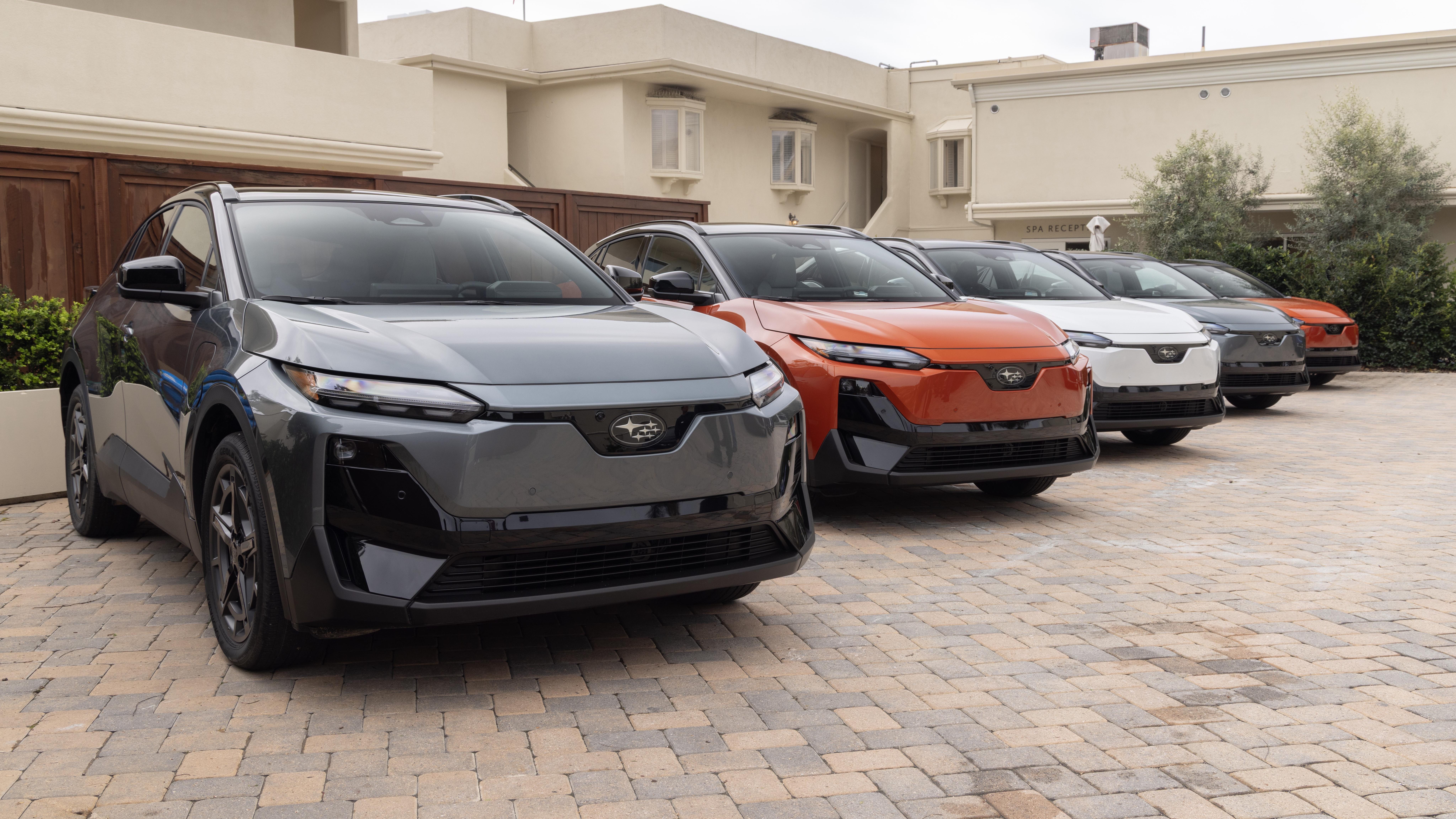
Subaru brought its off-road expertise to the Uncharted’s suspension tuning and AWD control logic, and is ready to market its new EV as a true off-roader. So they gave us a chance to put it to the test.
Great off-roading for an entry-level EV
In keeping with Subaru’s brand, the Uncharted is focused on allowing for off-road use.
At first I thought this could just be an exercise in branding – Subaru touts the strength of its AWD system, but this is a whole different powertrain than the company has historically built that AWD system around, so how much of it could really carry over here?
Well, we got a chance to try it out, as Subaru took us to an off-road recreation area in Lake Elsinore to do some things that you wouldn’t expect many entry level vehicles to do.
That said, we weren’t in the entry-level trim – while the vehicle starts at a base price of $35k, that’s for the “Premium FWD” version, which is going to be a lot less capable given that only one axle is driven (Subaru also says the FWD version will be “available in limited numbers” – though when pressed on what that means, Subaru couldn’t give us more specifics, except that they think most FWD Uncharteds will be sold in California).
The AWD version gains, well, an extra motor, along with heated steering wheel, drive mode select, adjustable power seats (with memory for driver seat), surround view monitor and roof rails.
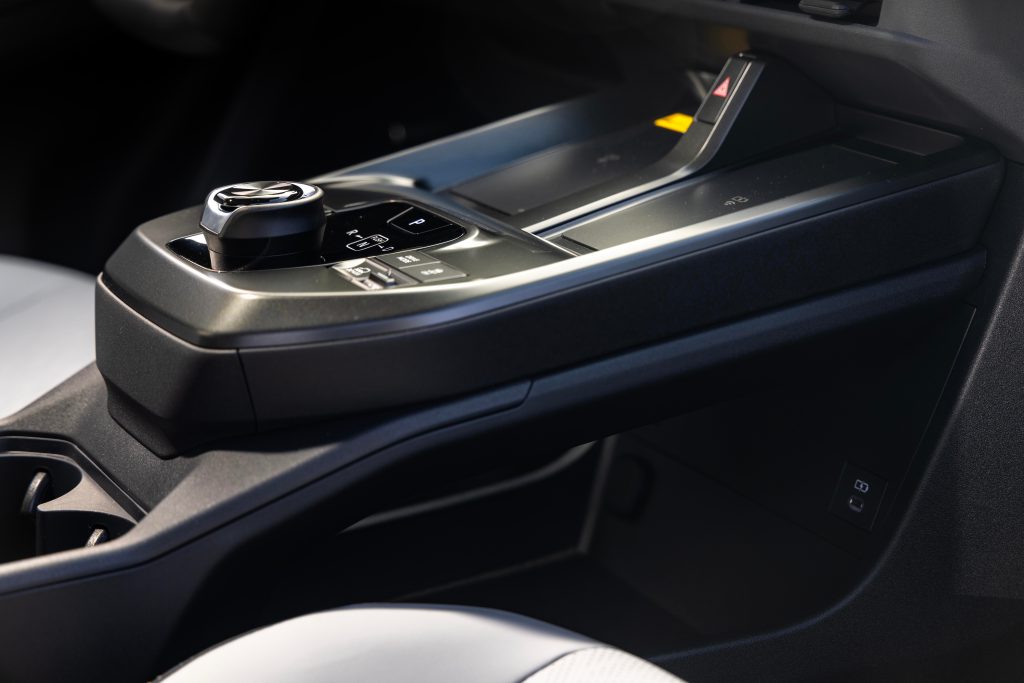
The motor comes along with X-MODE, Subaru’s improved traction and braking system for all-wheel drive. This can be selected with a button next to the shifter, just below the drive mode button (which is on the passenger side, for some reason).
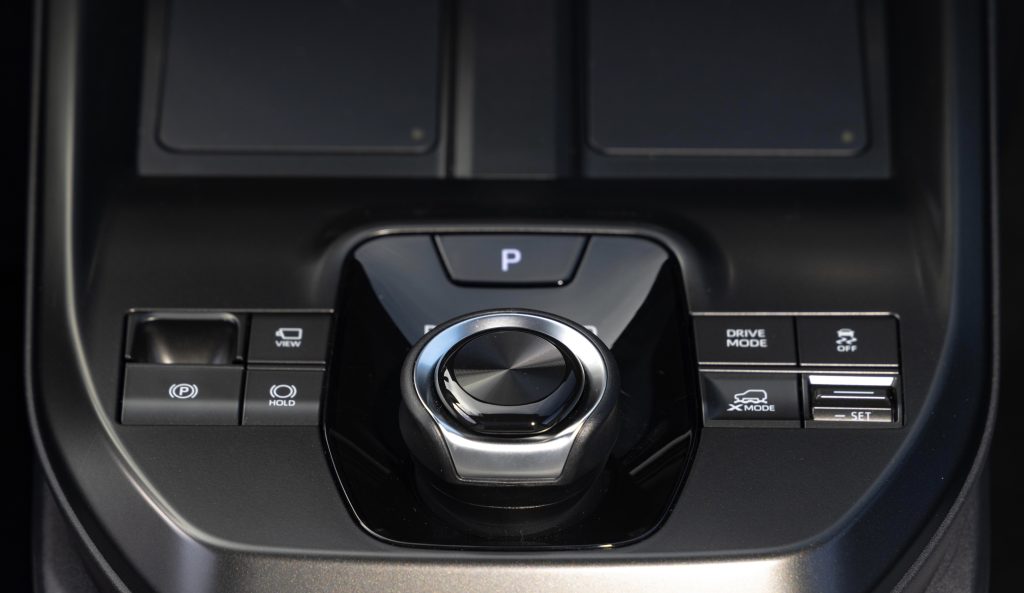
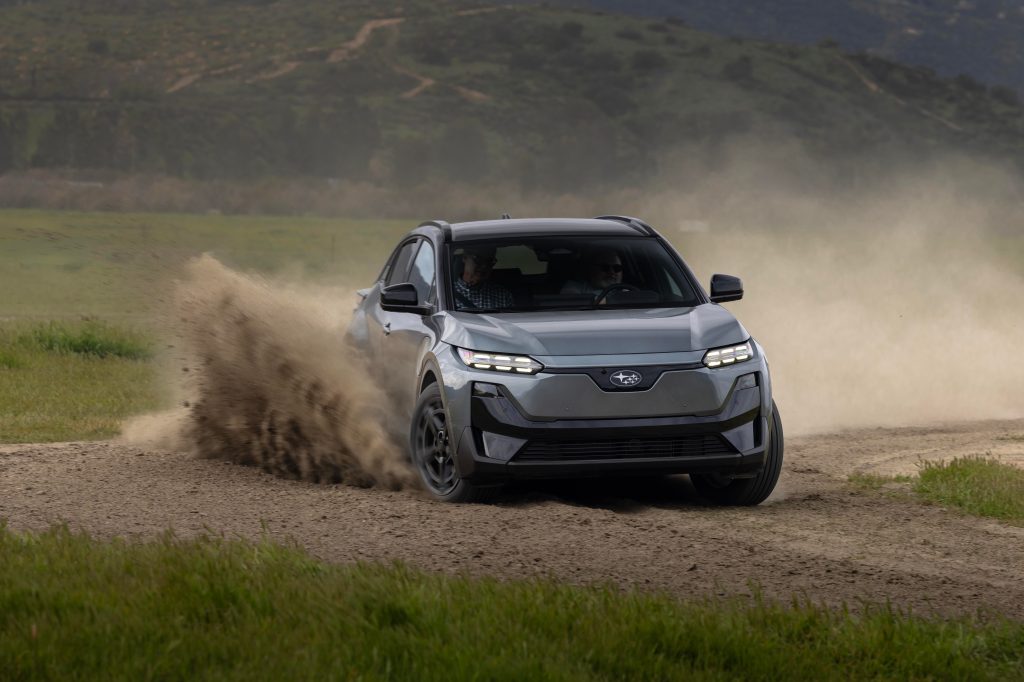
X-MODE is meant to be used on difficult terrain and low-traction surfaces like gravel, snow and mud. It also helps control hill descents – something we felt while tooling around on the off-road paths Subaru had set up for us.
It happened to rain quite hard the day before our visit and kept misting the day of, which threatened to put an end to our fun before it even started – but what better way to test a vehicle’s off-road capabilities than in inclement weather?


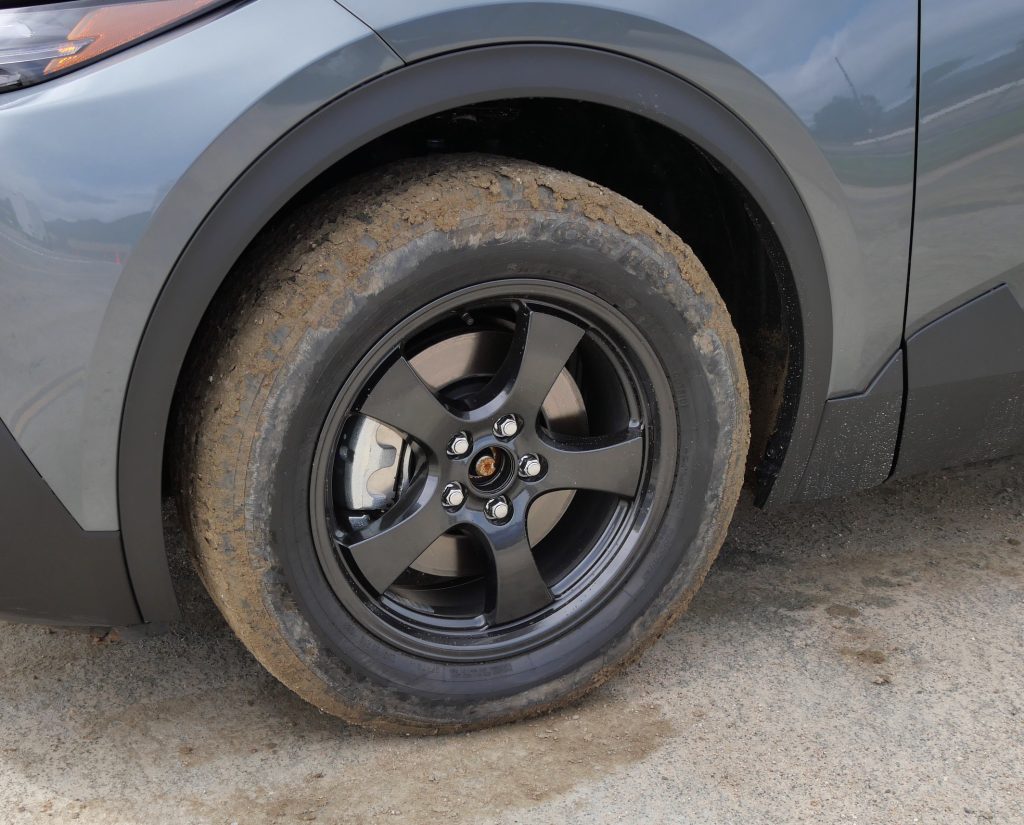
There was quite a bit of mud and standing water in the area, but our driving surfaces were still stiff enough not to cause too many problems – though our tires certainly brought plenty of dirt along with them when we got back to the parking lot.
So, not the most severe test off off-roading anyone’s seen, but certainly more than most cars will ever see, and the Uncharted was up to the challenges that we threw at it.
This included some rather steep ascents and descents, an uneven/bumpy road, and straddling a bump that left us tilted close to the 30º limit that the car’s display tops out at.
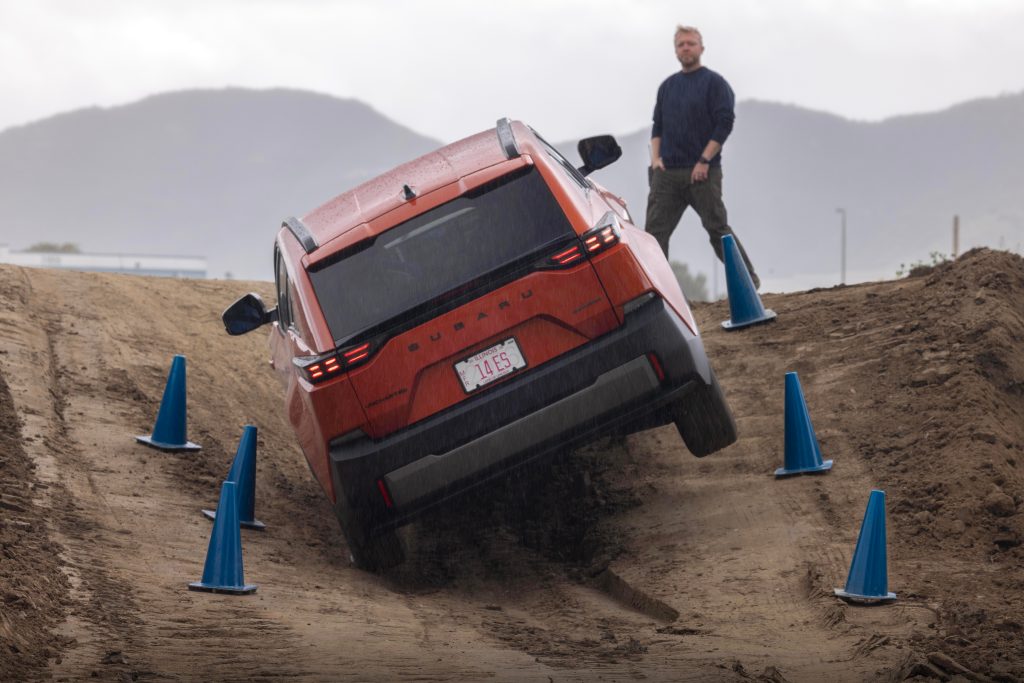
All in all, quite a handy display from the Uncharted.
On-road performance was good too
Back to the place where the vast majority of cars will spend the vast majority (or all) of their miles, we also got to drive the car through California’s canyons and highways to see how it handles there.
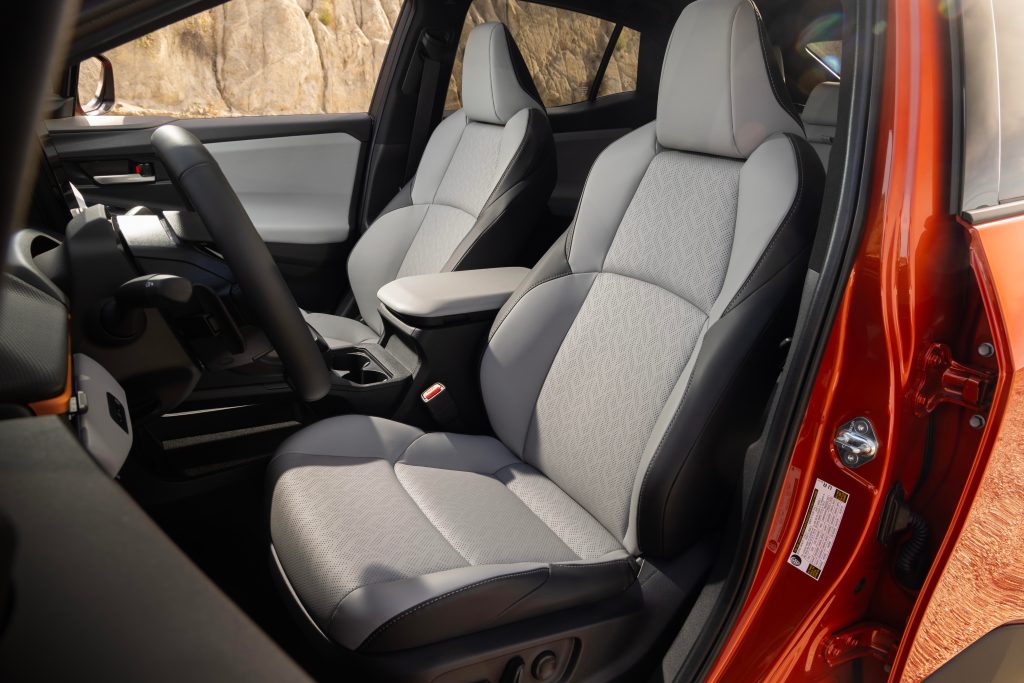
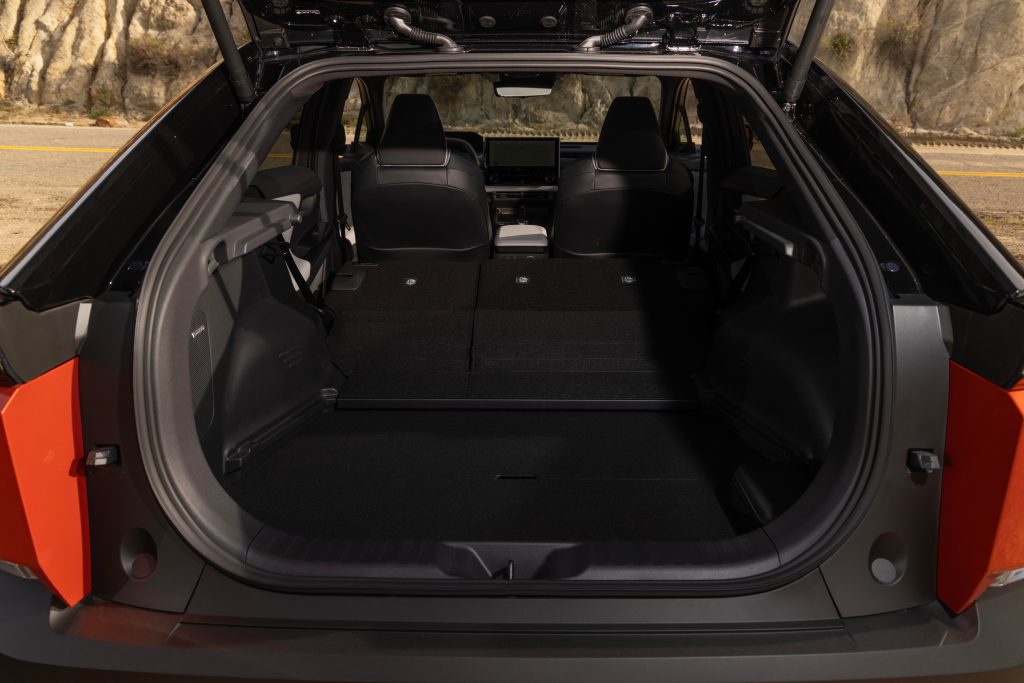
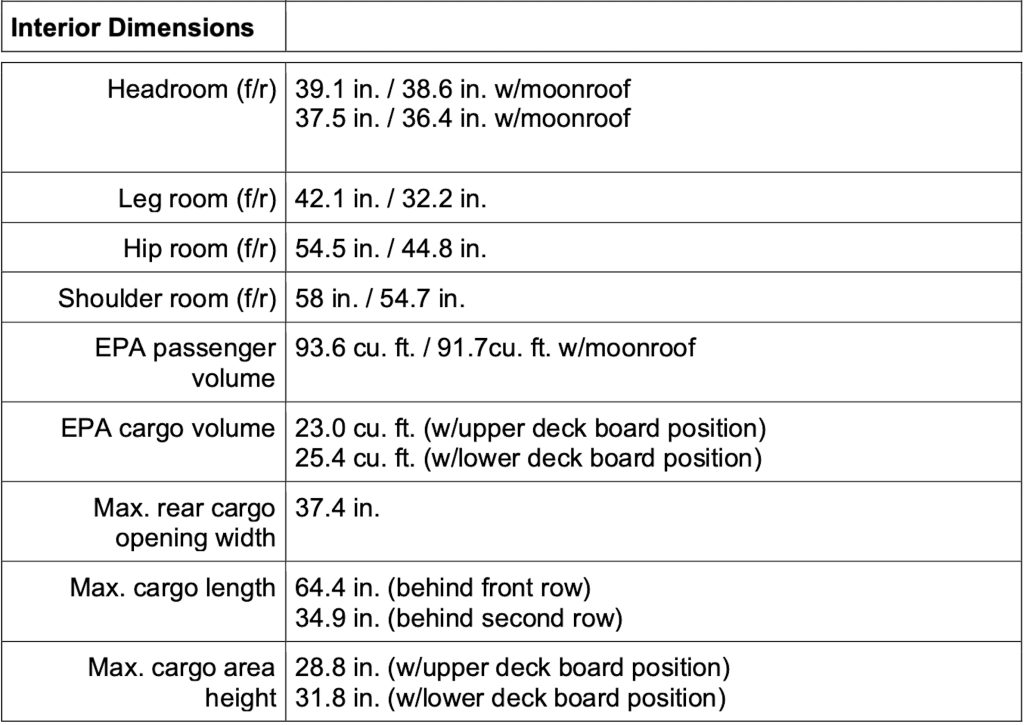
The Uncharted was quite a comfortable and spacious ride, at least in the front seats (we only managed to test it with two adults at a time). Subaru says it was responsible for the suspension tuning, and we had no problems with ride quality on our day out with the car.


It conquered the canyons well for a 4,480lb vehicle, owing to the now-standard low center of gravity and instant torque provided by the car’s EV powertrain. No 4,000lb+ SUV should be counted as a sportscar, but it was still reasonably tossable for what it is.
As a longtime EV driver, I’m particularly sensitive to any EV’s throttle response and regenerative braking settings. Many EVs, especially early efforts by manufacturers, will add a delay or smoothing to throttle inputs which leads to unpredictable behavior when you’ve gotten used to particularly responsive pedals.
I’m happy to say that the Uncharted passed my test in this case – the throttle is pleasingly direct without being jarring, and this carried over no matter the drive mode (Eco, Normal or Power).
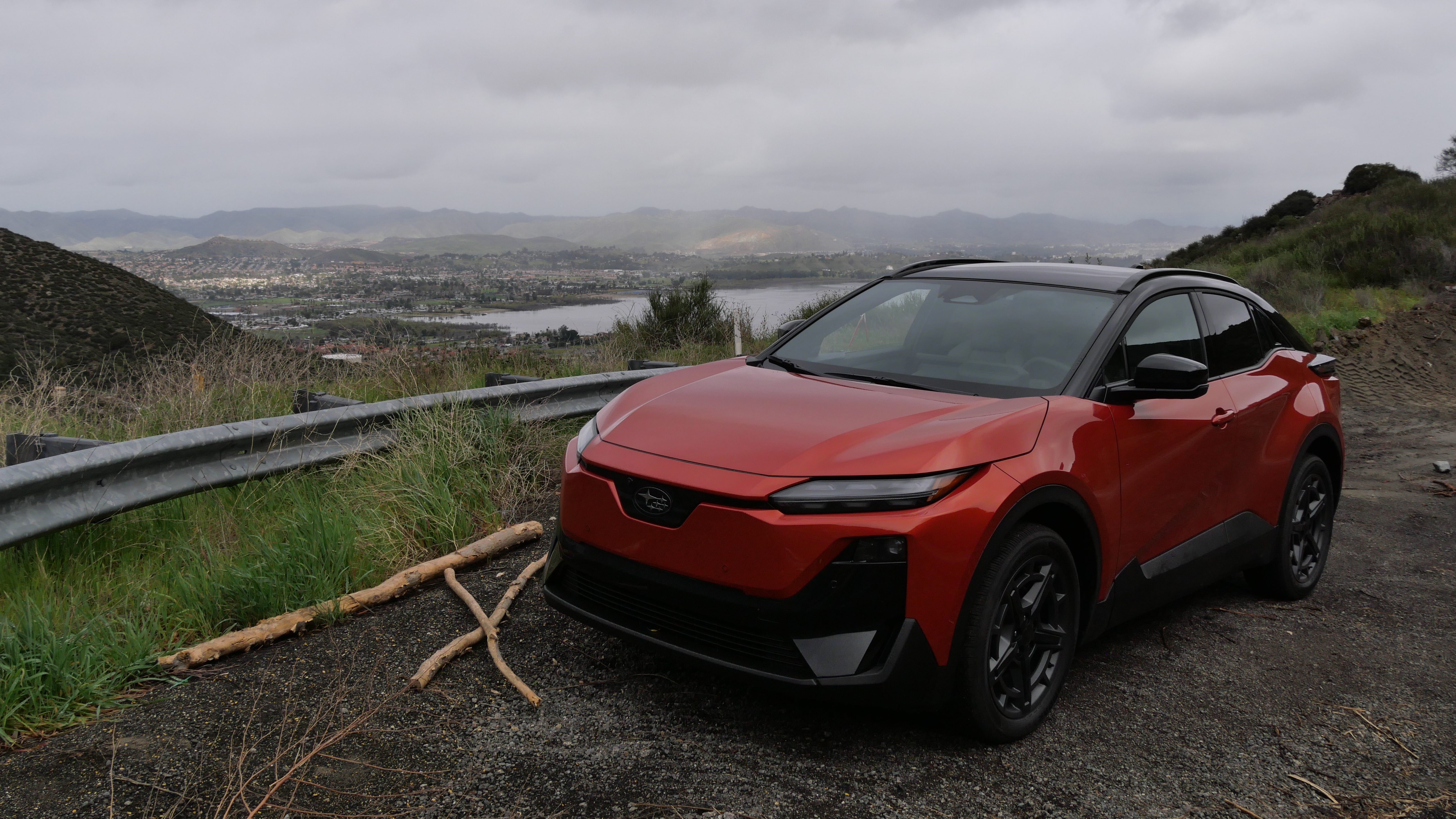
And the Uncharted GT’s 338hp (inches away from the 341hp 2019 WRX STI, the most powerful gas vehicle Subaru has ever offered) gave it plenty of oomph, particularly in Power drive mode. It’s obviously not up there with today’s most ridiculous sportscars, but I can’t imagine any normal driver will feel like this car is lacking in the power department as it sprints to 60mph in 4.7 seconds.
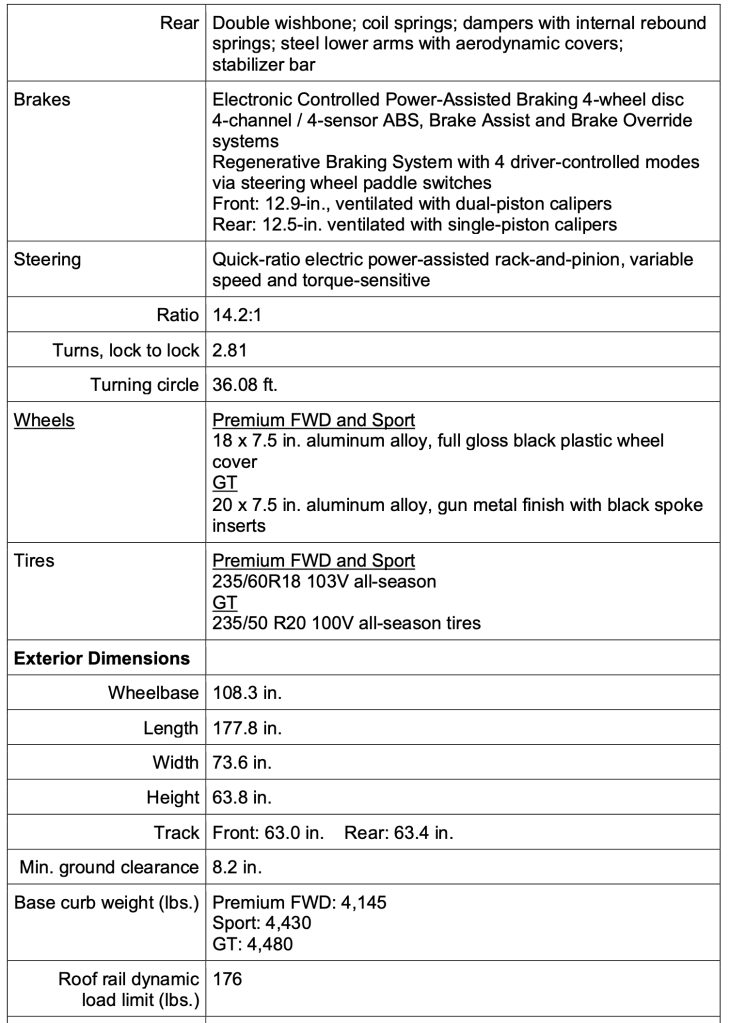
Subaru brags that it still manages to be more efficient than the competition despite its high performance, saying it has best-in-class range (308/287/273 miles for Premium/Sport/GT trims) and efficiency (129MPGe), while still being just as quick to 60 as other small/mid-size electric SUVs are. It does this despite “best-in-class” ground clearance of 8.2 inches.
I did have some EV-guy disappointment regarding the car’s regenerative braking settings, though. While it has 5-level adjustable regen through steering wheel paddles, I found that the strongest setting wasn’t nearly strong enough for me. This isn’t really a one-pedal driving car, unfortunately.

Between swapping cars and some spirited canyon driving, we didn’t really get a realistic idea of how well the car stands up to range estimates (besides, there’s a reason the phrase “Your Mileage May Vary” exists), nor did we get to test the car on a DC charger, as is the case for most of these drive events we go to.
Charging
Subaru does promise much better performance from the Uncharted than from the first-gen Solterra, which was known to have pretty poor charging performance (the 2026 Solterra is massively upgraded in this respect).
Charging peaks out at 150kW, and Subaru quotes a charge time of 28 minutes to fill the 74.7kWh battery from 10-80%. That’s neither the best or the worst out there, and I’d describe it as at “pretty good.” As usual: just plan your bathroom and food breaks at chargers and you’ll be fine.
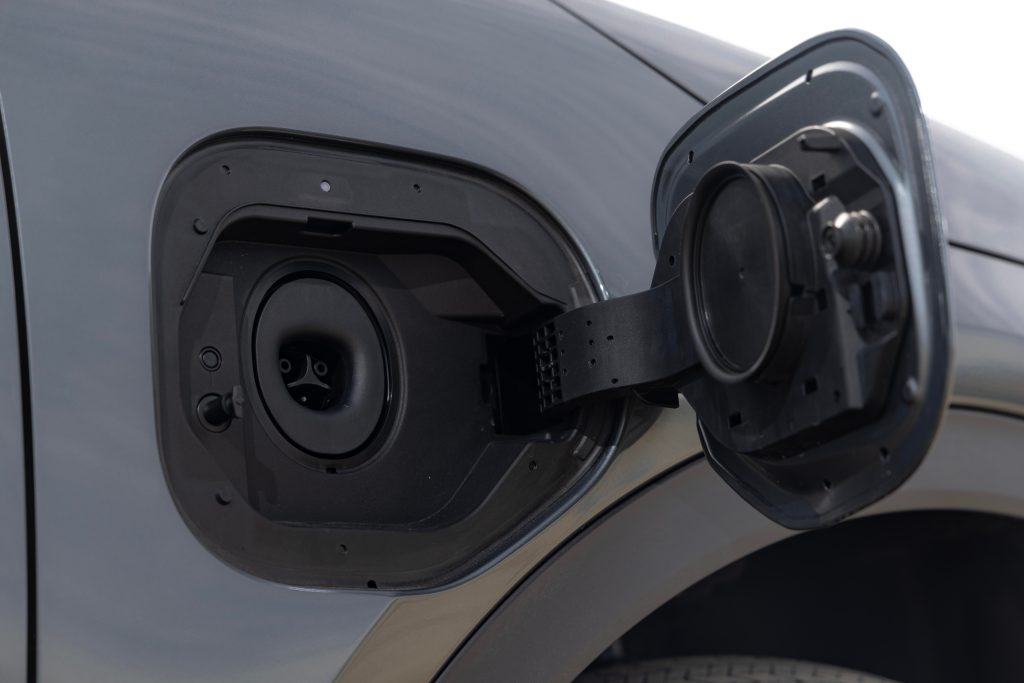
What’s more important is that the Uncharted comes with a native NACS port, allowing connection to “25,000 charging stations across the US.” Like other non-Tesla cars, it can’t charge at the oldest V2 Tesla Superchargers, but everything else should be golden, as it also comes with adapters to allow charging at CCS stations (and it has Plug & Charge capability too).
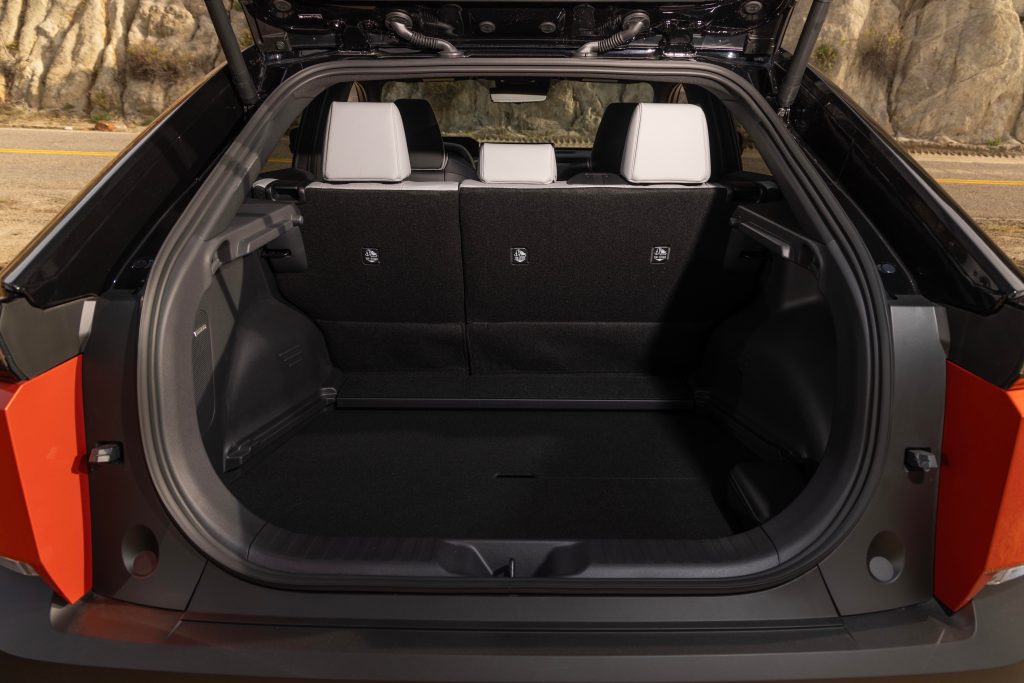
As for discharging, the Uncharted has a single 1500W outlet in the trunk for running devices off the car’s battery. The car does not have true vehicle to grid/home functionality, but the ability to offload battery power to run devices is very useful, especially for camping purposes (think a portable induction cooktop for camp cooking, for example).
Software
One thing it doesn’t have is charge routing. While you can search for charging stations (through Subaru’s Remote Connect feature, which also allows for remote start and climate, but only for a 1-year trial, which seems rather restrictive), the car will not route you through those charging stations.
That’s a step down from what’s available on many EVs these days, and on other cars that do have it, it helps make EV roadtrips so easy.
Speaking of which, we pressed Subaru on software updates, and couldn’t get any answers at all about their strategy on this. Not only would the company not commit to regular updates, it gave us a “no comment” answer on whether the cars are even capable of over-the-air software updates that many EV owners have come to expect and appreciate. (The Solterra has received software updates, but we’re only aware of ones that have been applied by dealers)
Now, maybe on-board software matters less for cars that have CarPlay and Android Auto (both come standard), but there are aspects of the vehicle that those systems can’t control, so a good OTA update strategy is still important in this day and age.
And one missing software feature that has become common on EVs: despite Subaru’s “dog tested” marketing, the Uncharted does not include a “dog mode” to keep your HVAC activated while your car is parked. It does, however, include a “My Room” mode which has somewhat similar functionality, though it only seems to work while plugged in.
Driver assist features
On the highway, we got a chance to test Subaru’s EyeSight drive assist features, despite the slightly confusing steering wheel button chords needed to activate it (can everyone just take a cue from Tesla and make this a one-button activation please?).
Traffic aware cruise control and lane centering worked well, even in challenging road conditions with rain and reflections making it tough to see where road markings were.
The car did warn us rather quickly when we looked away from the road, and when we let go of the steering wheel for more than a couple seconds, it threatened to turn off driver assist features on us. Other safety features like cross-traffic alert worked as you’d expect them to if you’ve been in any modern vehicles.
Subaru does have some additional subscription driver assist features like hands-free driving under 25mph on supported roads, active navigation and traffic jam assist, but we didn’t get to try these.
Verdict: Better than I expected from a Japanese EV
Longtime readers of Electrek may know that I’m quite critical of Japan’s EV strategy. The country has been behind the rest of the world in EV adoption and production plans, and its largest entities (namely, Toyota) are among the most anti-environment companies on the planet.
Japan’s intransigence on EVs could be devastating for the country (and, via climate change, for the world), so I’ve long wanted to see its automakers change course. They already lost their export crown to China, and more trouble will come if they don’t move quickly.
For Subaru specifically, each time I visit their trade show booths, which are gorgeous and have a pro-environment/outdoors message, I have been bothered to see them filled with nothing but gas cars. That changed a couple years ago with the Solterra, and now another EV is coming to join it (with more on the horizon, which we’ll have more news about soon).
So, we’re seeing progress, but I’ve remained skeptical until I see solid efforts to produce and market EVs that are competitive with the state of the art of the rest of the market. Especially when Subaru just three months ago shifted to focus more on ICE cars, while global EV sales rise and ICE car sales decline.
But the Uncharted EV at least seems to be heading in the right direction.
It’s not the flashiest or techiest, but it offers a solid set of specs and a drive experience that felt competent and capable.
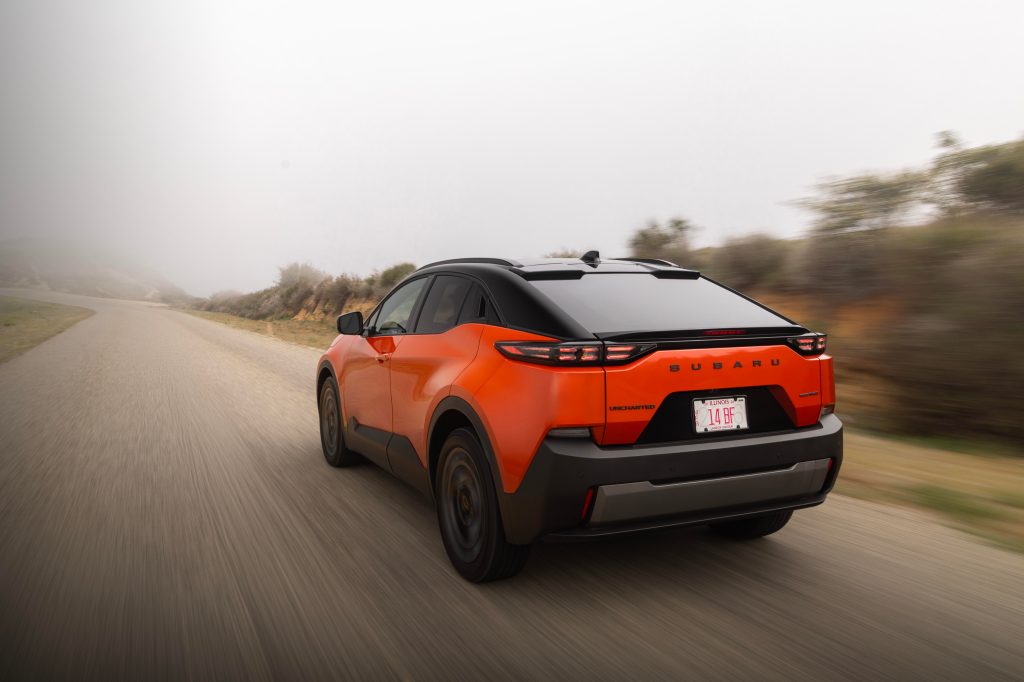
I do still think there have been some missteps which show that Subaru is not quite at the state of the art when it comes to EVs, like the lack of charge routing or commitment to OTA updates. This could be a sign of the overall conservative strategy that has been typical of Japanese automakers. Some buyers may appreciate the slow and steady approach, but I still think we need some quicker movement, especially from a company that is already behind.
It’s also a shared vehicle. Between the Subaru Uncharted (and Solterra) and the Toyota C-HR (and bZ), we do finally have multiple Japanese EVs on the market… which are all quite similar. Then there’s also the upcoming Trailseeker/Woodland, which we’ll tell you more about next week.
What we need next is more variety, something outside of the “mid-size SUV in the $40k range” paradigm that literally everyone is in right now. But if you’re in that area, you could do worse than the Uncharted.
Overall, the proof is in the pudding here. The car is pretty good. There is a time that I would have actively encouraged people away from buying pretty much any EV from Japan (except the Leaf). Now, if I hear about someone with their heart set on the Uncharted, I think I’d say “I do think there are some better EVs, but that’s a solid choice. I liked driving it.”
And for outdoorsy types, it might even be the best choice out there right now, especially for those looking for value (sorry Rivian, the R1 isn’t cheap, but let’s circle back on this when the R2 hits the road).
But how does it fit into the market?
The Subaru Uncharted EV starts at $34,995 for the base Premium FWD trim, $39,795 for the Sport AWD trim, and $43,795 for the GT AWD. And Subaru already said the base trim will be scarce, so this is more of a $40k vehicle than a $35k one.
That base FWD price is cheaper than the similar Toyota C-HR, which starts at $37k, but the C-HR’s base model is AWD, which means the AWD Uncharted is 3k more expensive than its cousin. The Uncharted is also about $6.5k more than Subaru’s own Crosstrek, though Subaru says the Uncharted comes with many more standard features than the base Crosstrek does.
Perhaps a little less favorable of a comparison is to the Nissan Leaf, which has a similar body style and starts at the significantly lower price of $30k. It’s an inch or three smaller than the Uncharted EV in each dimension (a bonus, from this small-car-guy’s perspective), but as a result of that lower price, it fits better into the entry-level EV space which now consists of basically just the Leaf and the Bolt, the only two EVs available in the US new for under $30k.
Top comment by CyanDucky
It's odd that Subaru, the brand known for it's AWD vehicles, chose to offer a FWD version of this vehicle while Toyota, which has vehicles in every market segment, chose to only offer AWD versions of this vehicle.
That being said, I prefer the front-end styling of the Subaru on all the Toyabaru EVs, and apparently that squircle steering wheel makes it easier to see the driver's display, so if I had to choose, I'd take the Subaru versions.
Also, though this is about $6k more than the Crosstrek, the Crosstrek doesn't offer 338 hp!
You’ll have to decide for yourself if the feature set on the Uncharted (especially its off-road capabilities) is worth that extra cash to you, but it does feel like Subaru has somewhat missed the “entry-level” pricing here, and has aimed instead at the crowded ~$40k space, where there is a ton of EV competition.
Subaru thinks that it will be able to stand on its brand loyalty and its off-road cred, along with various best-in-class numbers and residual value awards. Those are all beneficial and do earn the company some valuable points, but how many thousands of dollars is that worth to a customer?
We’ll find out soon, as deliveries to dealers start in April. If you want to get in line, you can contact your local dealer about the 2026 Subaru Uncharted.
Charge your electric vehicle at home using rooftop solar panels. Find a reliable and competitively priced solar installer near you on EnergySage, for free. They have pre-vetted installers competing for your business, ensuring high-quality solutions and 20-30% savings. It’s free, with no sales calls until you choose an installer. Compare personalized solar quotes online and receive guidance from unbiased Energy Advisers. Get started here. – ad*


FTC: We use income earning auto affiliate links. More.



Comments