

European solar roofing company Roofit.Solar has completed its first US project, marking its official entry into the North American market with a residential installation in Michigan.
The company, founded in 2016, says it’s now active in more than 30 countries and is pushing to expand its presence in the US through a new partnership with US installer ArcEdge, which installed its inaugural project in Michigan.
Estonia-headquartered Roofit.Solar focuses on building‑integrated photovoltaics (BIPV) – roofing materials that double as solar panels, rather than panels sitting on top of a roof. A roof and solar array are combined into a single product, so homeowners don’t have to choose between aesthetics and clean energy. The company markets its systems toward architecturally sensitive properties, historic buildings, and homeowners who want a low‑profile solar setup.
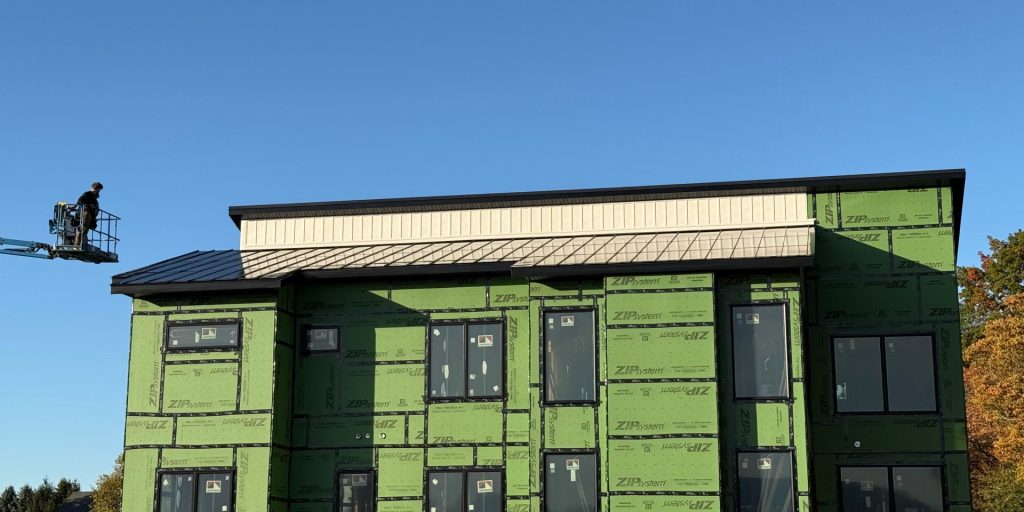
The Kalamazoo, Michigan, installation used Roofit.Solar’s Velario system, which integrates high‑efficiency monocrystalline solar cells directly into standing‑seam metal roofing panels. The result is a roof that serves both as weather protection and as a power generator. According to the company, the Velario module recently received UL certification after testing for fire resistance, electrical safety, and weather durability – a key requirement for selling solar hardware in the US.
The Kalamazoo project, completed in late 2025, added 12.32 kW of solar capacity to a newly built private residence designed to run on solar power. The system was installed by Agathon Solar as part of the partnership between Roofit.Solar and ArcEdge.
Roofit.Solar says it has completed more than 3,000 installations globally, most of them in Europe, before making its US debut. The company asserts that demand is growing among American property owners seeking distributed clean energy systems that don’t alter a building’s appearance.
Russ Newton, President of ArcEdge, said, “Before partnering with Roofit.Solar, we had identified a gap in the US solar market for integrated solutions that look stylish enough to suit even the most high-end of our projects.”
Electrek’s Take
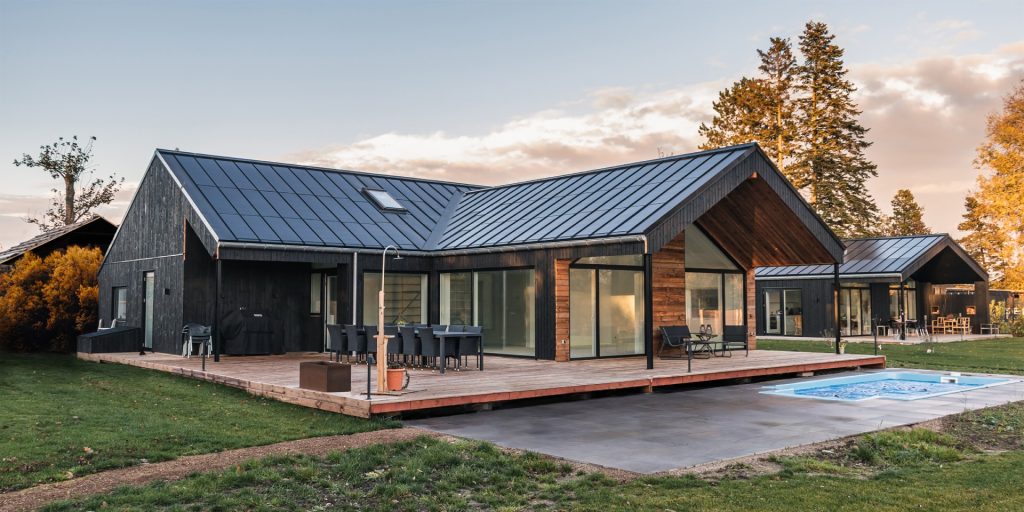
Building‑integrated solar has always been one of those ideas that sounds obvious – if you’re replacing a roof anyway, why not have it generate clean power? But adoption has been slow in the US, largely because costs have historically been higher than traditional rack‑mounted panels. If companies like Roofit.Solar can get US certification and prove installers can deploy these systems reliably, that could start to shift.
Top comment by OliveRaindrop
Would be curious about durability, we can get golf-ball sized hail here. Is there an easy fix when one of these panels does fail? This seems way better than the Tesla roof tiles which were much smaller and I assume required many failure prone interconnections. Standard PV panels are built the way they are for a reason, and I feel they look just fine. But these new roof panels could have a market if the look fits the building better, and perhaps for minimizing installation costs on a new build.
The real test won’t be whether the roofs look good – and Roofit.Solar’s solar roofs do – it’ll be whether they can compete on price, installation speed, and long‑term performance against conventional solar.
Read more: GAF Energy closes San Jose solar shingle factory, moves to Texas

If you’re looking to replace your old HVAC equipment, it’s always a good idea to get quotes from a few installers. To make sure you’re finding a trusted, reliable HVAC installer near you that offers competitive pricing on heat pumps, check out EnergySage. EnergySage is a free service that makes it easy for you to get a heat pump. They have pre-vetted heat pump installers competing for your business, ensuring you get high quality solutions. Plus, it’s free to use!
Your personalized heat pump quotes are easy to compare online and you’ll get access to unbiased Energy Advisors to help you every step of the way. Get started here. – *ad


FTC: We use income earning auto affiliate links. More.



Comments