
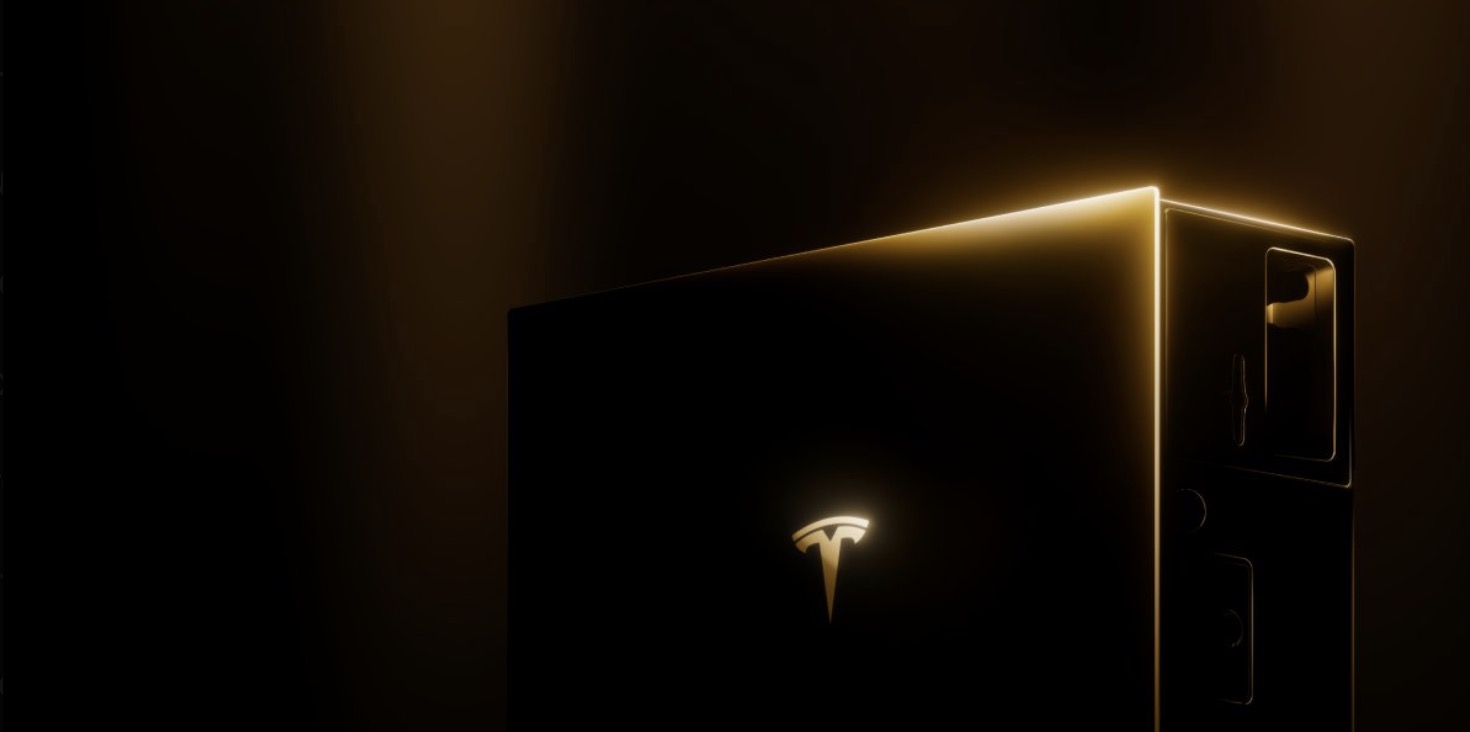
Tesla has announced the Powerwall 3P, a new variant of its home battery with a native three-phase inverter built into a single unit. The product, announced for the German market first, eliminates the clunky workaround that previously required European homeowners to install up to three separate Powerwalls to achieve whole-home backup on the continent’s standard three-phase residential grids. Sign-ups are now live on Tesla’s website.
Why three-phase matters
In North America, most homes run on single-phase power, and a single Powerwall 3 handles whole-home backup without issue. Europe is different. Germany, Austria, Switzerland, and most of the continent wire residential properties with three-phase power, which is more efficient, economical to install, and supports higher power demands.
Until now, Tesla’s answer to this was inelegant. The standard Powerwall 3 supports only single-phase backup per unit, meaning European customers needed to stack three units, one per phase, to cover their entire home. At roughly $15,400 per unit before incentives in the US (European pricing varies), that tripled the cost and complexity of installation. The Powerwall 3P consolidates all of that into a single box with a native three-phase inverter that connects to all three phases simultaneously and balances loads across them.
Tesla has not released detailed specifications or pricing for the 3P. The standard Powerwall 3 offers 13.5 kWh of usable capacity, 11.5 kW of continuous power output, up to 20 kW of DC solar input, and uses LFP battery chemistry with a 10-year warranty. Tesla has not disclosed whether the 3P maintains these same specs or adjusts them to accommodate the three-phase inverter architecture.
The company describes the Powerwall 3P as a “compact battery storage system with integrated solar inverter” that analyzes energy consumption, solar production, weather forecasts, and dynamic electricity tariffs to optimize when to store or discharge energy. That last feature is particularly relevant for the German market, where variable electricity tariffs are becoming standard and real-time optimization can meaningfully reduce household energy costs.
Tesla Energy’s bright spot in a difficult year
The Powerwall 3P launch comes at a critical moment for Tesla’s energy division, the one segment of the company that is unambiguously growing. Tesla deployed a record 46.7 GWh of energy storage in 2025, a 48% increase year-over-year, driving energy revenue up 26.6% to $12.8 billion. The division’s 29.8% gross margin is nearly double what Tesla earns selling cars.
Energy storage now accounts for 13% of Tesla’s total revenue and 23% of its gross profit. While vehicle deliveries declined 8.6% globally in 2025 and the company’s brand value crashed 36%, the energy business powered ahead. Powerwall installations surpassed 1 million units worldwide last fall, and the Powerwall 3 has been disrupting the solar inverter market thanks to its integrated inverter, which pushed Tesla to become the second-most quoted inverter brand in the US in 2024.
But there are headwinds. Tesla recently recalled more than 10,000 Powerwall units over fire safety concerns, and the Musk brand toxicity that has hammered vehicle sales is bleeding into energy products. More installers are recommending Powerwall alternatives like the Villara VillaGrid+, Sigenergy, and EcoFlow’s DELTA Pro Ultra X.
On the policy front, the One Big Beautiful Bill Act phased out federal tax credits for residential energy storage systems like the Powerwall in the US, though commercial credits for the Megapack and Megablock continue through the mid-2030s. That makes international markets like Germany, where incentive programs for home storage remain intact, even more strategically important for the Powerwall product line.
A crowded European market
Tesla is not launching the Powerwall 3P into a vacuum. The European residential storage market is intensely competitive, and several rivals already offer native three-phase solutions.
Enphase has been aggressively expanding across Europe with its IQ Battery 5P with FlexPhase technology, which launched in Germany, Austria, and Switzerland in 2025. The fully AC-coupled system delivers up to 70 kWh in a modular configuration and comes in both single-phase and three-phase versions. Enphase was the most-used solar battery brand among installers in 2025, according to industry surveys, with 74% of installers using the product.
BYD offers three-phase compatibility through its Battery-Box HVE paired with the Power-Box hybrid inverter, and its modular stacks work with popular European inverter brands like Fronius and SMA. Sonnen, a premium German brand now owned by Shell, provides the Sonnenbatterie 10 with virtual power plant integration — a feature particularly popular in the German market where dynamic tariff optimization is a real selling point.
The Powerwall 3P’s core advantage is simplification: one box, one installation, native three-phase. Enphase requires stacking multiple 5 kWh modules to match the Powerwall’s 13.5 kWh capacity, and BYD’s three-phase setup typically requires a separate inverter purchase. If Tesla prices the 3P competitively, at or near the cost of a single Powerwall 3, it could undercut multi-component setups from rivals on total installed cost.
Electrek’s Take
Top comment by Eduardo Pelegri-Llopart
Too little, too late. There are strong competitors in Europe that do this and do not have the toxicity that Tesla has.
It will be interesting to see the 2026 market penetration numbers for residential storage in Europe and US. In Australia, Tesla already lost a lot of ground; they used to be #1/#2 in 2024 and they have been leapfrogged by SigEnergy. In Europe BYD is top and there are many other competitors.
We have been talking about Tesla releasing a native three-phase Powerwall for years. The workaround of stacking three units was expensive, space-consuming, and frankly embarrassing for a company that claims to be the global leader in residential energy storage.
The Powerwall 3P is a long-overdue fix, and the execution, cramming a three-phase inverter into a single wall-mounted unit, is exactly the kind of product engineering Tesla excels at with its industry-leading power electronics integration.
The timing is great too, as Tesla is expecting a slowdown in Powerwall demand in the US. It needs the EU market to pick up.
Now, the question is: are Tesla’s brand issues in Europe extending to its energy division?


FTC: We use income earning auto affiliate links. More.




Comments