
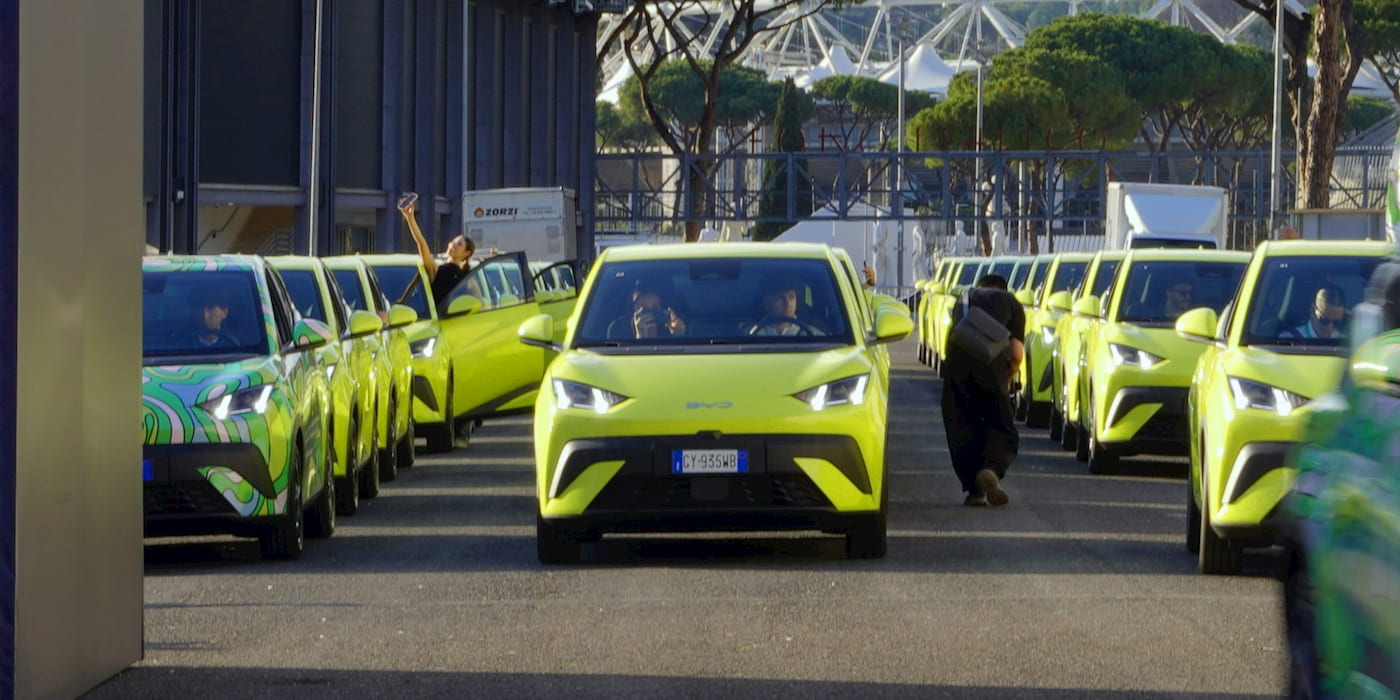
After it was outsold by China’s BYD globally for the first time last year, CEO Jim Farley said Ford “isn’t backing away from EVs.” It’s betting on more affordable models that will start at around $30,000.
Ford falls behind BYD globally as low-cost EVs take over
Although Ford’s sales rose 6% to over 2.2 million vehicles in the US last year, it struggled in other key global markets, including Europe and China.
One of the biggest reasons was the influx of affordable, efficient, and often more advanced EVs from Chinese automakers such as BYD and Geely.
BYD stopped producing vehicles powered solely by internal combustion engines (ICE) in 2022 to focus on battery-electric (BEV) and plug-in hybrid (PHEV) vehicles.
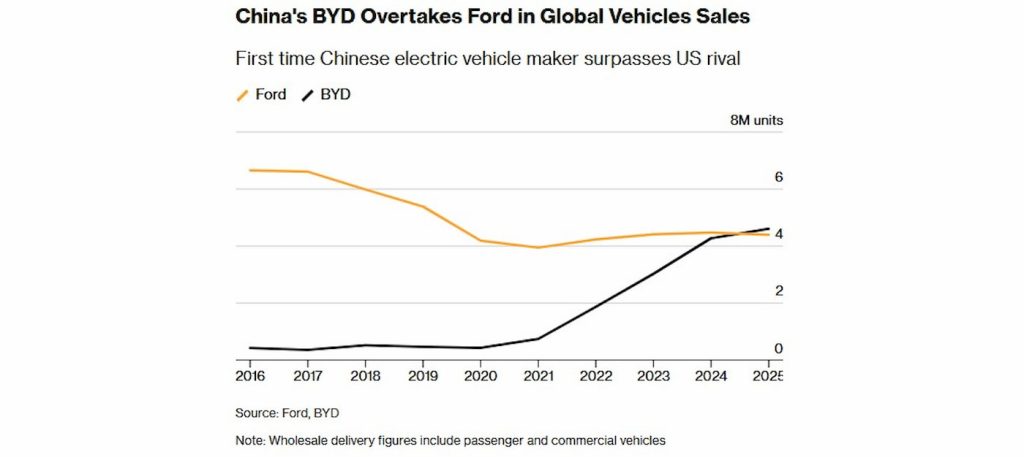
So far, it’s paying off. For the first time, BYD outsold Ford globally in 2025. China’s leading EV maker announced last month that it had sold over 4.6 million new energy vehicles (EVs and PHEVs) globally, surpassing Ford, which reported just under 4.4 million.
According to Bloomberg, BYD now ranks sixth in global sales, one spot ahead of Ford. Toyota remained first, followed by Volkswagen, Hyundai Motor (including Kia and Genesis), GM, and Stellantis.
After dominating sales in its home market, BYD is aggressively expanding into overseas markets such as Europe, Southeast Asia, South America, and Australia, with low-cost EVs such as the Dolphin and Atto 2 to drive growth.
As part of its updated Ford+ plan, the American automaker is shifting from larger electric trucks and SUVs to smaller, more affordable EVs.

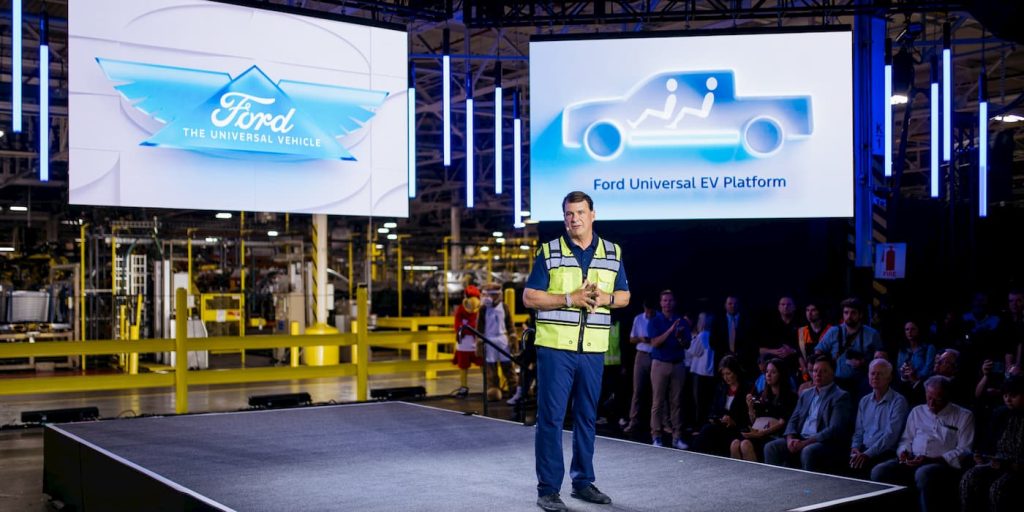
The key to this, Ford promises, will be its new Universal EV Platform. The UEV platform is Ford’s answer to BYD and other low-cost Chinese EV makers.
Ford’s CEO Jim Farley said the new platform reduces parts usage by 20% compared with the average vehicle. It also has 25% fewer fasteners, 40% fewer worstations dock-to-dock in the plant, and 15% faster assembly time.
Ford will also use lithium iron phosphate (LFP) batteries, which will be produced at its new battery plant in Michigan, using licensed tech from China’s CATL.
Top comment by European Bob
The common narrative that the Chinese have eaten Fords lunch in Europe just isn't true.
Ford are to blame for Fords issues here, they lurch from strategy to strategy often 4 or 5 times a year and never actually complete anything.
Ford's success in Europe was mostly due to cars, cars such as the Fiesta, the Focus and the Mondeo, in the UK these three models were at the top of the sales charts every month for around a decade. NONE of these cars are made any longer, they have been cancelled and not replaced. Ford state 'you can't make much profit on a small car', well guess what, you can't make ANY profit on no cars.
The "flood" of Chinese cars (which by the way is not evident on the roads) are actually just electric equivalents of all the cars that Ford gave up on.
Like it or not many Europeans like a small and nimble car, it suits our lives and our roads, and Ford's smallest vehicle is a compact SUV. For a decade or more we've been told "people only want SUVs", well the fact that EV cars in the B/C class are selling well, and Ford doesn't have anything in that range says it all.
Farley doubled down on the company’s bet, posting on social media that “Ford isn’t backing away from EVs, we’re democratizing them.” He added that “Winning this race requires chasing physics, not building bigger batteries. That’s why we developed our Universal Electric Vehicle Platform.”
Ford isn’t backing away from EVs, we’re democratizing them. Winning this race requires chasing physics, not building bigger batteries. That’s why we developed our Universal Electric Vehicle Platform. In a few days, we’ll share a peek at some of the efficiency innovations that… pic.twitter.com/ailVEII7NU
— Jim Farley (@jimfarley98) February 12, 2026
On Tuesday, February 17, the company will share an in-depth look at its new platform and how “Ford is taking on the challenge of the electric vehicle cost equation by chasing physics.”
The first vehicle based on the platform will be a midsize electric pickup, due out in 2027, starting at around $30,000.
Ford will also rely on partnerships, including a new one with Renault, to introduce more affordable EVs to market more quickly and with lower upfront costs.


FTC: We use income earning auto affiliate links. More.


Comments