
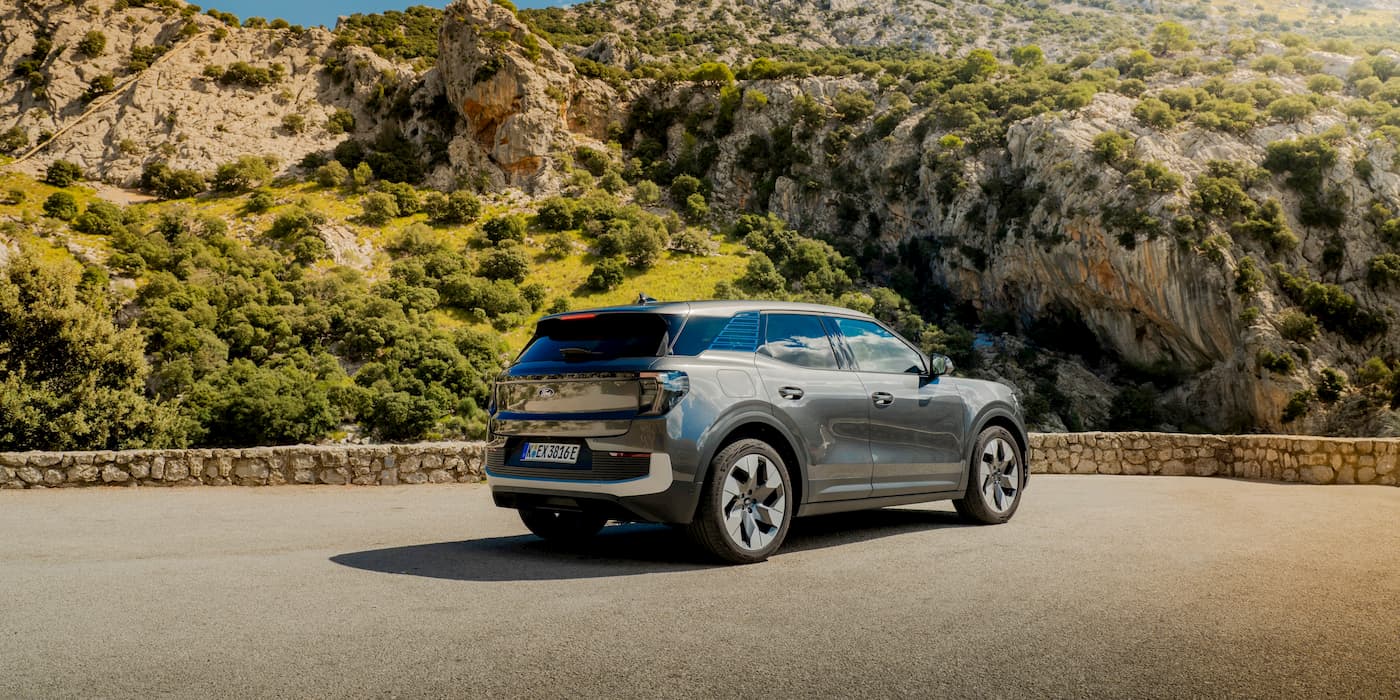
For months, Ford and Geely have been discussing a potential partnership that would allow the Chinese automaker to use underutilized plant capacity in Europe. The two appear to be closing in on a deal that would involve more than just sharing manufacturing space.
A Ford and Geely EV partnership could be a win-win
It’s no secret by now that China is the clear leader in the auto industry’s shift to software-defined electric vehicles.
The rapid rise of Chinese automakers in Europe, the UK, and other major global auto markets forced Ford to reconsider its global business plans.
“We know we’re in a fight for our lives,” Ford’s CEO Jim Farley said during an interview in December after announcing a new partnership with Renault to develop more affordable EVs to compete with BYD, SAIC’s MG Motors, and other surging Chinese brands.
Now, Ford is reportedly closing in on a potential deal with Volvo’s parent company, Zhejiang Geely Holding Group.
According to Reuters, citing eight sources familiar with the matter, the Ford and Geely deal may involve more than just sharing manufacturing space.
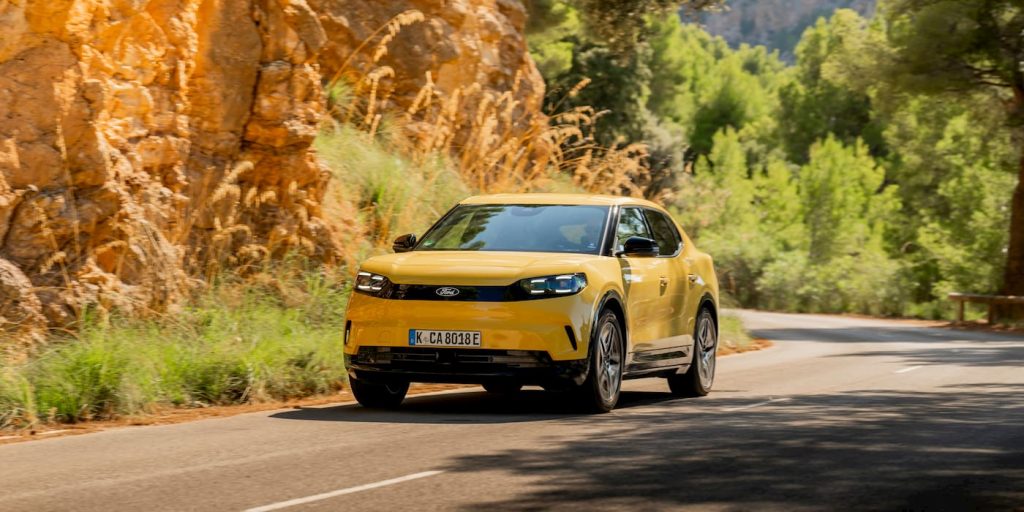
Two sources said Ford and Geely have discussed sharing new technology, including automated driving and other advanced driver-assistance systems (ADAS) features.
Talks have been ongoing for months, five of the sources claimed, but discussions have been intensifying recently.
Following a series of meetings last week in Michigan between Ford and Geely executives, Ford reportedly sent a representative to China this week.
The talks are still ongoing, and no plans have been finalized. Ford said in a statement, “We have discussions with lots of companies all the time on a variety of topics. Sometimes they materialize, sometimes they don’t.”
A partnership could benefit Geely and Ford in the long run. Using Ford’s underutilized space in Europe would help Geely avoid tariffs of up to 37.6% on imported EVs from China. Ford’s plant in Valencia, Spain, would most likely be chosen to share with Geely.
For Ford, it could help it gain an advantage as the American automaker aims to keep pace in the global shift to software-defined EVs.
The news comes after a Financial Times report over the weekend claimed Ford was in talks with China’s Xiaomi about a partnership to build EVs in the US. Ford and Xiaomi denied the report, calling it “completely false.”
Electrek’s Take
While Ford is not planning to build EVs in the US with Xiaomi or Geely, it is set to begin producing lithium iron phosphate (LFP) batteries at its new battery plant in Michigan in 2026, using licensed tech from China’s CATL.
Top comment by Philip234
In 2010 Geely bought Volvo from Ford for $1.3 Billion cash. Ford thought it was offloading a dog to a small Chinese upstart. Now Geely is selling 4.1 million units and growing at 25% last year. Looks like by 2035, Geely will be on track to absorb the rest of Ford.
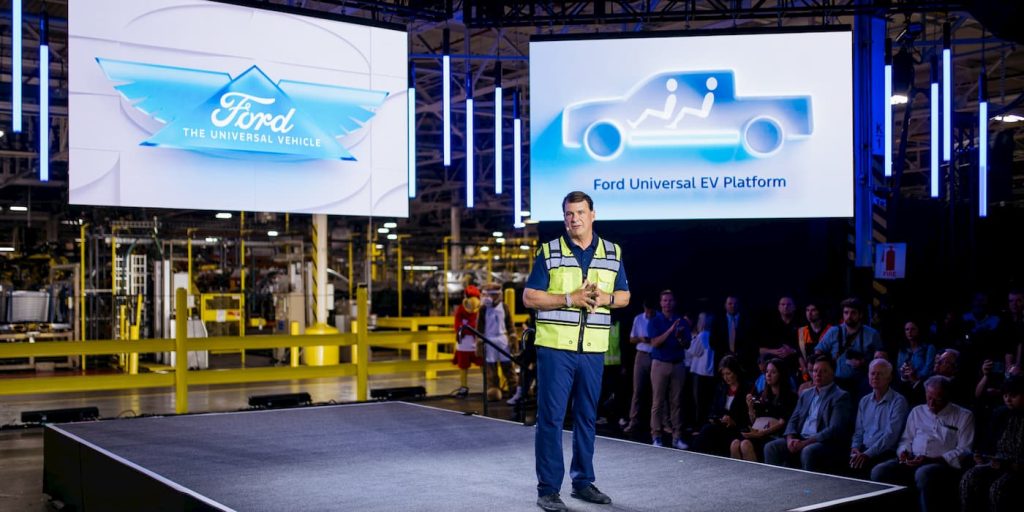
The lower-cost batteries will power electric vehicles based on Ford’s new Universal EV (UEV) Platform, the first of which will be a midsize pickup priced at around $30,000. Ford has already said it plans to introduce L3 eyes-off autonomous driving, starting with vehicles based on the UEV in 2028.
Farley has repeatedly warned that Chinese EV manufacturers are an “existential threat” to Western brands. By partnering with them, Ford can potentially help narrow China’s growing tech gap to keep pace in overseas markets.
Ford and Geely already have a history. In 2010, Geely bought Volvo from Ford, setting the stage for the Chinese carmaker to become the growing global powerhouse it is today.
The talks are still ongoing, and a deal could still fall through. This is still a developing story, so check back for more updates soon.


FTC: We use income earning auto affiliate links. More.


Comments