
New Jersey has just rewritten the rules on electric bikes – and not in a way most of the e-bike world was expecting.
This week, Gov. Phil Murphy signed a sweeping new law that effectively scraps the familiar three-class e-bike system and replaces it with something far closer to car and motorcycle-style regulation. In doing so, the Garden State may have gone further than any other US state in cracking down on all forms of electric two-wheelers – including the low-speed, pedal-assist e-bike models that make up a large segment of e-bike use nationwide.
Under the new law, New Jersey no longer distinguishes between Class 1, Class 2, and Class 3 e-bikes, which has become the standard used by the majority of states in the US to classify street-legal e-bikes. Instead, virtually all electric two-wheelers are grouped into a single category. Starting one year after the law takes effect, owners will be required to register their e-bikes, carry insurance, and hold a driver’s license. Riders 14 and under are banned entirely, while adults with a standard driver’s license won’t need an additional endorsement.
The law was introduced following several high-profile and fatal crashes involving electric two-wheelers, many of which involved high-speed, motorcycle-like e-motos. State leaders argued that existing regulations hadn’t kept pace with the rapid growth and changing nature of electric bikes on New Jersey roads.
But critics say the law doesn’t target the problem – it bulldozes right past it.
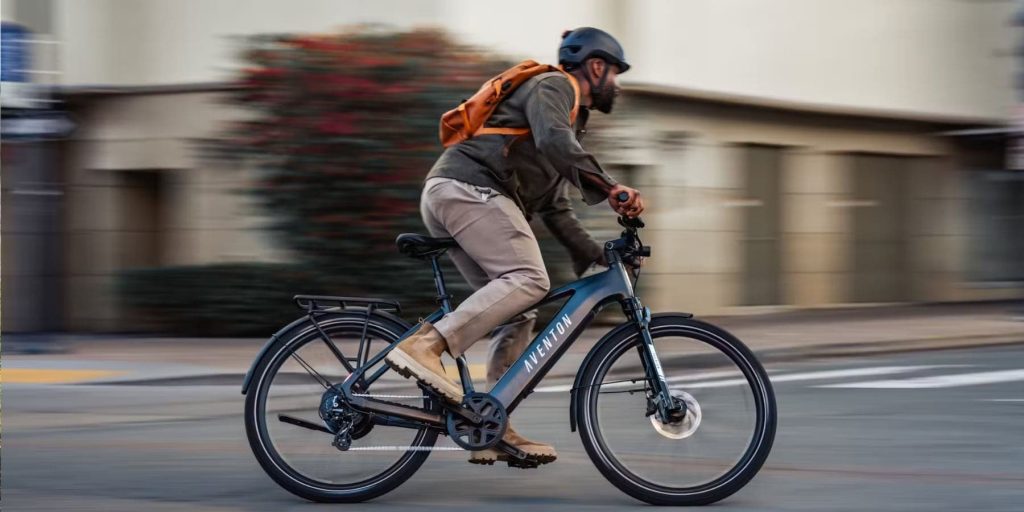
For more than a decade, the three-class e-bike system has been the backbone of e-bike regulation across the US. Adopted by over 40 states, it limits motor power and speed in clearly defined ways: low-speed pedal-assist bikes at 20 mph and one horsepower, throttle bikes capped similarly, and faster Class 3 models restricted to 28 mph with additional rules. The system has been widely credited with enabling rapid e-bike adoption while keeping speeds and power at relatively reasonable levels.
New Jersey’s new approach rejects that framework entirely.
Cycling and micromobility advocates argue that by effectively treating a 20 mph pedal-assist commuter e-bike the same as a high-powered electric dirt bike or a Ducati motorcycle, the state risks discouraging exactly the kind of low-impact transportation it claims to support. Groups like the New Jersey Bike Walk Coalition have criticized the law for creating barriers to everyday riders while failing to directly address illegal high-speed machines already prohibited under existing statutes.
Top comment by Ben
I really understand where the urge to regulate comes from, and wholeheartedly support requiring licenses and age Limits for ebikes that are closer to motorbikes than bicycles, but this seems totally bonkers. Lumping a 20 mph pedal assist together with sur rons, I kinda suspect this reflects the tacit admission that it’s hard work for enforcement officials to tell the the categories apart just from seeing someone ride without pedaling, and now, instead of determining which class it is, and then step 2, they can just ask for license and insurance. Easy. Of course, this will harm e-bike adoption in New Jersey, we’ll find out by how much. It also reduces the appeal of an e-bike as a car replacement, because now you need a license anyway.
Even national advocates who have supported tighter enforcement against overpowered electric dirt bikes are pushing back. The PeopleForBikes Coalition has warned that New Jersey is now an outlier, becoming the only state to require insurance for all e-bikes and one of the few to abandon the three-class model altogether.
To be clear, the law does have supporters among those who already hoped to reduce the number of e-bikes on the road. Some safety advocates also argue that licensing and insurance bring accountability, and the bill includes provisions aimed at curbing the online sale of certain high-powered e-motos to minors – a move many see as overdue.
But taken as a whole, New Jersey’s new law represents a sharp and unusually aggressive departure from how e-bikes are regulated elsewhere in the US. Rather than refining the three-class system to better address problem vehicles, the state has chosen to discard it entirely in favor of a new, untested regulatory system that ultimately may simply reduce the number of people seeking e-bikes legally.
Whether that bold move improves safety or simply pushes riders away from e-bikes – and back into cars – is a question that New Jersey may soon answer for the rest of the country.


FTC: We use income earning auto affiliate links. More.


Comments