
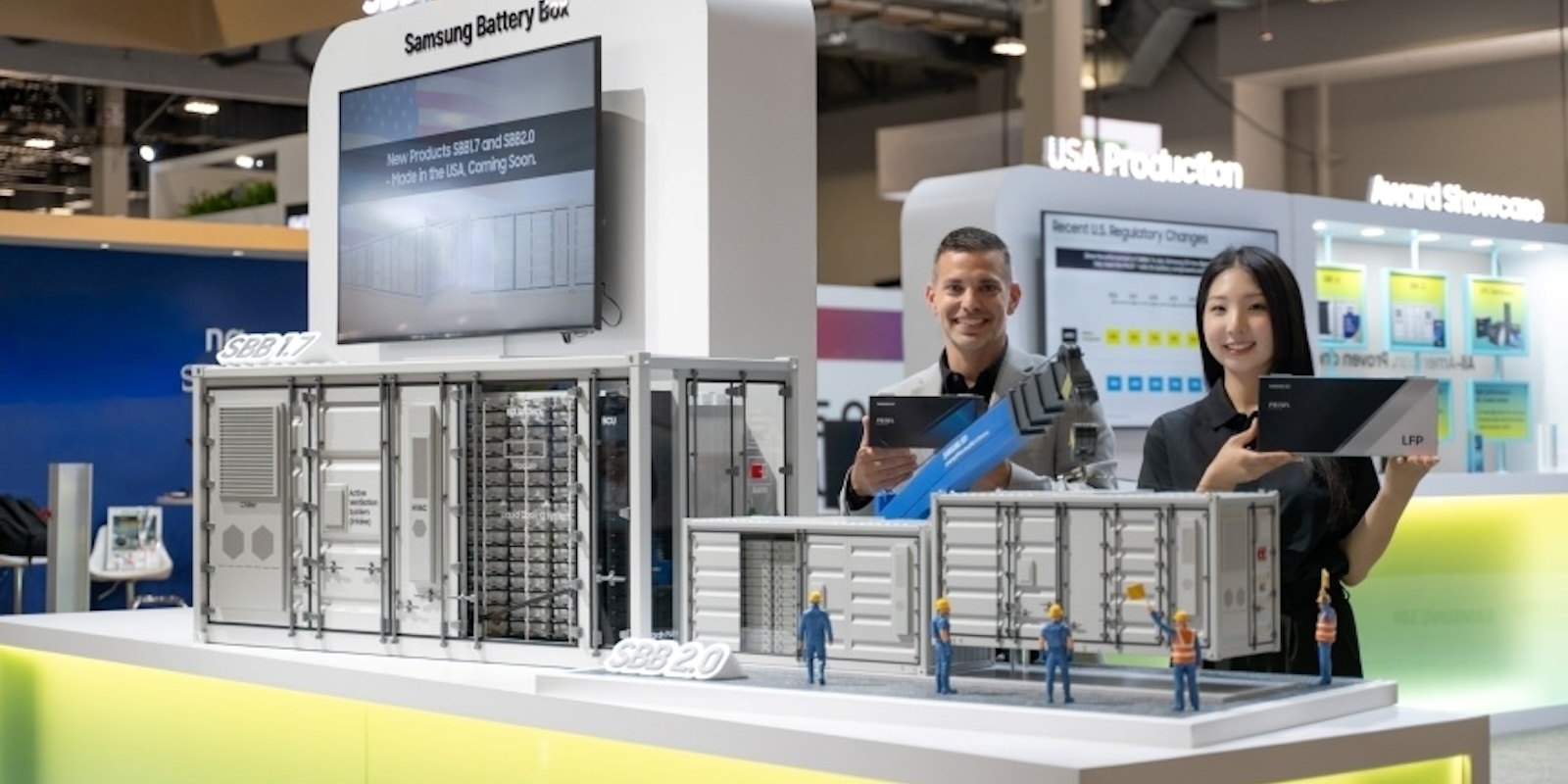
In what appears to be significant strategic pivot, Samsung SDI will begin supplying prismatic lithium iron phosphate (LFP) batteries for energy storage systems under a fresh US contract worth more than 2 trillion won (~$1.35 billion). The move will see the company shift US EV battery production lines to ESS output ahead of 2027.
Michigan-based Samsung SDI America will begin manufacturing battery energy storage system (BESS) cells at the company’s Indiana facility, where the manufacturer has been shifting some its production lines from cell production for EVs to prismatic LFP cell production for BESS units – a move the company claims will allow it to more closely align with domestic market demands.
“It is a significant opportunity for Samsung SDI to expand into the US ESS market with the first long-term contract for LFP supply,” said a Samsung official. “Through the first supply of SBB 2.0 for ESS installation in the US, Samsung SDI will start providing US customers with ESS batteries to meet their needs not only for high-performance but also for enhanced safety and price competitiveness, enabling them to stabilize power supplies in the era of renewable energy and AI.”
What’s in the box

Prismatic LFPs are encased in rigid aluminum housings that give them greater resistance to external shocks and impact damage, while promising lower heat and improved thermal safety compared to more familiar, pouch format cells. That construction, along with other proprietary anti-thermal propagation (read: fire safety) designs that limit heat spread between cells, make prismatic LFPs an attractive option for utility-scale BESS deployments where fire risk and system reliability are top priorities for utilities and data centers.
Samsung’s prismatic LFP cells are also attractive for utility- and grid-scale distributed energy resource (DER) projects because of their packaging. Each Samsung Battery Box (SBB) unit is packaged into a standard 20-foot container that incorporates a number of battery racks, battery management systems, and thermal management systems (both cooling and fire safety) for quick, easy deployment.
The company also pointed out that Samsung SDI is regarded as the only non-Chinese manufacturer of prismatic batteries currently operating in the US, a position the company believes strengthens its competitive standing as it expands its presence in North America.
Electrek’s Take
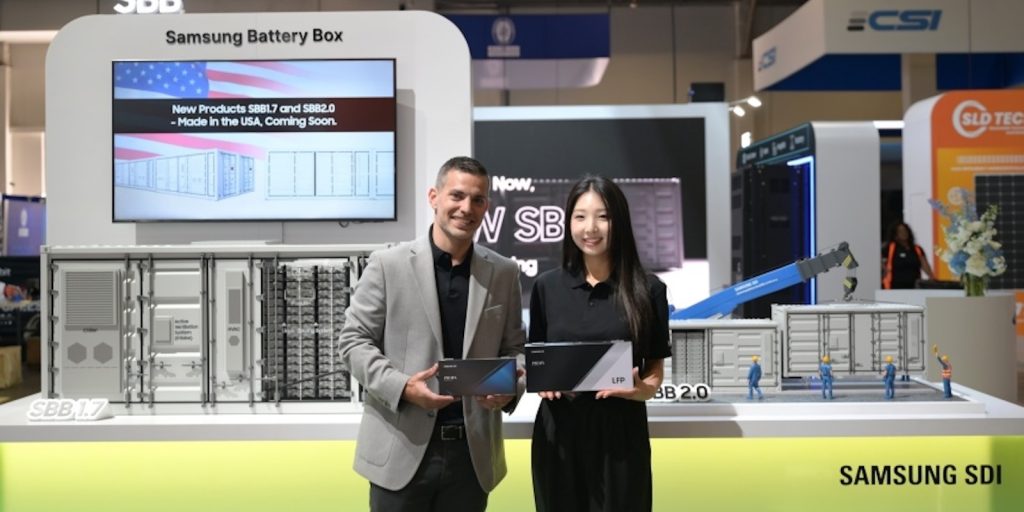
Samsung kicked off the launch of its SSB 2.0 at RE+ earlier this year with the words, “All-American, Proven, and Ready,” emphasizing the company’s role as a creator of American jobs with statements like, “Samsung SDI aims to strengthen competitiveness in the US market …” which reads, to me, like the company is trying to ride a wave of Sinophobia as it positions itself for leadership in the data center BESS market, just as the big Chinese and American tech players continue to separate from one another.
The only problem I see there is that the kind of American voters who buy into that particular brand of anti-China propaganda probably can’t tell the difference between China and Korea. Change my mind, in the comments.
SOURCE | IMAGES: Samsung.
If you’re considering going solar, it’s always a good idea to get quotes from a few installers. To make sure you find a trusted, reliable solar installer near you that offers competitive pricing, check out EnergySage, a free service that makes it easy for you to go solar. It has hundreds of pre-vetted solar installers competing for your business, ensuring you get high-quality solutions and save 20-30% compared to going it alone. Plus, it’s free to use, and you won’t get sales calls until you select an installer and share your phone number with them.
Your personalized solar quotes are easy to compare online and you’ll get access to unbiased Energy Advisors to help you every step of the way. Get started here.


FTC: We use income earning auto affiliate links. More.




Comments