
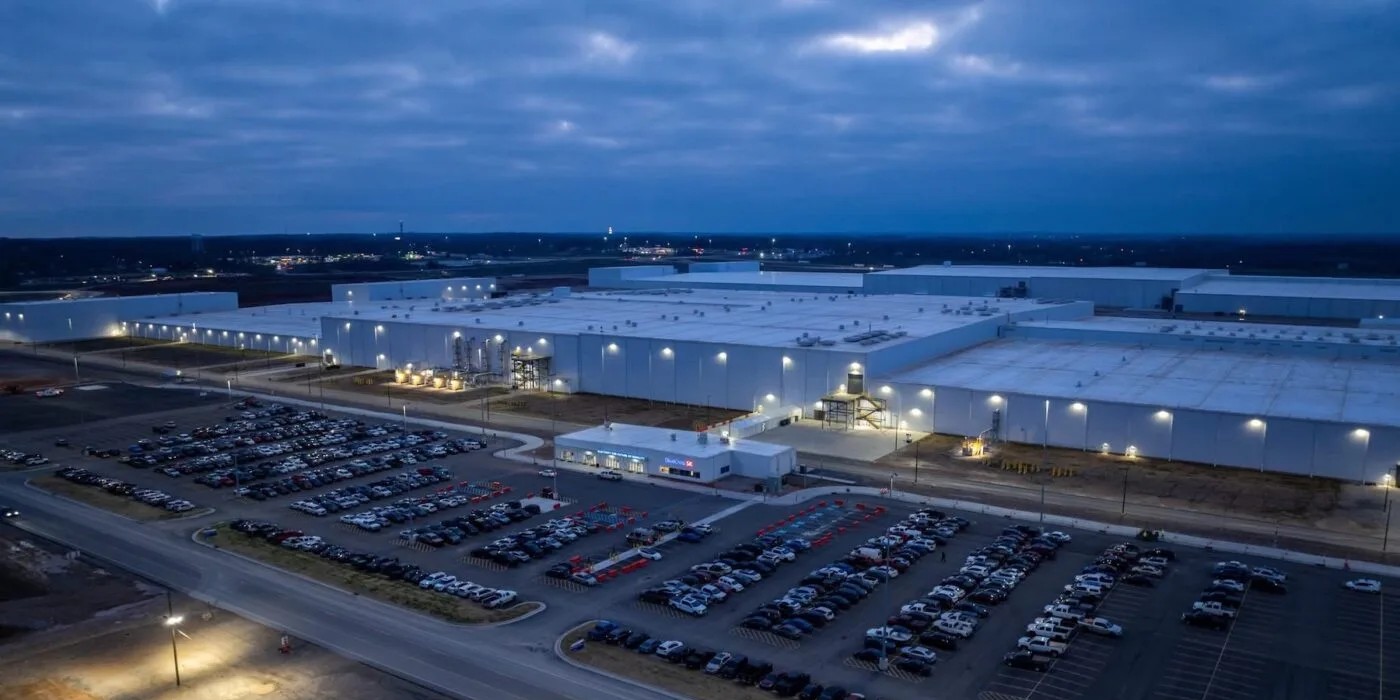
Ford is jumping into the battery energy storage business, betting that booming demand from data centers and the electric grid can absorb the EV battery capacity it says it’s not using.
To achieve this, Ford plans to repurpose its existing EV battery manufacturing capacity in Glendale, Kentucky, into a dedicated hub for manufacturing battery energy storage systems.
Ford pivots from EVs to battery storage for data centers
Ford says it will invest about $2 billion over the next two years to scale the new business. The Kentucky site will be converted to build advanced battery energy storage systems larger than 5 megawatt-hours, including LFP prismatic cells, BESS modules, and 20-foot DC container systems — the kind of hardware increasingly used by data centers, utilities, and large-scale industrial companies.
The company plans to bring initial production online within 18 months, leaning on its manufacturing experience and licensed battery technology. By late 2027, Ford expects the business to deploy at least 20 gigawatt-hours of energy storage annually.
The move follows a joint venture disposition agreement reached last week between Ford, SK On, SK Battery America, and BlueOval SK. Under the agreement, a Ford subsidiary will independently own and operate the Kentucky battery plants, while SK On will fully own and operate the Tennessee battery plant.
Ford is also planning a separate energy storage play in Michigan. At BlueOval Battery Park Michigan in Marshall, the company will produce smaller amp-hour LFP prismatic cells for residential energy storage systems. That plant is on track to begin manufacturing in 2026, and it will also supply batteries for Ford’s upcoming midsize electric truck — the first model built on the company’s new Universal EV Platform.
Electrek’s Take
Top comment by Philip234
This is wise. Ford is unable to compete in the global auto market with the new technology so let Changan build the electric Bronco in China; get VW to build the electric Capri and Explorer in Europe; outsource future EV models to Renault; pay off Washington to keep competition out of its home market; milk the old technology cash cow; and monetize its investment in batteries in the storage market. The collapse does not happen until post Farley retirement so all good!
Overall, the shift reflects Ford’s broader push toward what it calls “higher-return opportunities.” Alongside taking a step backward to add more gas-powered trucks and vans to its US manufacturing footprint, Ford says it will no longer produce some larger EVs, such as the Lightning F-150, where softer demand and higher costs are resulting from the lack of support for EVs by the Trump administration. (Batteries produced at the Glendale plant were for the all-electric Ford F-150 Lightning. The best-selling electric truck in the US in Q3, before the federal tax credit expired, was the Ford F-150 Lightning, with 10,005 EVs sold, a 39.7% year-over-year increase.)
With tax credits eliminated and regulatory uncertainty, Ford is pivoting to adjacent markets, including grid-scale and residential energy storage, to keep its battery plants running and justify billions in sunk investment.

If you’re looking to replace your old HVAC equipment, it’s always a good idea to get quotes from a few installers. To make sure you’re finding a trusted, reliable HVAC installer near you that offers competitive pricing on heat pumps, check out EnergySage. EnergySage is a free service that makes it easy for you to get a heat pump. They have pre-vetted heat pump installers competing for your business, ensuring you get high quality solutions. Plus, it’s free to use!
Your personalized heat pump quotes are easy to compare online and you’ll get access to unbiased Energy Advisors to help you every step of the way. Get started here. – *ad


FTC: We use income earning auto affiliate links. More.



Comments