
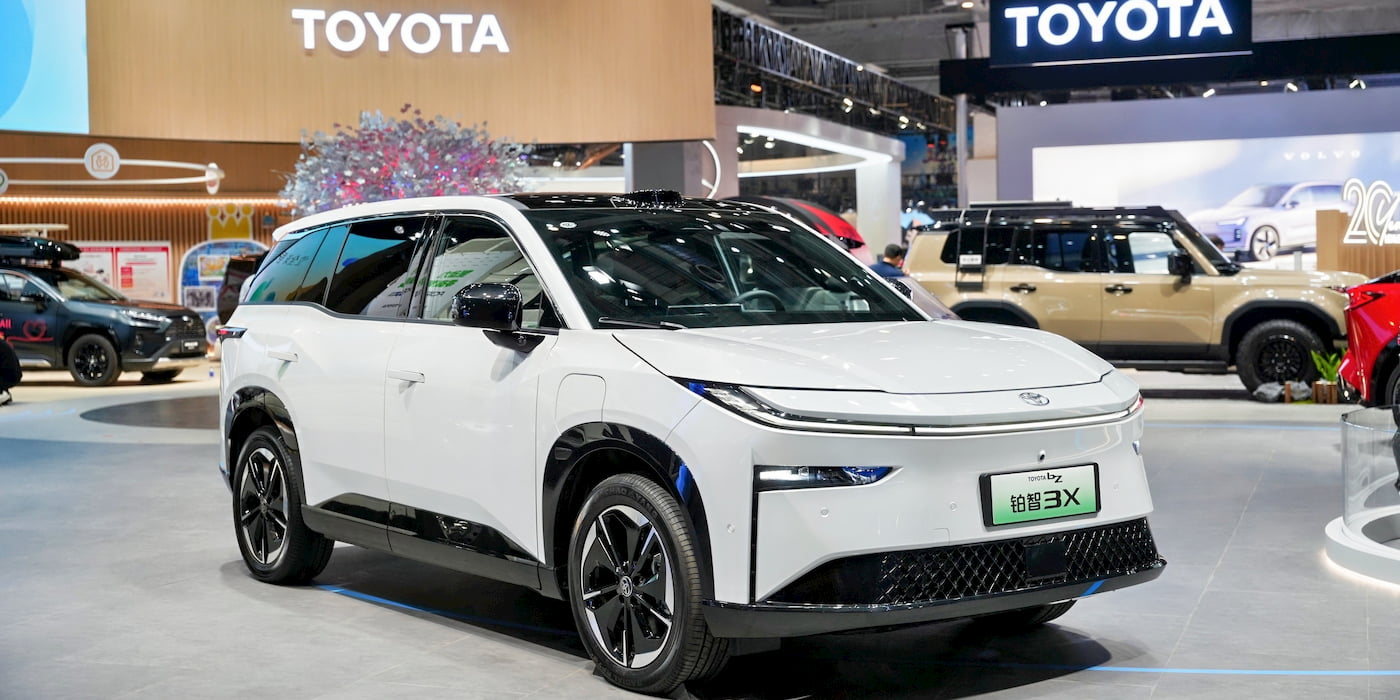
After falling behind in China, Toyota’s new electric vehicles are starting to find their footing. Now, it’s about to launch a new flagship model.
Keeping pace in an intensifying EV market
Although nearly every global automaker has struggled to keep pace in China’s fast-moving auto market, Toyota has been one of the hardest hit.
After its sales in China dropped by 7% in 2024, Toyota blamed the shift to new energy vehicles and “severe market conditions”, including an intensifying price war.
The Japanese automaker has been notoriously slow in the transition to fully electric vehicles, standing by its multi-pathway strategy that still includes hybrids and gas-powered vehicles.
In China, Toyota has had no choice but to adapt. As part of its China R&D 2.0 strategy, Toyota has tapped China’s biggest tech giants, including Huawei, Xiaomi, and Momenta, to help it compete with domestic brands like BYD.
So far, it seems to be paying off. Through October 2025, Toyota’s sales in China are up 3.5%. Now, Toyota is crediting strong demand for its new EV, the bZ3X, for the growth.

Toyota’s new EVs help boost sales in China
Toyota’s joint venture, GAC-Toyota, announced that bZ3X sales topped the 10,000 mark for two consecutive months.
The bZ3X is Toyota’s “first 100,000 yuan-level pure electric SUV,” starting at just 109,800 yuan, or roughly $15,000.
It’s about the size of a RAV4 at 4,645 mm long, 1,885 mm wide, and 1,625 mm tall, but it looks and feels very different from the Toyota models we’re used to, with advanced ADAS features, an intelligent voice assistant, smart storage, and much more.
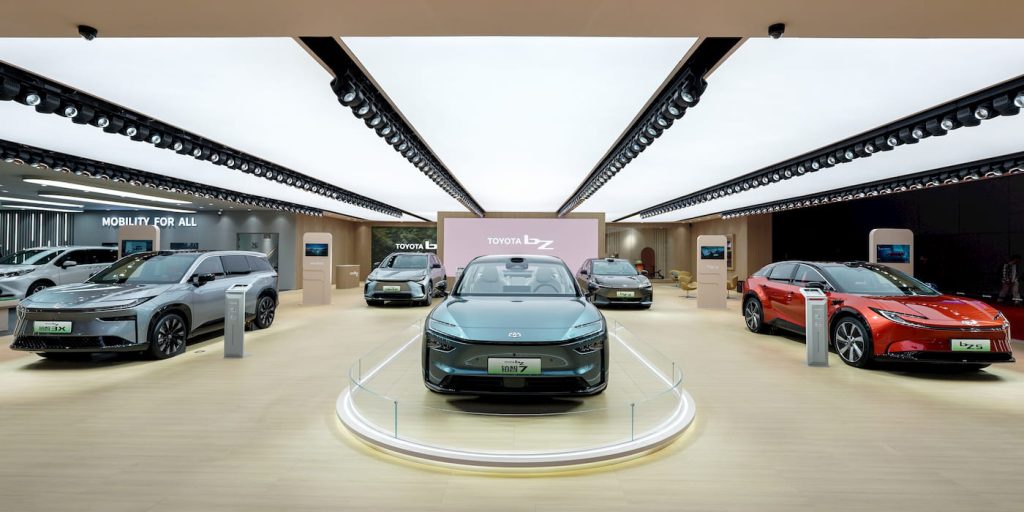
Now, the Japanese automaker is preparing to launch its new flagship EV, the bZ7. According to Toyota, the bZ7 “possesses a higher level of intelligence than any of Toyota’s offerings in global markets.”
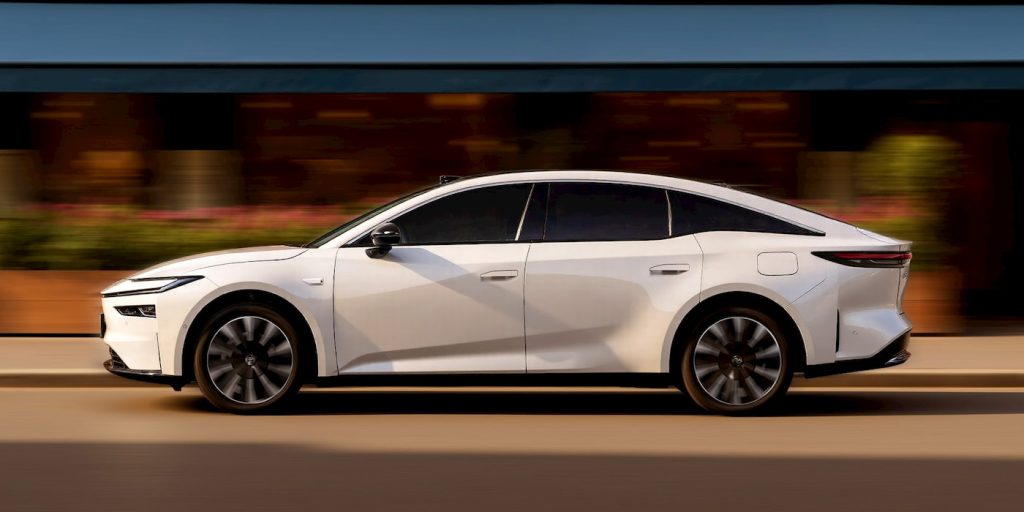
GAC-Toyota claimed the new flagship EV “generated significant interest” at the Guangzhou International Motor Show last month, thanks to advanced tech and features.
Like the bZ3X, the flagship electric sedan features a minimalistic interior with a floating infotainment screen, a smaller driver cluster, and a head-up display.
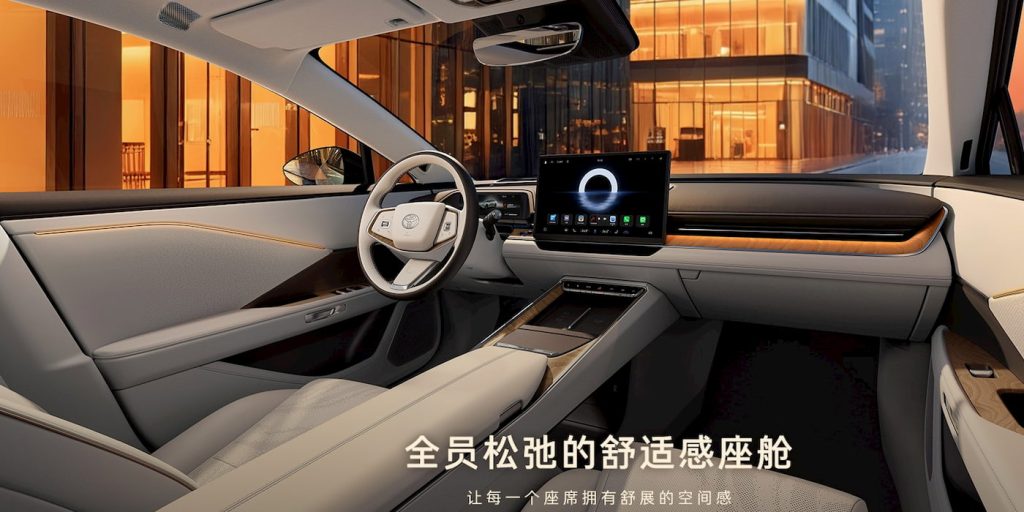
The bZ7 is the brand’s first vehicle to feature Huawei’s HarmonyOS intelligent driving system, which controls everything from the infotainment to navigation and climate control.
It’s also equipped with Momenta 5.0, providing nearly 50 new ADAS features, including Navigation on Autopilot in cities and on highways.
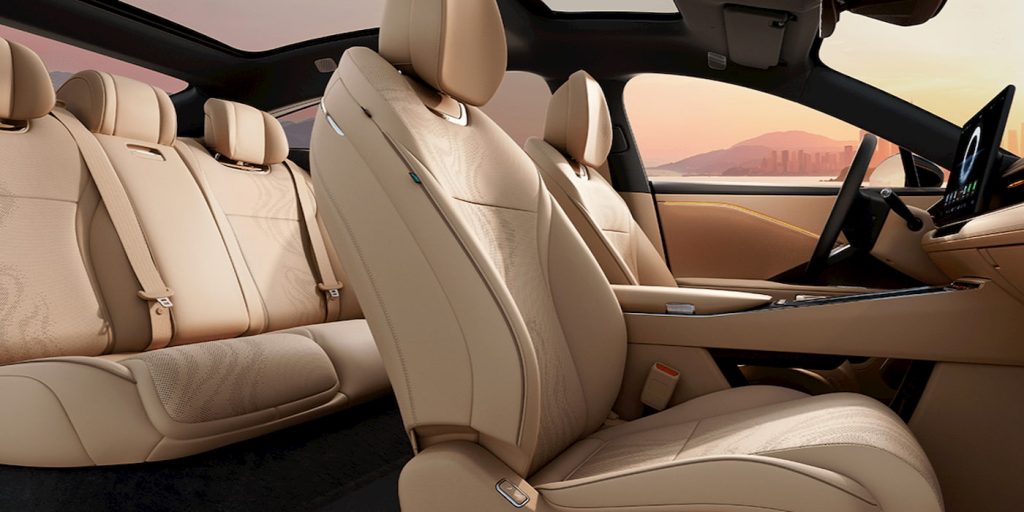
With Xiaomi’s “Human x Car x Home” smart ecosystem, drivers can manage smart home devices directly from the vehicle’s infotainment or smartphone.
The bZ7 is about the size of the Tesla Model S and the BYD Han L, measuring 5,130 mm in length, 1,965 mm in width, and 1,500 mm in height, with a wheelbase of 3,020 mm.
Toyota’s new flagship EV will be available with 71.35 kWh and 88.13 kWh battery packs, offering a CLTC range of up to 600 km and 710 km, respectively.
Official prices and more information will be revealed closer to its official launch in early 2026, but GAC-Toyota said the bZ7 is “a top choice among 200,000 RMB [$28,000] luxury pure electric sedans.” The company added that the flagship EV is “poised for a strong start, aiming to achieve one million units in production and sales.”
Can it compete with BYD, Tesla, and others in China? Let us know your thoughts in the comments below.


FTC: We use income earning auto affiliate links. More.


Comments