
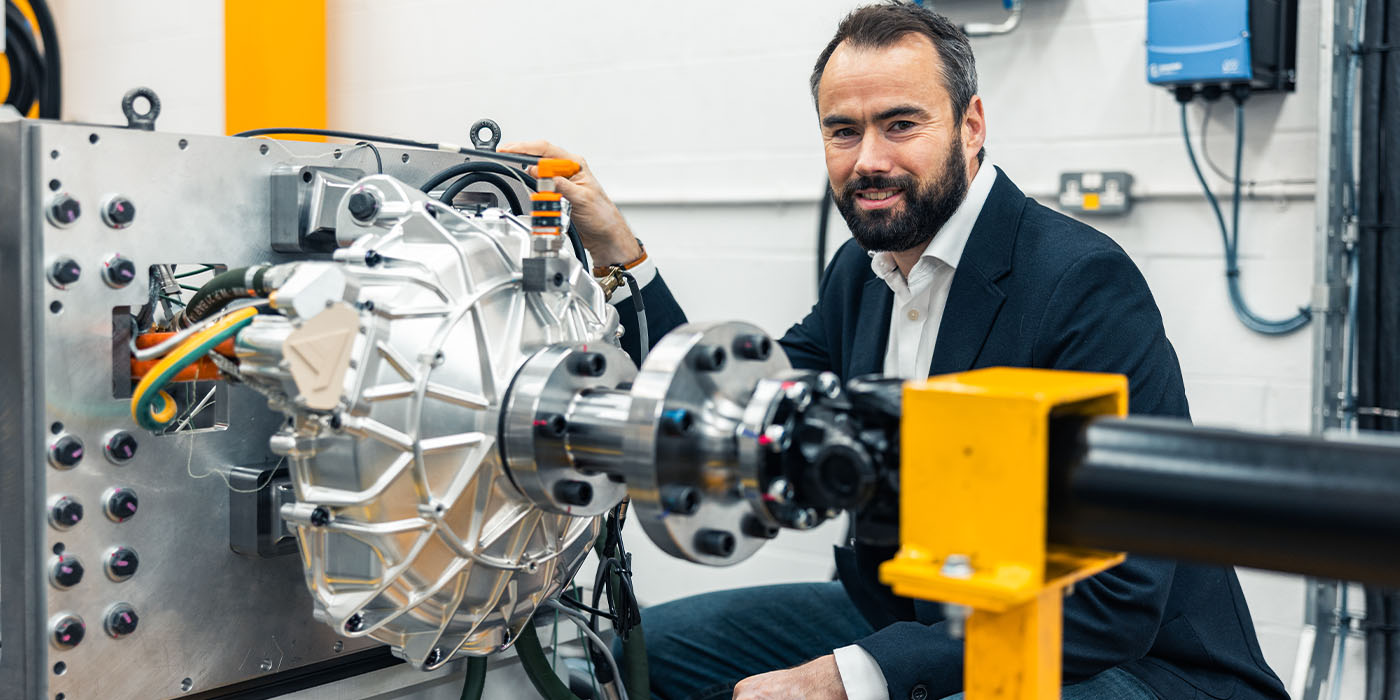
Less than two months after smashing its own (unofficial) record in power density with its proprietary axial flux motor, YASA has unveiled a real-world application of the technology as an in-wheel motor. The current prototype can deliver up to 1,000 bhp per wheel, paving the way for what could be some of the most powerful (and fast) EVs if the in-wheel motor continues development.
YASA is a unique mobility specialist in that it has found its niche revisiting and refining traditional motor designs dating back to the 1820s. YASA has optimized those dated designs using modern components and materials to create bona fide axial flux motors that are compact enough to fit in a wheel.
Thanks to YASA, this alternative technology to conventional radial motors used in most EVs today has not only been proven feasible, but in many ways it’s downright better. In July, YASA declared an unofficial world record in power density after its axial motor prototype completed real-world test trials. That prototype delivered a whopping 550 kW of power from a package weighing a mere 13.1 kg (28.9 lbs.). That power density ratio equaled 42 kW/kg or 19 kW/lb. Per YASA, that benchmark is double the current industry standard.
As an encore, it smashed its own record this past October by using a lighter axial flux motor prototype, weighing 12.7kg, on a more powerful dynamometer. The fall trials delivered a 750 kW (1000+ hp) short-term peak rating, resulting in a power density of 59 kW/kg – a 40% increase from initial testing and another unofficial world record.
According to YASA CEO Joerg Miska, that’s also triple the performance density of the top radial flux motors currently available in the industry. About a month and a half later, YASA has implemented that record-setting axial flux motor prototype into an in-wheel electric powertrain – another “world’s first” for the company.
YASA’s in-wheel motor could change the EV game one day
While this real-world application remains in the prototype phase, it’s tough to overlook the potential of an axial axial flux in-wheel motor system for EVs. According to YASA, this prototype has entered the testing and development stage as the “world’s first mass-neutral in-wheel motor.”
Thanks to its record-setting power density, YASA states that each in-wheel motor can deliver up to 750 kW to each wheel. That equates to over 1,000 bhp, or 986 hp, per wheel. For comparison, speedy BEVs with three radial motors combine for similar levels of horsepower.
It’s hard (yet exciting) to imagine an EV frame and tires that can handle the torque and power of approximately 3,944 combined horsepower. At that point, you’re not even talking about cars anymore; you’re talking about airplane-level power. It’s wild.
Top comment by Steve Zodiac
Would make more sense to produce an even lighter 175kW-200kW in-wheel motor. Two or four of those would be plenty fast and free up chassis space for more batteries, but perhaps they can't be scaled down so easily. Exciting news nonetheless.
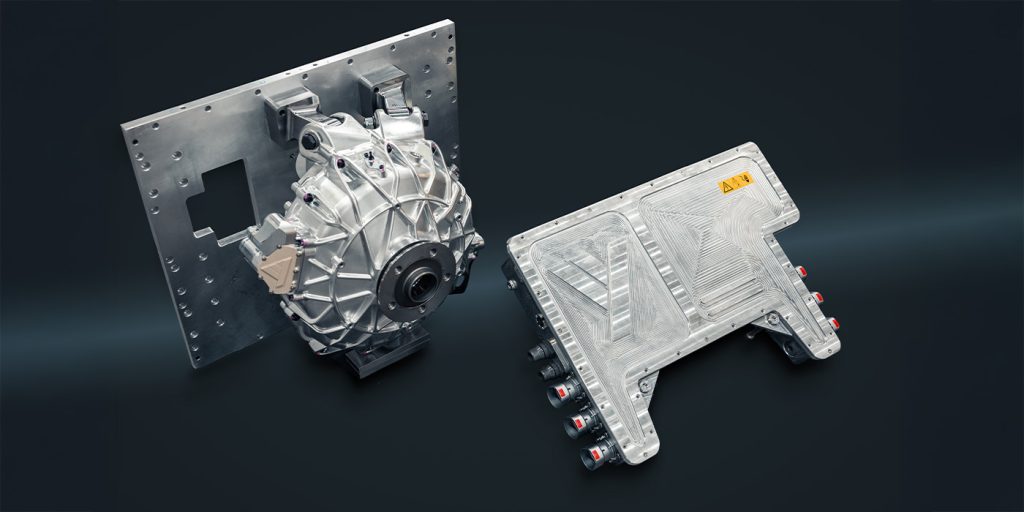
The in-wheel motor prototype is supported by a next-generation 15kg, 1500kW, 100kW/kg dual inverter – another first designed by YASA. Like the motor itself, YASA said its inverter (pictured above) will push control and power electronics beyond current benchmarks (50-70kW/kg). The company’s founder and CTO, Tim Woolmer, elaborated:
In-wheel motors are the major challenge and opportunity for EVs, but until now, technology has been too heavy, limited in torque and not powerful enough. This concept technology breakthrough is compact, powerful and light enough to be positioned inside the wheel of an EV, and it is the world’s first mass-neutral in-wheel motor, enabling up to 750kW (>1000bhp) per wheel. Combined with a new YASA-developed inverter, it results in a fully integrated prototype in-wheel electric vehicle powertrain, which will bring about a step change in weight reduction, performance and efficiency.
Additionally, YASA shared that the regenerative power of its prototype motor system has the potential to downsize rear EV brakes, or even eliminate the need for them altogether. While the in-wheel motor technology remains in the early testing and development phase, YASA appears poised to bring it to market someday. The company has shared that the powertrain system is already compact, scalable, and designed with cost efficiency in mind.
Additionally, it can be customized to accommodate a variety of powertrain configurations. YASA CEO, Joerg Miska, also spoke:
Our new in-wheel electric powertrain is a first for YASA and another example of how we are continuing to push the electrification envelope Thanks to the combination of our world record breaking power dense motor and a new YASA-designed and developed inverter, our revolutionary technology addresses the challenges of current existing in-wheel motor systems. It is the gateway to lighter, more efficient and higher performance electric vehicles.
YASA said it will share more updates about the development of its in-wheel powertrain in 2026.


FTC: We use income earning auto affiliate links. More.


Comments