
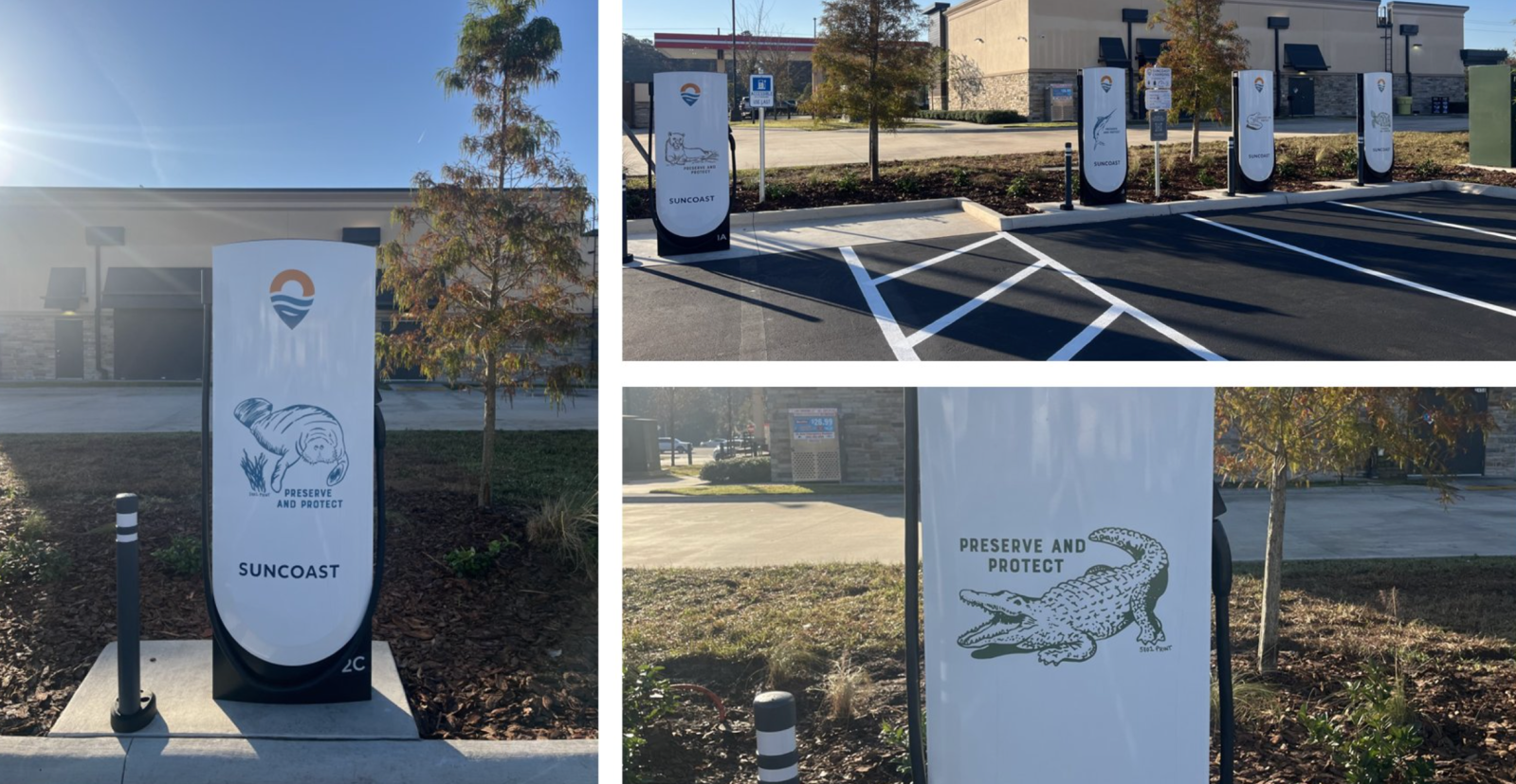
Tesla has officially deployed its first Supercharger station owned by a third party in the US, a step in the automaker’s effort to accelerate the charging infrastructure growth while reducing capital expenditure.
The new station, located at a Suncoast Charging in Land O’Lakes, Florida, consists of 8 stalls and is now open to the public.
While Tesla has previously sold Supercharger hardware to other networks – most notably BP Pulse back in 2023 – this site represents a different model.
The station is owned by the host but fully managed by Tesla, meaning it appears and functions exactly like any other Supercharger in the navigation system and app, maintaining the seamless user experience Tesla owners, and now non-Tesla owners, are used to.
Tesla’s official charging account confirmed the deployment in a post on X today:
This move falls under Tesla’s “Supercharger for Business” program, where property owners can purchase the hardware and pay for installation while Tesla handles the operations, maintenance, and billing.
Up until recently, Tesla owned and operated almost all of its Supercharger network, which has been the company’s most important moat.
However, as the network opens up to non-Tesla EVs with the adoption of NACS (North American Charging Standard), Tesla is transitioning from a purely closed ecosystem to a major energy and service provider for the broader EV market.
By allowing third parties to put up the capital for the stations while Tesla retains control over the software and customer experience, the company can likely deploy stalls much faster than if it were solely reliant on its own balance sheet.
Electrek’s Take
Top comment by Steve
Property owners can probably rent out their space easier too.
A few years ago, I managed to get our CEO and Tesla to agree to 12 superchargers in our lot because we have about 50 Teslas at work. Our CEO was going to pay for all charging for the employees. Tesla pays for the installs since this will be opened to everyone (kinda like the hotel charger or one in San Diego). The landlord wanted to charge $200/month for each stall since we would take a parking space. This was a paid parking garage so he wanted us to pay for it. CEO killed the deal.
We moved out of that building and got our own land/building. CEO installed 24 L2 chargers and whitelisted/free for all employees. I no longer work there, and my friend who was in charge of supercharger network was laid off a couple of years ago. Otherwise, I would have him install 50 superchargers on our lot. It’s not paid parking and anyone could have used it like normal charger.
Anyway, the lot we left still sits empty since 2021. I’m sure if that landlord has superchargers, some tech companies would rent that office space and give free charging as an employee perk for coming to the office.
This is a smart move.
We have been saying for years that while the Supercharger network is Tesla’s greatest asset, it is also a capital-intensive beast to feed. Tesla has installed over 70,000 Supercharger posts globally, but to support the millions of EVs hitting the road (both Tesla and NACS-adopting rivals), the network needs to grow exponentially, not linearly.
Tesla’s Supercharger growth has declined since Musk fired the entire charging team, just to rehire many of them after.
Allowing third parties to own the assets solves the capital bottleneck. It’s similar to the franchise model used by gas stations or even fast-food chains – with the main difference being that Tesla owns the pump rather than the gas as the electricity still comes from the electric utilities.


FTC: We use income earning auto affiliate links. More.



Comments