
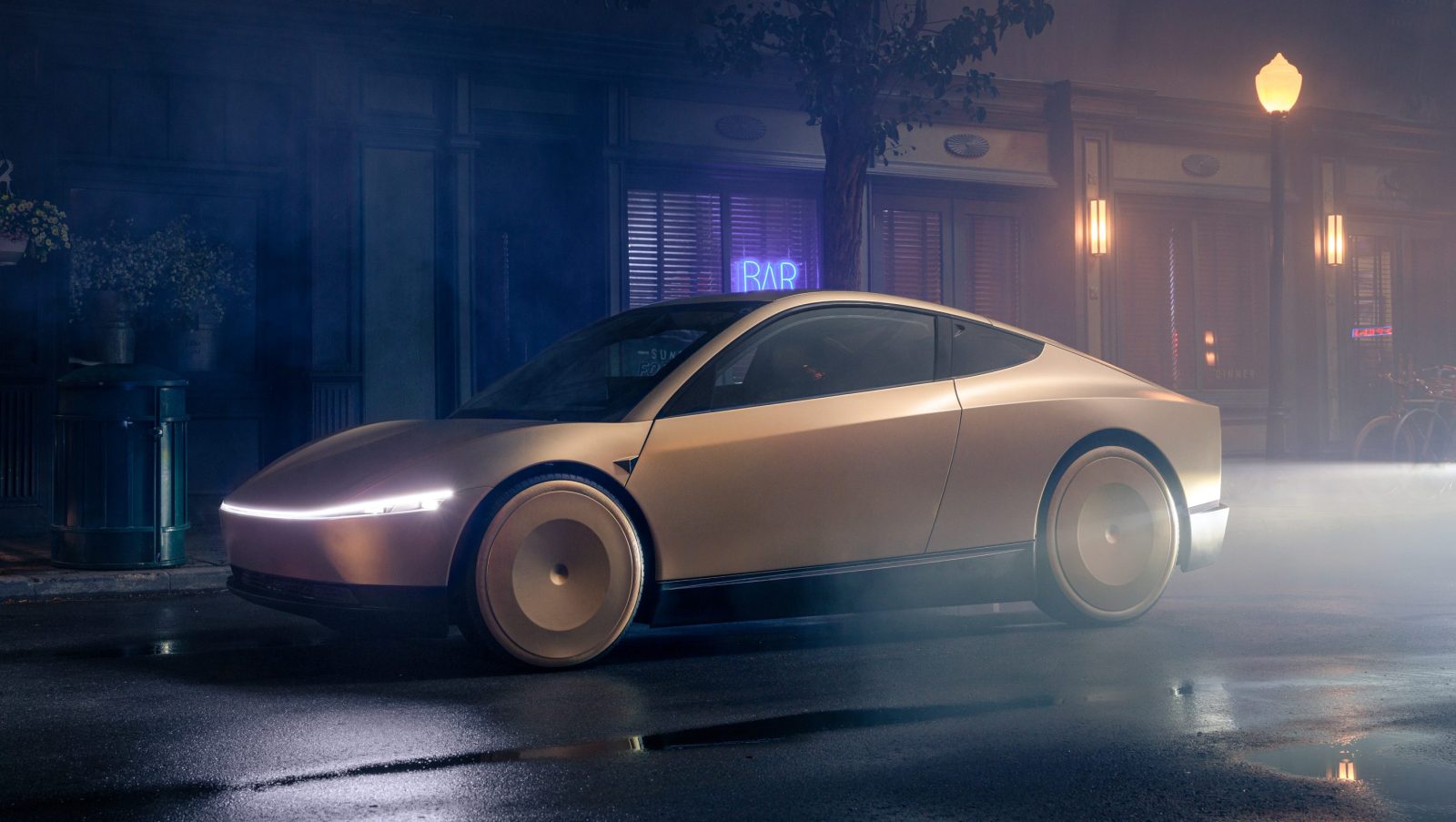
Tesla’s chairwoman said that the automaker might redesign the Cybercab, specifically add a steering wheel and pedals.
Last year, Tesla unveiled the Cybercab, a two-seater electric car without a steering wheel or pedals.
Musk was quoted during the design of the Cybercab:
No mirrors, no pedals, no steering wheel. Let me be clear. This vehicle must be designed as a clean robotaxi. We’re going to take that risk…But we are not going to design some sort of amphibian frog that’s a halfway car. We are all in on autonomy.
Here’s the interior of the Tesla Cybercab:
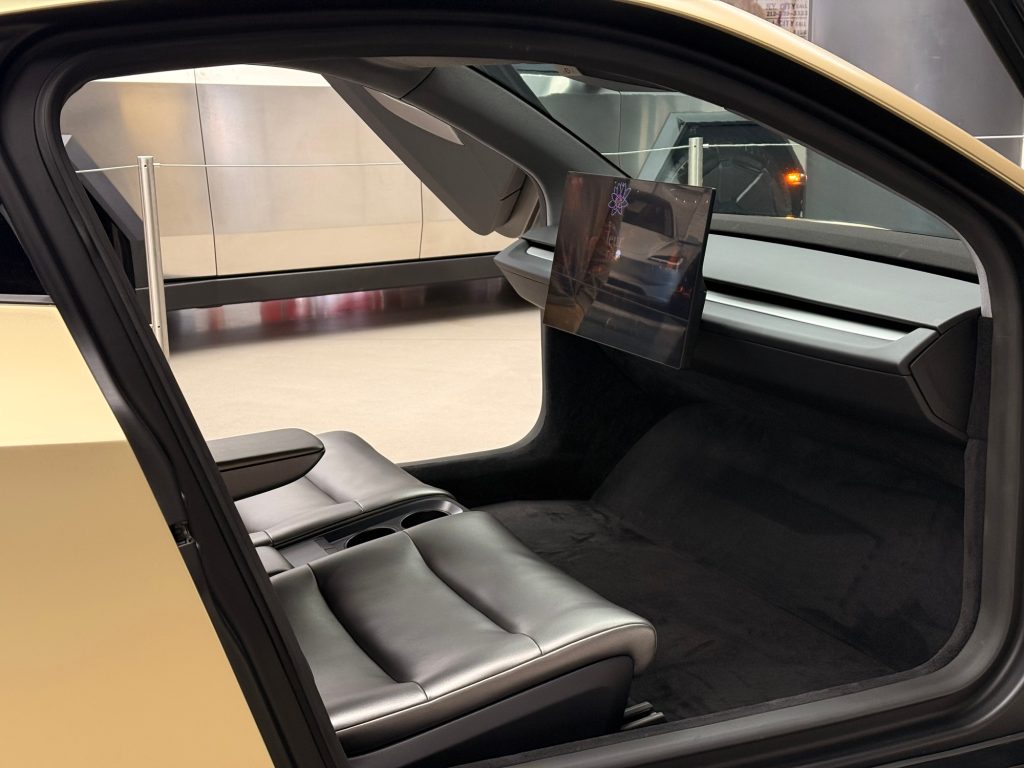
The vehicle was one of several new, cheaper electric vehicles that Tesla was developing for its new ‘unboxed’ platform, but CEO Elon Musk canceled the others, believing they wouldn’t be needed with the advent of autonomous driving.
However, Tesla has yet to solve unsupervised autonomous driving, and Musk has been consistently wrong about predicting when it will happen.
Tesla plans to bring the Cybercab to production in 2026, and during Tesla’s earnings call last week, Musk said the Cybercab will account for the bulk of Tesla’s upcoming production growth.
That’s not going to happen if Tesla hasn’t solved unsupervised self-driving.
Furthermore, while federal regulations for self-driving vehicles have been relaxed recently, there’s only an exemption available for 2,500 passenger vehicles without a steering wheel or pedals per manufacturer per year.
Now, Tesla chairwoman Robin Denholm said in an interview with Bloomberg today that Tesla plans to add a steering wheel and pedals to the Cybercab if needed:
“If we have to have a steering wheel, it can have a steering wheel and pedals.”
Tesla is currently setting up Cybercab production at Gigafactory Texas near Austin.
The automaker has framed the vehicle as a cheaper alternative to Model Y for its Robotaxi service.
Electrek’s Take
Just yesterday, I was talking to my friend Bastien, and he called it. He told me he bets Tesla does launch the Cybercab next year, but with a steering wheel and pedals.
Now, let’s be clear. As of today, Tesla’s need for a steering wheel and pedals in the Cybercab is not driven by regulators, as Denholm suggests.
Top comment by Tory Orzeck
Cybercab seems really odd to me. Holds only two passengers, and if it requires an actual driver, now it holds only a single passenger. This seems nonsensical. No rear window, so if you're behind it, you cant see the brake lights of a car in front of it .Not to mention claustrophobic. Not having 4 identical wheels and tires seems super impractical and costly as well. If you owned a fleet of them, you'd have inventory more wheels and tires.
You can t rotate the tires either. And, it sits low so seniors will have more trouble getting in and out of it.
Also if it ever does achieve autonomy, wouldn't versatility in carrying more passengers , cargo and safety be paramount? Seems lke the Model Y is the better vehicle for this dutiy.
I think making such a compromised dedicated vehicle for the taxi service was an in efficient choice.
Tesla hasn’t solved unsupervised self-driving as evidenced by the current version of ‘Full Self-Driving (Supervised)’ in consumer vehicles, and its Robotaxi service still has safety monitors.
If Tesla wants to produce and deliver the Cybercab in any significant volume, it would need a steering wheel.
The regulations are just an excuse as of now.
It could change in the future, but for now, Tesla’s technology is without a doubt the limiting factor.


FTC: We use income earning auto affiliate links. More.




Comments