
China’s clean energy surge is starting to transform the world’s energy systems, according to Ember’s “China Energy Transition Review 2025.” The report shows that China’s massive investments in solar, wind, storage, and electrification are cutting fossil fuel use at home while sending clean tech around the globe.
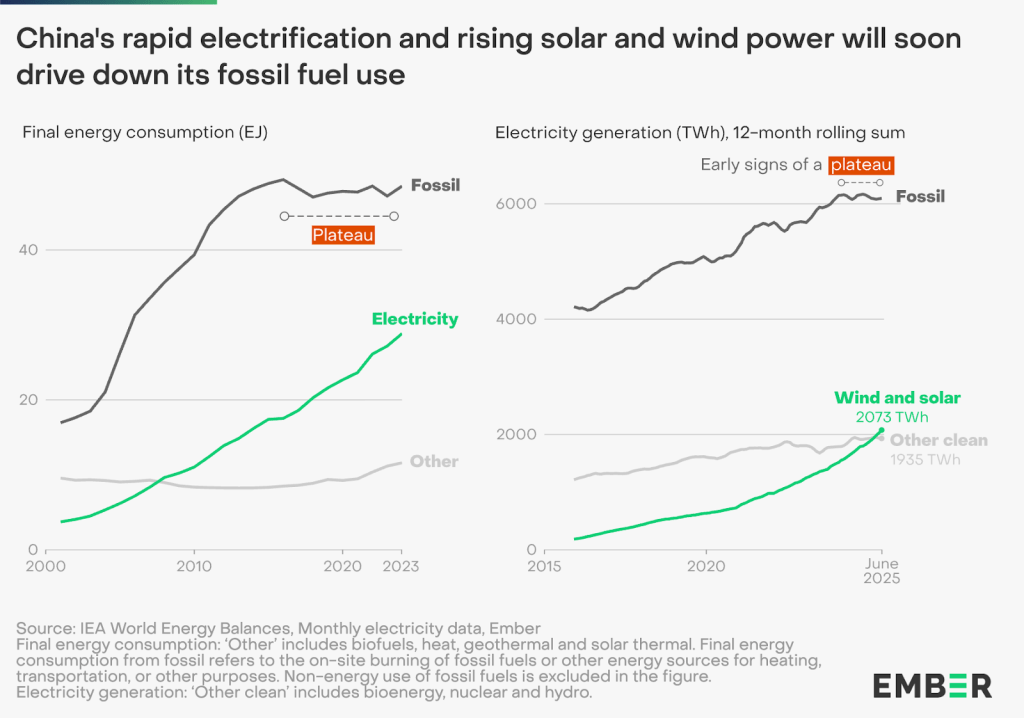
Between 2015 and 2023, fossil fuel use in China’s final energy consumption fell by 1.7% across buildings, industry, and transport, while electricity use rose by 65%. In power generation, fossil output dropped 2% in the first half of 2025 year-over-year, while wind and solar generation soared 16% and 43%, respectively. In the 12 months to June 2025, wind and solar generated more electricity than hydro, nuclear, and bioenergy for the first time. Just four years earlier, they produced only half as much.
This momentum is being fueled by record investment. In 2024 alone, China invested $625 billion in clean energy – 31% of the global total – with major expansions in storage and grids. That money doubled wind and solar capacity in China between 2021 and 2024 to 1,400 GW and tripled battery storage to nearly 95 GW. Grid spending also hit $85 billion last year, making integrating renewables and cutting curtailment easier.
As of 2023, electricity made up 32.4% of China’s final energy consumption, and it rises by about one percentage point per year. It’s the biggest source in buildings (39%) and industry (31%), overtaking coal in the latter sector for the first time in 2023.
Ember’s analysts say the transformation is deeply baked into China’s economy. Clean energy isn’t just about climate goals – it’s cheaper, more secure, and a foundation for future competitiveness. In 2024, clean energy investment and production contributed $1.9 trillion to the national economy – about a tenth of China’s GDP, equal to Australia’s entire economy.
Globally, China’s clean energy boom is reshaping markets: the country makes 80% of the world’s solar panels and 60% of its wind turbines, while leading exports of EVs, batteries, and heat pumps. It’s also filing three out of every four clean energy patents worldwide. That flood of tech has pushed costs down, letting emerging economies leapfrog straight into clean power systems. In fact, in 2024, a quarter of emerging economies sourced more of their final energy from electricity than the US, and nearly two-thirds generated a higher share from solar.
This shift spells trouble for fossil fuel exporters. China’s energy-related fossil fuel consumption will likely keep falling as electrification accelerates and exports of cheap clean tech grow. For decades, China was the main driver of global fossil demand. “Now, as its own consumption peaks and begins to decline, and as its clean energy exports scale globally, it is set to tip the balance, turning a long era of rising global demand into the start of structural decline,” said Sam Butler-Sloss, manager at Ember.
Still, Ember warns, the future of global fossil fuel demand isn’t set in stone. Rapidly growing economies outside the OECD could still offset China’s declines unless clean technologies scale just as quickly there.
Top comment by Grant
There was a time when the world looked to America for leadership, and marveled at the ingenuity and technology that sprang from its democratic foundations. Now nations turn to China for a chance to become energy independent and detach from the scourge of fossil fuels that has damaged so much already. How the mighty have fallen.
But China’s case is proof of concept. “It shows what’s possible when long-term vision meets coordinated action,” said His Excellency Dr Suwit Khunkitti, Thailand’s former deputy prime minister. “It proves that decarbonization can go hand in hand with industrial upgrading, job creation, and improved quality of life.”
Read more: H1 2025: China installs more solar than rest of the world combined

The 30% federal solar tax credit is ending this year. If you’ve ever considered going solar, now’s the time to act. To make sure you find a trusted, reliable solar installer near you that offers competitive pricing, check out EnergySage, a free service that makes it easy for you to go solar. It has hundreds of pre-vetted solar installers competing for your business, ensuring you get high-quality solutions and save 20-30% compared to going it alone. Plus, it’s free to use, and you won’t get sales calls until you select an installer and share your phone number with them.
Your personalized solar quotes are easy to compare online and you’ll get access to unbiased Energy Advisors to help you every step of the way. Get started here.


FTC: We use income earning auto affiliate links. More.



Comments