

Those ultra-long-range Toyota EV batteries we were waiting for? Yeah, they might take even longer than expected. Toyota is delaying plans to build a new EV battery plant in Japan, where it was expected to begin producing its next-gen batteries with over 620 miles (1,000 km) range in 2028.
When will Toyota’s long-range EV batteries launch?
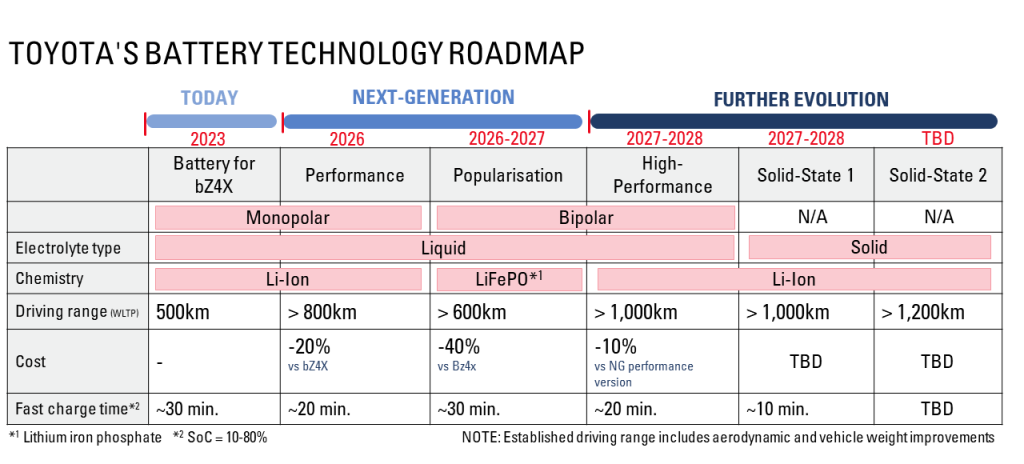
It’s been almost two years since Toyota outlined plans to launch a series of next-generation EV batteries promising significantly more range, faster charging, and at a lower cost.
The first battery, “Performance,” was expected to be released next year. It would have a nearly 500-mile (800-km) driving range and fast charging (10% to 80%) in 20 minutes. By 2027, Toyota planned to launch a new “Popularization” LFP battery with over 370 miles (600 km) and 40% faster charging than the bZ4X.
Toyota said it would follow up with “High Performance” Li-Ion batteries that could drive over 620 miles (1,000 km) with 20-minute fast charging.
Toyota bought a roughly 280,000 square meter plot of land for the battery factory in Fukuoka, Japan, just last month, but construction is already delayed. According to a report from Asahi Shimbun, Toyota’s president, Koji Sato, will visit the region on Tuesday to inform local officials.
Update March 25, 2025: A Nikkei report on Tuesday confirmed that Sato traveled to Fukuoka to meet with Gov Seitaro Hattori about the planned delay.
Although initially expected by next month, Hattori still expects Toyota to sign a location agreement by this fall. Toyota still plans to build the plant, but it could scale back or reconsider what will be made at the site.

Toyota planned to begin building the plant as early as this year. It was expected to begin production of the “High Performance” EV batteries in 2028, but that could also face delays. According to Hattori, Toyota’s 2028 production start is still in the air.
A company source said the reason was due to lower-than-expected EV demand and higher construction costs. Toyota may also postpone the launch of the next-gen electric Lexus sedan to ensure it has the tech and quality buyers are looking for.
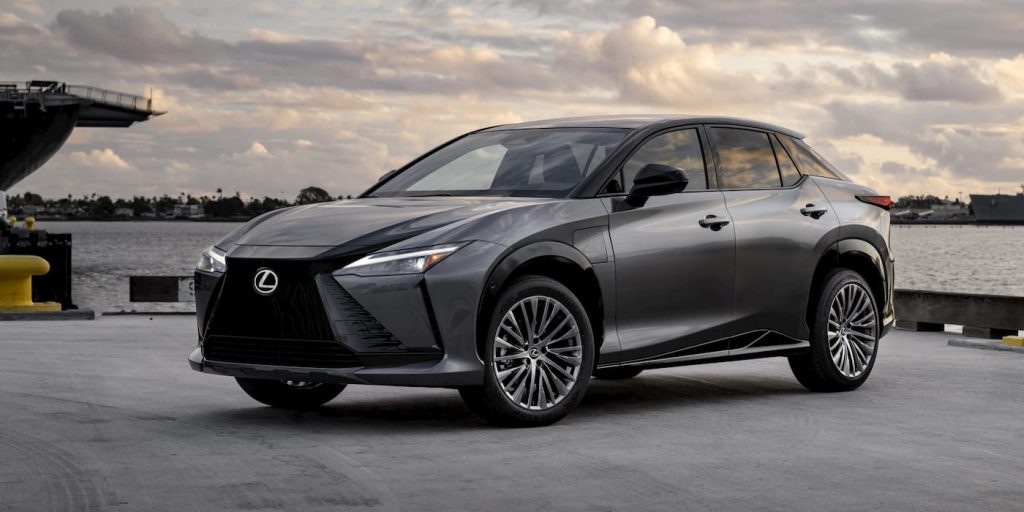
Toyota’s Miyata assembly plant in Fukuoka can produce up to 430,000 vehicles a year. About 90% of these are shipped to Asia and Europe, mainly under the Lexus brand.
Last year, Toyota told suppliers it planned to cut EV output from 1.5 million to 1 million in 2026. Earlier this year, it was reduced even further to just 800,000, or nearly half its initial target.
Meanwhile, in the US, Toyota’s $14 billion NC battery plant will begin shipping out batteries next month. A seperate Nikkei report last week claimed Toyota will supply batteries for the roughly 400,000 Honda hybrids in the US.
In China, where Japanese brands have been some of the hardest hit, Toyota is doubling down as it looks to compete with domestic leaders like BYD.
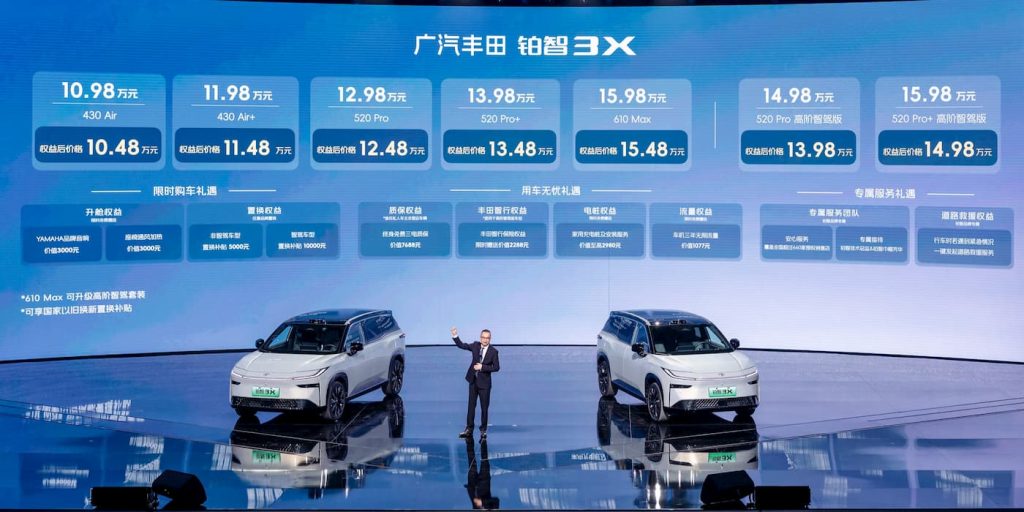
Earlier this month, Toyota launched the bZ3X, it’s cheapest EV in the region starting at 109,800 yuan, or around $15,000). It’s also building a new plant in China that will build Lexus EVs starting in 2027.
Electrek’s Take
Although Toyota is reportedly blaming slower-than-expected EV demand, bZ4X sales are finally picking up. In fact, it was the top-selling EV in Norway in January.
Top comment by Pete Za
I don't understand how Toyota can claim low demand for BEVs, when they only build and sell one mediocre product in the segment. Maybe they sell more EVs outside of the US that I'm not aware of? If I wanted to buy a Toyota electric vehicle in the US, my choice is the bZ4X, or if I'm willing to spend more for a higher trim and slightly different body panels, the Lexus RZ.
Why not use their existing technology/drive train to BEVify a Prius? Seems like they could just put more batteries and no gasoline engine in the Prius Prime and have an aerodynamically efficient vehicle that people would want to buy. It'd probably even get better range than the bZ4X with a smaller battery.
After another record year in 2024, with over 17 million EVs sold, global electric vehicle sales continued to climb by double digits in the first two months of 2025.
Toyota pushing back battery plans will only set it further behind global EV leaders like China’s BYD. BYD is known for its low-cost, long-range Blade LFP batteries. Because it makes most components in-house, including batteries, BYD not only sells cheap EVs, but it also makes money doing it.
BYD topped Tesla last year after revenue surged to over $100 billion for the first time. The Chinese EV giant is quickly expanding overseas into overseas markets like Southeast Asia, Europe, and South America, some of Toyota’s most important markets.
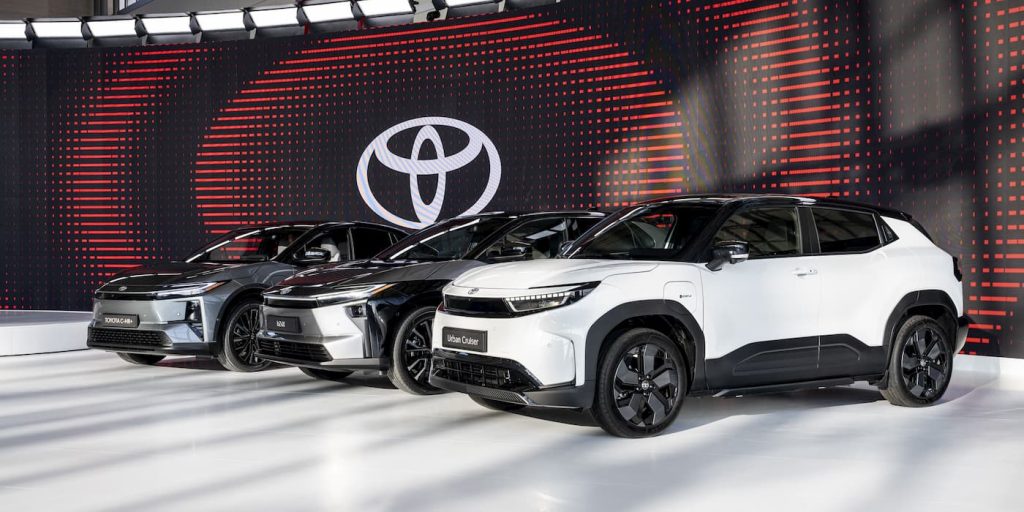
After unveiling a new lineup of electric SUVs for Europe, including the updated bZ4X, why would Toyota “take its foot off the gas” now? Drop us a comment below and let us know your thoughts.


FTC: We use income earning auto affiliate links. More.



Comments