
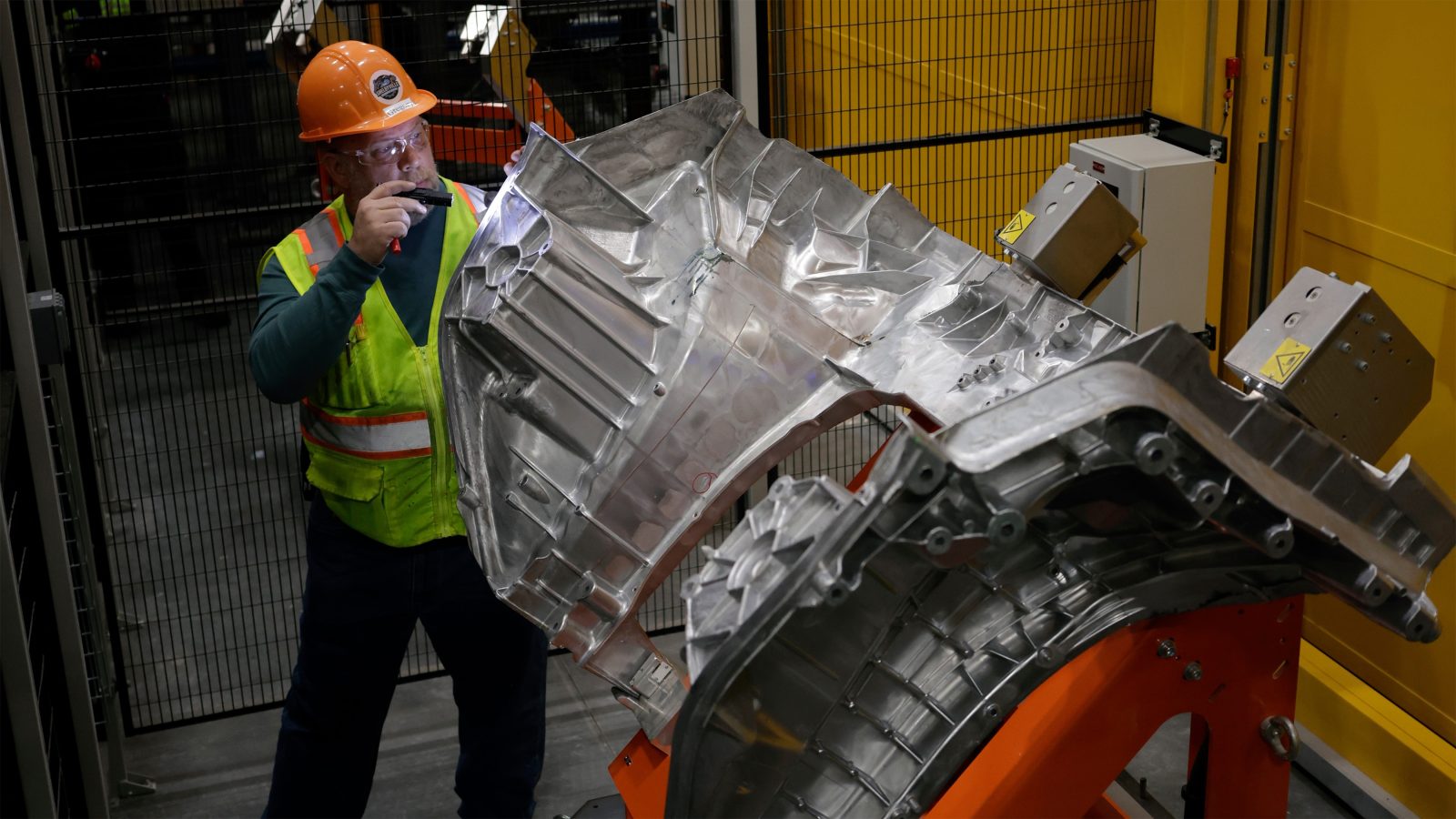
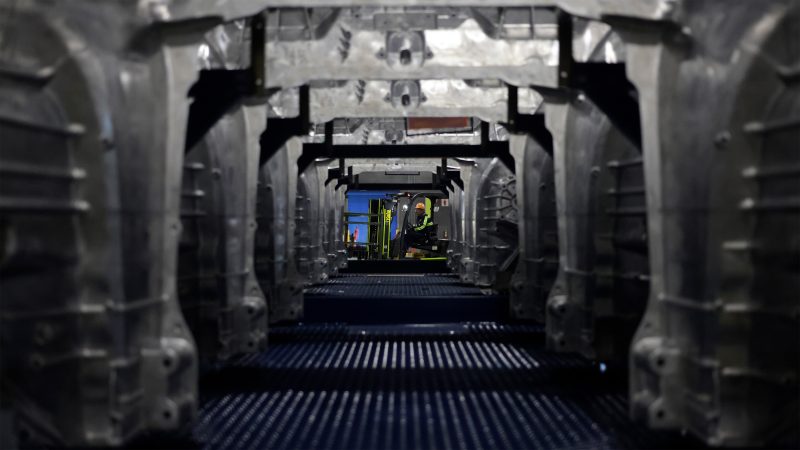
Ford has now produced more than 5,000 large aluminum “unicastings” for the Fathom, its upcoming $28,350 midsize electric pickup, as it fine-tunes the process ahead of a 2027 launch.
Each truck gets two of them, front and rear, replacing 146 individual parts. It’s the clearest sign yet that Ford is all-in on the manufacturing approach Tesla popularized with its Giga Press six years ago.
Inside Ford’s unicasting process
The update comes from Vladimir Bogachuk, Ford’s chief engineer of advanced vehicle structure architecture, in a post on Ford’s From the Road blog. The castings are made at Ford’s Shelbyville Technical Center and shipped to Louisville Assembly Plant for process testing and prototype builds. Louisville is the Kentucky factory Ford is retooling for the Fathom and other vehicles on its Universal EV Platform.
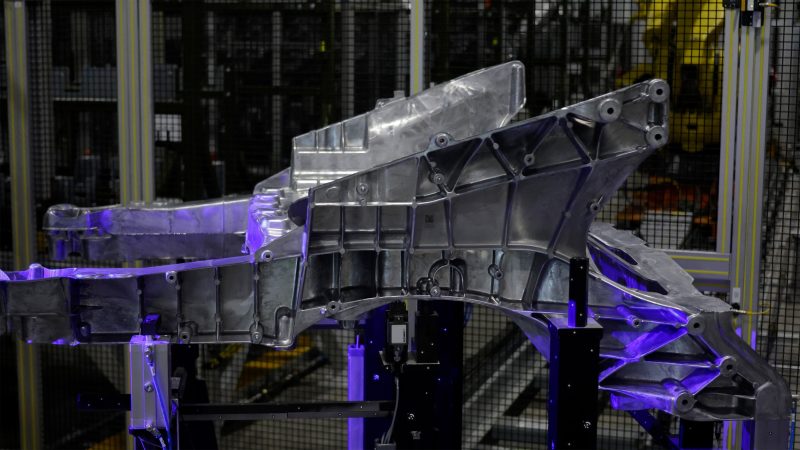
Ford melts aluminum ingots at about 1,300°F (700°C) and injects the metal into either a front or rear structure mold. Once a robot pulls the part out, it goes into a quench tank, gets trimmed and machined, and then runs a gauntlet of checks: industrial X-ray scans for pores and voids, dimensional measurements in a climate-controlled room, optical surface scans, and lab tensile and chemistry tests on samples.
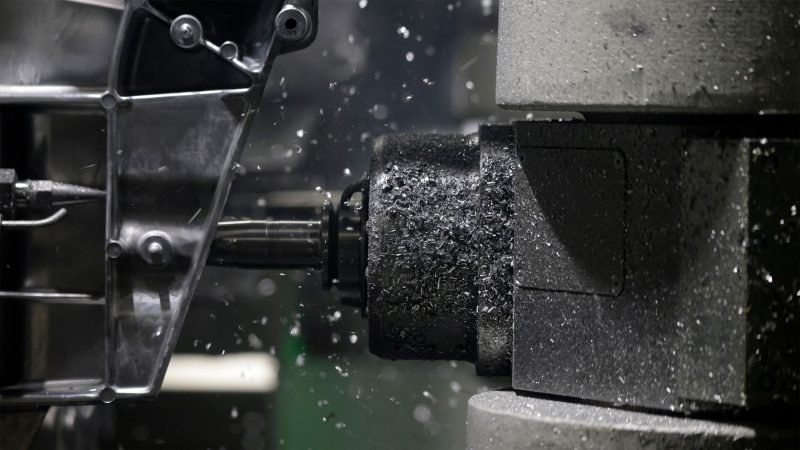
Nothing ships to Louisville until a batch clears every inspection. Ford says it’s also working on cutting cycle time and on designing the castings for “modular repairability.”
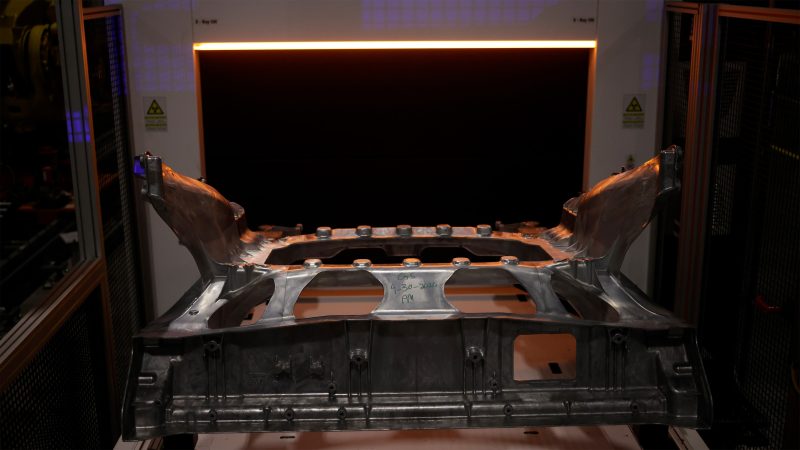
That last part has been the main reason why automakers have been reticent about larger cast parts. Repair cost is the biggest knock on giant castings, since a damaged one-piece structure can turn a moderate crash into a write-off. Lucid executive Cory Steuben has said insurance concerns drove the company’s decision to skip gigacasting altogether.
Tesla started it with 70 parts
Tesla kicked this off in 2020 with the first IDRA Giga Press at Fremont, a machine with roughly 6,000 tons of clamping force. It cast the Model Y’s rear underbody in a single piece, replacing 70 parts, and Elon Musk said the change removed the need for about 300 robots.
Tesla wanted to go much further. It added a front casting, tied the two together with a structural battery pack, and moved to even bigger presses for the Cybertruck. But in 2024, Reuters reported that Tesla had backed away from its plan to cast nearly the entire underbody in one piece, and the automaker has reportedly since dropped the front casting on some Model Y production.
So Ford’s 146-to-2 figure looks great on paper. But it’s a front-and-rear layout, basically the same architecture Tesla launched with on the Model Y. Ford isn’t leapfrogging Tesla here. It’s catching up, just with a vehicle that will cost less than any Tesla on sale.
The industry went bigger, but not everyone
Since that first Giga Press, a growing list of automakers have bought huge presses or committed to them:
- Volvo started EX60 production at Torslanda this year with a single rear megacasting, and it ordered two 9,000-ton-class IDRA presses for its new plant in Slovakia.
- Xiaomi runs 9,100-ton presses, combining 72 components into one underbody casting.
- Xpeng casts the G6’s front and rear underbody, merging more than 300 parts across the two.
- Honda is installing six 6,100-ton presses at its Anna Engine Plant in Ohio for EV components.
- Toyota has shown its own gigacasting process, and group supplier Aisin plans to spend $3.4 billion over three years.
Top comment by Beario
Ever since Jim Farley went to China, he has been on a mission. Good for him revamping the company and getting started in an area where other companies so far have barely made meaningful moves. Ford will definitely remain competitive as things change if they maintain their plan and can make an impact selling the Fathom. It is certainly worth taking a look once the final product comes to market.
Others aren’t buying it. Stellantis has said it won’t invest in gigacasting, while BMW and Mercedes-Benz have stuck with smaller presses for body parts. Hyundai pushed its “Hypercasting” plan back two years.
Electrek’s Take
We’ve been tracking this casting race since Tesla’s first Giga Press showed up in Fremont, and the lesson so far is simple. Fewer parts is great, but the press alone doesn’t make a car cheap. The whole factory does.
That’s why Ford’s approach is worth watching. The unicastings are one piece of a bigger overhaul at Louisville, where Ford is splitting the line into three branches (front, rear, and the battery pack with the interior floor) that meet at the end. Ford says that can be up to 40% faster than its current assembly, or about 15% net once it reinvests some of the savings into automation and insourcing. It’s very close to the logic behind Tesla’s “unboxed” process, and they are betting it’s what actually gets you to a $28,350 truck.
If you’re buying an EV, powering it with home solar can cut your fuel costs to nearly zero. With electricity rates up almost 10% last year and expected to keep climbing, going solar is one of the best ways to protect yourself against rising costs. And with lease and PPA options, you can do it with zero upfront cost and start saving immediately. If you want to find the best deal, check out EnergySage. It’s a free service with hundreds of pre-vetted installers competing for your business, so you save 20 to 30% compared to going it alone. No sales calls until you pick an installer. Get your free quotes here.


FTC: We use income earning auto affiliate links. More.




Comments