
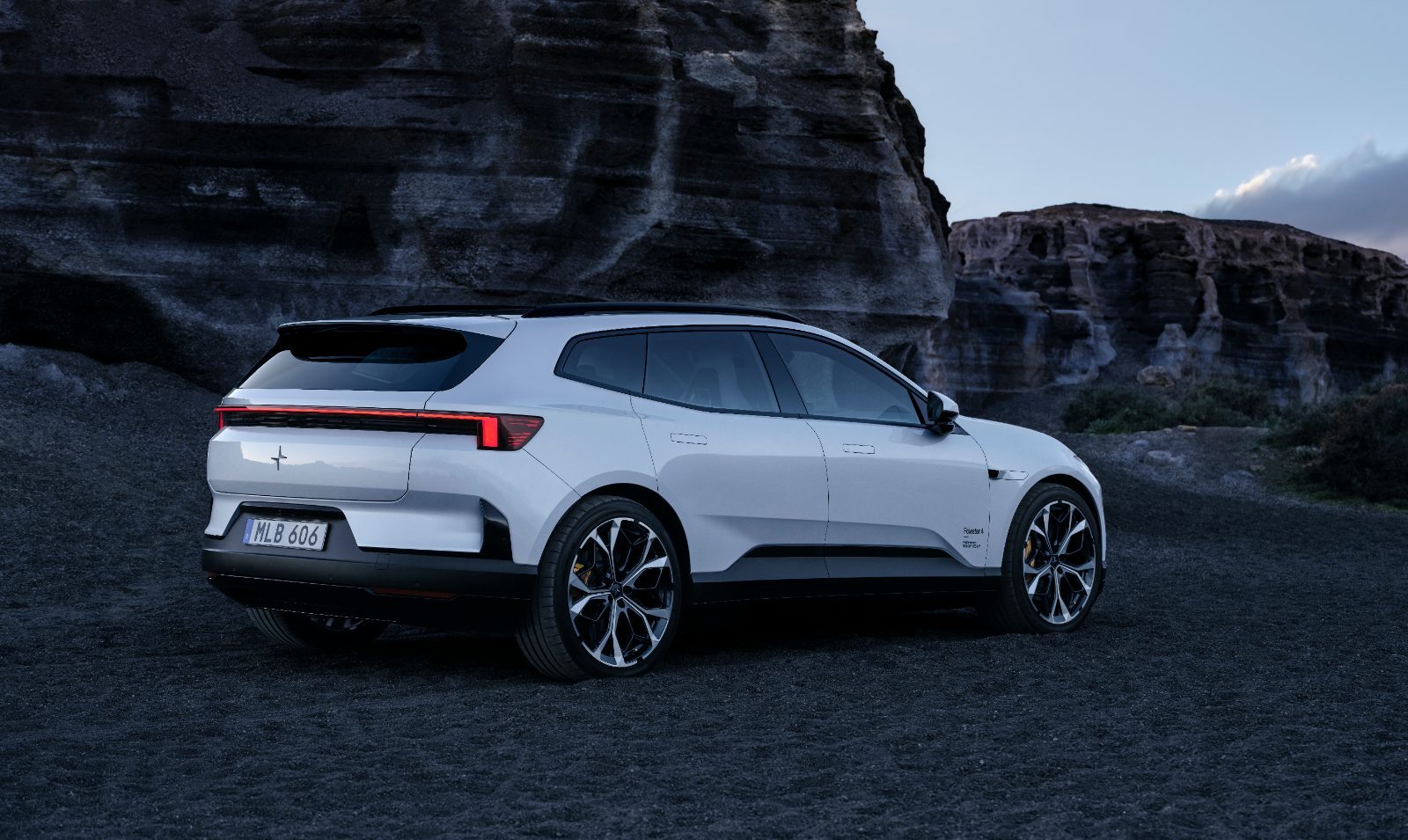
Polestar launched the Polestar 4 SUV today, a new body style of its compact executive electric SUV that starts at €57,900 and delivers up to 630 km of WLTP range.
The bigger news for anyone who followed the original car: unlike the Polestar 4 coupé, the SUV has an actual rear window.
The rear window returns
When Polestar unveiled the Polestar 4 in 2023, the headline feature was a missing one. The coupé shipped with no rear window at all, replacing it with a roof-mounted camera feeding a digital rear-view mirror. Polestar argued the design freed up rear headroom and enabled a larger panoramic roof, but it became the car’s most divisive talking point.
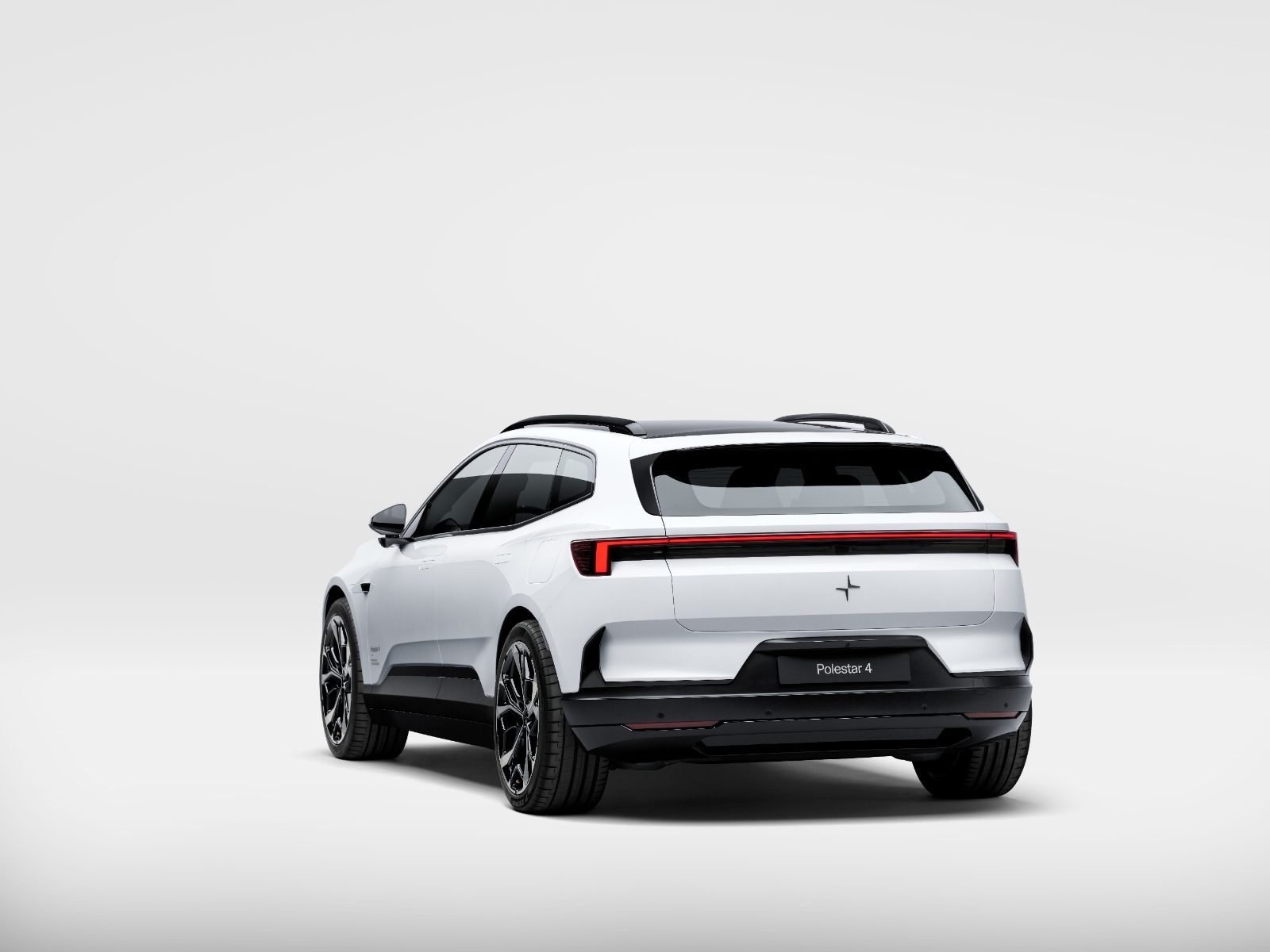
The Polestar 4 SUV reverses that call. Polestar says the new variant “opens the rear vision-field towards the tailgate with a rear window” and comes with a conventional rear-view mirror as standard. Customers who preferred the camera setup can still option the digital rear-view mirror that launched on the coupé.
It’s a rare, quiet acknowledgment that the original bet didn’t land with everyone — and it comes wrapped in a more practical package.
More space, same platform
The Polestar 4 SUV is built on the same Geely SEA architecture as the updated Polestar 4 coupé, but a straighter roofline and more upright tailgate open up the back.
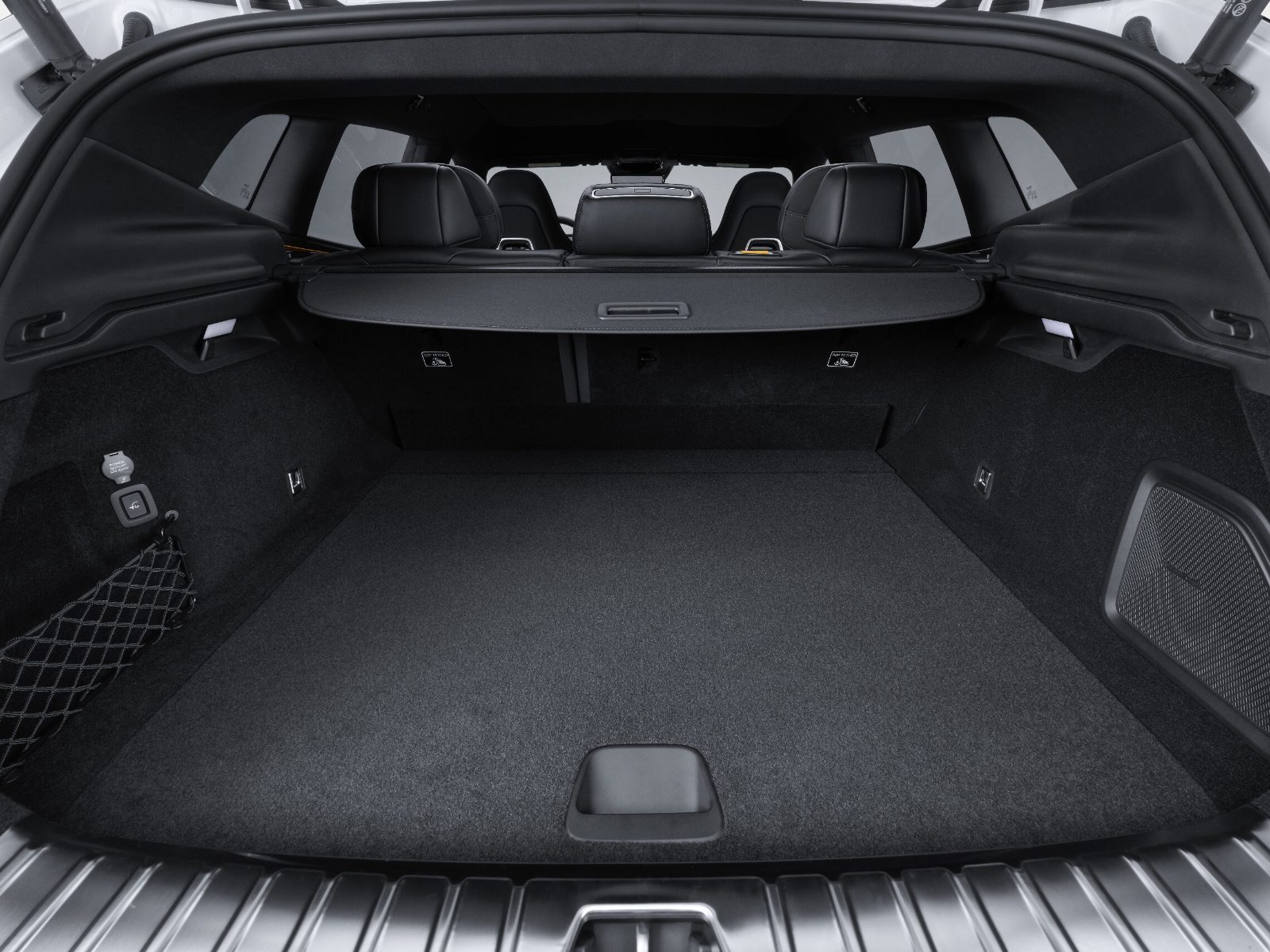
The SUV offers 1,680 liters of total storage across front and rear compartments, expanding to 1,665 liters of luggage capacity with the rear seats folded. The taller rear end adds 2.5 centimeters of second-row headroom over the already-roomy coupé, and full-length roof rails raise dynamic roof load capacity to 100 kg.
A larger standard panoramic glass roof stretches to the tailgate, with an optional electrochromic version — unique to the SUV — that lets occupants dim the glass through the center display.
Two powertrains, 100 kWh standard
Every Polestar 4 SUV gets a 100 kWh battery. The rear motor version pairs 200 kW (272 hp) with up to 630 km of WLTP range and a 0-100 km/h time of 7.3 seconds. The dual motor all-wheel-drive version delivers 400 kW (544 hp) and 686 Nm, dropping the 0-100 km/h sprint to 3.9 seconds while offering up to 600 km of range.
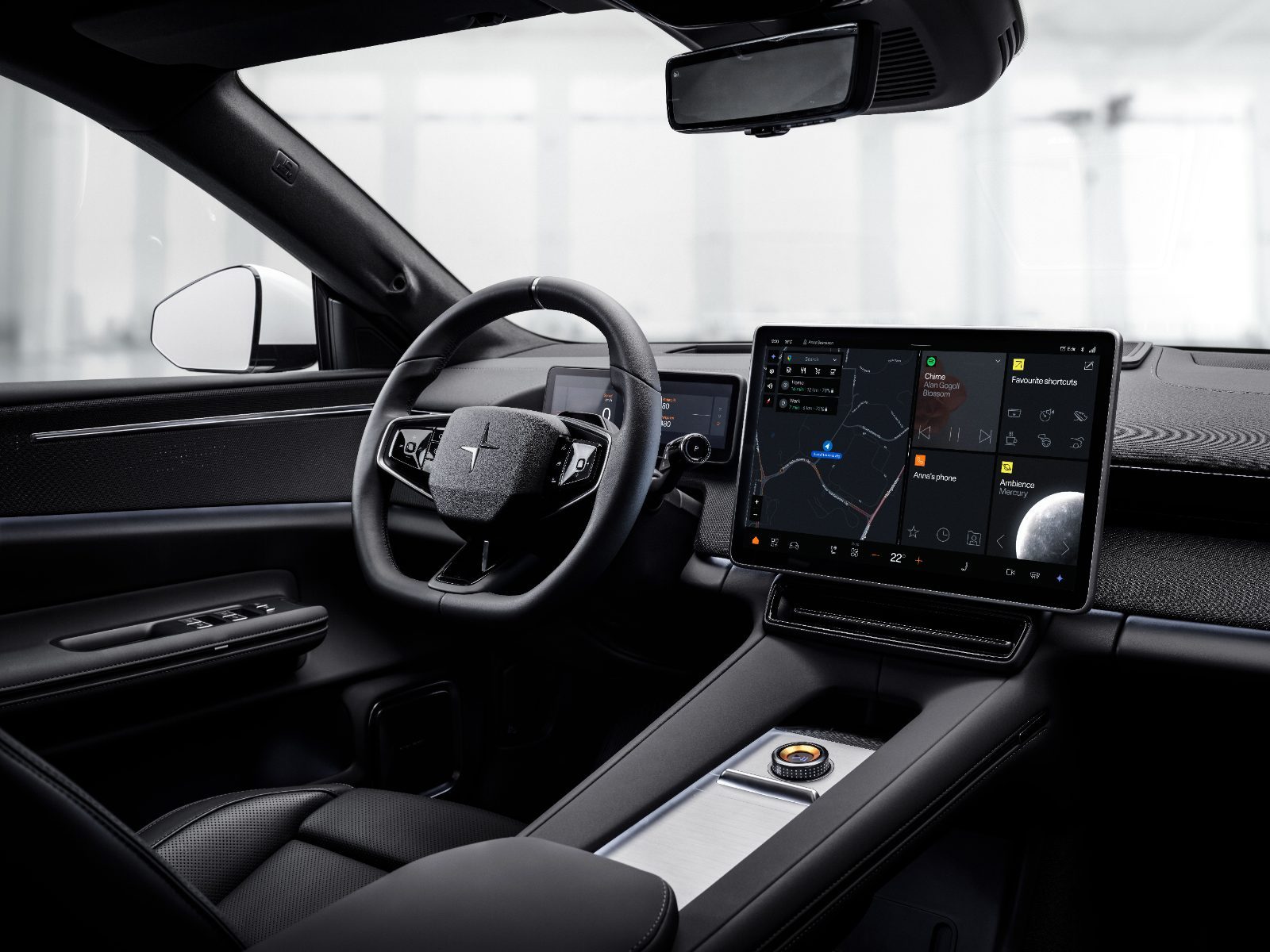
Charging tops out at 200 kW DC and 22 kW AC in selected markets. A Performance pack adds ZF active dampers, Brembo brakes with gold calipers, and 22-inch wheels on Pirelli P Zero tires.
Polestar also confirmed Vehicle-to-Load is coming to all Polestar 4 vehicles, delivering up to 3.3 kW of AC power through a certified adapter, alongside a new Camping mode that turns the parked car into a climate-controlled space. Google Gemini replaces Google Assistant as the in-car voice AI, rolling out across 22 countries in 16 languages.
Pricing and availability
Polestar 4 SUV pricing starts at €57,900 for the Rear motor, €65,900 for the Dual motor, and €76,300 for the Performance pack (German base prices, incl. VAT).
The SUV is built in Busan, South Korea, where production started in the second quarter of 2026. First customer deliveries are planned for the fourth quarter of 2026. Polestar CEO Michael Lohscheller said the first shipment “is on the way to our customers.”
Electrek’s Take
Personally, I didn’t have any problem with the lack of a rear window in the Polestar 4. It was better implemented than in the Cybertruck, for example. But this is still the right move. The company took its best-selling model, gave it the practicality buyers actually want — more cargo, more headroom, roof rails, V2L, a camping mode — and quietly fixed the one feature everyone complained about.
Top comment by stetrain
It looks great. Hopefully we get something like an electric Volvo V60 eventually in the US.
The timing matters. Polestar just posted record retail sales of 30,423 cars in the first half of 2026, but it’s still deeply unprofitable and leaning on Geely for support. A more versatile, better-priced version of its most successful model is exactly the kind of low-risk volume play it needs right now, and €57,900 in Germany undercuts a lot of the compact executive SUV field on paper.
Of course, this version of the vehicle could do well in the US and since it is being produced in South Korea rather than China, it looks like Polestar was aiming for the US market – a decision it likely made before being kicked out of the market.
I think Polestar makes great EVs that are really fun to drive. I hope Geely keeps supporting them because I truly believe that they could become an impressive brand if they can find their footing in this currently wild EV market, especially for them in the US.
Charge your electric vehicle at home using rooftop solar panels. Find a reliable and competitively priced solar installer near you on EnergySage, for free. They have pre-vetted installers competing for your business, ensuring high-quality solutions and 20-30% savings. It’s free, with no sales calls until you choose an installer. Compare personalized solar quotes online and receive guidance from unbiased Energy Advisers. Get started here.


FTC: We use income earning auto affiliate links. More.



Comments