
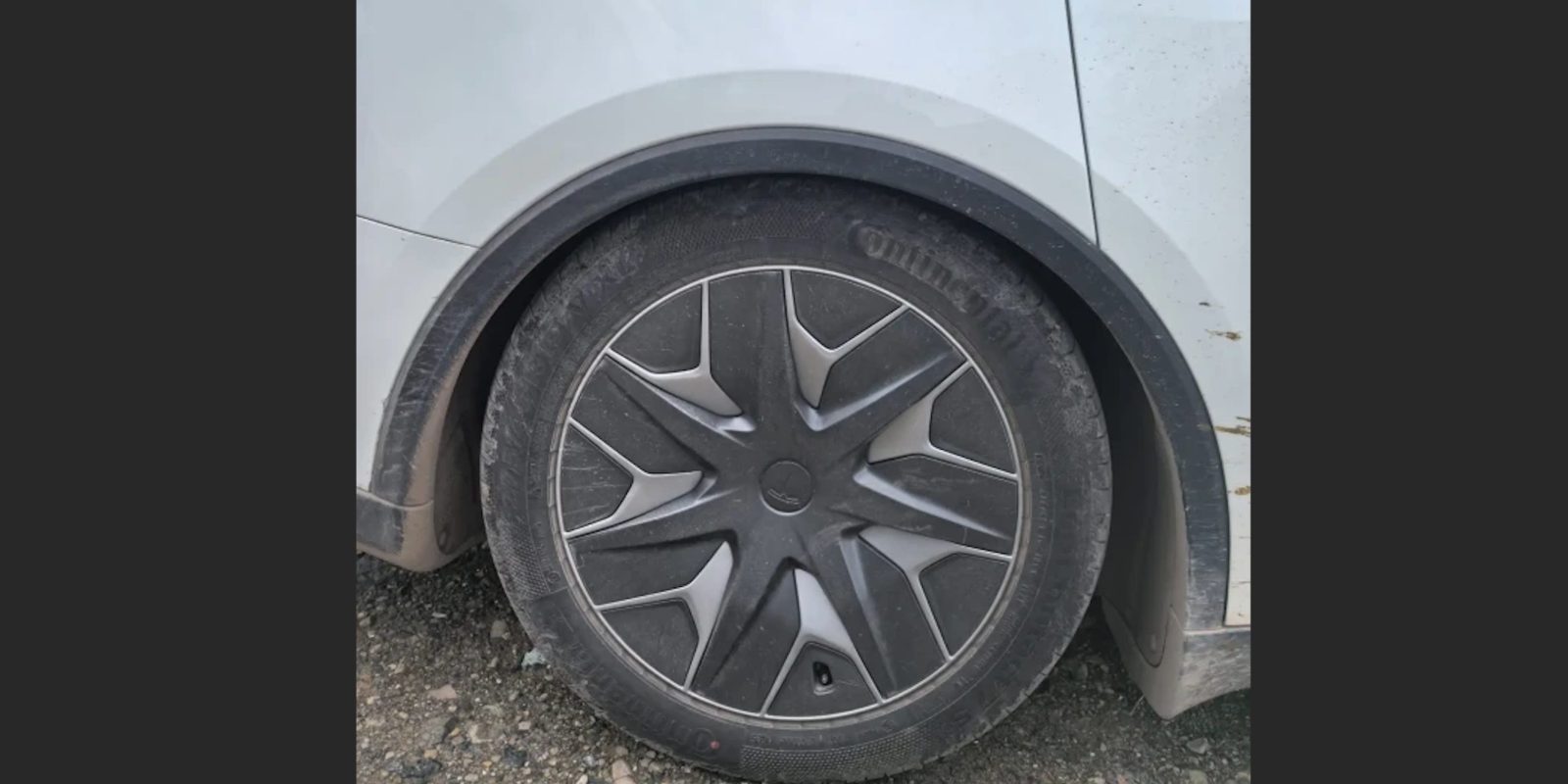
Several Chinese owners of Tesla’s new Model Y L, the larger 3-row version of the popular Model Y, are going to Chinese social media to complain about suspension collapse issues – and it’s enough of a problem that fans have developed a “finger method” to test whether a vehicle is affected.
Tesla released the Model Y L in China almost exactly one year ago, and the model got okay reviews in the brutally competitive Chinese Ev market. It had several improvements over the standard Model Y at the time, and a larger wheel base which allowed for a third row of seats – though those rear seats could only be occupied by rather small people.
The model did debut to an impressive wave of sales, but over the longer term, Tesla sales in China have continued to fall – though perhaps less than the sales of other foreign brands that are getting absolutely crushed by domestic electric vehicle competition.
Now, Tesla seems to be seeing a new set of problems, at least according to Chinese social media reports.
The issue was recently covered on Sina.com and CarNewsChina, but the first collection of reports seems to have been posted in early August on smzdm.com, a Chinese product review/recommendation site (the name seems to be Chinese shorthand for “What’s Worth Buying”).
The report says that in the period of June through August, Chinese social media had seen a pattern of complaints of rear suspension collapse on the new longer, heavier vehicles. The complaints were sourced from Xiaohongshu, sometimes referred to in the West as “Chinese Instagram.”
Users posted various photos of Model Y L vehicles with low rear wheel arches, with smzdm finding at least ten posts showing the same issue, and hundreds of comments on those posts complaining.
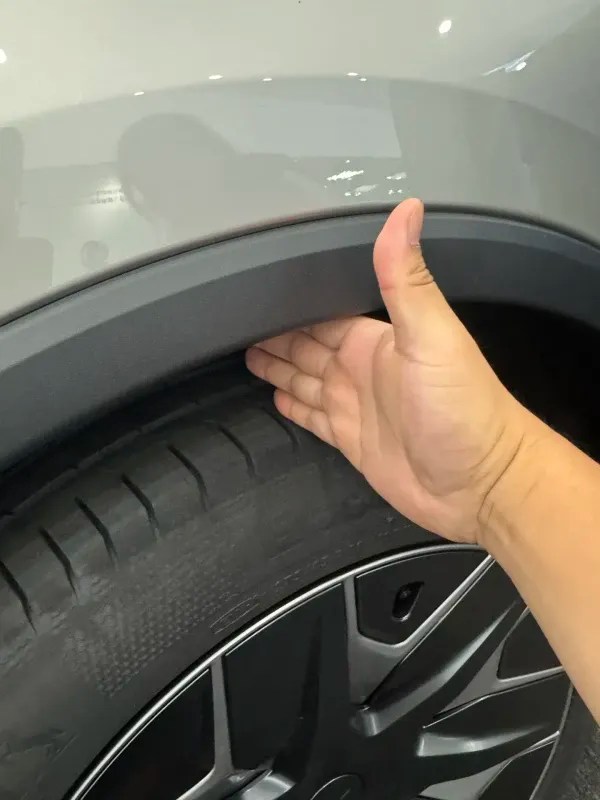
On those posts, owners have developed a “finger test” for other owners to follow as a simple check whether their vehicle might be affected. Simply put your hand inbetween the wheel and wheel arch: if 4 fingers fit, you’re fine; if 3 fingers fit, watch out; if fewer than 3 fingers fit, your suspension has probably been affected by this issue.
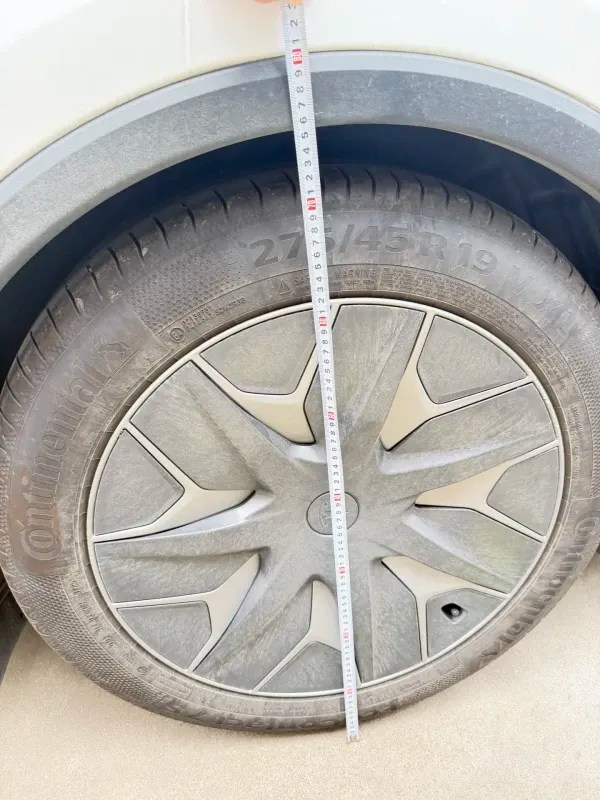
A more accurate test can be done with a measuring tape, measuring from the ground. Normal heights run from 764-804mm. If your wheel arch is less than 764mm off the ground, this will qualify for a replacement from Tesla, per its service guidelines.
A lower rear suspension can dangerously affect handling characteristics, and at the very least alters tire wear patterns to prematurely wear out tires. Some users report a feeling of “swaying” at the rear of affected vehicles.
Most of the affected vehicles seem to have come from the first batch of cars, delivered in September and October of 2025. These cars have mostly been fixed under warranty, but the issue has recurred for some of the vehicles even after service was done on them.
But users are suggesting vigilance. Since Tesla China has not yet made a statement about the issue, social media users have suggested that owners should check their suspension monthly, and keep a log of the heights – either measured with a tape or with fingers, and taking photos to keep track of it all.
This is particularly true for older vehicles from the early batches. It could be that Tesla has improved its processes since then, or it could be that the issue just hasn’t become apparent yet on newer vehicles.
Top comment by Eric Fisher
The Tesla doesn’t have as much ground clearance as what a normal SUV should have in the first place, so the risk of striking the bottom of the battery box will become even greater with this spring problem.
So far, it seems that most vehicles are having the issue solved under warranty, but vigilance is still important. The same applies to overseas Y L owners with Shanghai-assembled cars, such as those in Australia and New Zealand, who should keep an eye on their rear suspension.
This isn’t the first time Tesla has had suspension issues. The US NHTSA is currently probing Tesla over suspension failure (which it has done before), though those are about the front suspension, not the rear. And in Germany, the Model Y was found to have a high defect rate in annual testing, with suspension being the main source of issues.
Whether this same rear suspension issue will affect the US version of the Model Y L, which was just launched in July, is another question. Chinese models are assembled in Tesla’s Shanghai factory, and US models are assembled in Texas. There have been differences between US and Shanghai-built models in the past, so we really have no idea yet whether this problem will be present on US models. Until Tesla develops and announces a fix, keep your fingers ready.
Charge your electric vehicle at home using rooftop solar panels. Find a reliable and competitively priced solar installer near you on EnergySage, for free. They have pre-vetted installers competing for your business, ensuring high-quality solutions and 20-30% savings. It’s free, with no sales calls until you choose an installer. Compare personalized solar quotes online and receive guidance from unbiased Energy Advisers. Get started here. – ad*


FTC: We use income earning auto affiliate links. More.





Comments