
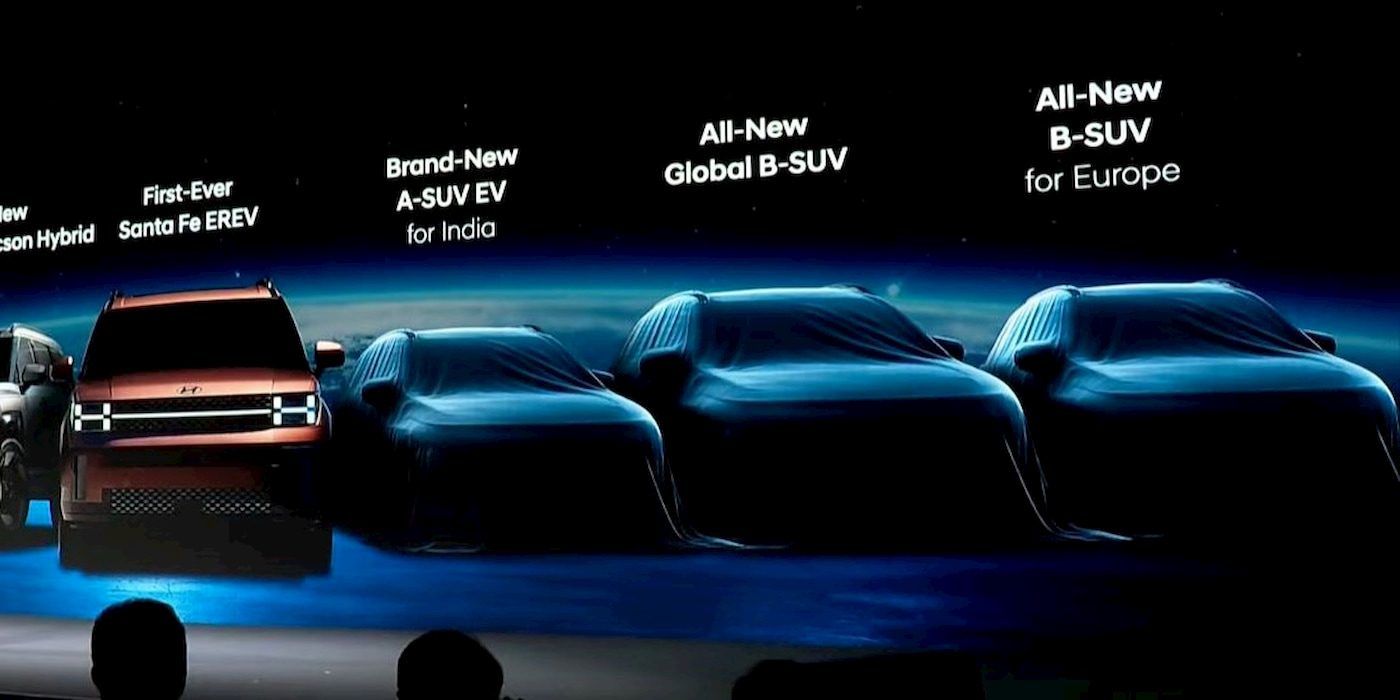
Hyundai has several new electric SUVs coming, including a new global D-segment SUV positioned slightly above the IONIQ 5.
Hyundai plans to launch 100 new vehicles by 2030
“It’s a great time to be at Hyundai,” José Muñoz, Hyundai Motor Company president and CEO, said during the company’s 2026 CEO Investor Day this week.
In the first half of 2026, Hyundai sold 2 million vehicles and achieved record revenue of 95.2 trillion won (about $69 billion), up 3% from the same period last year.
The performance helped propel Hyundai Motor Group, including Kia and Genesis, to become the 2nd most profitable auto group globally behind Toyota and 3rd in volume.
Over the next few years, Hyundai is betting on AI, robotics, software, batteries, and other new tech to drive growth as it transitions from a traditional automaker to a tech and physical AI company that also produces great cars.
By 2030, Hyundai aims to sell 5.5 million vehicles globally, up from 4.1 million in 2025. Of which, electrified vehicles, including hybrids, fully electric vehicles, and extended-range electric vehicles (EREVs), will account for 60% of the mix, a big jump from just 23% in 2025.
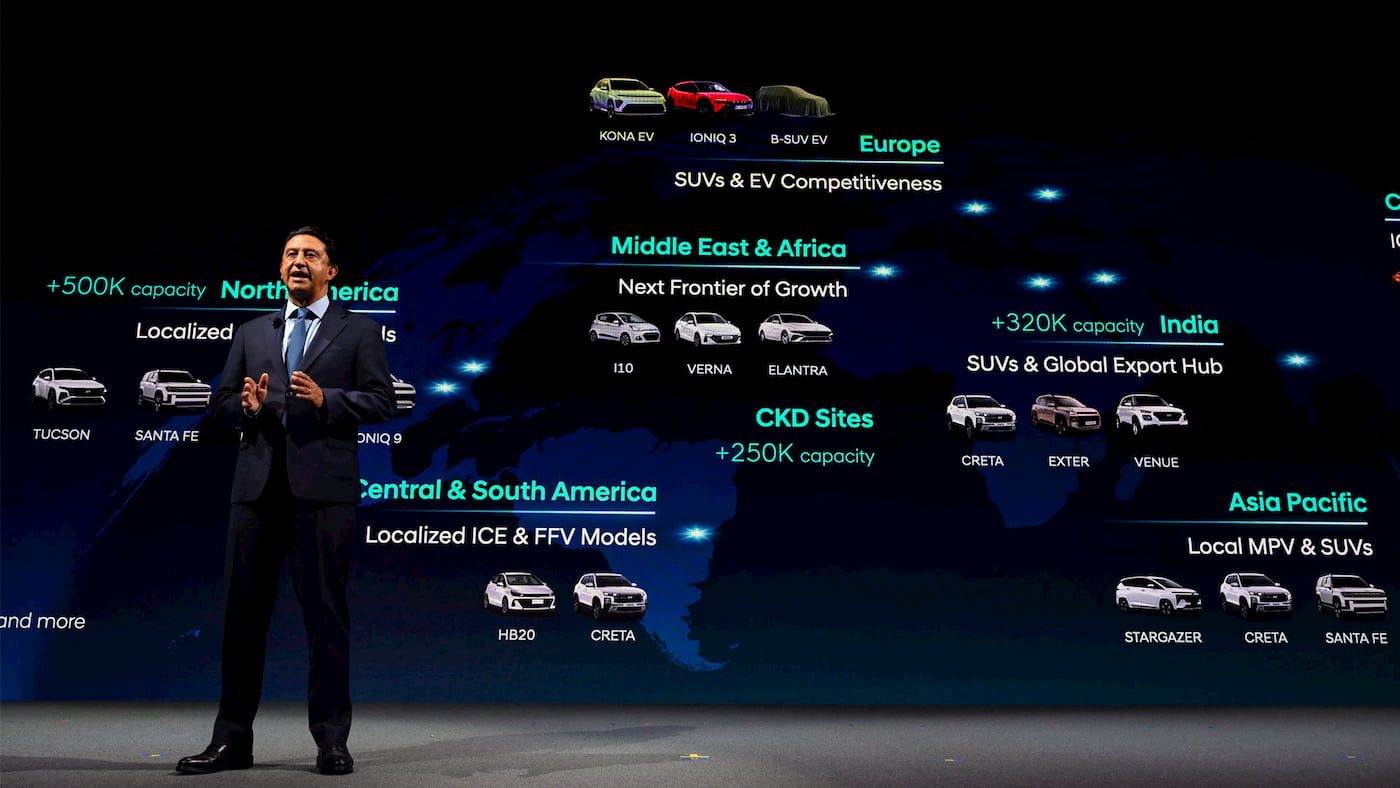
Hyundai and Genesis plan to launch 100 new or refreshed vehicles globally between now and 2030, including 58 in North America, 49 in South Korea, 41 in Europe, and 26 in India.
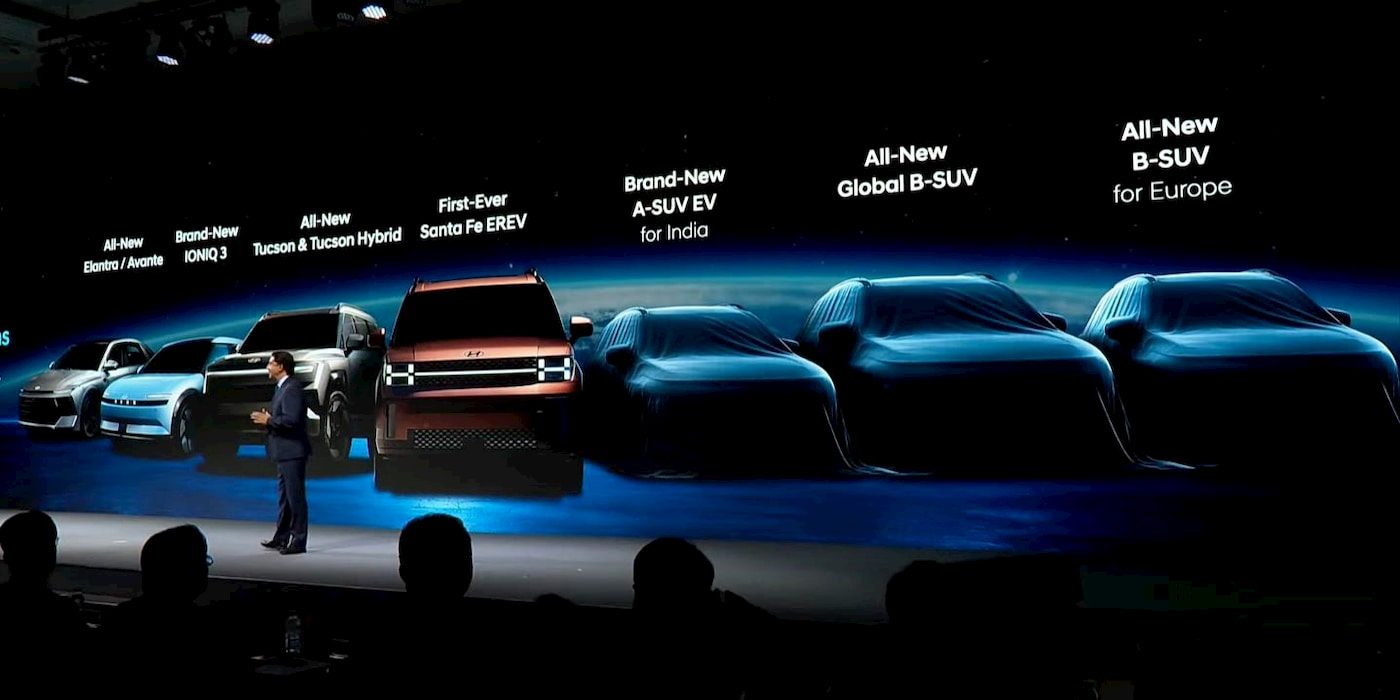
Electric vehicles, hybrids, and EREVs
Over the next eight months, Hyundai will launch seven new vehicles, including the new Elantra (Avante in Korea), IONIQ 3, new Tucson and Tucson Hybrid, its first-ever Santa Fe EREV, plus a new electric A-SUV for India, a new global B-SUV, and another new B-SUV for Europe.
Later in the presentation, Muñoz revealed five new EVs set to launch in Europe. These include the two new B-segment SUVs, two light commercial vehicles, and a mysterious “D-SUV.”
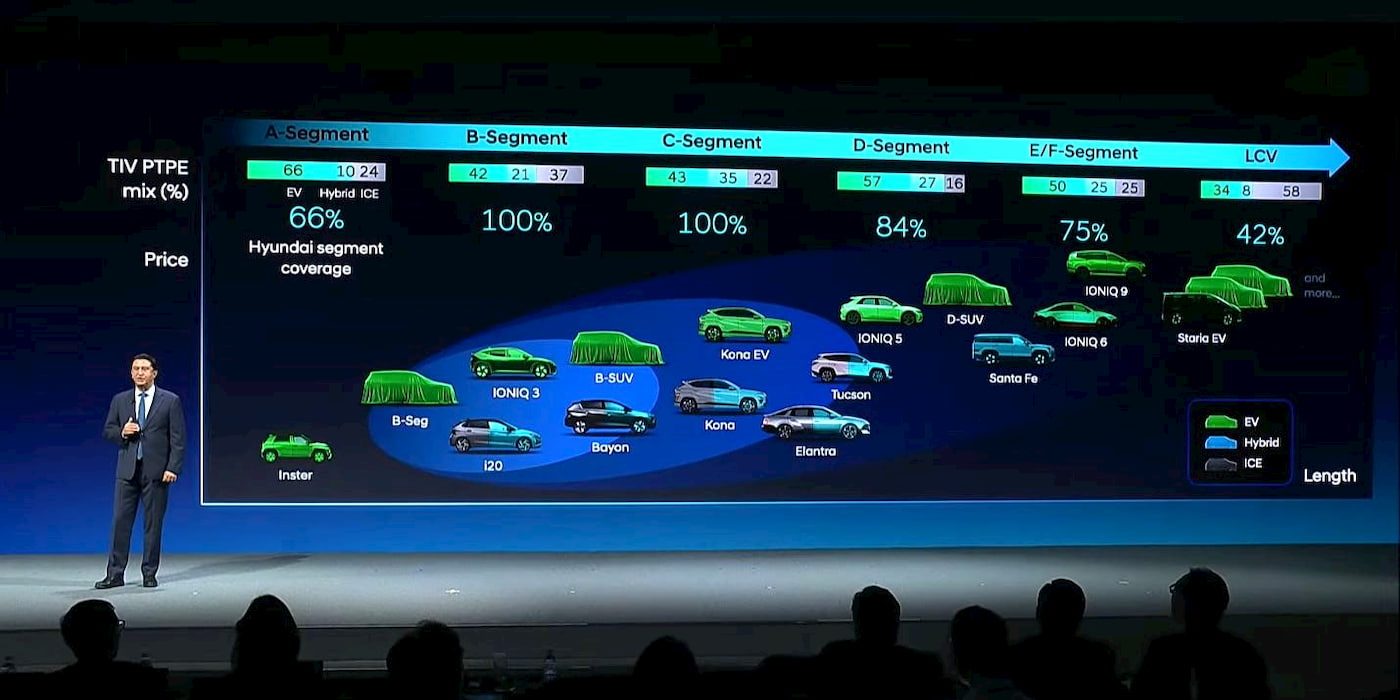
The D-segment SUV was shown covered, sitting between the IONIQ 5 and Santa Fe in Hyundai’s lineup.
No other details were revealed about the new electric D-SUV, but it appeared while Muñoz was explaining Hyundai’s China strategy.
Hyundai is “tripling down on the world’s largest and most competitive market,” Muñoz said. Its new “In China, for China” strategy relies on local partnerships for tech and development, beginning with the IONIQ V launched earlier this year.
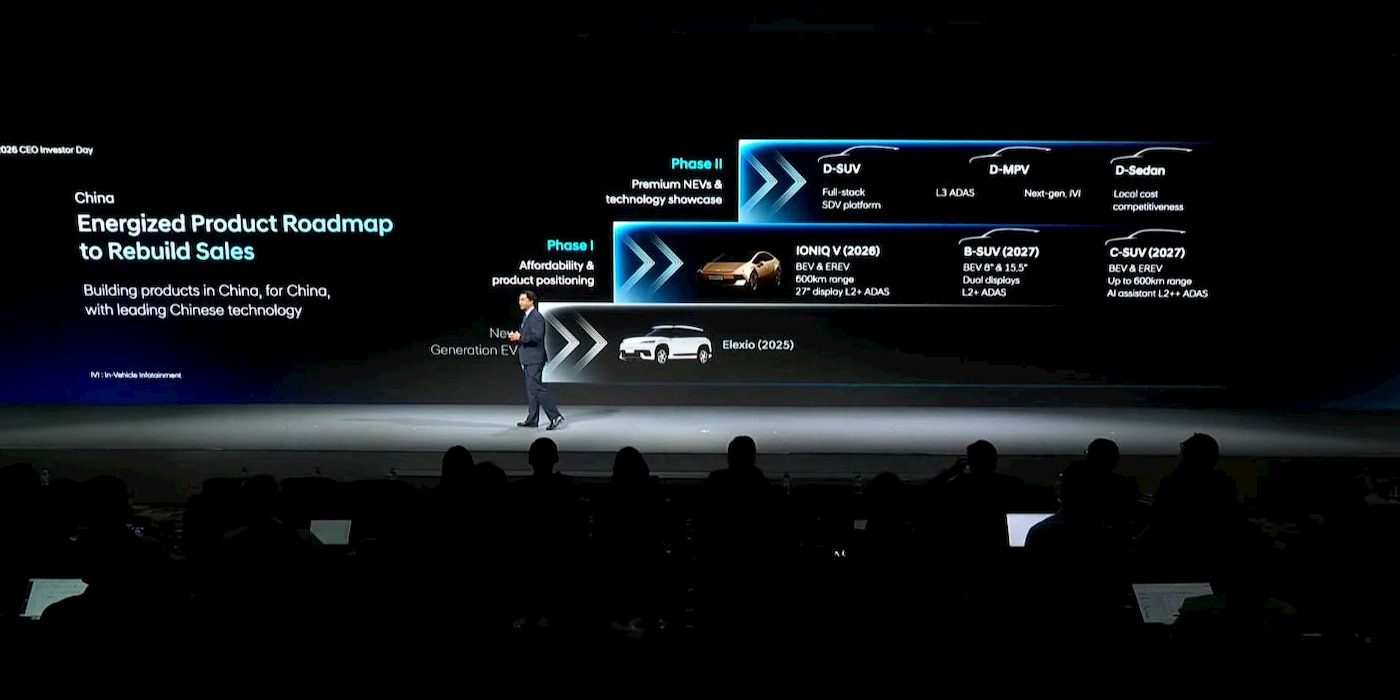
In 2027, Hyundai will introduce a new B-SUV and C-SUV, followed by the D-SUV, a D-MPV, and a D-sedan as part of “Phase II,” which includes premium NEVs and technology.
Moving to SDVs
The D-SUV will be based on a new full-stack SDV platform. Hyundai plans to apply Level 2 ADAS to its first mass-produced SDV model in 2028 through a partnership with NVIDIA.
Hyundai’s in-house autonomous driving AI, Atria AI, will begin collecting data on roads in Korea by the end of 2026. The company will use the data to advance the technology and eventually offer Level 2 to Level 4 autonomous driving capabilities.
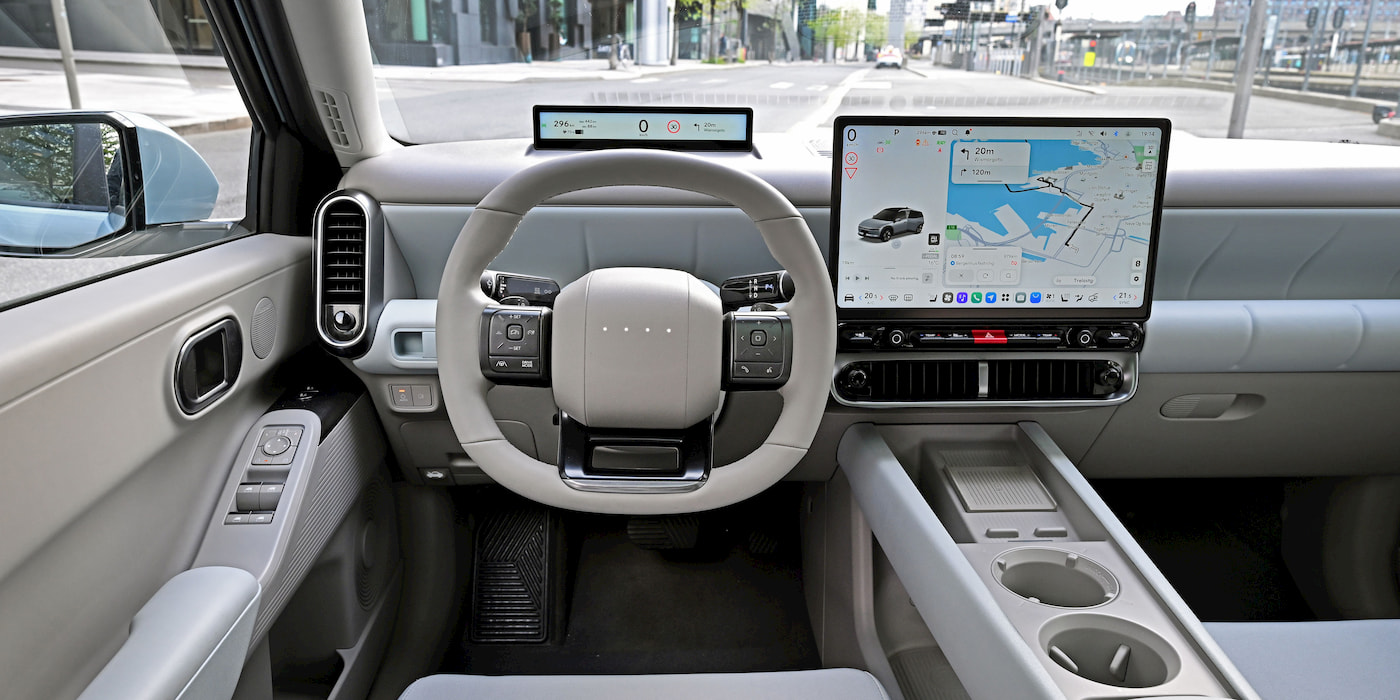
It will feature Hyundai’s next-gen Pleos Connect infotainment system. The IONIQ 3 is Hyundai’s first European vehicle to feature the new setup.
Built directly on the Android Automotive OS, Hyundai’s new infotainment system is similar to using a smartphone with apps, customizable screens, and Gleo AI, an in-car AI companion.
Top comment by Swallow_Doretti
The D-segment SUV is the IONIQ 7, which should be roughly Santa Fe-sized and will likely be built in the expanded Georgia plant. The presentation did explicitly say that "North America" is included for that vehicle. Hyundai also confirmed the forthcoming IONIQ 4 is going global, and that'll likely be a Hyundai version of the EV3.
Beyond that, Hyundai did say that every platform will spawn at least 7 vehicles, so I would expect a few BEVs coming from that as well (the Kia pickup and probably something BOF for Hyundai).
EV sedans for the US are a lot less likely as long as the current administration is in place, or until the market for sedans grows enough again to make US production financially worthwhile.
Will Hyundai bring the new electric D-segment SUV to the US? While nothing is confirmed, according to TheKoreanCarBlog, the new D-SUV is a global model.
In the US, its biggest market, Hyundai Motor has grown faster than any automaker over the past decade. Hyundai Motor sold a record 490,000 vehicles (retail) in the first half of the year, thanks to its growing lineup of electrified vehicles.
The IONIQ 5 was the third-best-selling EV in the US, behind the Tesla Model Y and Model 3. A slightly bigger, high-tech D-segment SUV might hit the sweet spot at the right price.


FTC: We use income earning auto affiliate links. More.



Comments