
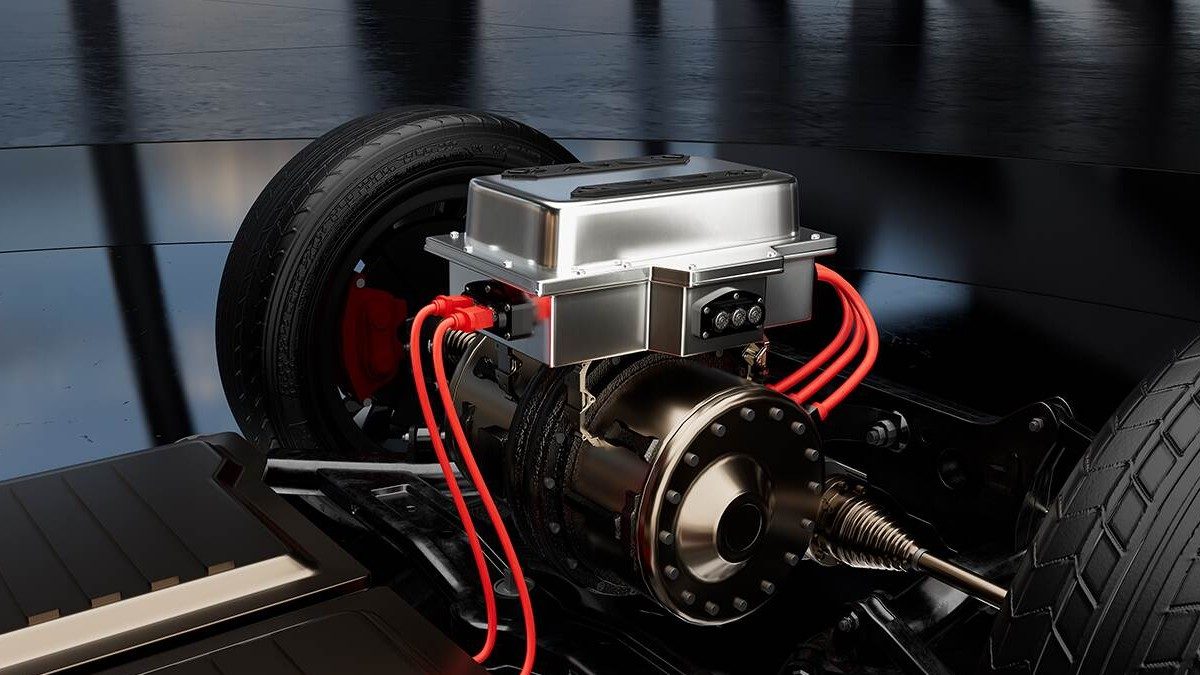
A tiny new sensor from Texas Instruments (TI) could help future EVs squeeze more range from their batteries while delivering smoother acceleration and less motor noise.
TI’s new TMCS2100-Q1 sensor is designed for the traction inverter – the part of an EV that controls how electricity moves from the battery to the motor. Think of the inverter as the motor’s power manager: It needs to know exactly how much electricity is flowing so it can deliver the right amount of power at the right moment.
The more accurate that measurement is, the more precisely the EV can control its motor. That matters to drivers because sloppy measurements can cause tiny fluctuations in power, known as torque ripple. Drivers may experience that as less-smooth acceleration, while the EV can lose some energy as extra heat and motor noise.
Existing sensors force automakers to make a compromise. Sensors with a magnetic core are accurate, but they’re larger and heavier. Smaller sensors without a core take up less space, but vibration can throw off their readings as the car moves.
TI’s new sensor is compact and designed to be accurate. Instead of measuring the magnetic field around the electrical current in just one direction, it measures it horizontally and vertically at the same time. That allows it to compensate when vibration shifts the sensor slightly out of position.
TI says that makes the TMCS2100-Q1 20 times more accurate than current single-direction coreless sensors. It keeps measurement errors below 1% even when its position shifts by 0.4 millimeters.
That may sound like an absurdly tiny amount of movement, but EV powertrains need extremely precise measurements, especially newer 800-volt systems that can deliver a lot of power very quickly.
For EV drivers, the possible benefits include smoother acceleration, a quieter motor, improved efficiency, and potentially greater range from the same battery. Because the sensor is compact, it could also help automakers build smaller and lighter traction inverters.
Top comment by BCGeiger
This is good. Sure we can hope for a breakthrough, (SS Batteries for example), but a million tiny improvements and refinements can add up to something huge. It’s all good.
This one component won’t add a predictable number of miles to an EV’s range. Its real-world impact will depend on how automakers use it and the rest of the powertrain. But EV efficiency is built from lots of small improvements, and more accurate control of the electricity powering the motor is a useful one.
Read more: Base Power raises $1B to roll out its giant new home battery

If you’re looking to replace your old HVAC equipment, it’s always a good idea to get quotes from a few installers. To make sure you’re finding a trusted, reliable HVAC installer near you that offers competitive pricing on heat pumps, check out EnergySage. EnergySage is a free service that makes it easy for you to get a heat pump. They have pre-vetted heat pump installers competing for your business, ensuring you get high quality solutions. Plus, it’s free to use!
Your personalized heat pump quotes are easy to compare online and you’ll get access to unbiased Energy Advisors to help you every step of the way. Get started here. – *ad


FTC: We use income earning auto affiliate links. More.




Comments