
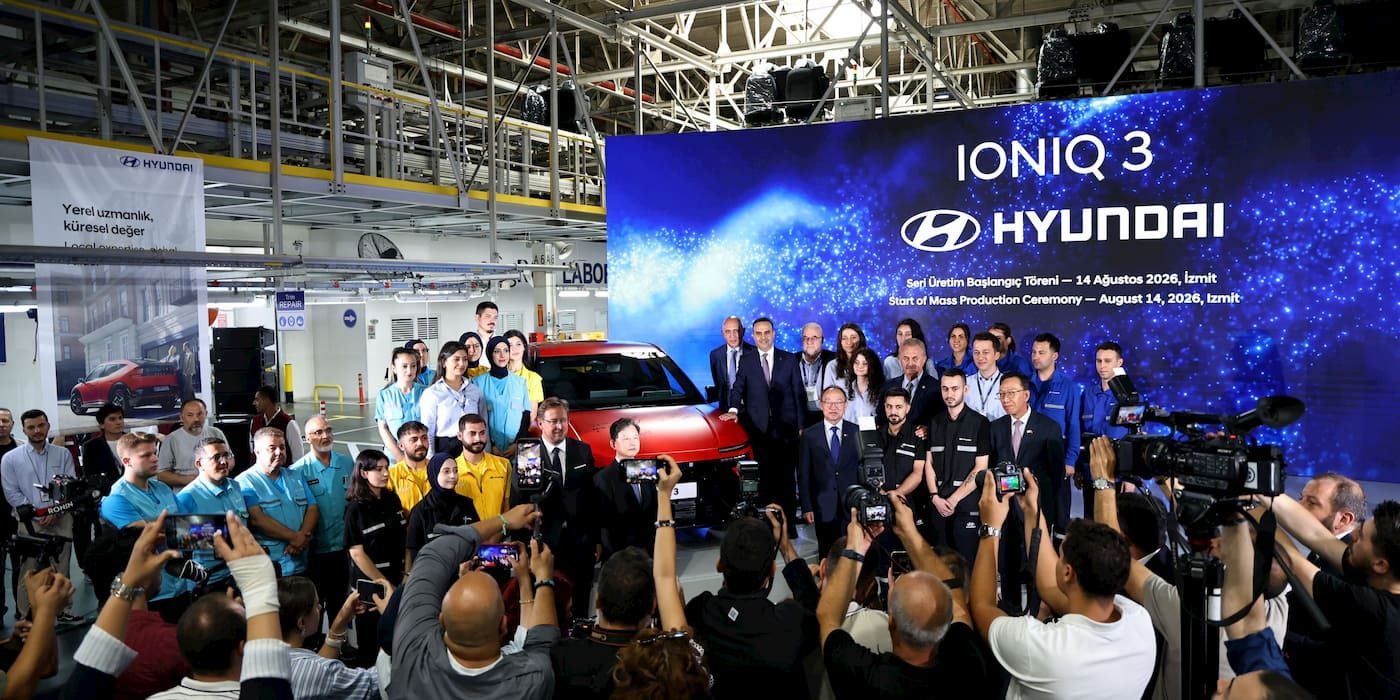
Hyundai wants the IONIQ 3 to be “the best vehicle in Europe.” With sales set to begin soon, the electric hatch is now rolling off the line.
Hyundai begins IONIQ 3 EV production in Turkey
As Hyundai’s first B-segment electric vehicle, the IONIQ 3 arrives at a key time as Chinese automakers like BYD are quickly gaining market share in Europe.
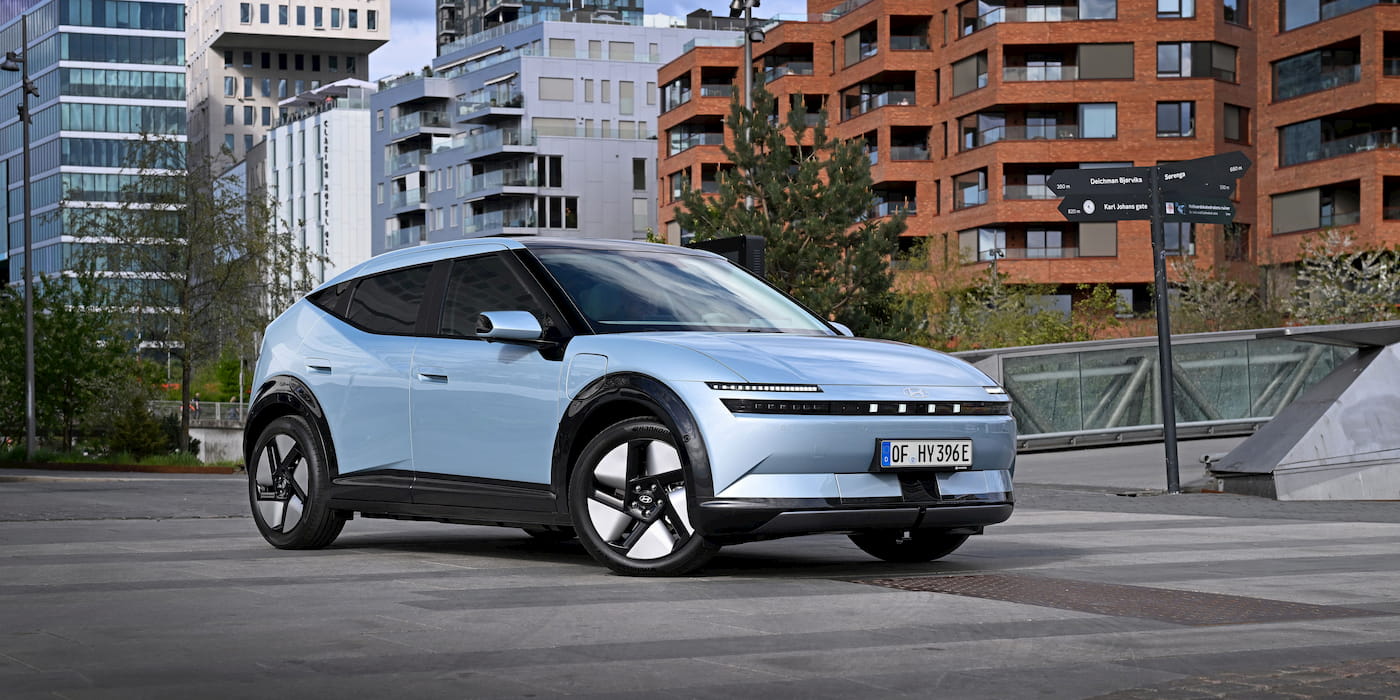
The electric hatch is Hyundai’s smallest IONIQ model yet, slotted in between the Inster and Kona Electric, and its first EV specifically designed for Europe.
In Europe, B-segment vehicles make up around 15% of car sales. While EVs currently account for roughly 14% of total B-segment vehicle sales in Europe, that number is expected to reach 65% by 2035.
Hyundai held a ceremony at its Izmit plant in Turkey on Friday to celebrate the official start of IONIQ 3 production.
The IONIQ 3 is Hyundai’s first electric vehicle produced at the facility following a €250 million ($290 million) investment to upgrade it for EV production.
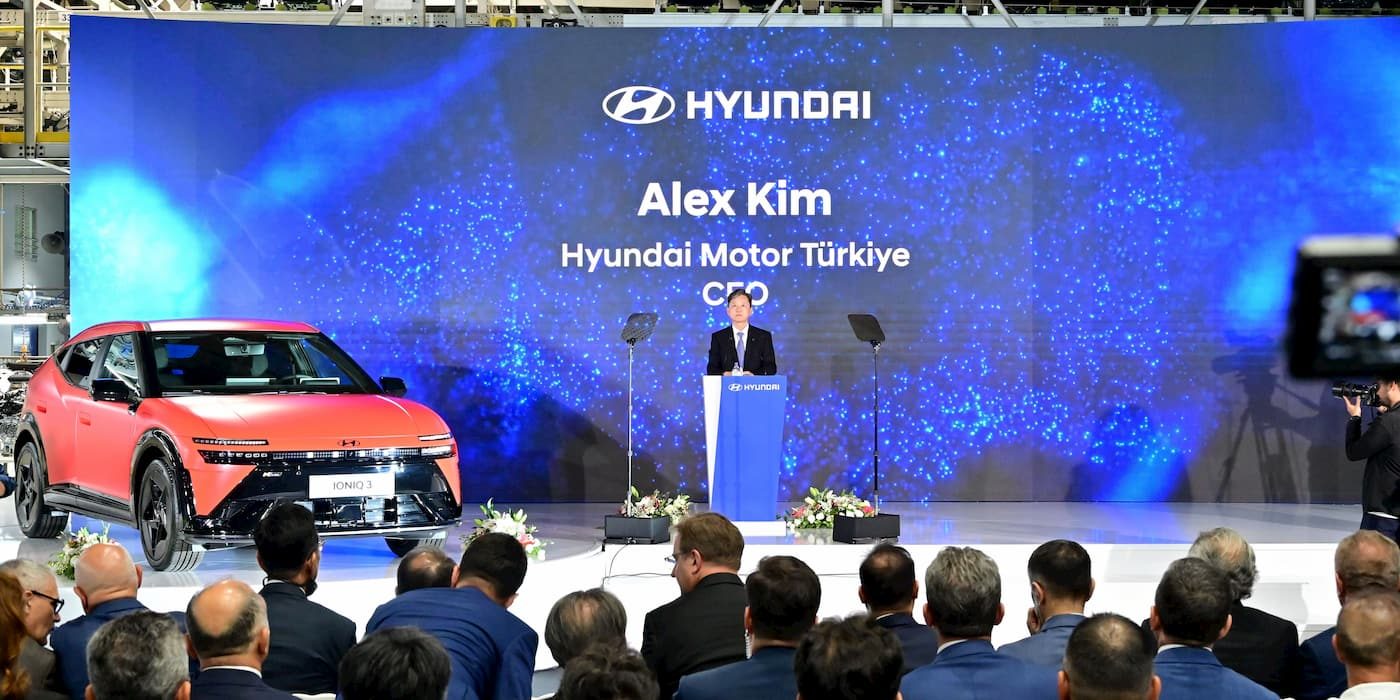
Hyundai will initially produce 30,000 IONIQ 3 vehicles annually at the facility. As part of the upgrades, Hyundai said about 50% of the plant has been modernized. Next year, it will begin production of the next-generation BAYON and i20 at the facility.
Earlier this month, Hyundai Motor Group’s CEO Chung Euisun visited the Izmit plant to “personally inspect” it as it prepared for mass production.
“We must prioritize quality from the early stages of mass production,” he told employees at the facility, adding, “In particular, regarding safety, we must ensure that it is recognized as the best vehicle in Europe.”
Hyundai said the IONIQ 3 will go on sale in September, rolling out to new markets throughout the year.
In a few markets, prices have already been revealed. The IONIQ 3 Standard Range is listed on Vertu Motors’ website at £22,245 ($30,000) in the UK. In the Netherlands, IONIQ 3 prices start at €27,995 ($32,000).
| Hyundai IONIQ 3 trim | Battery | Starting Price |
| Advance | 42 kWh | £22,245 ($30,000) |
| Advance | 61 kWh | £25,745 ($34,500) |
| Premium | 61 kWh | £27,445 ($37,000) |
| Ultimate | 61 kWh | £29,945 ($40,000) |
| N-Line Evo | 61 kWh | £31,945 ($42,700) |
Hyundai’s electric hatch is available with two packs: 42.2 kWh and 61 kWh. The standard range 42.2 kWh battery provides a WLTP range of up to 213 miles (344 km), while the extended-range 61 kWh battery delivers a “class-leading” range of 308 miles (496 km).
With DC fast charging, Hyundai said the standard IONIQ 3 with the 42.2 kWh battery can charge from 10% to 80% in about 29 minutes. The long-range 61 kWh battery takes about 30 minutes.
The IONIQ 3 is also Hyundai’s first vehicle in Europe equipped with its new Pleos OS and infotainment system.
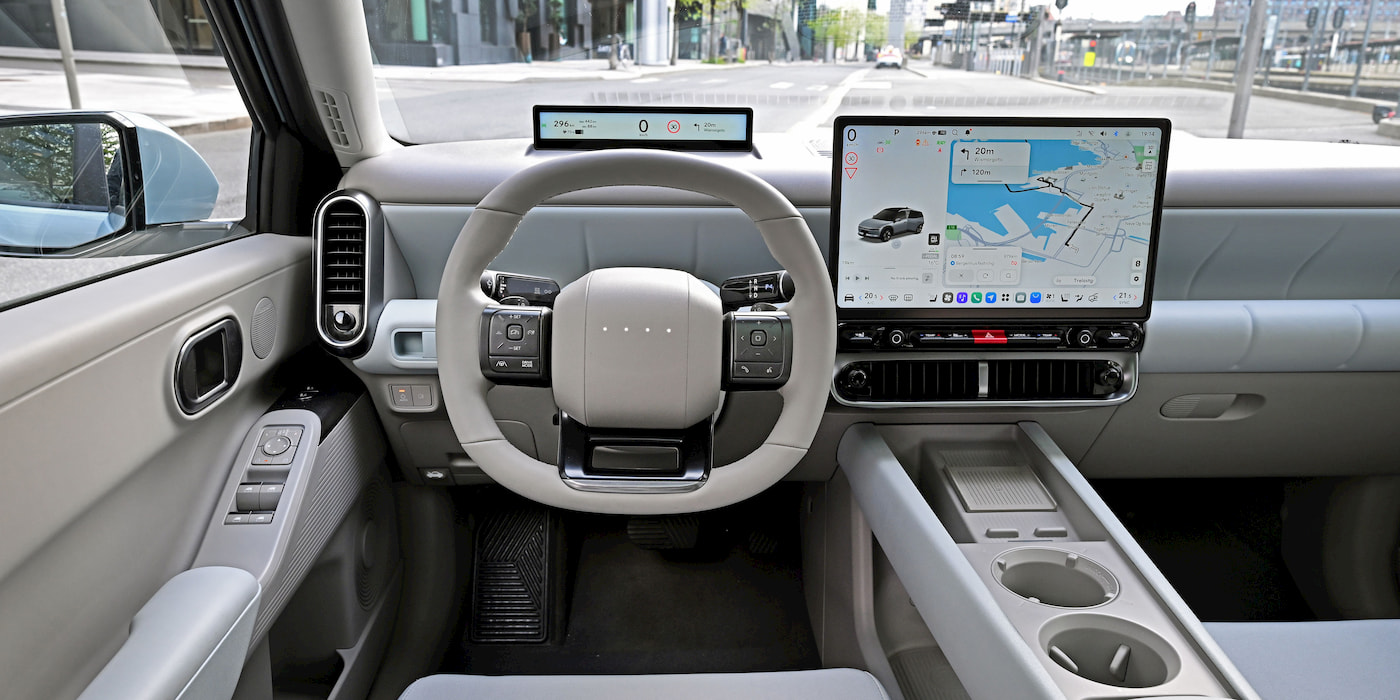
Based on Android Automotive OS, the system is similar to a smartphone with apps and customizable screens.
Top comment by *Rich
Why can't Americans have nice affordable things too w/o having to be a billionaire?
Buyers will be able to choose from 12.9″ or 14.6″ center infotainment screens, plus an optional driver display. The system also includes Gleo AI, Hyundai’s new AI companion.
The Hyundai IONIQ 3 is 4,155 mm (163.5″) long, 1,800 mm (70.9″) wide, and 1,505 mm (59.3″) tall, with a wheelbase of 2,680 mm (105.5″), or slightly smaller than Kia’s EV3.
Despite its compact size, Hyundai said the electric hatch is expected to set the benchmark in its segment with a luggage capacity of up to 441 liters.


FTC: We use income earning auto affiliate links. More.



Comments