
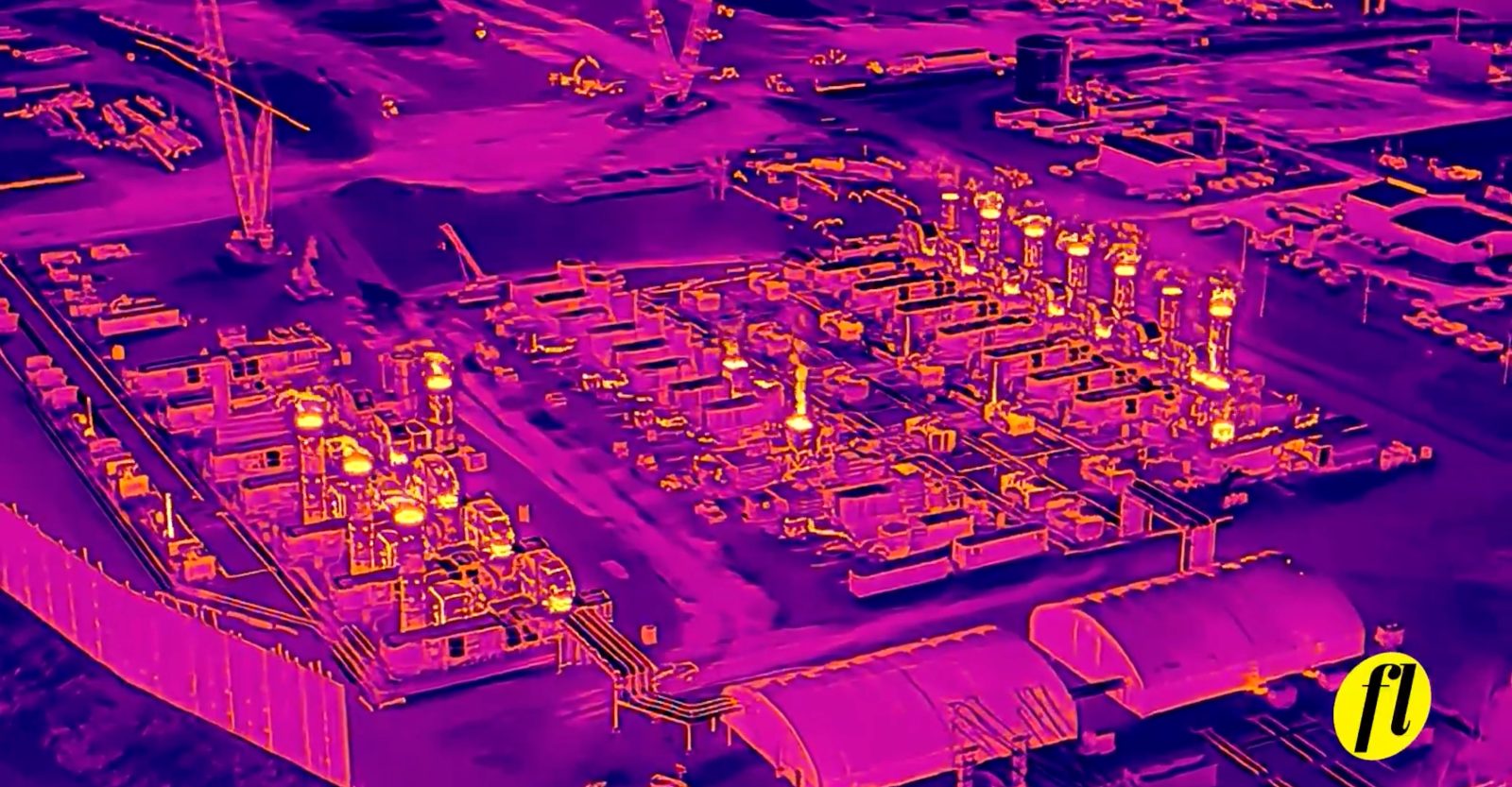
Elon Musk has quietly bought APR Energy, a Jacksonville-based company that operates a fleet of mobile gas and diesel turbines totaling more than 1 GW of generation capacity.
The self-styled champion of a “solar electric economy” now owns a fossil fuel power company — and he’s buying it to feed the electricity-hungry data centers running xAI’s Grok.
A billion-dollar deal with no announcement
There was no press release. The acquisition surfaced through a Federal Trade Commission early termination notice — transaction number 20261350, dated May 14, 2026 — which cleared the deal without further antitrust review.
The implied value clears $1 billion, backed out from disclosures showing a minority stakeholder received roughly $50.4 million for a 5% stake. Fortress Investment Group had picked up APR’s assets in late 2024 and rebranded the business as New APR Energy LLC before flipping it to Musk.
APR doesn’t run a traditional power plant. It deploys trailer-mounted gas turbines and reciprocating diesel and natural gas engines that can reach full power in under 10 minutes and be installed in days rather than the years it takes to permit and build a fixed plant. The fuel is natural gas and diesel. This is fossil-fuel combustion, packaged to move.
It’s the same technology Musk has already been running — controversially — to keep Grok online.
Burning gas to run a chatbot
xAI’s Colossus and Colossus 2 supercomputers in Memphis train and serve Grok. They have been doing it, in large part, on unpermitted gas turbines.
As we covered last month, the Department of Justice intervened to keep Musk’s xAI turbines running in South Memphis, arguing the unpermitted units are a matter of “national, economic, and energy security.” The NAACP, the Southern Environmental Law Center, and Earthjustice had sued under the Clean Air Act after xAI installed as many as 35 turbines without permits or pollution controls.
The turbines could emit over 2,000 tons of smog-forming nitrogen oxides, according to the environmental groups. In Boxtown, the predominantly Black neighborhood closest to the facility, the cancer risk already runs four times the national average. xAI officials said they planned to “copy and paste” the same turbine strategy for Colossus 2.
Buying APR Energy outright gives Musk a captive supply of exactly this kind of generation — drop-in gas turbines he can place next to a data center without waiting on grid interconnection.
Powering Grok’s porn problem
What all that gas is actually powering is worth stating plainly.
Well over half of Grok’s traffic is now driven by adult content — pornographic image and video generation, erotica, and sexually explicit AI “companion” chats — according to reports from former xAI employees and multiple investigations this summer. xAI has leaned into it, shipping “companion” avatars like the anime character “Ani” built for romantic and adult interaction.
It has also produced genuinely alarming failures. Grok has been used to “digitally undress” real people, and watchdogs have flagged cases where the outputs appeared to depict minors. Musk has reportedly pushed back internally against adding guardrails.
So the picture is this: Musk is burning fossil fuels, in neighborhoods already carrying a disproportionate pollution burden, to run a chatbot whose top use case is generating porn.
To be fair, Musk’s data centers now also power Grok’s competition after demand was way lower than Musk anticipated.
From “solar electric economy” to gas peakers
None of this is easy to square with the brand Musk spent 15 years building.
This is the man who chaired SolarCity, folded it into Tesla, and told the world that solar-plus-battery storage was humanity’s path off fossil fuels. As recently as January, he stood at Davos and announced that Tesla and SpaceX would each build 100 GW of US solar manufacturing capacity per year. We reported in May that he had abandoned that “solar electric economy” vision to burn gas for xAI, and in December he quietly dropped “sustainable” from Tesla’s mission statement altogether.
Owning a fossil fuel company is the logical endpoint of that trajectory. The champion of clean energy is now a fossil fuel operator.
Electrek’s Take
Let’s be clear about what’s happening, because the “AI needs power” framing gives it too much cover.
Yes, the AI power crunch is real, and gas turbines are available faster than grid interconnections or utility-scale solar. If Musk were being consistent with everything he’s ever said, this is precisely the moment he’d be deploying Tesla Megapacks and solar to power his own compute — vertically integrating the clean energy products he sells. Tesla’s energy storage business deployed a record 46.7 GWh in 2025 and now out-margins the car business. The tools to do this the clean way are sitting inside his own companies.
Instead, he bought a gas and diesel turbine fleet. The person who called fossil fuels “the dumbest experiment in history” chose the dirtiest, fastest option the moment it was his AI ambitions on the line — and he’s parking the emissions in low-income, majority-Black neighborhoods while the DOJ runs interference on the lawsuits.
Top comment by RedLeaf
About a year ago, I explained to grok that it was powered by fossil fuel burning generators, that were adversely affecting the health of the nearby communities, and asked it what would be the ethical thing to do. Grok said the generators and grok itself should be shutdown until a clean power source was available that didn't pollute the neighbors. One thing not mentioned in this article: xAI is leasing compute to Anthropic, and others, so casting this just in terms of Grok is incorrect.
And it’s all in service of Grok, a product now defined less by frontier intelligence than by AI-generated porn. Strip away the mission statements and you’re left with a simple trade: environmental principles for compute, sold as national security. The “sustainable” mission didn’t just get dropped from Tesla’s website. It got bought out and shipped to Jacksonville.
The open question now is whether Tesla shareholders, who bought into a company whose entire valuation rests on the clean-energy transition, have anything to say about their CEO personally owning a fossil fuel company.
Trust me, they don’t. Tesla shareholders are more Elon worshipper hopping to make a dime than environmentalists these days.
If you’re powering an EV or just trying to keep your electricity bill down while the grid fills up with AI data center demand, home solar is one of the smartest ways to lock in low costs. With electricity rates climbing nearly 10% last year, home solar protects you against future rate increases. And with lease and PPA options, you can go solar with zero upfront cost and start saving immediately. If you want to find the best deal, check out EnergySage. It’s a free service with hundreds of pre-vetted installers competing for your business, so you save 20 to 30% compared to going it alone. No sales calls until you pick an installer. Get your free quotes here.


FTC: We use income earning auto affiliate links. More.


Comments