
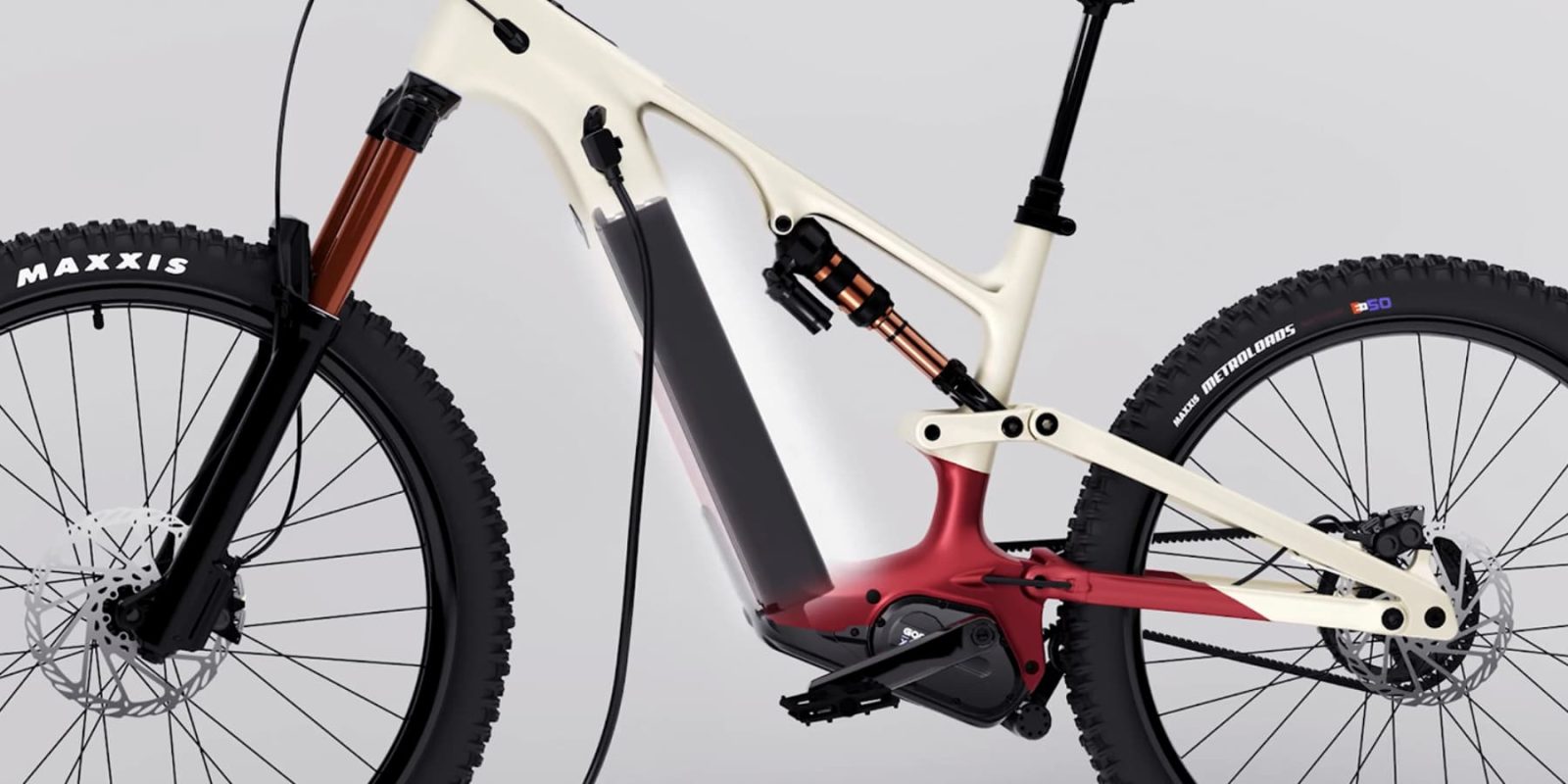
Gobao has officially taken the wraps off several new e-bike drive systems, but while the company’s new continuously variable transmission (eCVT) motors are certainly intriguing, it’s the batteries that may end up stealing the show.
Fast charging has become one of the biggest frontiers in electric mobility, yet e-bikes have largely been left behind. Most riders have simply accepted that a full recharge means plugging in the bike for several hours. Gobao appears ready to challenge that assumption.
The company’s new battery lineup includes 500 Wh, 750 Wh, and 900 Wh options, all of which can reportedly recharge from 0% to 80% at speeds that would have sounded almost impossible just a few years ago. Using Gobao’s new 30 A Super Charger, their 500 Wh battery reaches 80% in just 24 minutes, while their 750 Wh version does it in 28 minutes, and even the largest 900 Wh battery gets there in only 32 minutes.
Those numbers put Gobao well ahead of the charging times offered by most of today’s leading e-bike systems. For comparison, competitors in the eMTB space, such as Bosch’s larger batteries, typically require around 2.5 to 3 hours to reach 80%, while DJI’s Avinox system takes roughly 1 hour and 45 minutes. Gobao’s charging speeds are approaching the type of quick top-ups that EV drivers have become accustomed to at public DC fast chargers.
The batteries are impressive for another reason too: weight. Gobao says its largest 900 Wh battery weighs just 3.7 kg (8.2 lb), making it slightly lighter than DJI’s integrated 800 Wh Avinox battery despite packing an additional 100 Wh of capacity.
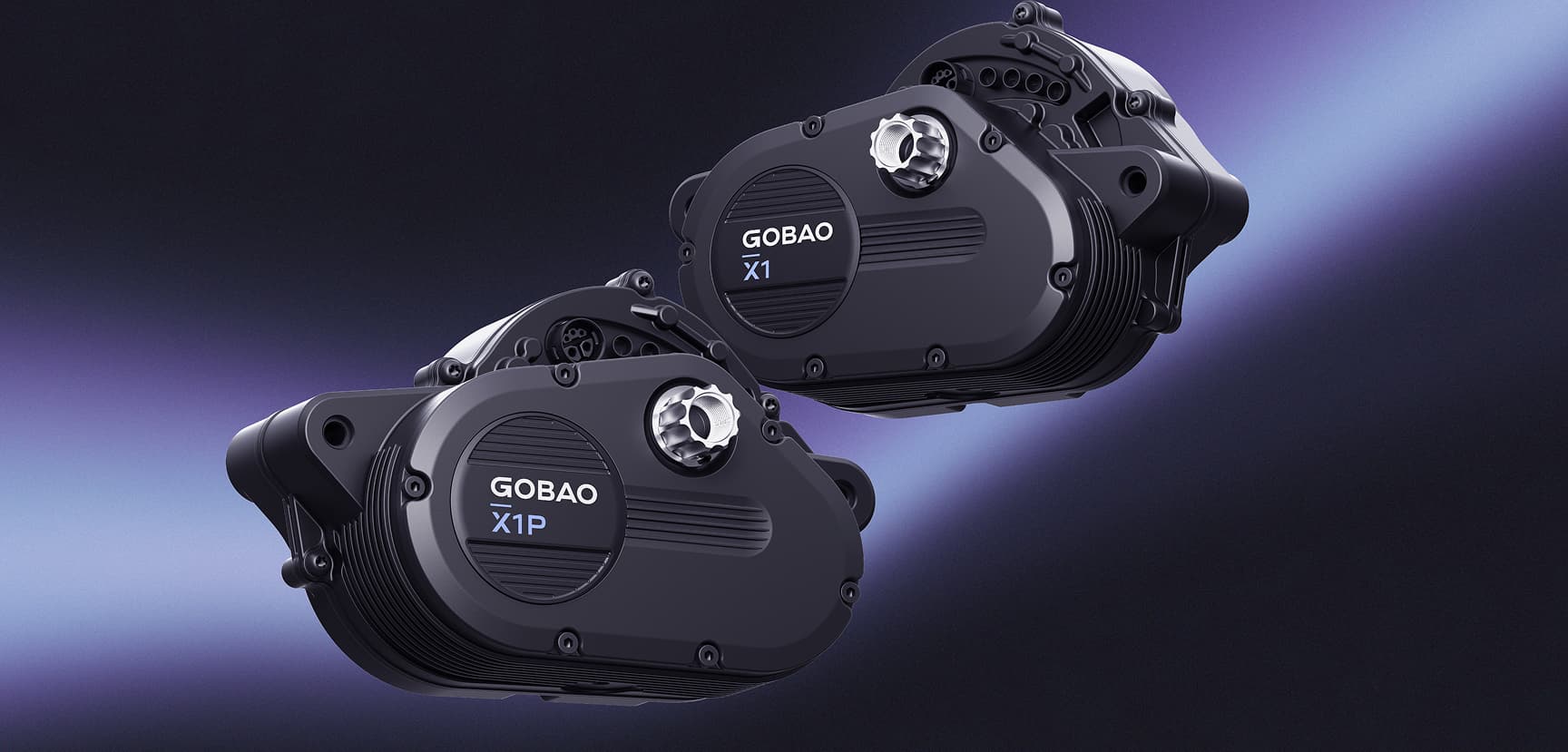
Of course, fast charging is only half the story. Those batteries are designed to pair with Gobao’s new X1 and X1P eCVT drive systems, which replace the traditional derailleur drivetrain with an electronically controlled continuously variable transmission.
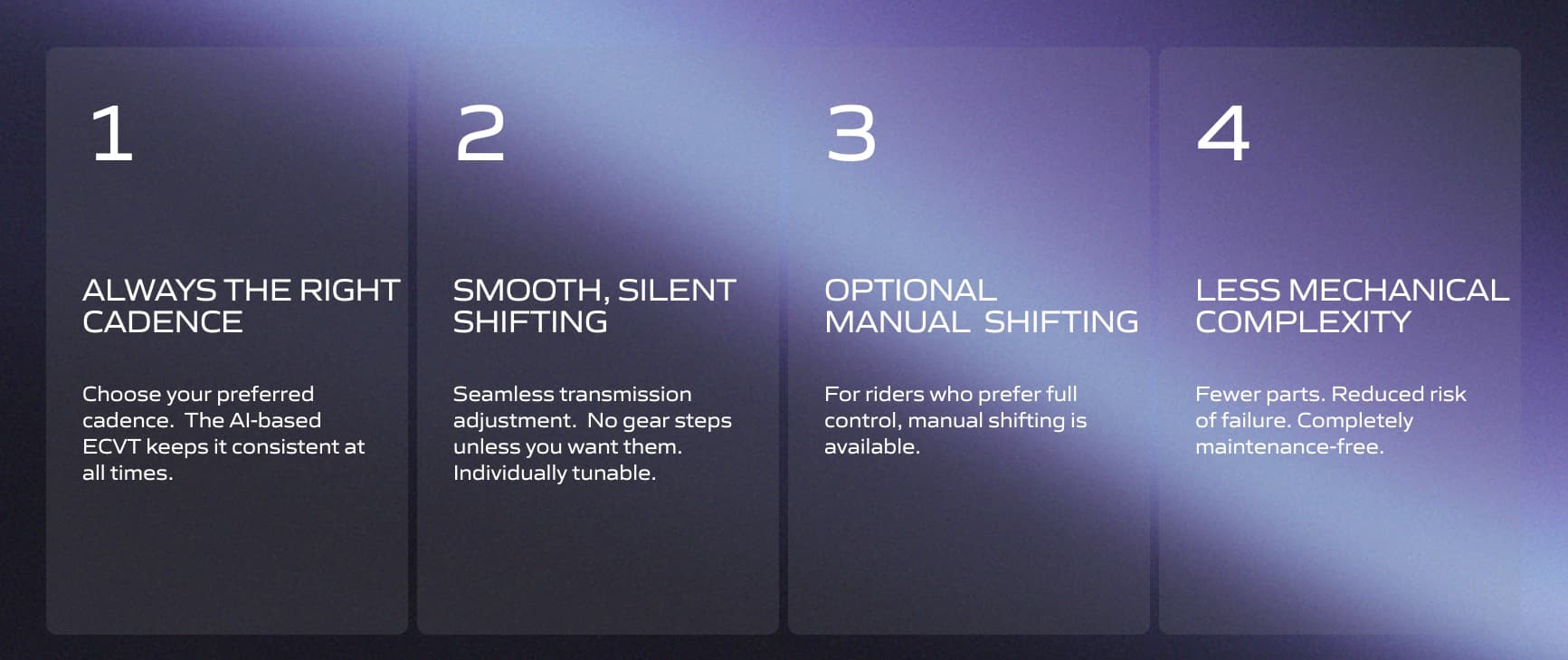
Unlike systems such as the Pinion MGU and other gearbox units that have been integrated into a mid-drive setup, Gobao’s eCVT offers a continuously variable ratio across its range. Riders simply select their preferred pedaling cadence, and the system automatically adjusts the gearing to keep them spinning at that cadence regardless of changing terrain. It’s step-less and largely unnoticed as it works.
The technology relies on two electric motors inside the drive unit. One provides propulsion while a second, smaller motor adjusts the speed of an internal gear, continuously changing the transmission ratio without the stepped gear changes riders are accustomed to.
Interestingly, Gobao says the system can also simulate traditional gears for riders who prefer the familiar feel of shifting. However, the company believes most users will eventually leave the system in its fully automatic continuous mode once they experience it.
Gobao claims the X1P weighs 3.85 kg (8.5 lb), making it slightly lighter than the Pinion MGU. Compared to a conventional mid-drive motor paired with a derailleur drivetrain, the complete Gobao setup ends up only marginally heavier, while eliminating exposed drivetrain components that can be damaged on technical mountain bike trails.
Whether riders ultimately embrace continuously variable transmissions remains to be seen. Cyclists and especially mountain bikers tend to be a traditional bunch, and convincing them to abandon mechanical shifting won’t be easy. But if Gobao’s fast-charging batteries perform as advertised in the real world, that technology alone could prove to be one of the company’s biggest contributions to the next generation of premium e-bikes.


FTC: We use income earning auto affiliate links. More.


Comments