
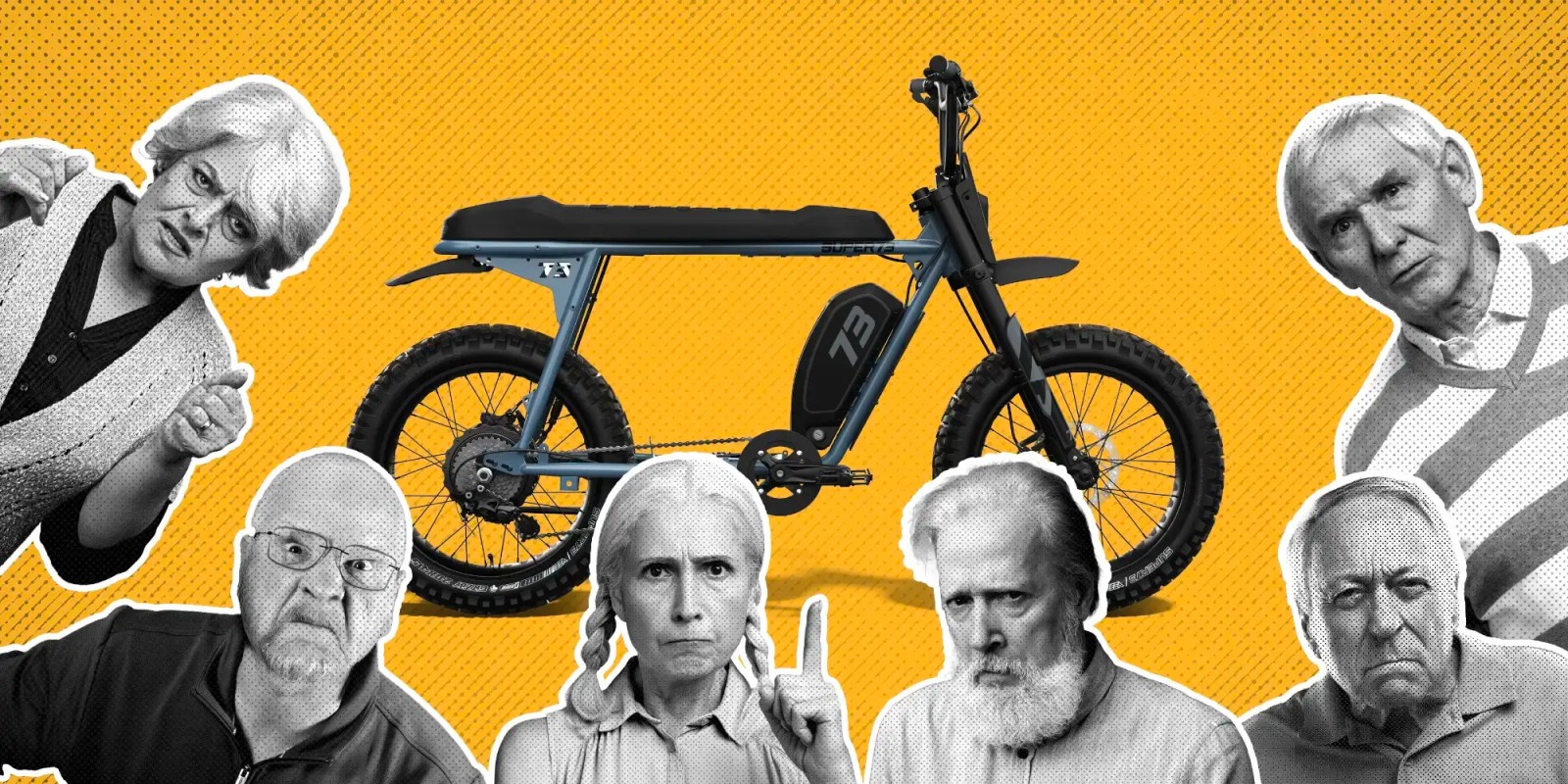
If you spend enough time reading local news headlines these days, you’d be forgiven for thinking electric bicycles are one of the greatest threats facing American streets. Teenagers on fat-tire e-bikes, viral videos of wheelies, stories about injuries complete with ER doctor interviews… the same themes are playing on repeat.
And yes, these are real concerns worth discussing. Walk around just about any town in the US, and you’ll eventually see some issues yourself.
Some riders behave irresponsibly. Some companies sell vehicles that blur the line between e-bikes and electric motorcycles. Some inexperienced riders are suddenly traveling at speeds they aren’t prepared to handle.
But somewhere along the way, the conversation seems to have lost all sense of proportion.
I recently read a CNN article discussing the rising danger of e-bikes and micromobility vehicles. Included in the piece was a chart showing annual deaths involving e-bikes and e-scooters in the US hovering around 135 fatalities per year in the last few years.
Any death is tragic, even more so when it’s a child. Even one is too many. But if the goal of this national conversation is to improve road safety or to truly save lives, then it’s hard to ignore the three-ton elephant in the room – or perhaps more accurately, the three-ton SUV on the road.
Compared to 135 electric bike and e-scooter-related deaths per year, cars kill around 7,000 pedestrians every year in the United States. Total roadway deaths from automobiles in the US exceed 40,000 annually.
That means pedestrians alone are killed by cars at roughly fifty times the rate of all e-bike and e-scooter deaths combined. And that’s not even including car-on-car deaths.
Yet somehow, America’s transportation panic has increasingly centered on e-bikes.
It’s a bit like frantically placing buckets under a dripping roof while a living room window has been blown wide open during a hurricane. Sure, the dripping ceiling is a problem worth fixing. But maybe the wall of water pouring through the open window deserves most of the attention first.
When pedestrian safety is addressed, it’s so often in a manner that blames the victims. “Pedestrians should be more careful around cars”, or “pedestrians should wear bright colors to be seen crossing the road.”
Some cities have even begun installing high-visibility hand-held flags at crosswalks, encouraging pedestrians to carry one with them as they cross the street and deposit it on the other side for the next person to use in an effort to avoid becoming roadkill.
It’s like handing out ceramic plate carriers to children at the front door of school each morning. It’s a “solution” so absurd in its attempt to avoid the real problem that it is often best addressed in parody and satire. The video below helps illustrate the point.
Of course, focusing on reducing the danger that cars pose to all of us doesn’t mean that e-bikes get a pass. I’m not saying that e-bike safety shouldn’t matter. It absolutely should. But there’s a massive difference between “this deserves thoughtful safety improvements” and “this is the defining danger on our roads.”
I wish it weren’t the case, but road safety has turned into something of a zero-sum game in the US. When the national conversation focuses on one issue, others fall by the wayside. When regulatory effort goes into ensuring a 15-year-old can’t ride an electric bicycle, lawmakers seem to lose sight of the fact that 16-year-olds can operate a 6,000 lb (2,700 kg) SUV.
One of the reasons the e-bike discussion feels so distorted is because humans are terrible at evaluating familiar risks versus unfamiliar ones. Cars have been dangerous for so long that Americans largely accept the danger as background noise. We barely notice the risk anymore because it has become normalized. The price to pay for going out to buy a carton of milk while still in air-conditioning is 40,000 deaths per year. But hey, it’s someone else’s kid. Or mother. Or brother.
E-bikes, meanwhile, are new. They’re visually noticeable. A teenager zipping by on a moped-style electric bike looks disruptive and alarming in a way that a distracted driver rolling a 5,500-pound (2,500 kg) crossover through a crosswalk somehow no longer does.
Novelty bias is powerful.
And to be fair, some of the concern surrounding e-bikes is justified. There’s a legitimate issue with high-powered electric motorcycles masquerading as bicycles. There are riders using bike paths irresponsibly. There are parents buying children vehicles capable of speeds that would have been considered motorcycle territory a decade ago – and legally speaking, may still be.
But many headlines lump together e-bikes, electric scooters, unregistered electric motorcycles, and other micromobility devices into a single category that makes the problem sound larger and more chaotic than it really is.
Meanwhile, the far deadlier transportation system surrounding us every day remains largely unquestioned.
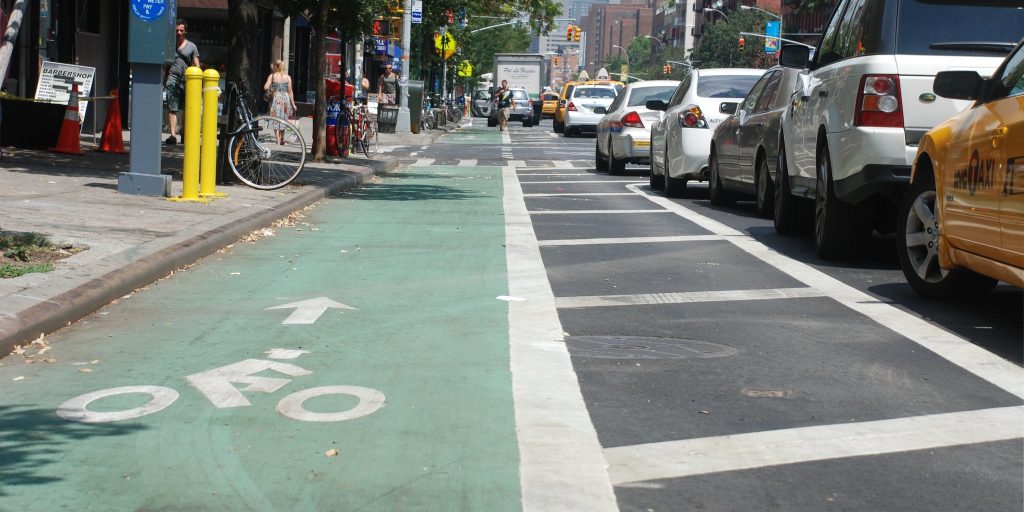
The irony is that e-bikes may actually be part of the solution to reducing traffic deaths overall.
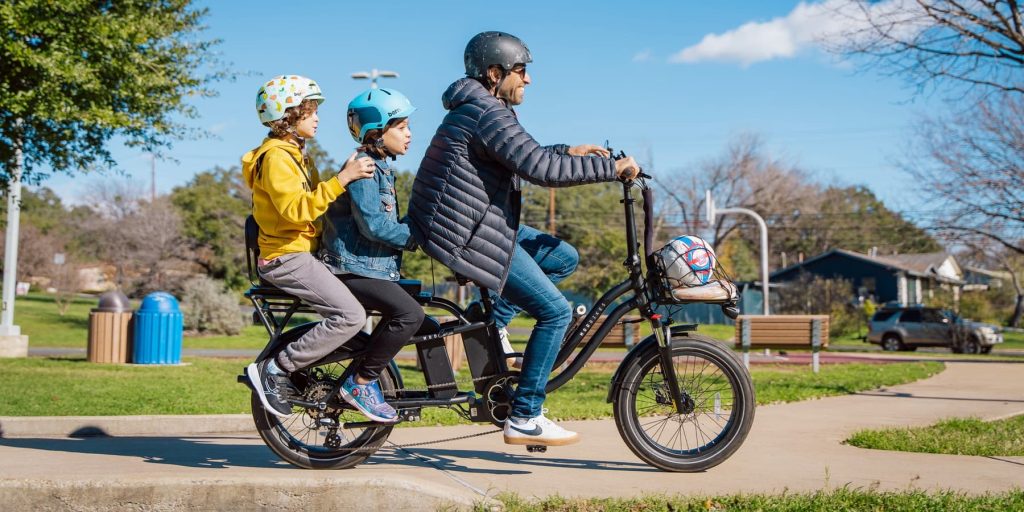
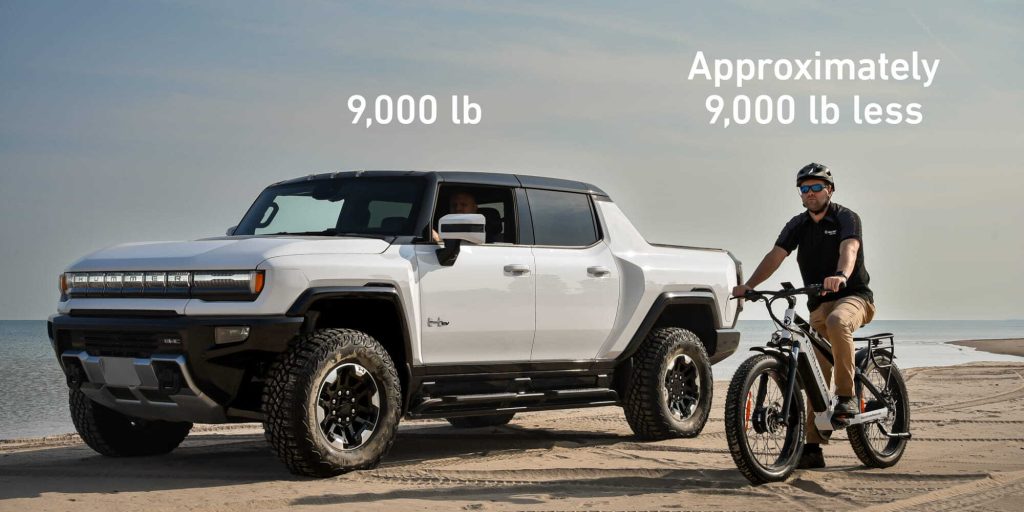
A person riding an e-bike instead of driving a car is operating a vehicle that is dramatically lighter, slower, and less destructive in a collision. Even when crashes happen, physics matters. A 70 lb (32 kg) e-bike simply does not carry the same kinetic energy as a 5,000 lb (2,200 kg) SUV. That’s why e-bike crashes typically end in skinned elbows and knees, whereas car crashes are often more life-changing – or life-ending.
Sure, the reduced energy doesn’t eliminate danger. But it changes the scale of it enormously.
Countries with strong cycling cultures have already demonstrated this. Places with more bikes and fewer car trips often see lower transportation fatality rates overall, especially when infrastructure evolves to support safer micromobility.
Isn’t this just “whataboutism”?
I hear this argument a lot, and I think it is worth addressing. Is what I’m saying here just whataboutism, or the act of deflecting criticism by raising a counterargument? You could claim that, sure. But I think those who do are simply engaging in similarly problematic deflection – attempting to dismiss a valid argument because it feels uncomfortable to them.
There are times when “But what about…?” is the correct answer. Those times are when the accusation itself is patently false, such as the claim that e-bikes deserve the lion’s share of America’s road-safety panic.
If a nurse hands someone a Band-Aid for their paper cut and they respond, “Thanks, but what about my gaping neck wound?”, I think they’d still be in the right.
I accept that relativism and whataboutism can be fallacies, but I’d argue they can also be important and legitimate tactics when society demands a mirror held up to its hypocrisy.
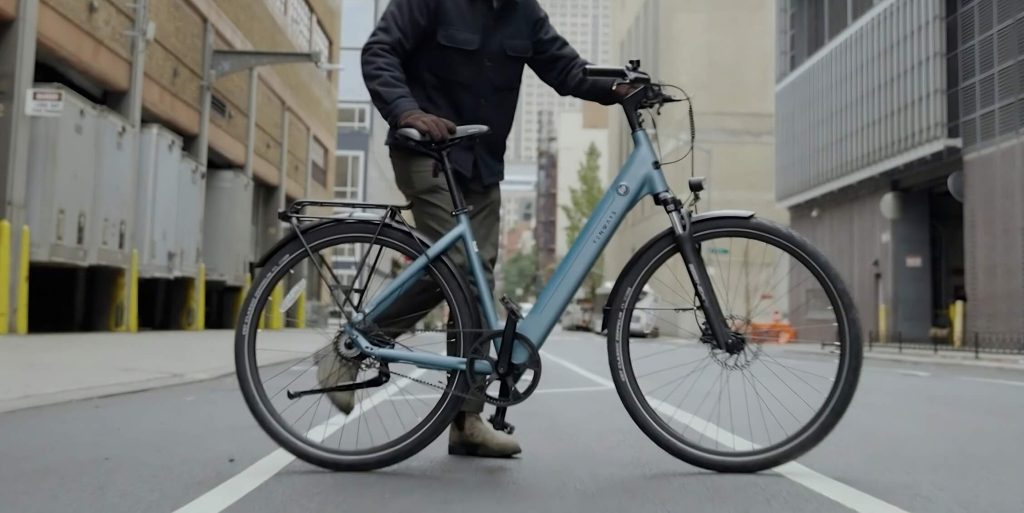
Balancing rider responsibility with national safety priorities
I say all of this as someone who still strongly believes the e-bike industry and individual riders also bear significant responsibilities here.
Companies shouldn’t market electric motorcycles as bicycles. Riders shouldn’t treat bike paths like racetracks. Parents shouldn’t hand teenagers unrestricted 40 mph machines and hope for the best.
The industry needs better self-policing in some areas. And riders – especially young riders – need to be aware of the rules of the road and respect them. There’s a great e-bike rider education program endorsed by PeopleForBikes that is free for the rest of May Bicycle Month and would be a great course for young riders whose parents just got them their first e-bike, or anyone who wants to feel more confident getting back on two wheels.
And so, yes, the industry bears responsibility, and riders must also educate themselves to ride safely and appropriately. But I also worry that America is beginning to repeat a familiar pattern anytime a new form of transportation appears: basically to panic first, and only later to find perspective.
The bigger picture is important here, because if e-bikes replace even a small percentage of car trips, they could ultimately make our transportation system safer overall – not more dangerous.
And that’s the part of this conversation that often gets lost amid the panic.

Unfortunately, the US conversation often seems determined to treat e-bikes not as a potential improvement to transportation safety, but as a new menace to be controlled.
And perhaps that’s because fixing the actual problem would require confronting much harder truths.
It’s easier to regulate teenagers on e-bikes than it is to redesign dangerous streets. It’s easier to crack down on throttle speeds than to question why massive vehicles dominate urban environments. It’s easier to debate helmets than to acknowledge that America has built an entire transportation ecosystem around machines that kill tens of thousands of people every year.
Anything else that killed an entire medium-sized town of people would be labeled a weapon of mass destruction. But when cars kill 40,000 people a year, we just accept it as a fact of life.
Top comment by Chris M
To reemphasize Micah's point, automobiles in urban and suburban areas cause so much destruction that any micromobility effort that reduces their numbers will be safer. That doesn't eliminate the need to recognize and address the potential weak points in the change, but it does mean we shouldn't lose the forest for the trees.
The uncomfortable reality is that cars remain the single greatest danger on American roads by an overwhelming margin.
If policymakers, media outlets, and safety advocates genuinely want to save lives, then the conversation should reflect that reality proportionally. It should focus on the real solutions other countries have found to reduce car-related deaths.
Yes, we need to improve e-bike safety. Yes, we need to enforce reckless riding laws.
And yes, we need to establish clearer standards that improve the safety of e-biking for riders and for those around them.
But let’s stop pretending the dripping faucet is the flood.


FTC: We use income earning auto affiliate links. More.



Comments