
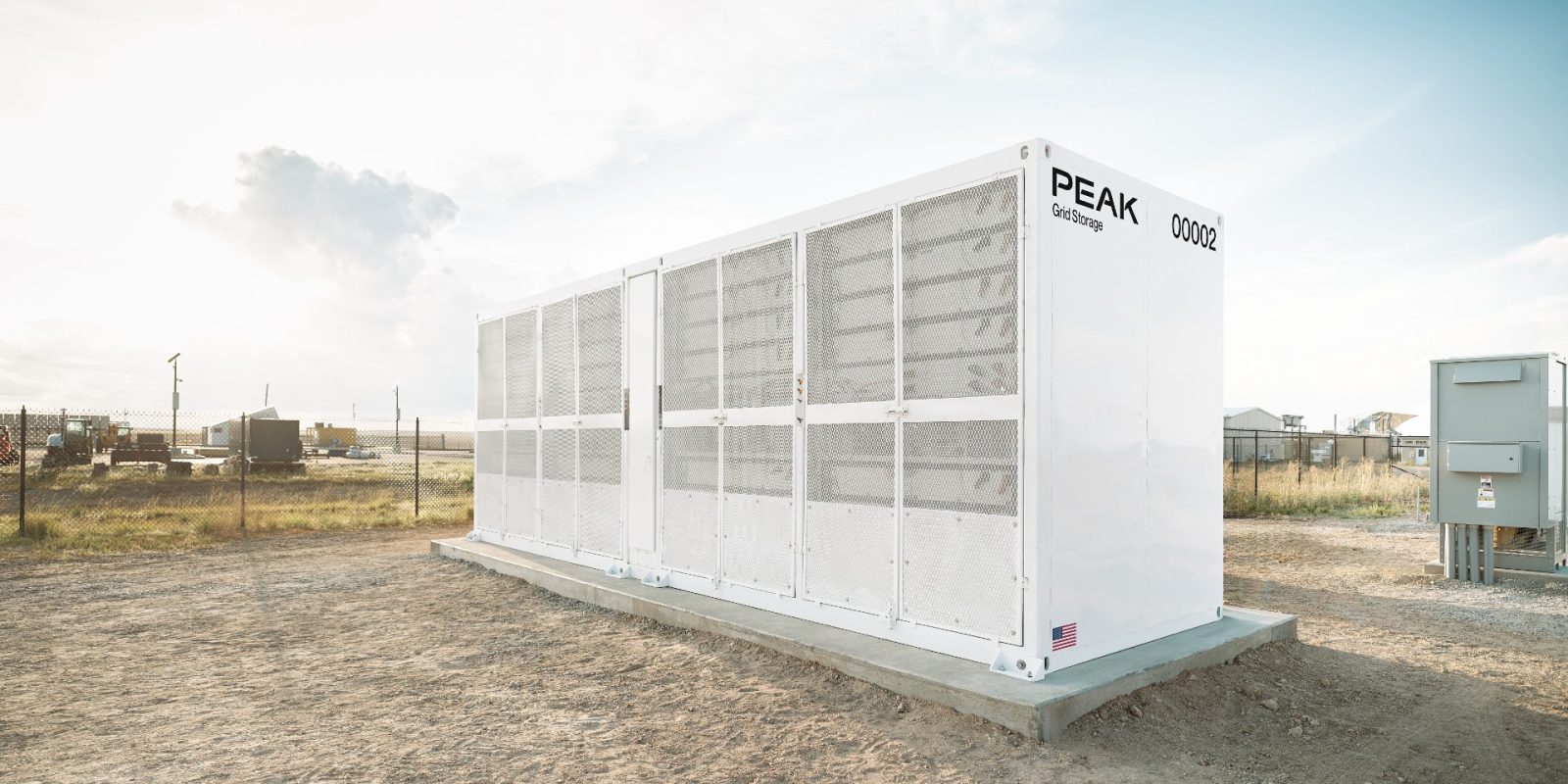
A new type of battery storage is about to be deployed on the Midwestern grid for the first time.
Sodium-ion battery storage manufacturer Peak Energy and global energy company RWE Americas will pilot a passively cooled sodium-ion battery system in eastern Wisconsin on the Midcontinent Independent System Operator (MISO) network – the first sodium-ion deployment on that grid.
Peak Energy says its technology is specifically designed for grid-scale storage and leverages sodium‑ion chemistry’s inherent stability. Unlike many lithium‑ion systems, sodium-ion batteries don’t require active cooling and can operate over a wide temperature range without losing performance.
That simpler design could make a meaningful dent in the cost of storing electricity.
According to Peak Energy, its system cuts the lifetime cost of stored energy by an average of $70 per kilowatt-hour. That’s roughly half the total cost of a typical battery system today.
The company says it achieves those savings by removing energy‑hungry cooling systems, eliminating routine maintenance requirements, and reducing the need to overbuild storage capacity to account for battery degradation over time.
RWE Americas, which operates about 13 gigawatts of energy assets in the US, will run the pilot to test how the technology performs on the grid.
“Energy storage is central to providing dispatchable, reliable energy on demand,” said Peak Energy CEO Landon Mossburg. “Peak’s innovations, enabled by sodium‑ion batteries, greatly reduce energy storage costs, enabling lower cost energy delivery to Wisconsin residents.”
Peak’s aim is to deliver the lowest‑cost electricity possible while helping utilities avoid the expense of building new power plants.
Like most of the US, the MISO region, which includes Wisconsin and much of the Midwest, is seeing electricity demand surge while energy costs rise and grid‑scale storage remains limited.
Research from Aurora Energy Research found that installing 10 GWh of battery storage capacity in the MISO region over the next decade could cut system costs by as much as $27 billion compared with a scenario without that storage.
Peak says using its GS1.1 sodium‑ion systems for that capacity would lower total storage system costs by more than 25% compared with conventional lithium‑ion batteries.
Grid batteries play an increasingly important role as more wind and solar come online. They store electricity when demand is low and release it when demand spikes, helping stabilize the grid and avoid expensive spot-market purchases.
If the Wisconsin pilot proves successful, it could open the door to wider adoption of sodium‑ion batteries for large‑scale energy storage across the US.
Read more: The AI power crunch sparks a 1.5 GWh sodium-ion battery deal
If you’re looking to replace your old HVAC equipment, it’s always a good idea to get quotes from a few installers. To make sure you’re finding a trusted, reliable HVAC installer near you that offers competitive pricing on heat pumps, check out EnergySage. EnergySage is a free service that makes it easy for you to get a heat pump. They have pre-vetted heat pump installers competing for your business, ensuring you get high quality solutions. Plus, it’s free to use!
Your personalized heat pump quotes are easy to compare online and you’ll get access to unbiased Energy Advisors to help you every step of the way. Get started here. – *ad


FTC: We use income earning auto affiliate links. More.



Comments