
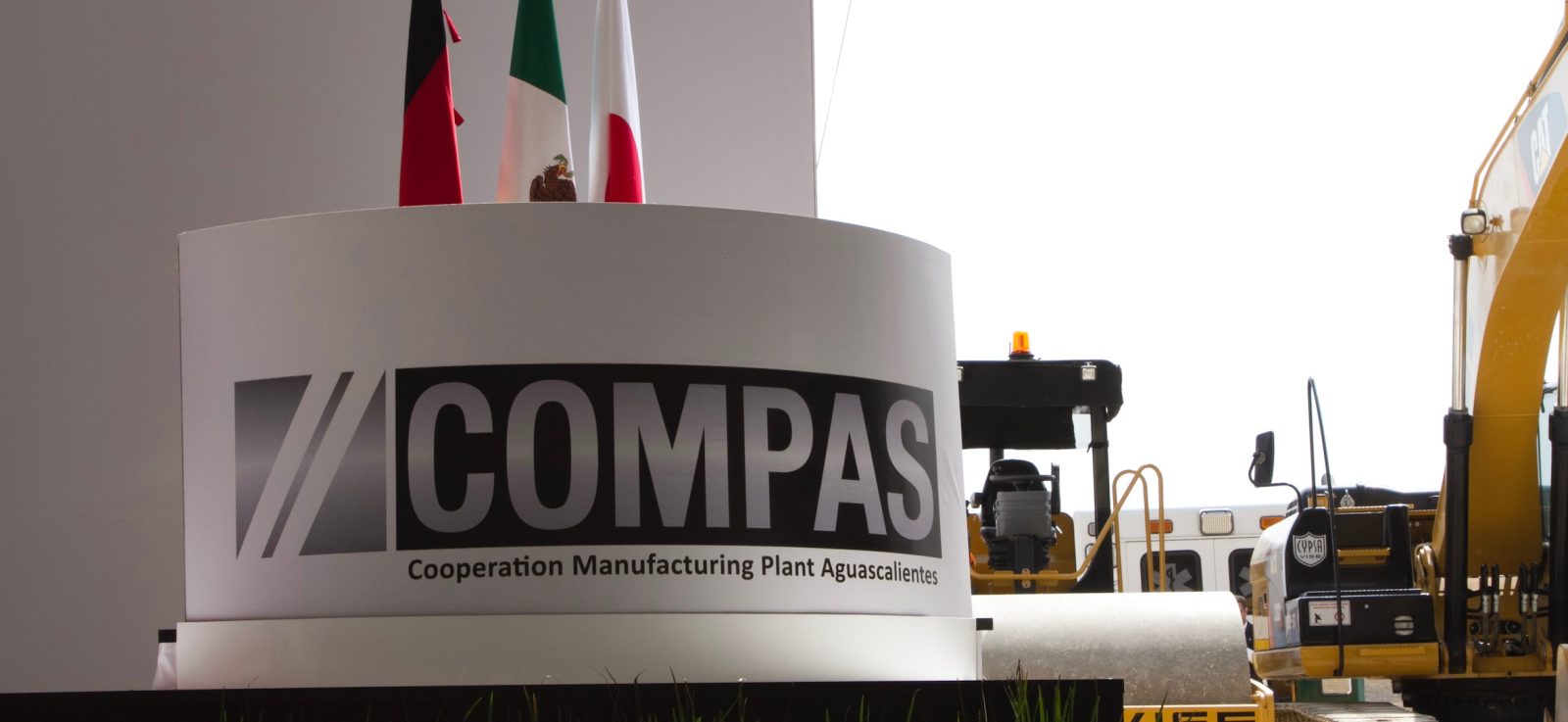
BYD and Geely are among three finalists competing to purchase a Nissan-Mercedes-Benz joint venture plant in Aguascalientes, Mexico, according to a Reuters exclusive report. The plant, which has a production capacity of 230,000 vehicles per year, would give either Chinese automaker an instant manufacturing foothold in North America, bypassing years of regulatory delays that have stalled their greenfield factory plans in the country.
The third finalist is Vietnamese EV maker VinFast. The three were selected from a pool of nine companies that expressed interest, including Chinese automakers Chery and Great Wall Motor.
A new strategy to bypass red tape
The move to acquire an existing plant marks a significant strategic pivot for BYD in particular. The company had spent years trying to build a new factory in Mexico, with plans dating back to early 2024 when BYD was exploring the country as an “export hub” for the US and other markets. By mid-2024, BYD was closing in on a deal for a massive new plant that would eventually produce up to 500,000 vehicles annually.
Those plans ran into a wall from both sides. China’s Ministry of Commerce delayed approval for the new plant in March 2025, citing concerns that BYD’s proprietary technology could leak to US competitors through proximity to North American R&D centers. Meanwhile, Mexico’s own government was quietly stalling Chinese investment under pressure from Washington.
Buying an existing plant solves much of that problem. The COMPAS factory in Aguascalientes, originally a $1 billion joint venture between Daimler and the Renault-Nissan Alliance that opened in 2017, does not require Mexican government approval for a change of ownership. It comes with skilled workers, transportation infrastructure, and a 230,000-unit annual capacity ready to go.
The COMPAS plant and Nissan’s retreat from Mexico
The Aguascalientes factory is being sold as part of Nissan’s massive global restructuring. The Japanese automaker posted a $4.5 billion net loss for the fiscal year ending March 2025 and is consolidating from 17 production plants down to 10 by fiscal year 2027. The COMPAS facility, which currently builds the Infiniti QX50 and QX55 and the Mercedes-Benz GLB, is set to cease operations by May 2026.
The closure will eliminate approximately 3,600 direct jobs, jobs that a Chinese buyer would almost certainly restore. That economic reality puts the Mexican government in a difficult position: blocking the sale means losing thousands of jobs in a country where Trump’s 25% tariffs on auto imports are already devastating the manufacturing sector.
Chinese automakers’ explosive growth in Mexico
The bid underscores the staggering speed at which Chinese automakers have captured market share in Mexico. According to consultancy AutoForecast Solutions, Chinese automakers collectively grew their share of Mexico’s roughly 1.5 million annual car sales from zero in 2020 to about 10% last year.
The numbers at the company level are even more striking. BYD’s global vehicle sales have jumped tenfold since 2020. The company crushed Tesla in full-year all-electric sales for 2025, selling over 2.25 million BEVs compared to Tesla’s 1.63 million, a gap of more than 600,000 vehicles. BYD’s overseas sales surpassed 1 million units for the first time in 2025, up 150% year-over-year.
Geely, which owns Volvo, Polestar, Lotus, and Zeekr, also sold more than 4 million vehicles last year, roughly on par with Ford. The conglomerate recently signaled its intention to enter the US market within two to three years and has been in talks with Ford to use underutilized plant capacity in Europe to dodge EU tariffs.
Political minefield
The acquisition will inevitably provoke a strong reaction from Washington. Trump has effectively barred Chinese-made vehicles from the US market and has repeatedly accused Mexico of allowing Chinese products to enter the country as a backdoor to American consumers. The US currently imposes tariffs exceeding 100% on Chinese-made EVs.
Mexico’s economy ministry has quietly urged state authorities to delay Chinese automaker investments until it concludes trade negotiations with the US, according to two government sources cited by Reuters. The problem is that Mexico’s auto industry is bleeding, Trump’s tariffs are causing factory closures and layoffs across the country, and Chinese investment represents one of the few sources of new manufacturing jobs.
Business consultant Victor Gonzalez, who advises Mexican states on attracting Chinese investment, told Reuters that the economic incentive is hard to ignore regardless of the political optics.
Electrek’s Take
This is a significant development. For years, we’ve tracked BYD’s halting attempts to build a factory in Mexico, and the strategy of buying an existing plant is a smart workaround to the political and bureaucratic obstacles that have stalled those plans.
I am currently in Mexico on a workcation, and I’m driving a BYD Shark and enjoying it so far.
The COMPAS plant is particularly attractive because it’s as close to plug-and-play as it gets: 230,000-unit capacity, an experienced workforce, existing supplier relationships, and no government approval required for the sale. For BYD or Geely, it’s a way to establish North American manufacturing presence in months rather than years.
Top comment by Mat
All of these 3 companies have a foothold in Canada... I wonder if that is part of the reasoning behind them being « finalists » for potentially buying this plant. Because the door is open for the Canadian market in the short/medium therm while we wait for the relations with the USA to cool down a bit.
However, significant investments will be required to produce their own vehicles at the plant.
The bigger question is whether this triggers an escalation from Washington. Trump has already imposed punitive tariffs on Chinese EVs, and a Chinese-owned factory in Mexico, just across the border, would almost certainly become a political flashpoint. The Mexican government is caught in the middle, needing the jobs but fearing US retaliation.
What makes this particularly interesting is the competitive dynamic. BYD and Geely are not just competing against each other for the plant, they’re racing to establish manufacturing positions before the political window closes entirely. With both companies now selling over 4 million vehicles annually and expanding aggressively across every continent, North America remains the biggest untapped market. Whoever secures this factory could get a head start that could prove decisive.


FTC: We use income earning auto affiliate links. More.



Comments