
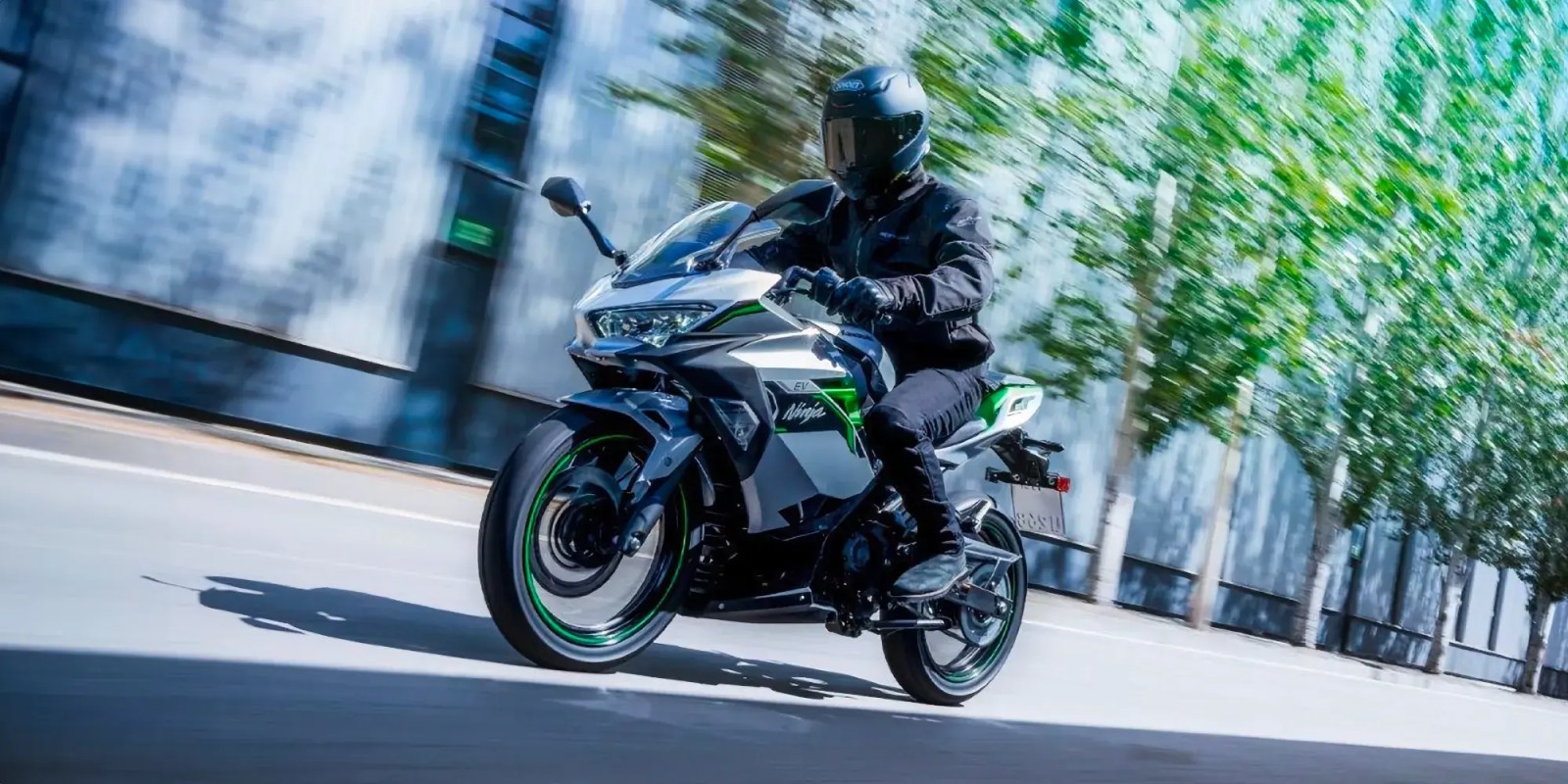
It’s not often we get to applaud a legacy motorcycle manufacturer for doing what so many still haven’t: actually bringing an electric motorcycle to market. So credit where credit is due – Kawasaki didn’t just make one electric motorcycle, they made two: the Ninja e-1 and Z e-1.
They’re sleek, affordable, and surprisingly refined machines that show real promise in design and execution. But once you get past the glossy panels and respected nameplate, there’s still one glaring issue that we can’t ignore.
And that giant issue is the tiny battery.
The battery’s total capacity is a mere 3.0 kWh, split among a pair of 1.5 kWh removable packs. At that size, the two 25-pound (11.5 kg) batteries powering the Ninja e-1 and Z e-1 make it seem more like an e-bike than an e-moto.
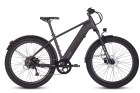
And I don’t mean that figuratively – there are electric bicycles on the market with nearly as much battery as these motorcycles. Eunorau’s Flash e-bike, for example, packs over 2.4 kWh into a pedalable two-wheeler.
We’ve long known how vital range figures are to riders in the electric motorcycle world (even if they will rarely ever push it to the max), and Kawasaki, for all its engineering prowess, delivered a battery spec that limits these bikes from the start.
Kawasaki has positioned its e-1 models as urban commuters, and to be fair, that’s where they perform best. Their top speed is capped at 52 mph (85 km/h), with a temporary “e-Boost” mode unlocking 65 mph (105 km/h) for up to 15 seconds – a clever solution for occasional bursts that doesn’t overly drain the small battery. That limited top speed helps preserve range, keeping the battery from running flat in minutes like it might on a highway blast. But let’s be honest: it also firmly puts these bikes in scooter territory. And there’s nothing wrong with scooters – I use one as my daily driver. But nothing with a Ninja badge is ever meant to feel scooter-y.
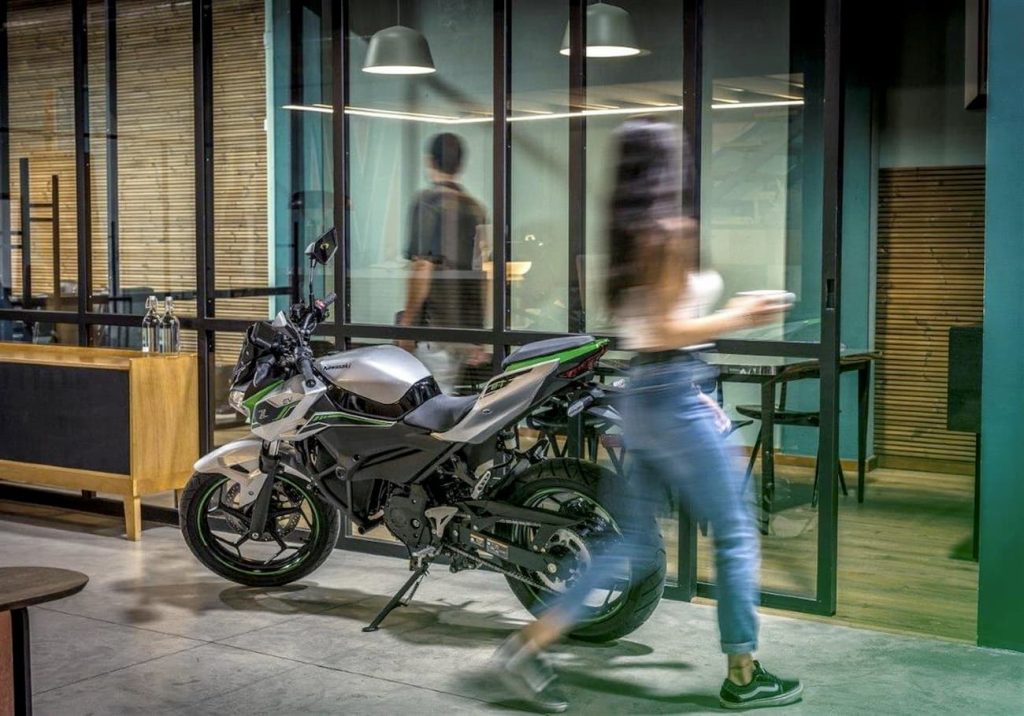
The official city range is rated at 41 miles (65 km), which sounds modestly acceptable at a glance, at least for a city bike. But we know how optimistic the range numbers from manufacturers can be. Add in some hills, stop-and-go traffic, cold weather, or a heavier rider, and you’re likely looking at sub-30 mile (48 km) real-world range in many cases. Again, that’s not far off from an electric bicycle.
And while the removable dual-pack battery design is appreciated, it’s not especially user-friendly. Each 25 lb (11.5 kg) pack is about the size of a jerrycan and must be carried individually. Compare that to something like the Ryvid Anthem, which has a 4.3 kWh battery (nearly 50% larger than Kawasaki’s), faster charging, higher speed (75+ mph or 120+ km/h), and a roll-out battery that can be easily rolled along like a carry-on suitcase. And all of that comes in at just $100 more than Kawasaki’s $7,899 sticker price. So it’s not like it can’t be done.
To be clear, Kawasaki got a lot right. The bikes look fantastic. The frame and component quality seem like what you’d expect from a major OEM. And the sub $8k price is far more approachable than the $20,000+ tags seen on other electric motorcycles. These bikes aren’t toys. They’re real motorcycles with full-size wheels, ABS, and Kawasaki-level fit and finish.
But here’s the thing: we need to talk about the minimum viable battery size for electric motorcycles. For scooters, 3 kWh is barely okay. For 30 mph (48 km/h) mopeds, it’s fine. But for a motorcycle – especially one that looks like a Ninja – it sets expectations the bike can’t meet. The styling says “motorcycle,” but the performance is still firmly in the “scooter” class. And that’s okay – if we call it what it is.
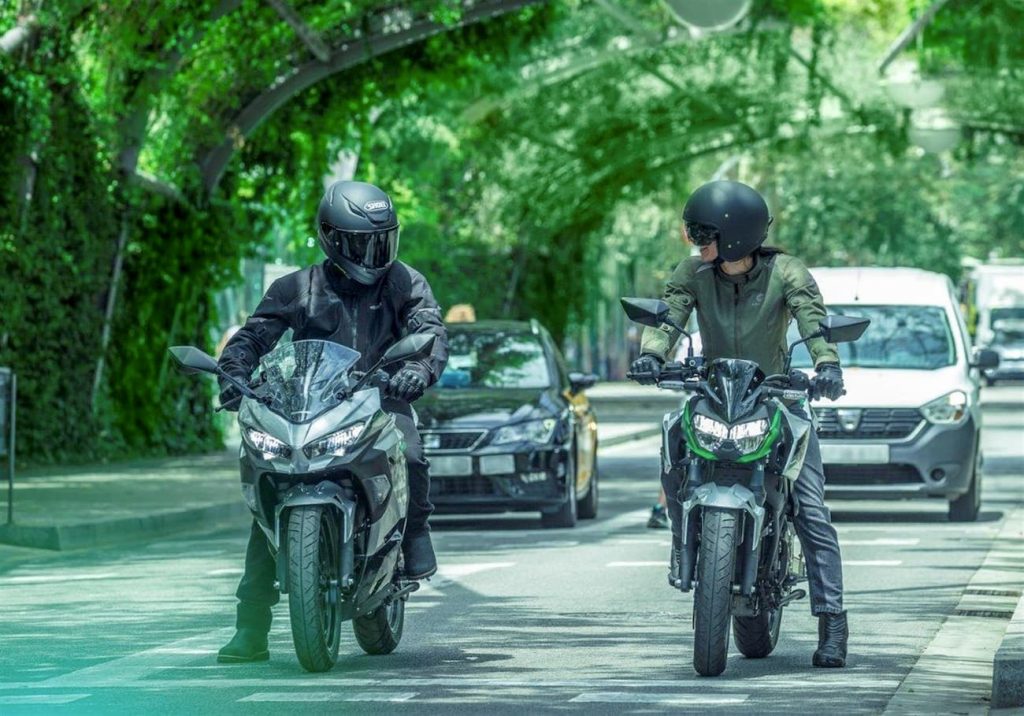
The larger disappointment isn’t that Kawasaki made a bad bike – it’s that they made a great one and gave it a powerplant that holds it back. With just 50% more battery (say, 4.5 to 5 kWh), the e-1 platform could be a potent contender for an excellent commuter e-moto. Even more so if that extra energy came with a bit more speed and a faster charger.
Top comment by Connor Paull
EV motorcycles are just a difficult market where motorcycles aren't generally treated as urban commuter vehicles. It's super easy to find a bike that'll be plenty of fun and get over 60 MPG so the economic case isn't really there. Meanwhile, a lot of motorcyclists in the US will go on group rides and road trips that will cover hundreds of miles in a day. The Kawasaki is utterly incapable of taking part, and to be honest I don't think there is a EV motorcycle that would be 'good' in that scenario because most of them cap at level 2 charging.
IMO it makes sense for motorcycle companies to get some practice with electrification by making e-bikes and maybe some scooters, and wait for improvements in battery energy density and fast charging capability to try to electrify motorcycles.
And again, to Kawasaki’s credit, they actually shipped something. While Honda and Yamaha continue to dabble in electric concepts and low-volume scooters, and Suzuki still watches the world pass it by, Kawasaki now has two real, road-legal electric motorcycles for sale right now in the US. That’s no small feat.
But if we’re going to take electric motorcycles mainstream, 3 kWh can’t be the bar. 40 miles of range *at the best of times* can’t be the bar. Riders need practical range, usable top speeds, and charging solutions that don’t require an entire afternoon to refill. Right now, Kawasaki’s e-1 series scratches the surface – but it doesn’t dig deep enough.
Here’s hoping this is just the beginning. Kawasaki has already committed to electrifying more of its lineup in the coming years. If the next models carry the same design sensibility, but with bigger batteries and more ambition, they might just bring real competition to the electric motorcycle market. And that’s something we should all root for.
Oh yeah, and Honda, I haven’t forgotten about you. Stop playing around and get your freakin’ head in the game.


FTC: We use income earning auto affiliate links. More.


Comments