
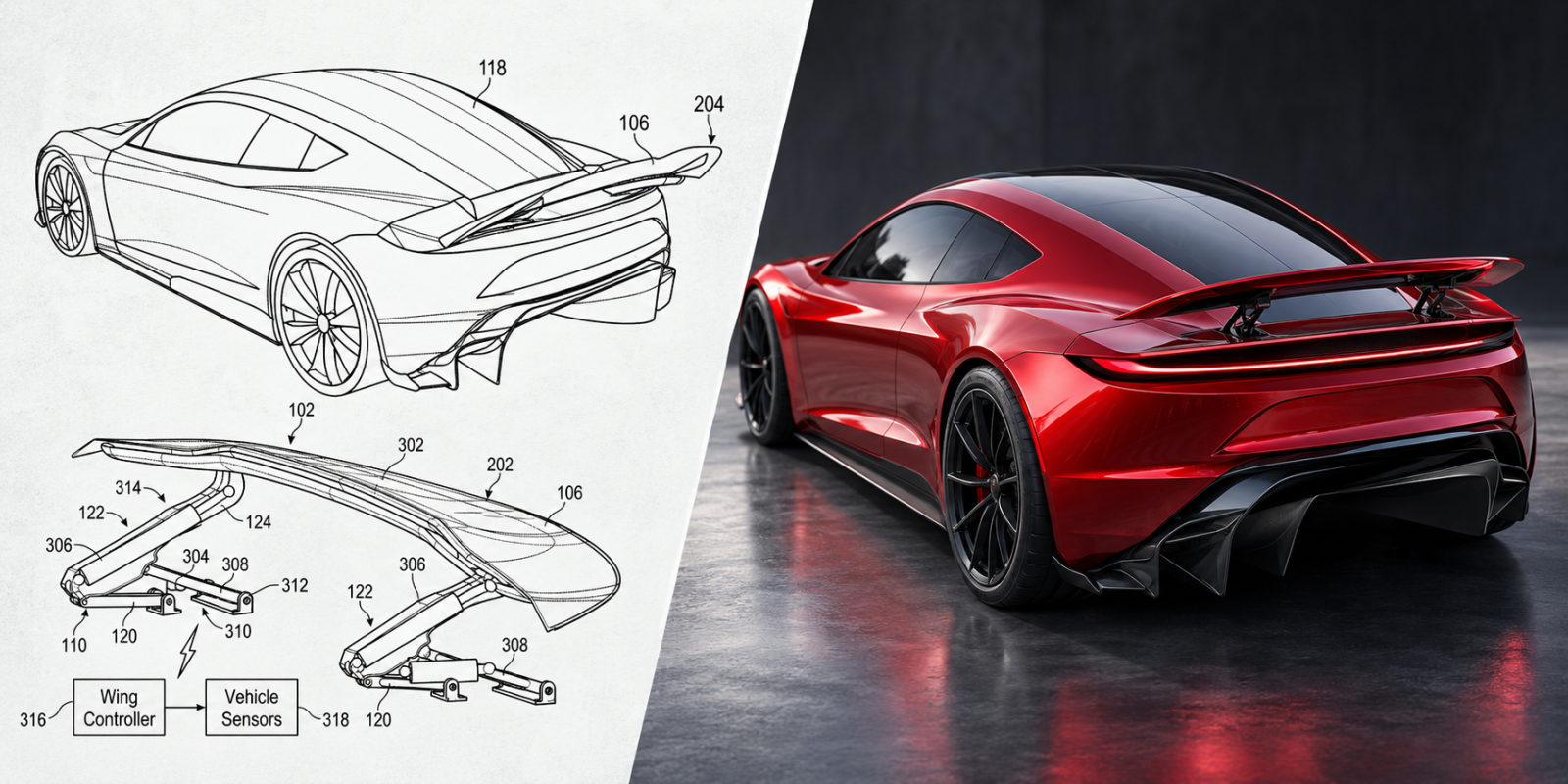
A new Tesla patent application describes a two-piece active rear wing that hides flush in the bodywork and can produce up to 700 kg of downforce once deployed. The car in the drawings looks a lot like the next-generation Tesla Roadster.
The USPTO published the filing on September 24, a week before the Roadster unveiling Tesla has scheduled for October 1 in Texas.
Tesla’s hidden wing, by the numbers
The application, US 2026/0285418 A1, is titled “Deployable and Active Rear Wing Assembly with Safety Features.” Tesla filed it in August 2025 as a continuation of a March 2025 application, which is now listed as abandoned. The named inventors are David Lemire and James Michael Arthur Crook.
The wing has two parts: a main element and a smaller leading-edge slat that sits 3 to 15 mm ahead of it. In “road mode,” the main element sits flush with the deck lid thanks to a step in its shape, and the slat hides under the rear panel. You wouldn’t know there’s a wing there.
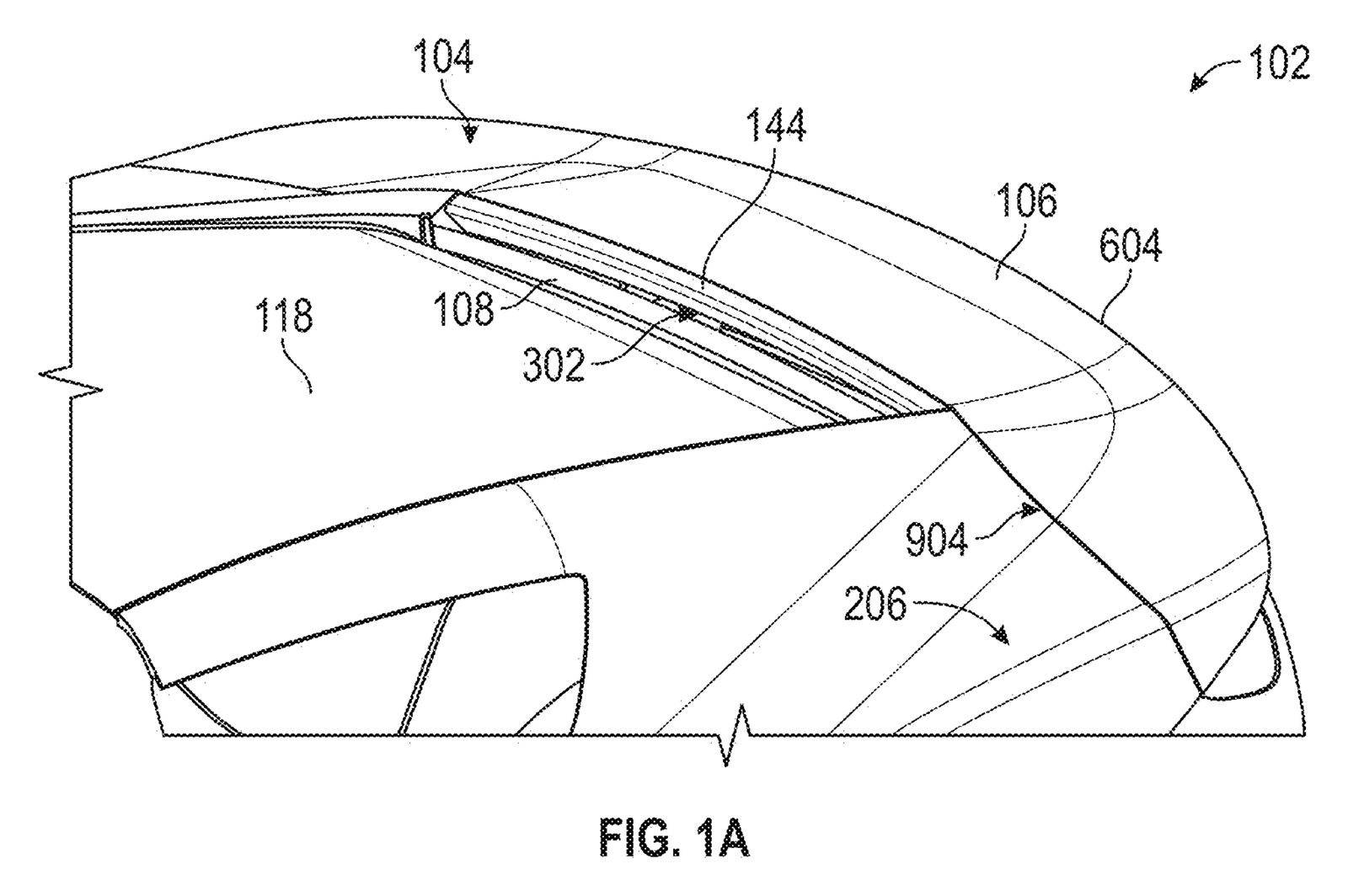
Then it deploys up and back on a four-bar linkage. The filing also describes versions with linear rails and lead screws. Tesla says it can go from fully stowed to fully deployed in under 3 seconds and change its angle in under a quarter of a second.
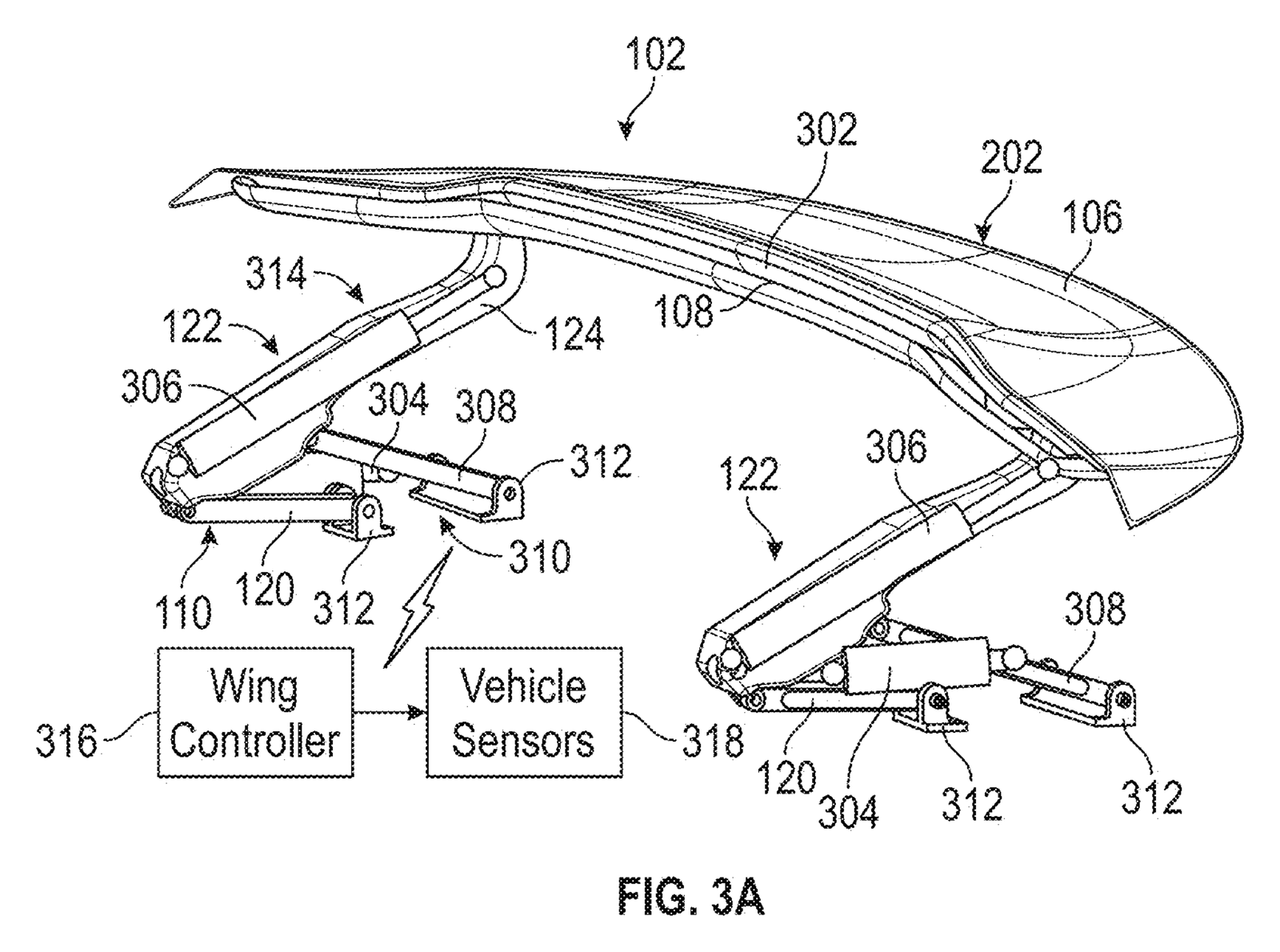
The downforce figure is the headline. According to the filing, the wing can generate “0 kg of downforce in DRS mode, and up to 700 kg of downforce in high downforce mode at top speed,” and the example Tesla gives is speeds above 100 mph. That’s hypercar territory. McLaren’s track-focused Senna is rated at 800 kg.
Tesla also gives aero coefficients. Deploying the wing adds 350 drag counts (0.035 Cd) and 1,000 counts of downforce. Once it’s up, rotating it flat into the DRS position removes 250 counts of drag. So the same car can be a slippery road car or a track car at the push of a button.
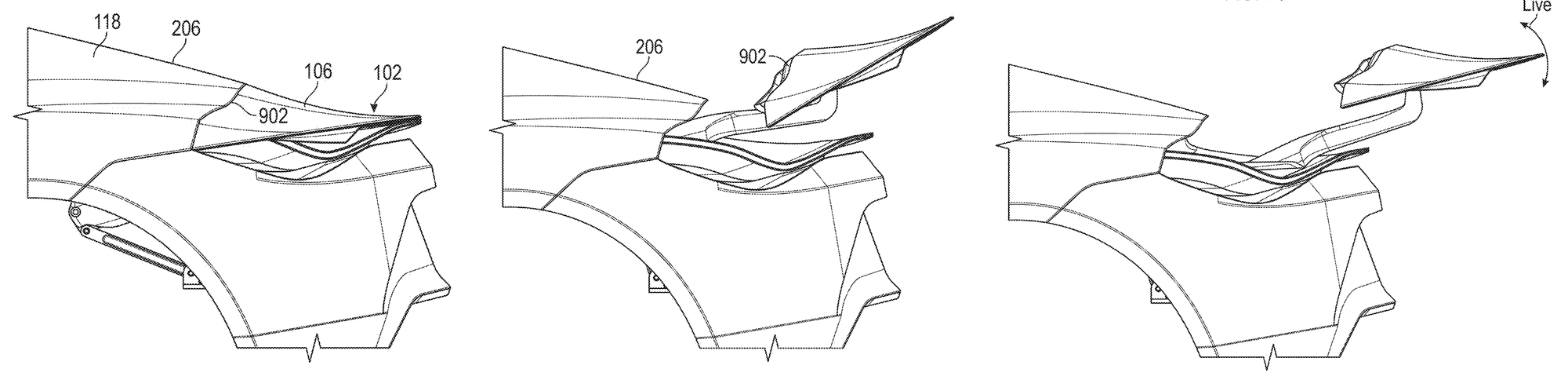
A controller runs the wing based on speed, acceleration, steering angle, brake input, GPS location and “autonomous driving sensor data.” It flattens the wing on straights and rotates it to high downforce under braking or in fast corners. It can even switch to track mode on its own when GPS says you’ve arrived at a racing circuit.
Tesla also uses non-back-drivable actuators, so the wing holds its position under load without drawing power.
A wing built to get out of the way
Tesla admits there’s a downside to a wing that sticks out this far behind the car. The filing says the wing sits “fully clear” of the rear when deployed, and it specifically mentions the risk of a cyclist or motorcyclist hitting it from behind.
So there are two safety systems. The first is purely mechanical: latches release when an impact goes over a set force threshold, and the wing folds back until its trailing edge is no farther out than the rear of the car. The second is predictive. It uses the car’s sensors to start retracting the wing before an expected rear collision, while weighing that against the stability the car loses when the aero changes mid-maneuver.
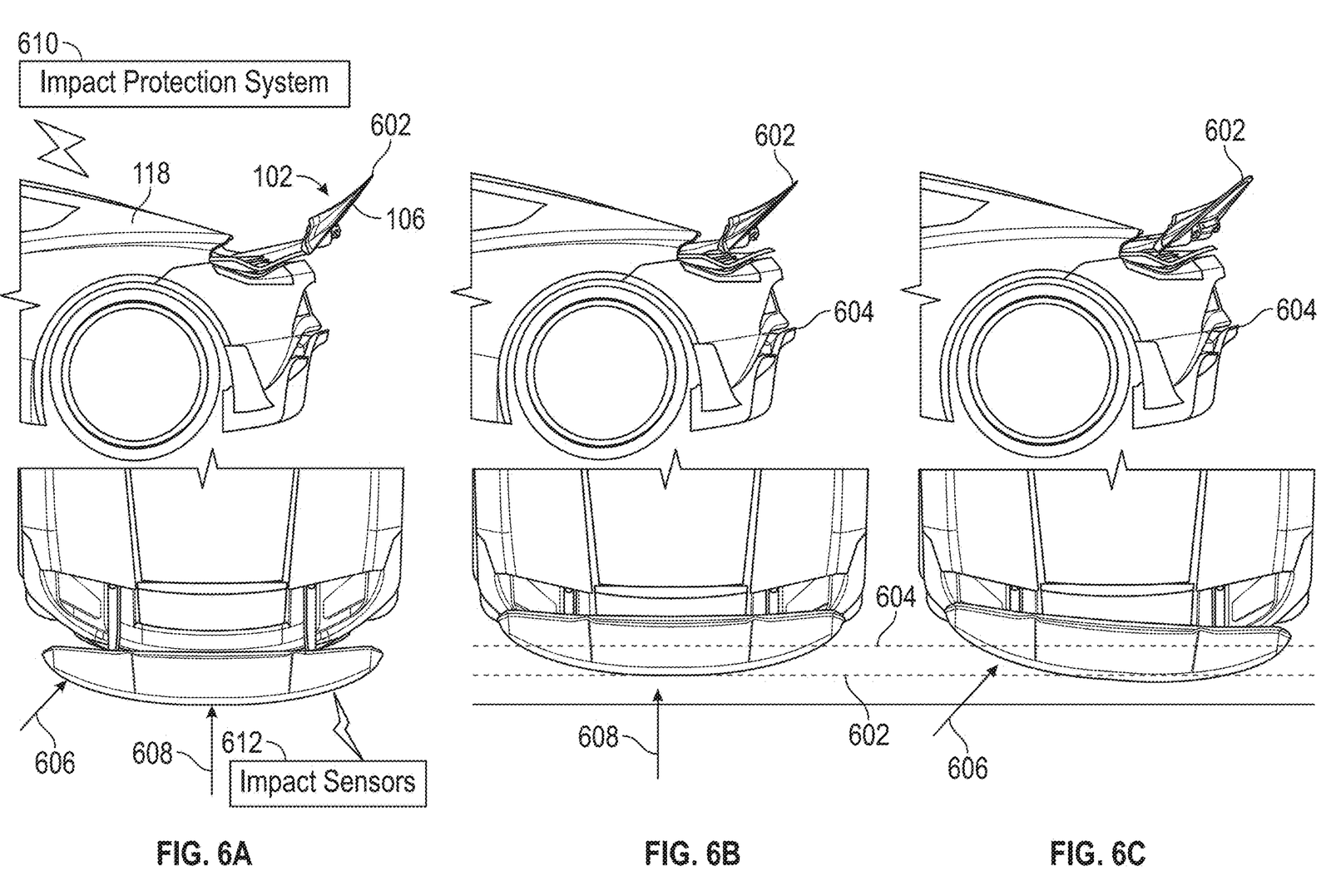
The patent lists those sensors as cameras, radar and lidar. Lidar is something Elon Musk has spent years calling a crutch, when it comes to self-driving, and it’s almost certainly patent boilerplate rather than a hint about the Roadster’s hardware.
Why this looks like the new Roadster
Tesla doesn’t name the car in the filing. Patents almost never do. But Figures 2A and 2B show a low, fastback 2+2 with a huge rear diffuser, and it’s a close match for the Roadster’s shape.
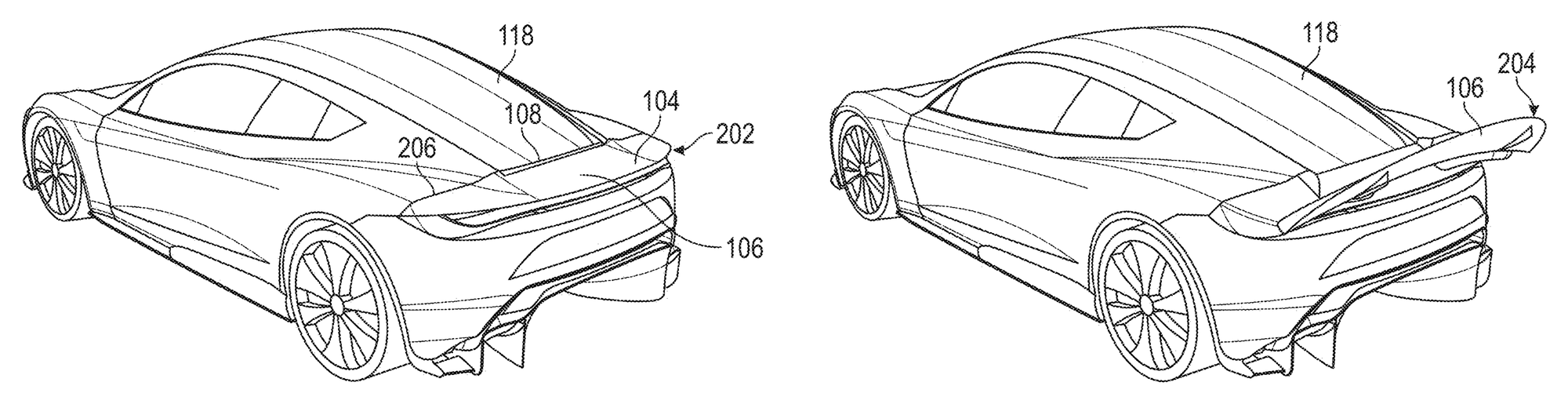
It also doesn’t match the 2017 prototype exactly and the patent has been filed roughly a decade after the original prototype was unveiled. The timing points to the new version. Tesla filed the first application in March 2025, after Musk said in late 2024 that Tesla was “close to” finalizing the Roadster’s design. And Tesla’s latest teaser hints at a “Cyber” redesign rather than the 2017 look.
It’s also the second aero patent in about a year that lines up with the Roadster. Last August, we covered a Tesla patent for an underbody duct that makes downforce and cools the battery at the same time, a fan-car idea without the fan.
Electrek’s Take
A 700 kg wing with a slat, DRS and automatic track mode is serious hardware for lap times, not just straight-line launches. The original Roadster pitch was all about 0-60 mph times and a “SpaceX package” with thrusters. This patent reads like engineers building a real track car, and we like that a lot more than the flying-car talk.
And the crash retraction is a smart touch. A wing that sits this far behind the car is the kind of thing regulators would ask about, and Tesla thought about it.
But it’s a patent. Tesla patents plenty of things that never ship, and nothing in this filing says “Roadster.”
We’ll know in a week whether this wing shows up on the car.
With electricity rates up almost 10% last year and expected to keep climbing, going solar is one of the best ways to protect yourself against rising costs. And with lease and PPA options, you can do it with zero upfront cost and start saving immediately. If you want to find the best deal, check out EnergySage. It’s a free service with hundreds of pre-vetted installers competing for your business, so you save 20 to 30% compared to going it alone. No sales calls until you pick an installer. Get your free quotes here.


FTC: We use income earning auto affiliate links. More.



Comments