
Tesla’s active robotaxi fleet in Austin has fallen back to just 8 vehicles over the past seven days, according to data from community tracker Robotaxi Tracker.
That’s about the same number Tesla had on the road when it launched the service in June 2025. Fifteen months of promises, and no net growth. A surge following the “launch of the Cybercab” quickly dissipated.
Tesla’s “launch” spiked the numbers for about a week
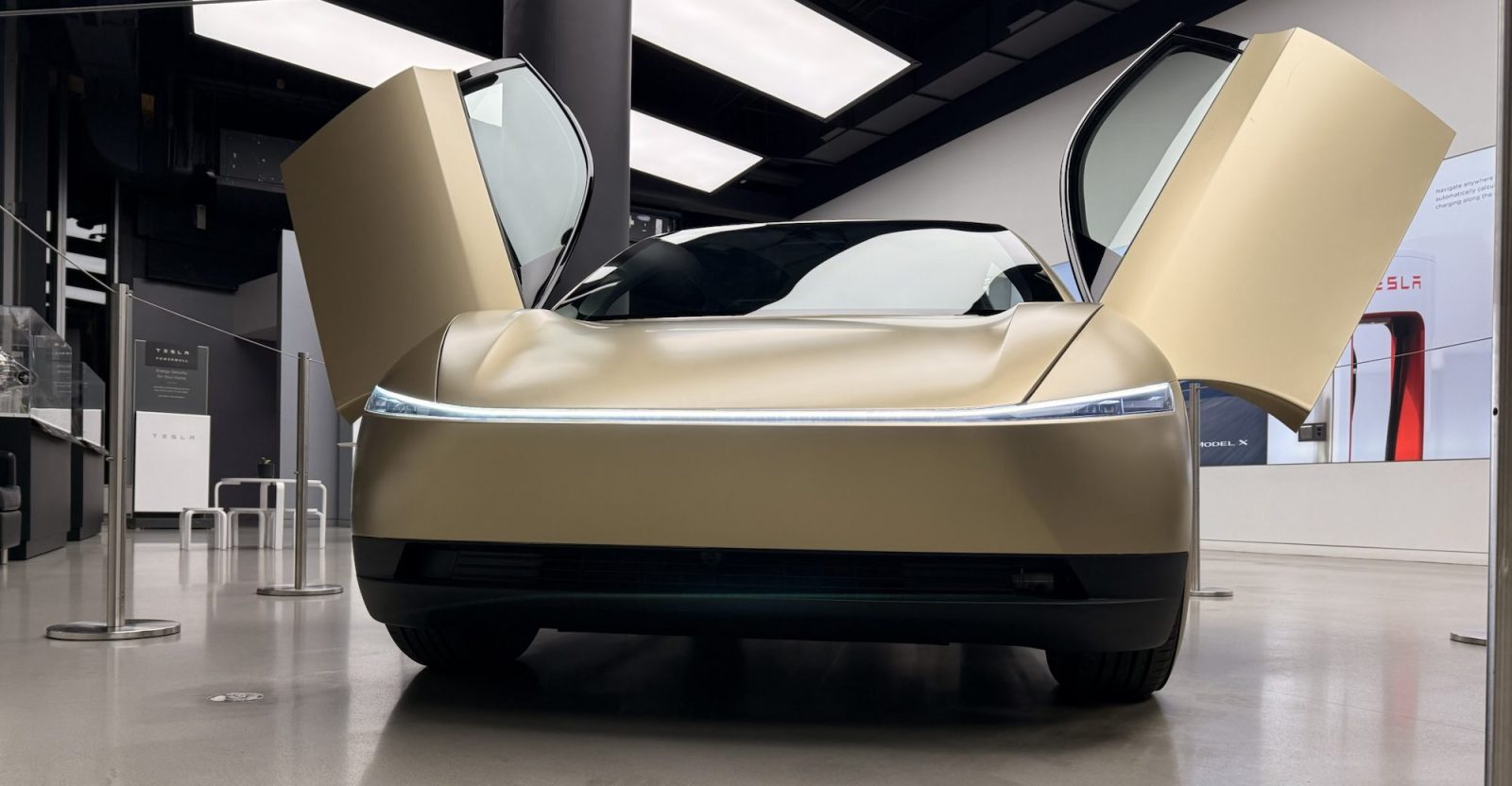
Tesla held a Cybercab launch event in Austin on September 3 and invited a wave of supporters and Tesla influencers to ride the steering-wheel-free vehicle. For a few days, X was full of first-ride videos.
The tracker data shows exactly what that looked like. The number of unique Tesla robotaxis actually seen carrying riders in Austin spiked past 100 in early September, up from the 20-to-40 range it had been stuck in for most of the year.
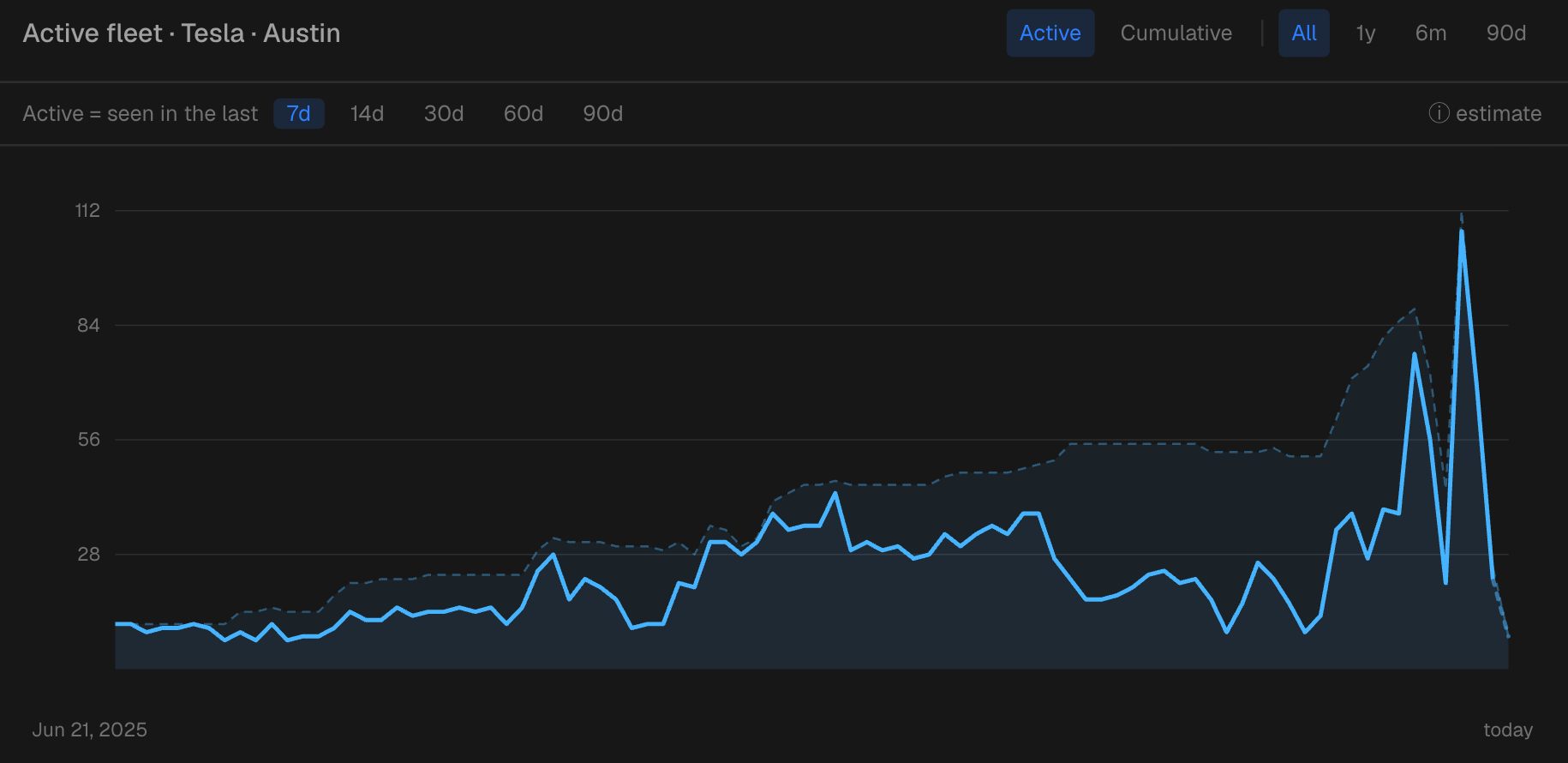
Then it collapsed. By September 22, the seven-day active count is back to 8.
And the ride videos dried up with it. One of those early Cybercab rides turned a 10-minute trip into a 70-minute detour, and the flood of posts Tesla engineered for launch week has slowed to a trickle after Tesla “influencers” left the city.
Registered vehicles aren’t the same as active ones
Here’s the gap Tesla’s boosters keep glossing over.
Tesla registers its autonomous vehicles with the Texas DMV under the state’s new AV rules, and that registered fleet now sits at 476 VINs (409 Model Ys and 67 Cybercabs), up 285 in the last 30 days alone. TSLA pumpers point to that growing number, and to the rising Cybercab count in particular, as proof the fleet is scaling.
But a registration is a VIN in a database, not a car giving rides. Of those 476 registered vehicles, trackers have matched only 265 to license plates actually spotted on the road, and just 179 were seen at all in the last 30 days. Over the last 7 days, only 8 were caught carrying passengers.
Tesla keeps “adding” vehicles to its Texas robotaxi fleet on paper. That count has never reflected how many cars are actually operating at the same time.
Electrek’s Take
This is what a marketing launch looks like when there’s no product ramp behind it. And by product ramp, I mean useful Cybercabs. I do beleieve that Tesla can ramp up production and we have seen plenty of Cybercabs sitting in parking lots, but it currently has no way to translate that into autonomous ride-hailing at scale due to the same safety concerns we have been talking about for more than a year.
Top comment by Volvo Guy
What's interesting is that there is a spike about 2 weeks before the "launch" and then another spike at "launch". I'd bet good money that:
--The first spike was a test to make sure they were ready for the "launch" spike
--Both of these events are spikes rather than new plateaus because during both events, Tesla was remote monitoring every car and that is not sustainable. If they had truly autonomous operations, there would be no reason to scale back after ramping up. The cars would just keep running and the line would go up and to the right. The spike pattern demonstrates that these were tests, not actual scaling of ongoing operations
Tesla needed a moment, and it got one on September 3. It invited the usual crowd of supporters, and generated a week of glowing ride videos. The active-fleet chart shows the whole thing: a clean spike past 100 vehicles, then a cliff straight back down to 8. Once the influencers went home, so did the cars.
And 8 is rough. That’s essentially where the service started in June 2025. Fifteen months later, after a “launch,” a Cybercab reveal, and hundreds of new registrations, the number of Tesla robotaxis actually carrying people in Austin in a given week hasn’t moved.
That’s entirely because if Tesla deploys the system at scale, it would face too many accidents. Therefore, it is preferable to only run a few vehicles at a time, in geo-fenced areas, and at lower speeds.
There would be nothing wrong about that if Tesla wasn’t trying to convince the public, and mostly the stock market, that it is “leading the autonomous market with no close second behind” when in fact, it is mostly an act.
If you’re driving on Tesla’s robotaxi hype but paying real electricity bills at home, solar is where the actual savings are. With electricity rates up almost 10% last year and expected to keep climbing, going solar is one of the best ways to protect yourself against rising costs. And with lease and PPA options, you can do it with zero upfront cost and start saving immediately. If you want to find the best deal, check out EnergySage. It’s a free service with hundreds of pre-vetted installers competing for your business, so you save 20 to 30% compared to going it alone. No sales calls until you pick an installer. Get your free quotes here.


FTC: We use income earning auto affiliate links. More.




Comments