
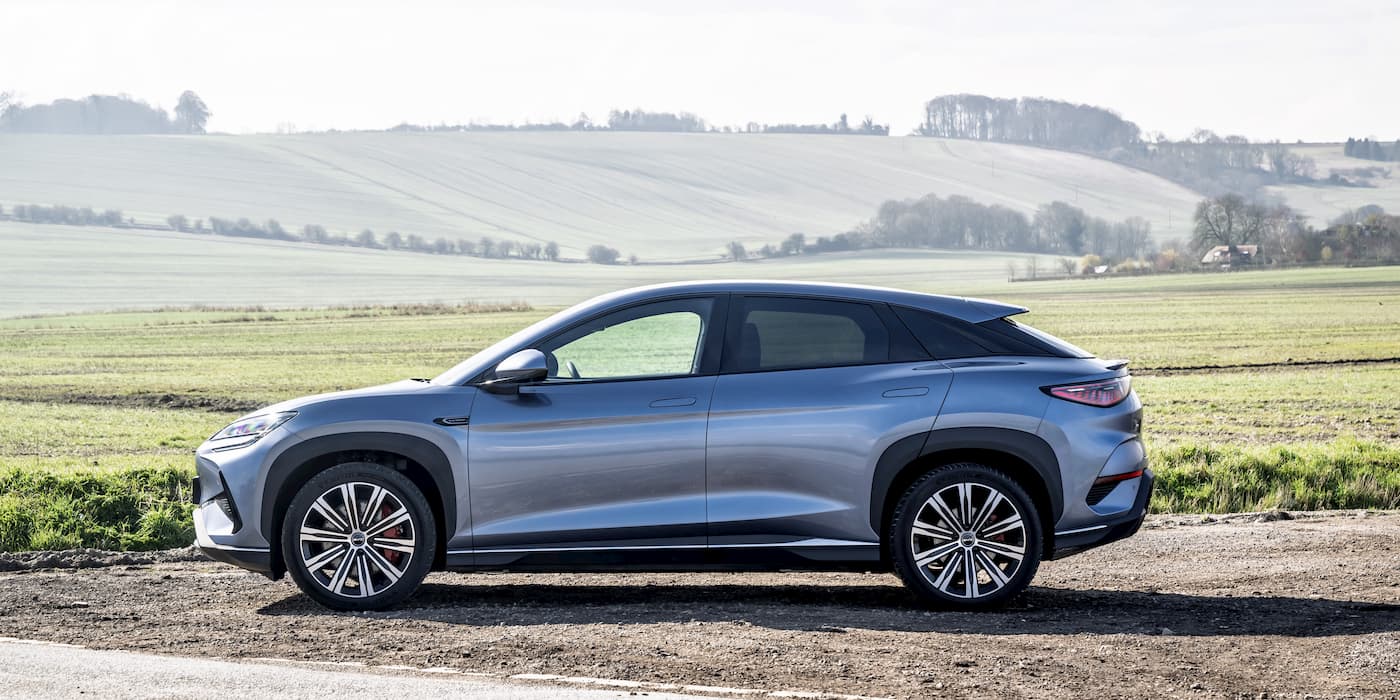
Australia just posted its biggest month ever for electric car sales, and for the first time seven different EVs each cleared 1,000 units in a single month.
Every one of them is either Chinese-owned or Chinese-built — and that includes the Tesla Model Y that topped the chart, which rolls off the line in Shanghai.
A record month, and a changing of the guard
According to The Driven, which broke down the June registration data, only one or two EVs used to reliably top 1,000 monthly sales in Australia — usually the Tesla Model Y, the Model 3, or the BYD Sealion 7.
In June, that number jumped to seven. Five new Chinese models joined the Model Y and Sealion 7 near the top, while the Model 3 slid all the way to 12th place.
Here are Australia’s best-selling EVs in June 2026, per The Driven:
- Tesla Model Y – 8,072
- BYD Sealion 7 – 4,730
- BYD Atto 2 – 2,482
- Geely EX5 – 2,303
- Omoda Jaecoo J5 – 2,096
- Zeekr 7X – 1,868
- MG4 Urban – 1,015
BYD, Geely, Omoda Jaecoo, Zeekr, and MG are all Chinese brands. MG — once a signature marque of the British auto industry — has been owned by China’s SAIC since 2007. That accounts for six of the seven.
Yes, even Tesla’s Model Y is Chinese-made
The one nameplate on that list that isn’t a Chinese brand is Tesla. But the Model Y and Model 3 that Tesla sells in Australia aren’t American cars.
Tesla supplies the Australian, New Zealand, and broader Asia-Pacific right-hand-drive markets out of Gigafactory Shanghai, not Fremont or Berlin. Australia has imported right-hand-drive Model Ys and Model 3s from Shanghai since 2022, and the new three-row Model Y L that just launched there is a Shanghai-built export as well — Australia was the first market to get it outside China.
So the Model Y’s chart-topping 8,072 sales are, physically, Chinese-made vehicles. Strip away the badge on the hood, and Australia’s entire EV top seven traces back to Chinese factories.
Three cheap Chinese EVs are doing the damage
Price is a big part of the story. Three of the seven best-sellers — the BYD Atto 2, the Omoda Jaecoo J5, and the MG4 Urban — can be had for under AU$40,000. The Geely EX5 comes in under AU$50,000.
None of these models existed in the Australian market a year ago. We covered how BYD outsold Tesla 10-to-1 in Australia back in January, led by the same Sealion 7 and Atto 2 that are now cemented in the top three. The floodgates that opened then are now a permanent feature of the market.
The pressure isn’t confined to EVs. With its plug-in and hybrid models added in, BYD nearly overtook Toyota as Australia’s biggest-selling brand of any kind in June, part of the same global surge that has BYD chasing Toyota for the world No. 1 spot.
Japan is barely in the race
The flip side of China’s rise is Japan’s near-total absence from the EV chart. Japan was long the dominant source of cars in Australia, but its automakers stayed focused on internal combustion.
Only three Japanese EVs crack Australia’s top 50 electrics so far this year: Toyota’s bZ4X (15th), the Subaru Solterra (a rebadged sibling, 30th), and the Subaru Trailseeker (47th). That’s the entire Japanese EV presence in a market its brands used to own.
EVs took a 23.5% share of a record-breaking overall Australian car market in June, with the ACT hitting a remarkable 43.5%. Even the Federal Chamber of Automotive Industries — the local car lobby — now concedes there’s a “structural shift” underway.
Electrek’s Take
This is the clearest snapshot yet of what “Chinese EV dominance” actually means. It’s not that Chinese brands are creeping up the sales charts — it’s that they now own the entire chart, top to bottom, and the one non-Chinese brand on it is selling cars built in Shanghai.
Top comment by Dirk Diggler
The Australians who buy the EVs charge them for free with their rooftop solar.
The Tesla detail matters because it could be a different story if its vehicles sold in Australia weren’t coming from China.
A good example is the fact that Tesla recently started selling the Model YL in the US and it is about $4,000 more expensive than in Australia after taking away the add-ons from the launch edition made in the US.
For the same car from the same automaker, there appears to be a 10% cost improvement between the US and China. That’s hard to overcome.
If you’re shopping for an EV to beat rising fuel costs, pairing it with home solar is one of the smartest ways to lock in cheap “fuel” for years. With electricity rates climbing nearly 10% last year, home solar protects you against future rate increases. And with lease and PPA options, you can go solar with zero upfront cost and start saving immediately. If you want to find the best deal, check out EnergySage. It’s a free service with hundreds of pre-vetted installers competing for your business, so you save 20 to 30% compared to going it alone. No sales calls until you pick an installer. Get your free quotes here.


FTC: We use income earning auto affiliate links. More.


Comments