
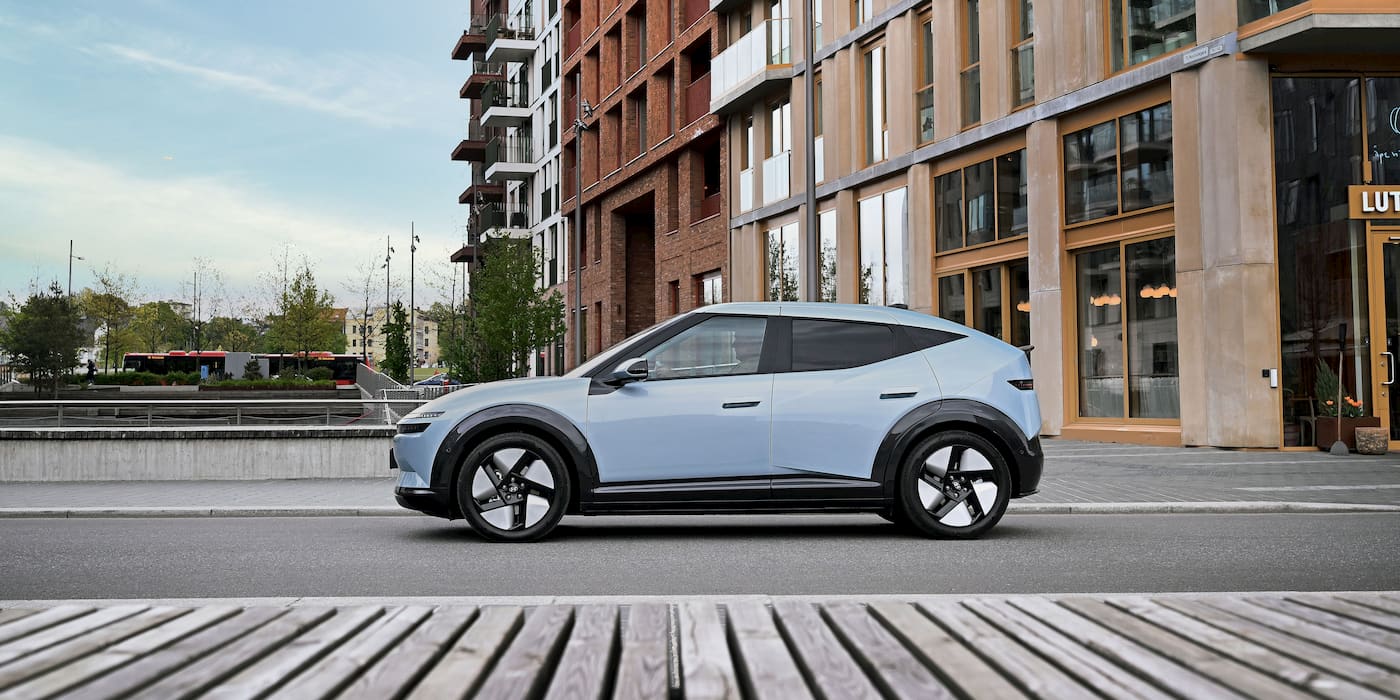
The IONIQ 3 is a high-tech, fully electric hatch that the US will miss out on. It can drive over 300 miles on a single charge and is Hyundai’s first vehicle in Europe to use its new Pleos Connect infotainment system.
Meet the Hyundai IONIQ 3, an advanced new EV hatch
Another affordable, practical all-electric vehicle that those in the US will likely never see. The IONIQ 3 is a smaller sibling to the IONIQ 5, designed and built in Europe at Hyundai.
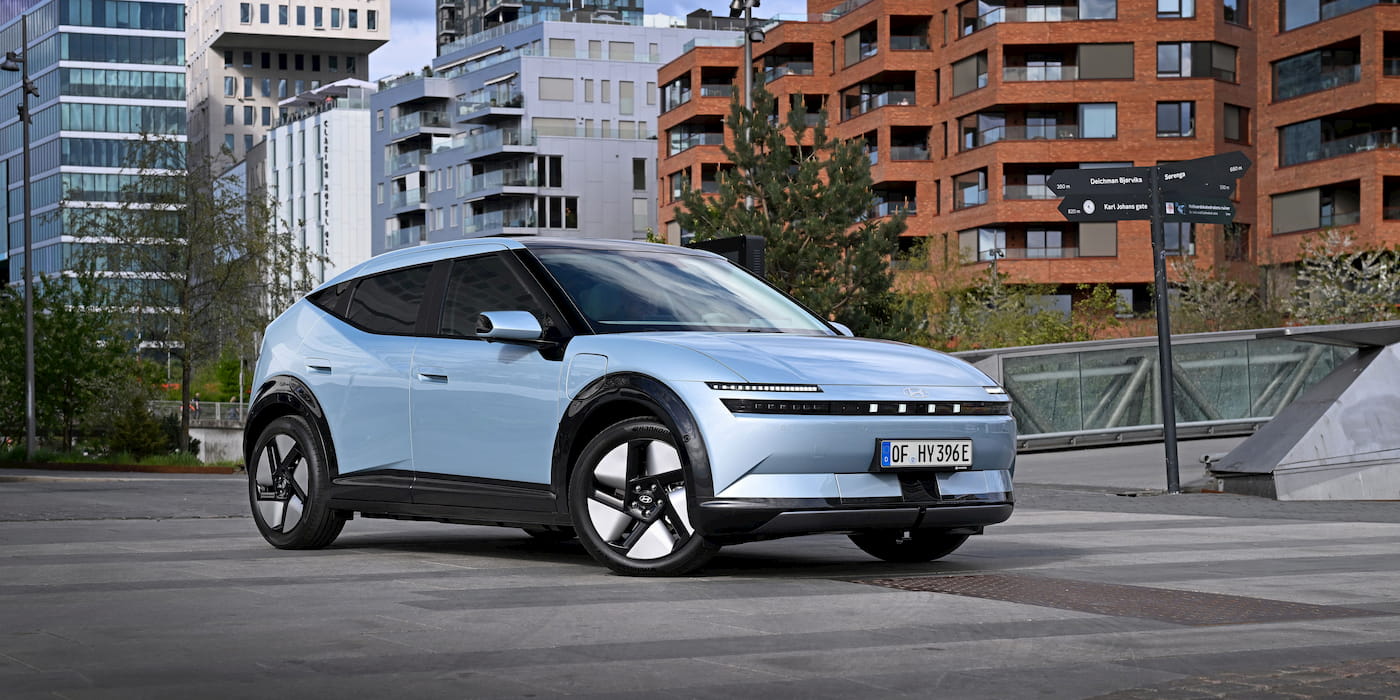
We got our first look at it in April during Milan Design Week. Although it’s part of the IONIQ series and bears some resemblance to the IONIQ 5 and IONIQ 6, the smaller electric hatch debuts a unique “Aero Hatch” design.
The new look “reimagines the compact EV silhouette,” according to Hyundai. It’s designed to optimize efficiency and interior space.
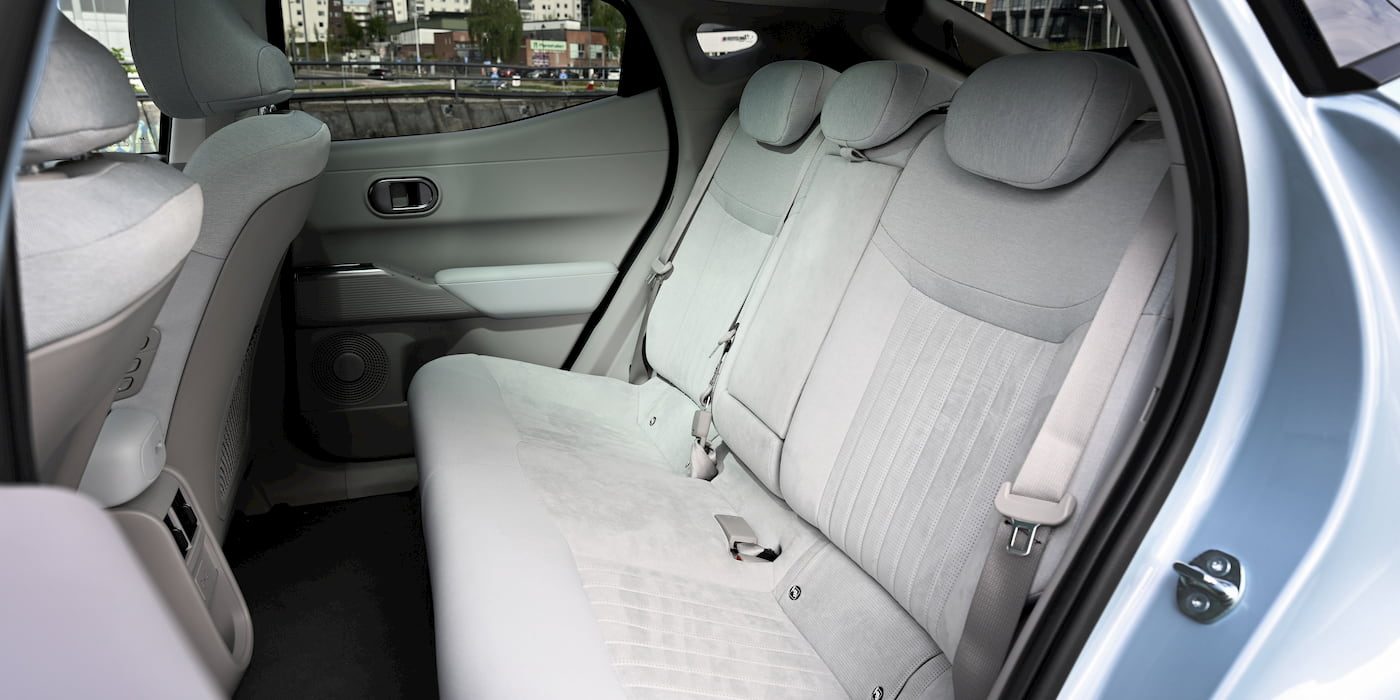
Measuring 4,155 mm (163.5″) in length, 1,800 mm (70.9″) in width, and 1,505 mm (59.3″) in height, with a wheelbase of 2,680 (105.5″) mm, the IONIQ 3 is even slightly smaller than the new Chevy Bolt EV.
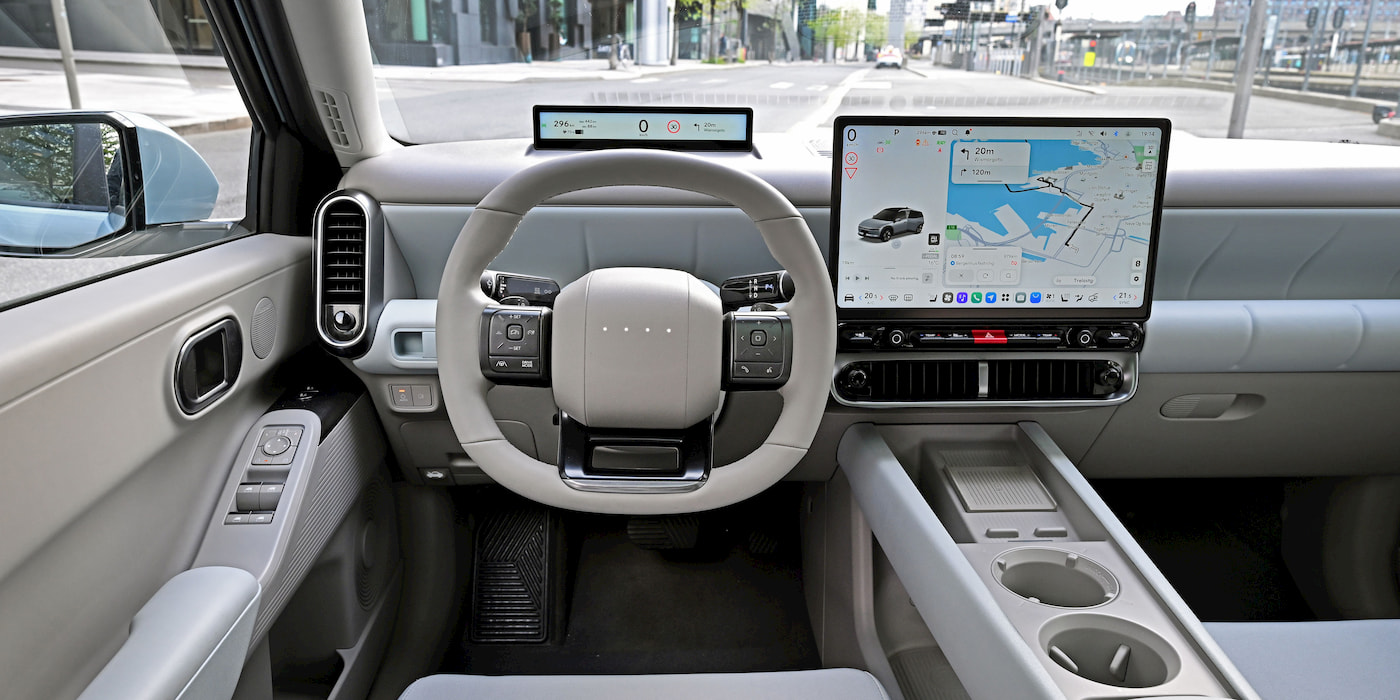
While the IONIQ 3 debuts a new exterior look, it’s also Hyundai’s first vehicle in Europe to feature its next-generation Pleos Connect infotainment system.
Hyundai Pleos Connect
The setup is similar to Tesla’s with a “smartphone-like” user interface with apps and customizable screens.
Based on Android OS, Hyundai’s infotainment system is available with either a 12.9″ or 14.6″ center touchscreen, and an optional slim display in front of the driver. Physical buttons are still found below the display and on the steering wheel for climate control, media, and more.
The Pleos Connect system includes Hyundai’s advanced new AI companion, Gleo AI. Built on a large language model (LLM), the AI voice assistant will continue to learn and generate responses based on location, driving conditions, and other real-time factors.
It will also learn and adapt based on the conversations you have with it, offering a more personalized experience.
You can ask it questions like “find a restaurant near me” or “take me here,” or use it to search the web for sports, news, and more.
The IONIQ 3 is based on the same E-GMP platform that underpins Hyundai’s other IONIQ EVs. It’s available with two battery pack options: 42.2 kWh and 61 kWh, providing WLTP ranges of up to 213 miles (344 km) and 308 miles (496 km), respectively.
Unlike the IONIQ 5 and 9, the IONIQ 3 swaps the 800V architecture for a 400V system to cut costs. With DC fast charging, the standard (42.2 kWh) battery can still recharge from 10% to 80% in around 29 minutes. The long-range (61 kWh) battery version takes about 30 minutes.
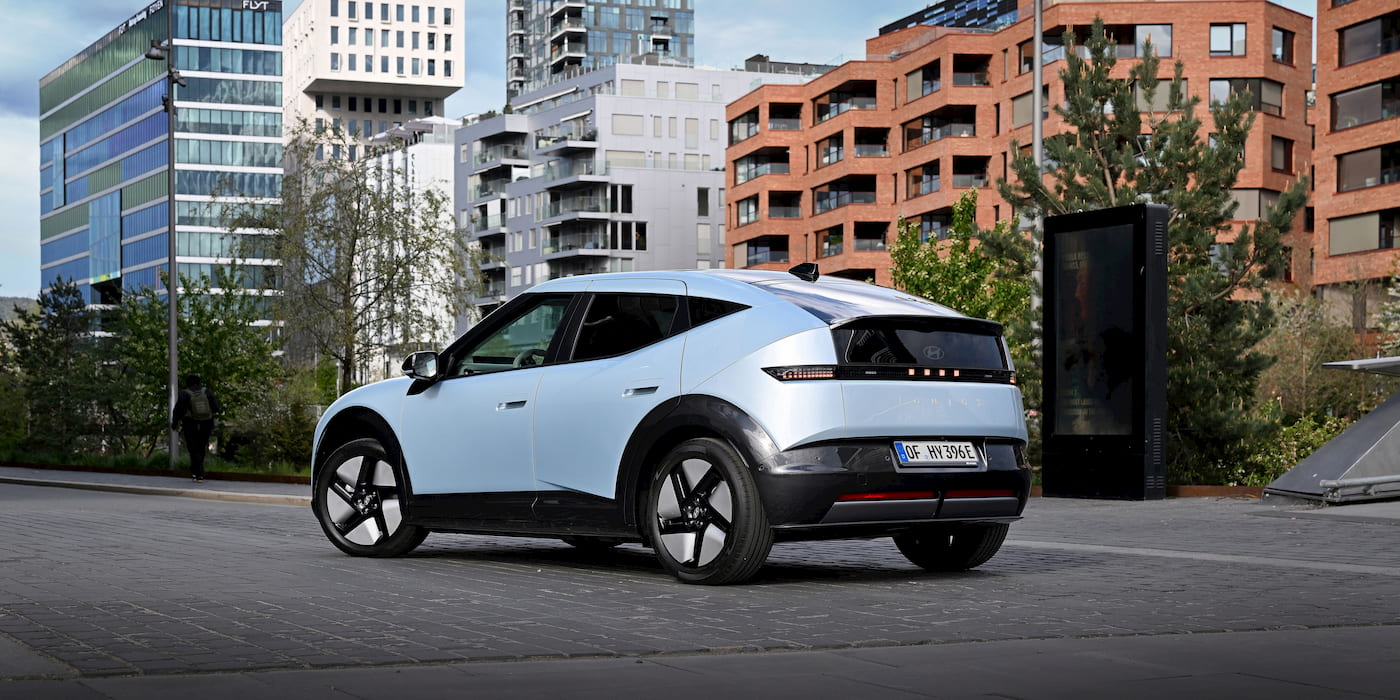
Hyundai has yet to announce prices, but the standard IONIQ 3 is expected to start at around €30,000 ($35,000) in Europe and £25,000 in the UK.
The N-Line variant will likely cost at least €10,000 ($11,700) more. To give you an idea, the IONIQ 5 starts at €45,750 ($52,300) in Germany, while the N-Line variant costs €58,300 ($66,700).
Electrek’s Take
Why doesn’t Hyundai bring the IONIQ 3 to the US? An affordable, efficient electric hatch with modern tech and features? It sounds great, but don’t get your hopes up.
For one, the IONIQ 3 is produced at Hyundai’s İzmit plant in Turkey, so importing it would likely be too costly thanks to the Trump Administration’s tariffs. Plus, hatchbacks are not exactly America’s forte, with larger trucks and SUVs dominating US sales.
Top comment by cornsama
I actually really like it. Hopefully when the squatter is gone we can reduce tariffs and get it in the US as well.
Hyundai’s sister company, Kia, is launching the EV3 in the US later this year, which is likely better suited to the market as a slightly larger, taller compact SUV.
Meanwhile, Hyundai still sells the IONIQ 5 in the US. Starting at $35,000, the Hyundai IONIQ 5 remains one of the most affordable (and top-selling) EVs in the US.
The IONIQ 5 sold in the US is built alongside the three-row IONIQ 9 at the Hyundai Motor Group Metaplant America outside of Savannah, GA.


FTC: We use income earning auto affiliate links. More.


Comments