
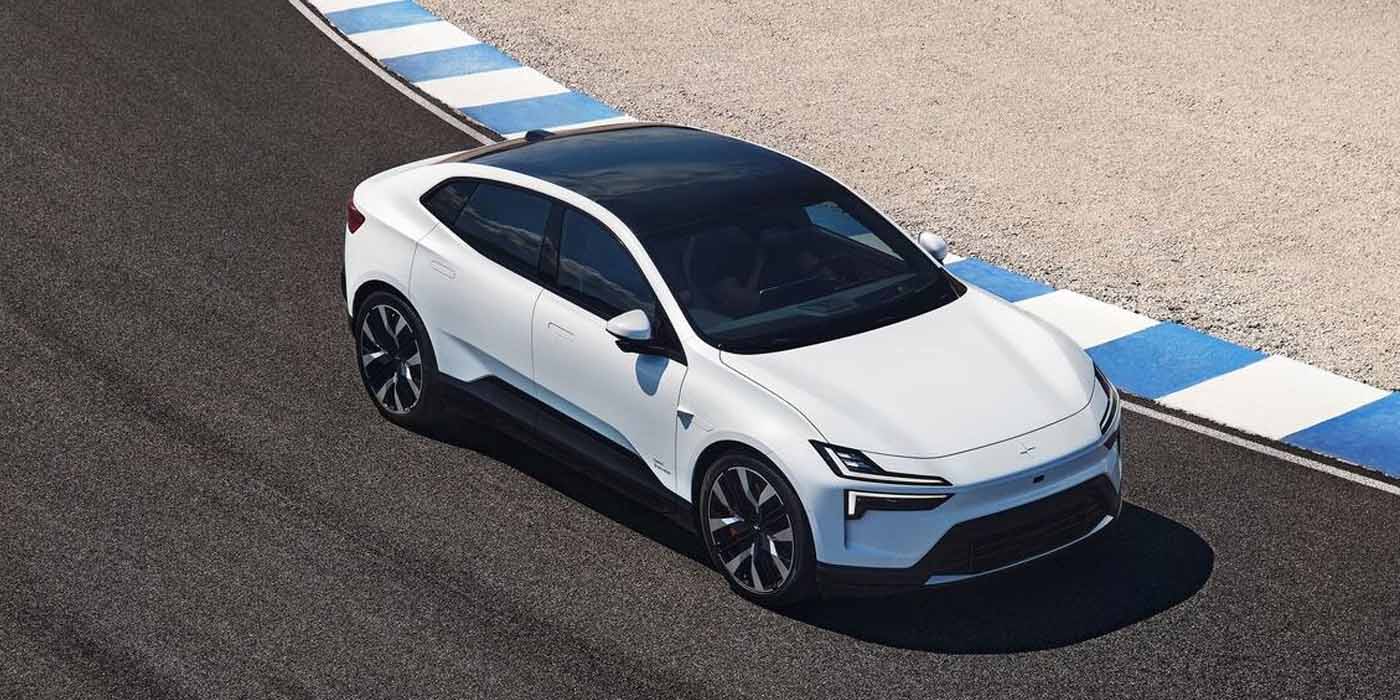
Polestar is pulling new vehicles out of the US market starting with model year 2027 after the Commerce Department declined to grant it authorization under the Connected Vehicle Rule, the company confirmed today.
The decision effectively ends new-car sales in the US for the Geely-owned Swedish EV brand — even though one of its models is assembled in South Carolina.
What Commerce decided
The Bureau of Industry and Security, part of the US Department of Commerce, declined to grant Polestar (Nasdaq: PSNY) an authorization to sell vehicles in the US from model year 2027 onward under the current Connected Vehicle Rule.
The rule, finalized in January 2025, bans connected vehicles with a “sufficient nexus” to China or Russia from the US market, with the software prohibitions taking effect for model year 2027 and hardware restrictions following in 2030. It covers telematics, cameras, microphones, GPS, Bluetooth, cellular modules, and automated driving software across gas, hybrid, and electric vehicles alike.
Polestar’s problem is ownership, not where the cars are built. The brand is majority-owned by Geely, the Chinese automotive group that also controls Volvo Cars. That nexus is what triggers the rule, regardless of the factory location — a dynamic that traces back to the Biden administration’s 2024 warning that Chinese-connected vehicles could harvest US driver data.
It’s a notable outcome given the geography of Polestar’s lineup. The Polestar 3 is built at Volvo’s plant in Charleston, South Carolina, while the Polestar 4 is assembled in Busan, South Korea — neither is made in China.
The Volvo contrast
Here’s the catch: Volvo, also owned by Geely, was granted authorization to keep selling connected vehicles in the US.
Same parent company, opposite outcome. Volvo operates as a separately listed, more established automaker with a larger US footprint, while Polestar is more tightly entangled with Geely’s broader structure and shares vehicle platforms and software with Geely brands. Whatever the precise reasoning, the result is that one Geely brand stays and the other goes.
Polestar says it will continue to sell existing stock of the Polestar 3 and Polestar 4 in the US and will keep supporting current owners through its service network. But the Polestar 4 that only went on sale in the US this month now has a hard expiration date on new sales.
Doubling down on Europe
Polestar is responding by leaning into the region where it already does most of its business. Europe accounts for close to 80% of the company’s retail volumes, and 94% of its Q1 2026 retail sales came from outside the US.
The company plans to expand its European sales network and localize manufacturing, with production of the upcoming Polestar 7 compact SUV planned in Europe. It also flagged growth markets including Southeast Asia, Eastern Europe, Latin America, and Canada.
“The automotive industry is entering a new phase, based on regional dynamics,” CEO Michael Lohscheller said, calling Europe the company’s “largest growth engine.”
The backdrop is a company that has been growing volume but bleeding margin. Polestar posted a record 2025 with more than 60,000 cars sold and revenue above $3 billion, and a record first quarter of 13,126 deliveries in Q1 2026, up 7%. But gross margin swung to negative 3.2% in Q1, down from a positive 10.3% a year earlier, on pricing pressure, tariffs, and product mix.
Electrek’s Take
Top comment by Anupreet Singh
At this point, I honestly do not know why China is not banning Tesla. They don't need Tesla's technology in their country anymore, as they have enough domestic companies that are far ahead of Tesla in EV, Battery chemistry, and charging infrastructure technologies. If the answer is China is the true capitalist here while the US is just paying lip service, that'll be hilarious, but true.
Losing the US stings less than it would for almost any other automaker, because the US was never where Polestar’s volume lived. With 94% of Q1 sales already coming from outside the US, this is a pruning, not an amputation — and the company’s Europe-first messaging is a reasonable read of where it actually has momentum.
But the precedent is what matters here. The Connected Vehicle Rule just demonstrated it can wall off a Swedish-branded, partly US-built EV purely on the basis of Chinese ownership upstream. That’s a clear signal to every automaker with Chinese capital or a Chinese tech stack in its supply chain, and it lands while the US is simultaneously trying to expand domestic EV production. The Volvo-yes, Polestar-no split also shows how much discretion sits inside this rule — corporate structure and software sourcing, not assembly address, decide who gets in.
Now, hopefully, China doesn’t hit back at US automakers with similar sanctions. I doubt this administration even thought that far ahead.
One cost you can actually control is how you charge your EV — and home solar is the cheapest way to fuel an EV long term. With electricity rates climbing nearly 10% last year, home solar protects you against future rate increases. And with lease and PPA options, you can go solar with zero upfront cost and start saving immediately. If you want to find the best deal, check out EnergySage. It’s a free service with hundreds of pre-vetted installers competing for your business, so you save 20 to 30% compared to going it alone. No sales calls until you pick an installer. Get your free quotes here.


FTC: We use income earning auto affiliate links. More.


Comments