
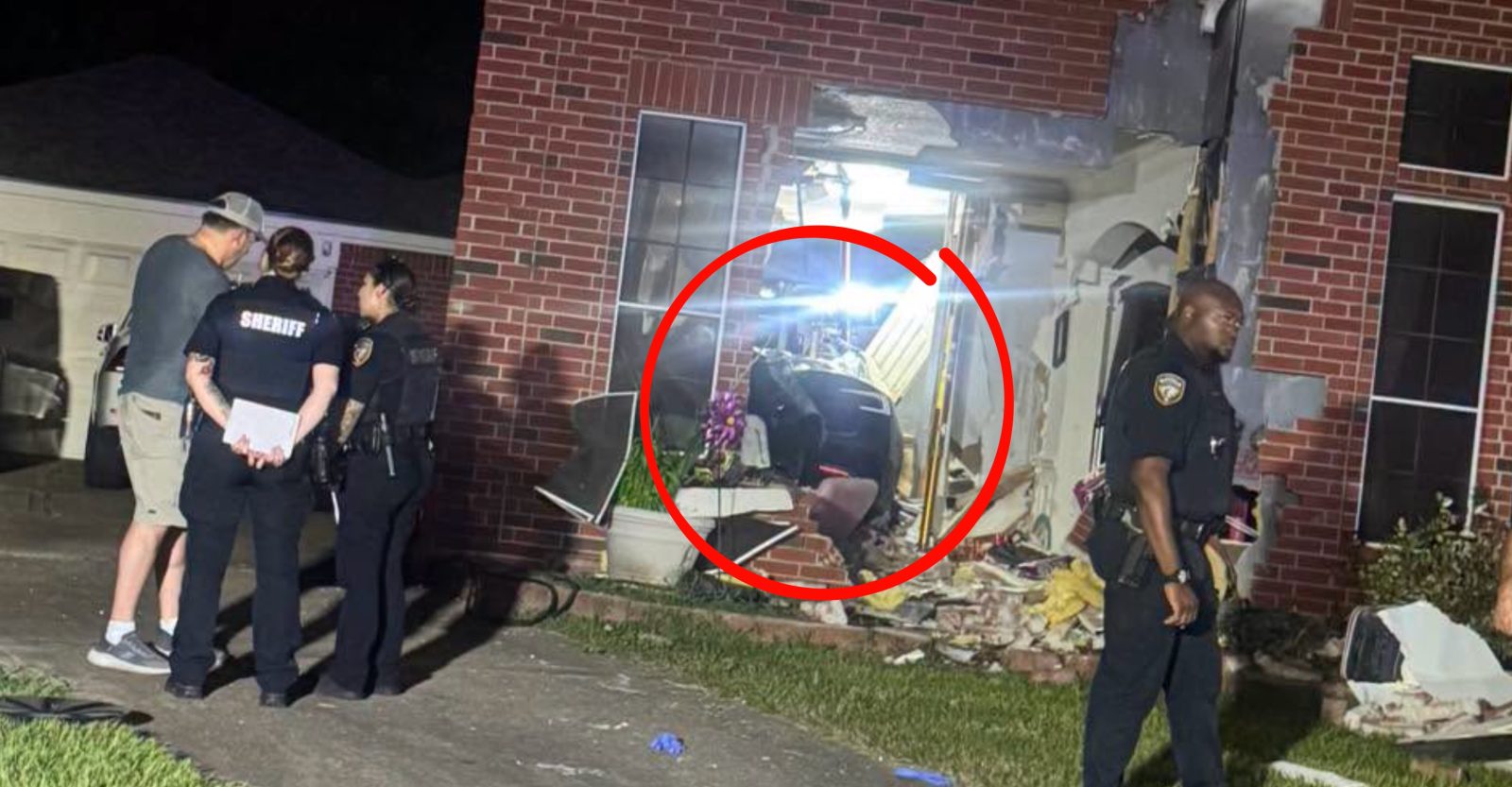
The family of a 76-year-old woman killed when a Tesla Model 3 crashed into her Katy, Texas, home has sued Tesla and the driver, alleging the company’s “Autopilot” and “Full Self-Driving” systems are defectively designed.
The wrongful death suit lands just days after the crash — and it leans on the same argument that produced last year’s landmark $243 million Autopilot verdict against Tesla in Florida.
The lawsuit
The suit was filed Monday in Harris County District Court by Jennifer and Justin Barbour — Martha Avila’s daughter and son-in-law — individually and on behalf of Avila’s estate. It names Tesla, Inc. and the driver, 44-year-old Michael Butler, as defendants.
According to the petition, Butler was driving the Model 3 eastbound on Rose Hollow Lane around 8 p.m. on June 19 when the car crashed through the front wall of the family’s home. Avila was standing in the front room and was pinned in the wreckage. She was airlifted to a hospital, where she was pronounced dead. Justin Barbour was also inside and suffered neck, back, and shoulder injuries. The family says the home is now unlivable and they are living in hotels.
The lawsuit accuses Tesla of design defect and failure to warn, and the driver of negligence and gross negligence. It alleges the vehicle failed to detect the end of the street and the home in its path, failed to adequately monitor driver engagement, failed to warn owners about the limitations of its driver-assistance systems, and may have experienced “sudden unintended acceleration.”
The petition argues Autopilot has “a history of known danger,” citing a 2023 Washington Post analysis that identified at least 17 fatal incidents linked to the system. It seeks more than $1 million in damages plus punitive damages, and demands Tesla preserve the vehicle, the event data recorder, Autopilot and FSD logs, telemetry, firmware versions, and camera and sensor data.
The family is represented by attorney Chris Adkins of Houston firm Zehl & Associates.
Tesla is blaming the driver
Tesla has already laid out its defense in public. As we reported when Tesla admitted FSD was engaged but blamed the driver for “overriding” it, Head of AI Ashok Elluswamy said vehicle data shows Butler “manually overrode self-driving by pressing the accelerator all the way to 100% of the accel pedal in this residential area,” reaching 73 mph with the pedal still pressed after impact. CEO Elon Musk added that “FSD drives slowly through neighborhood streets and this was a high speed crash!”
The Harris County Sheriff’s Office said it found no evidence of a mechanical malfunction, and that Butler showed no signs of intoxication and was cooperative.
That account points to a pedal misapplication — accelerator instead of brake. But Tesla treats “the driver pressed the accelerator” as a complete defense, and the Florida case is the clearest sign that argument no longer holds up in court.
The Florida precedent
In August 2025, a Miami federal jury found Tesla 33% responsible for a 2019 Key Largo crash in which driver George McGee, using Autopilot, blew through a T-intersection at roughly 62 mph while reaching for a dropped phone, killing 22-year-old Naibel Benavides Leon and injuring Dillon Angulo. The jury put 67% of the fault on McGee but still held Tesla partly liable, producing a $329 million damages award — about $243 million of it against Tesla. A federal judge upheld the judgment in February.
The driver was plainly misusing the system, just as Butler appears to have. Yet the jury concluded Tesla shared responsibility because its marketing and weak, steering-torque-based driver monitoring fostered a false sense of what the car could do. Misuse by the driver and responsibility on Tesla’s part are not mutually exclusive — and that is exactly the opening this new lawsuit is aiming at.
What we still need to see
Like Florida, the driver here will likely shoulder most of the blame. But the question Tesla keeps skipping is why an experienced driver would floor his car into a house.
The most plausible answer fits Tesla’s own timeline: the driver is on FSD, the car does something he doesn’t expect approaching the turn, and in the scramble to intervene he hits the accelerator instead of the brake and holds it. That is the complacency problem we’ve written about candidly — a Level 2 system good enough to lull drivers out of the loop, and nowhere near good enough to trust when the rare takeover comes.
Only the logs and the driver can answer that, and Tesla’s version is its own interpretation of its own data. In the Florida case, Tesla told plaintiffs the crash data didn’t exist until an independent researcher recovered it. NHTSA has opened a Special Crash Investigation and will pull the event data recorder independently. That’s the version that counts.
Electrek’s Take
Top comment by Philip234
This is why America will continue to lag behind the rest of the world on autonomous vehicles:
instead of having sensible, national standards we have broad and unenforced Federal guidelines...
and allow every state to create their own broad guidelines...
and every company to self-certify and invent standards within those guidelines...
then we wait until after enough problems are reported to investigate whether the system was within the broad and vague guidelines.
Then you get to spin the liability lottery and 6-12 random and totally unqualified people get to decide whether a (by now five year old) system was effective, sensible, and appropriate to task and if not, how much you owe for failing to meet the poorly defined standard.
No way to run a modern legal system. We need a single set of national standards, a common third party testing and qualification process, plus clear national liability and compensation laws for what happens if the system fails. This process is idiotic.
This lawsuit was predictable, and it’s aimed squarely at the soft spot Tesla’s own framing creates. Tesla wants the story to end at “the driver pressed the accelerator.” The Florida verdict already showed a jury will look past that and ask what conditioned the driver to fail in the first place.
To be fair, the facts here may cut differently. A 100% accelerator input is a more aggressive driver action than reaching for a phone, and Tesla’s lawyers will argue it breaks the chain of causation. The plaintiffs’ “sudden unintended acceleration” theory also runs against the sheriff’s preliminary finding of no mechanical fault, and Tesla’s pedal data will be hard to dismiss. This is not a clean win for either side.
But the broader pattern is now established. Until Tesla takes the complacency problem seriously — the names, the marketing, the easily-gamed driver monitoring — these cases will keep landing in court, and juries have shown they’re willing to assign Tesla a share of the blame even when the driver clearly misused the system. The independent NHTSA data should tell us what really happened in the seconds before a grandmother was killed in her own living room. We’ll hold full judgment until it does.
If you’re a Tesla owner, powering your EV with home solar is one of the smartest ways to lock in low fuel costs. With electricity rates climbing nearly 10% last year, home solar protects you against future rate increases. And with lease and PPA options, you can go solar with zero upfront cost and start saving immediately. If you want to find the best deal, check out EnergySage. It’s a free service with hundreds of pre-vetted installers competing for your business, so you save 20 to 30% compared to going it alone. No sales calls until you pick an installer. Get your free quotes here.


FTC: We use income earning auto affiliate links. More.


Comments