

Telo confirmed that its Mini-sized MT1 electric truck will charge at 400 kW sustained — a charging rate that puts it in the company of luxury EVs costing two to three times as much.
The startup also revealed a dual 800V/400V split-pack battery architecture designed to maximize performance on any fast charger, not just the latest high-voltage stations.
The announcement, made by CTO Forrest North in a video update, comes on the heels of Telo securing a body manufacturing partner in Schwab Industries, a Michigan-based Tier 1 automotive supplier that will produce the MT1’s body-in-white structure. First customer deliveries of roughly 500 units are targeted for late 2026.
Dual voltage architecture in a compact package
The MT1 will use two 400V battery packs that can operate in parallel at 400 volts or switch to series configuration for 800V charging. This split-pack design allows the truck to take full advantage of 800V high-power chargers while maintaining strong performance at the more common 400V fast chargers that make up the majority of today’s DC fast charging network.
North emphasized that this was a deliberate engineering decision: “Vehicles that just go for pure 800 volts end up being compromised at 400-volt chargers. And because there are more 400-volt chargers out there than there are 800-volt chargers, that’s too big of a limitation for our customers.”
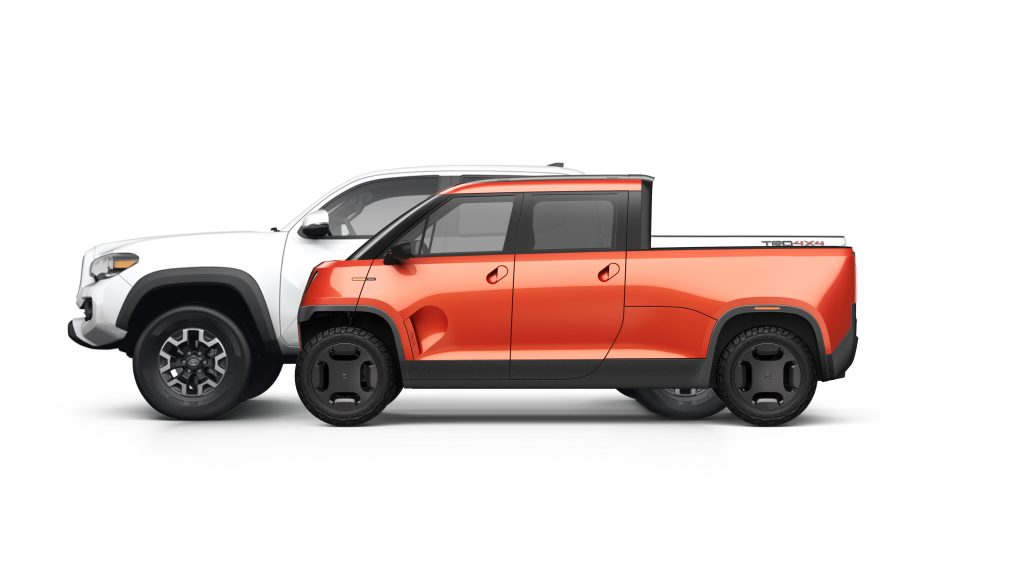
The approach mirrors what a handful of other EVs do, but North noted it was “a big packaging challenge” given the MT1’s compact 152-inch footprint — the same length as an electric Mini Cooper. Telo claims it has “one of the most dense series to parallel high voltage packs that exists.”
Other automakers have tackled 400V compatibility differently. The Porsche Taycan uses a DC-DC charge booster that limits it to around 150 kW at 400V stations. Hyundai’s E-GMP vehicles use the rear motor to step up voltage, achieving roughly 135 kW at 400V Superchargers. Telo’s split-pack approach should theoretically deliver stronger 400V performance, though the company hasn’t specified the exact charging rate at 400V stations.
Sustained 400 kW, not just a peak number
The more significant claim is that the 400 kW charging rate is sustained, not a brief peak that tapers within seconds. North directly addressed the industry practice of advertising peak charging rates that last only moments: “In the past we’ve seen some vehicles be able to charge at a very high charge rate but only for a few seconds. We know that that doesn’t fool anybody; we know it’s about sustained charge. That’s what brings the actual charge time down.”
This is a notable distinction. The Lucid Gravity, one of the few EVs currently capable of 400 kW charging, maintains that peak rate for roughly 90 seconds before tapering linearly. The BMW iX3 on the Neue Klasse platform also advertises 400 kW but follows a similar taper pattern. Tesla’s Model Y, by comparison, maxes out at 250 kW.
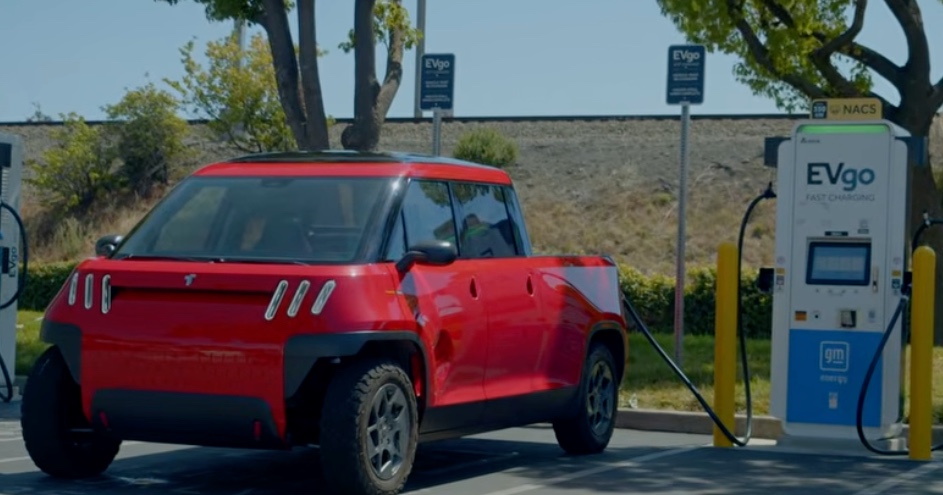
If Telo can deliver genuinely sustained 400 kW charging, the MT1 would stand out among EVs at any price point — and it starts at $41,520.
North attributed the improvement to rapid advances in battery cell technology, noting that cells Telo is sourcing today have 20% more energy density and roughly one-fifth the internal resistance of cells available just a year ago. Lower internal resistance means less heat generation during fast charging, which is what allows higher sustained power without thermal throttling.
Building momentum toward production
The charging announcement adds to a string of recent milestones for Telo. The company has raised roughly $30 million, including a $20 million Series A backed by Tesla co-founder Marc Tarpenning, and has accumulated over 12,000 preorders representing more than $600 million in potential revenue.
The MT1 offers a 60-inch truck bed — comparable to a Toyota Tacoma — despite being five feet shorter. Battery options include a 77 kWh standard pack (260 miles range) and a 106 kWh long-range pack (350+ miles). The dual-motor AWD configuration delivers 500 horsepower and a 4-second 0-60 time.
With the Schwab Industries partnership now in place for body manufacturing and certification activities underway, the initial run of approximately 500 units will target high-deposit customers and fleet buyers before broader production ramps up. Telo aims to produce around 5,000 trucks per year.
Electrek’s Take
The sustained 400 kW charging claim is the headline here, and it’s a bold one. Most EVs that advertise 400 kW peak rates see dramatic taper within the first minute or two. If Telo delivers on this, the MT1 would charge faster than vehicles costing $50,000 or more.
Top comment by Navarre
I'm optimistic their approach to prioritize off-the-shelf components will play out to actually hitting their started goal of profitability at 5k units/yr. They've been taking a lean startup approach instead of a burn all the capital approach we've seen from other EV startups that flamed out.
The dual 800V/400V architecture is the right call. We’ve been tracking how 800V-only vehicles struggle at 400V chargers — and with the majority of the fast charging network still running at 400 volts, optimizing for real-world infrastructure rather than spec-sheet bragging rights shows engineering maturity.
That said, Telo is still a startup with $30 million in funding trying to bring a vehicle to production — a feat that has humbled or destroyed far better-capitalized companies. The company wisely isn’t announcing specific charge times yet, which suggests final validation is still in progress. We’ll need to see actual charging curve data at real stations before this moves from impressive claim to confirmed capability. But the technical approach is sound, and the momentum, body manufacturing partner, 12,000 preorders, improving battery cell performance, is heading in the right direction.
But to bring a passenger vehicle program to market, you generally need in the hundreds of millions of dollars.
If you’re considering a compact truck like the Telo MT1, home solar can dramatically cut your charging costs. With electricity rates climbing nearly 10% last year, home solar protects you against future rate increases. And with lease and PPA options, you can go solar with zero upfront cost and start saving immediately. If you want to find the best deal, check out EnergySage. It’s a free service with hundreds of pre-vetted installers competing for your business, so you save 20 to 30% compared to going it alone. No sales calls until you pick an installer. Get your free quotes here.


FTC: We use income earning auto affiliate links. More.


Comments