
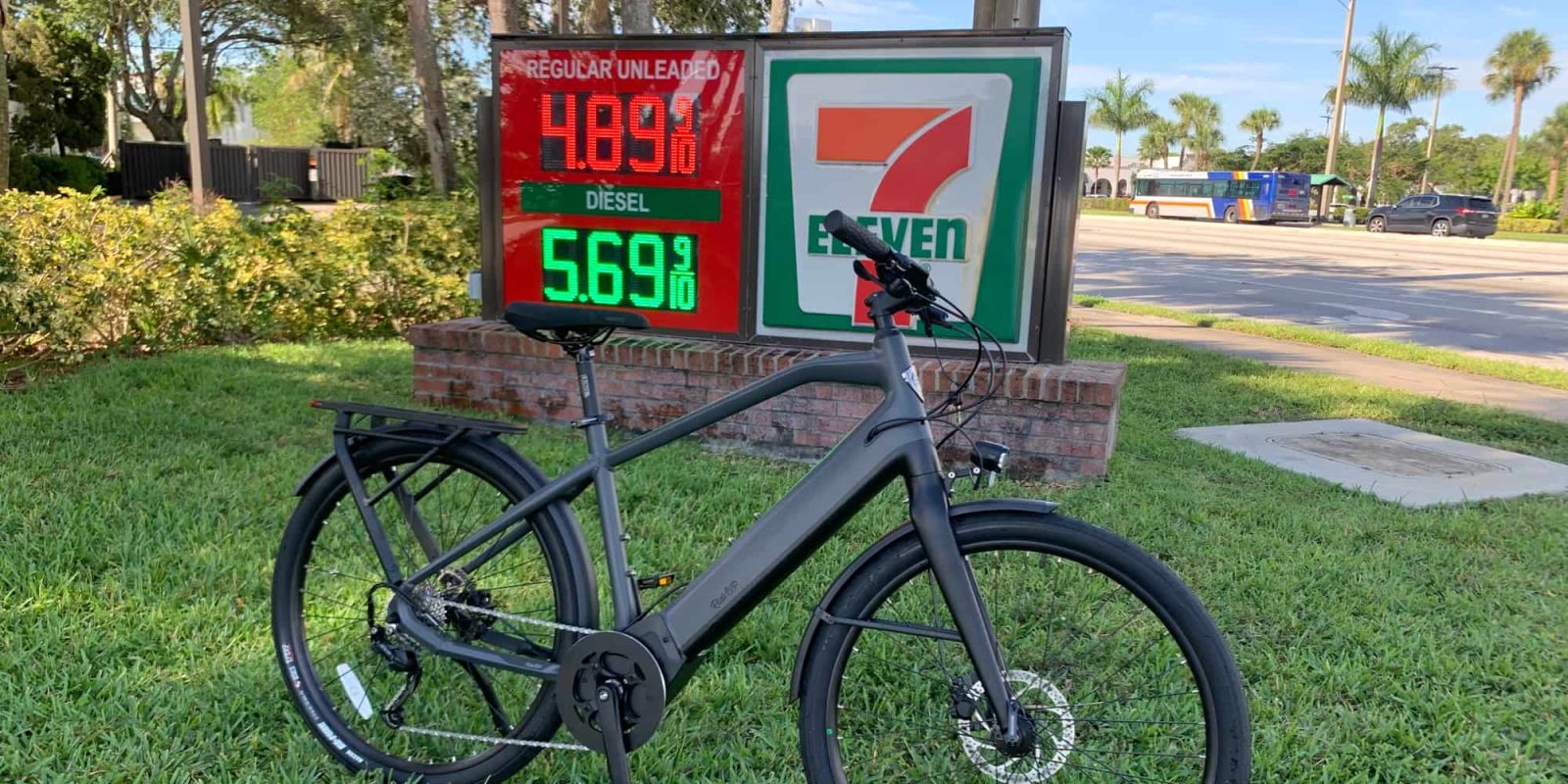
One of the most common questions I hear from people considering an e-bike right now, during a period of soaring energy prices, is some variation of “Can it actually save me money?”
The answer is yes. Quite a bit, actually. But the interesting part is that most people focus on the wrong number.
You see, most people think about the cost of charging an e-bike versus filling a gas tank. And while that’s certainly worth discussing, especially now as gas prices are higher than they’ve been in years, the real savings often come from pretty much everything else.
Let’s start with the simple math.
The average American drives around 13,500 miles (21,700 km) per year, according to federal transportation data. Not all of those miles can realistically be replaced with an e-bike, and not for every person (yes, I understand maybe you live in the middle of bum-luck nowhere, but most people don’t). But ultimately, many miles can be replaced by e-bikes for many people. Short errands, grocery runs, commuting, school drop-offs, trips to restaurants, and visits to friends are often well within e-bike range, whether someone has considered that for themselves or not.
Let’s say an e-bike replaces just 4,000 miles (6,400 km) of driving per year.
The average vehicle in the US gets around 25 mpg (11 liters per 100 km). At $3.25 per gallon (€0.75 per liter), driving those 4,000 miles (6,400 km) would consume about 160 gallons (600 liters) of fuel, costing roughly $520 (€450) annually.
Now let’s compare that to an e-bike.

A typical electric bike uses around 20-30 Wh/mile (13-19 wh/km). Assuming somewhere around the middle of that range, riding 4,000 miles (6,400 km) would consume approximately 100 kWh of electricity.
At the US average residential electricity price of roughly $0.17 per kWh, that comes out to around $17 worth of electricity, or around €14.50 (I’m trying really hard here to do the conversions but you Europeans will have to work out your own local energy costs… I’m still a mere mortal).
Keep in mind that the $17 figure is not per month. That is
So in this example, the fuel savings alone are about $500 (€430) annually.
That’s already significant, but if you ask me, it’s actually the least interesting part of the equation.
Cars are expensive even when they’re sitting still.
The American Automobile Association estimates that maintenance, repairs, and tires alone often add around 10 cents per mile (5.3 eurocents per km) to vehicle operating costs, sometimes even more.
If our hypothetical rider avoids 4,000 miles (6,400 km) of driving, that’s another $400 (€344) in maintenance-related savings.
Now we’re approaching $900 (€775) of savings per year.

Parking can push the numbers even higher.
For urban residents who regularly pay for parking, avoiding just a few paid parking sessions per week can easily save hundreds more dollars annually. In some cities, it can save thousands.
And then there’s the biggest opportunity of all: reducing the need for a second car.
Many households own two vehicles because both adults need transportation. But as e-bike ranges improve and cargo-carrying capabilities increase, a growing number of families are discovering that one car plus one e-bike works surprisingly well.
That’s where the math gets almost ridiculous.
The average new car payment in the US is now well over $700 (€600) per month. Insurance often adds another few hundred dollars monthly. Registration, maintenance, repairs, and fuel pile on even more.
Even a modest second vehicle can easily cost $8,000-$12,000 (€7,000-€10,000) per year to own and operate.
By comparison, a good e-bike might cost $1,500-$3,000 (€1,300-€2,600) upfront and only pennies per day to charge.
Many families find that the e-bike pays for itself within the first year or two simply by allowing them to avoid buying or replacing a second vehicle.
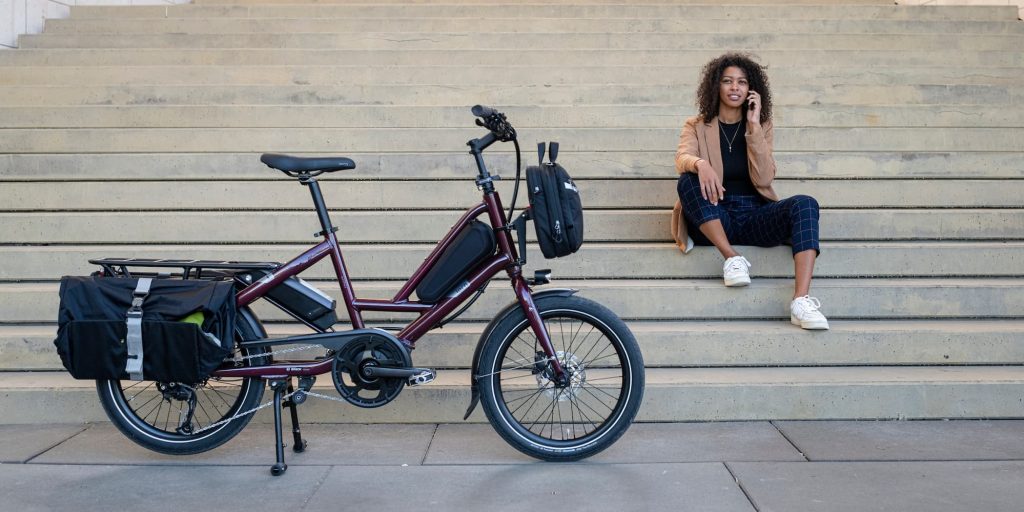
Of course, not everyone can replace a car.
Some commutes are too long. Some areas lack safe cycling infrastructure. Some people regularly transport large loads or multiple passengers. I’m not saying this works for everyone or for every trip.
The good news is that an e-bike doesn’t need to replace every car trip to provide meaningful savings.
Even replacing a few trips each week can add up surprisingly quickly.
A 5 mile (8 km) round trip to the grocery store. A quick run to pick up takeout. A commute to the office a couple days per week. These small trips are often where e-bikes shine.
Top comment by travis peterman
I'm a huge bike advocate but very few individuals are going to replace 4,000 miles annually by bike. I live in an urban environment that has significant bike infrastructure and I bike pretty regularly to drop off & pick up kids and a range of other tasks & outings. My annual range is somewhere between 1,750-2,000 miles.
4,000 miles isn't a realistic measure for 90% of ebike consumers.
Ironically, they’re also some of the least efficient trips for a car. Internal combustion engines burn proportionally more fuel during short trips and cold starts, making those errands more expensive than many drivers realize.
And then there are the benefits that don’t fit neatly into a spreadsheet.
It’s hard to put a number on the value of less time sitting in traffic, easier parking, more fresh air, regular exercise, lower stress, or more enjoyable commutes.
But as difficult as it is to assign a dollar value to those other benefits, they matter just as much. Or to some people, they may even matter more.


FTC: We use income earning auto affiliate links. More.



Comments