
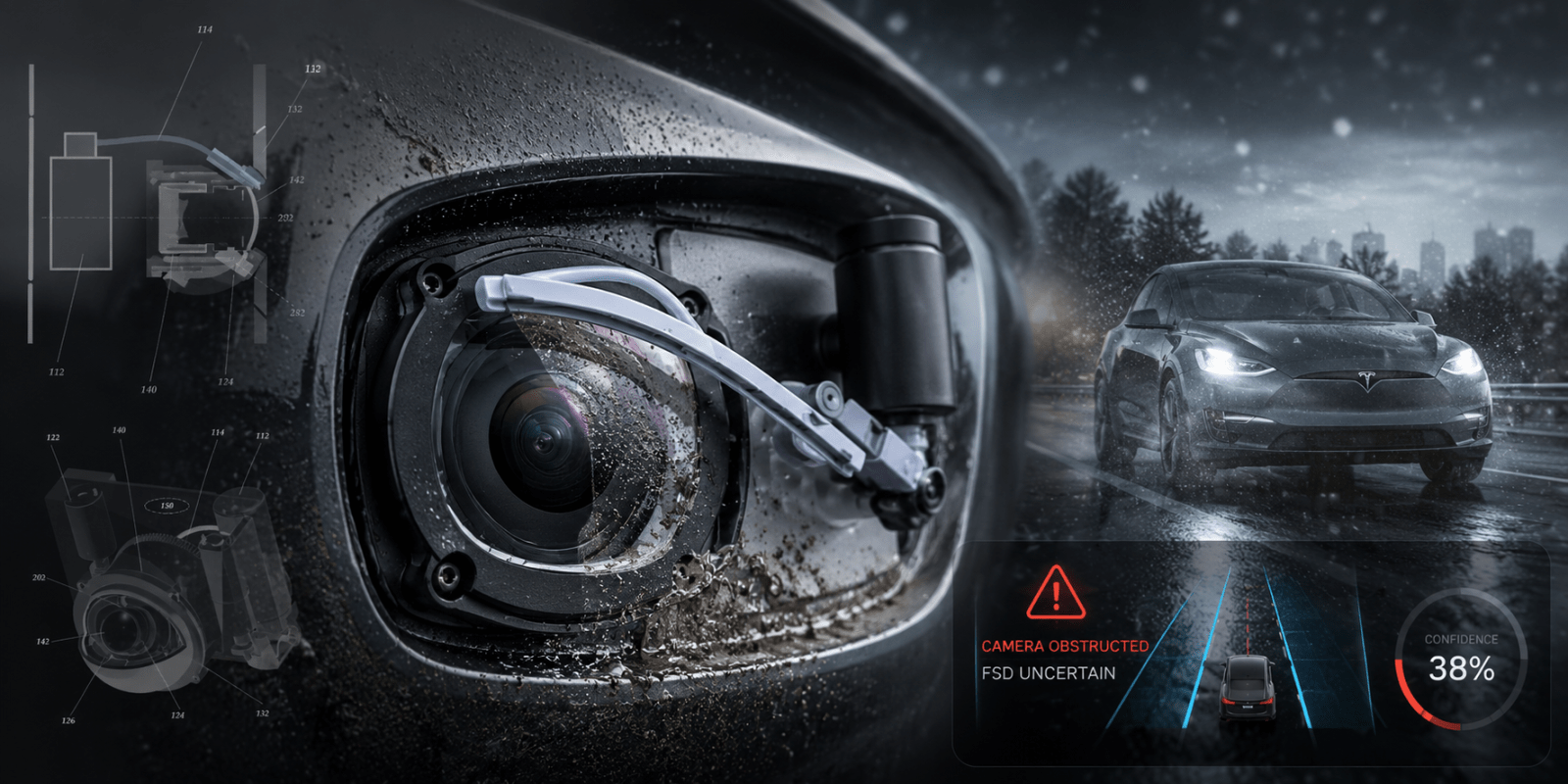
Tesla has been granted a new patent for a miniature camera cleaning system with a built-in wiper designed to keep vehicle cameras clear for autonomous driving.
The patent addresses one of the most frustrating and well-known issues with Tesla’s “Full Self-Driving” system — dirty cameras that constantly trigger alerts telling drivers to clean them. But Tesla’s Robotaxi fleet in Austin already has its own camera washer hardware that consumer vehicles don’t get.
How Tesla’s patented camera wiper works
The patent (US 12,636,684 B1), granted on May 26, describes a “Lens Cleaning System” that integrates a fluid dispenser and a mechanical wiper directly around the camera lens. Unlike traditional windshield wipers that sweep across a flat surface, Tesla’s design uses a compact blade that follows the curve of a spherical camera lens — essentially mimicking how an eyelid cleans the human eye.
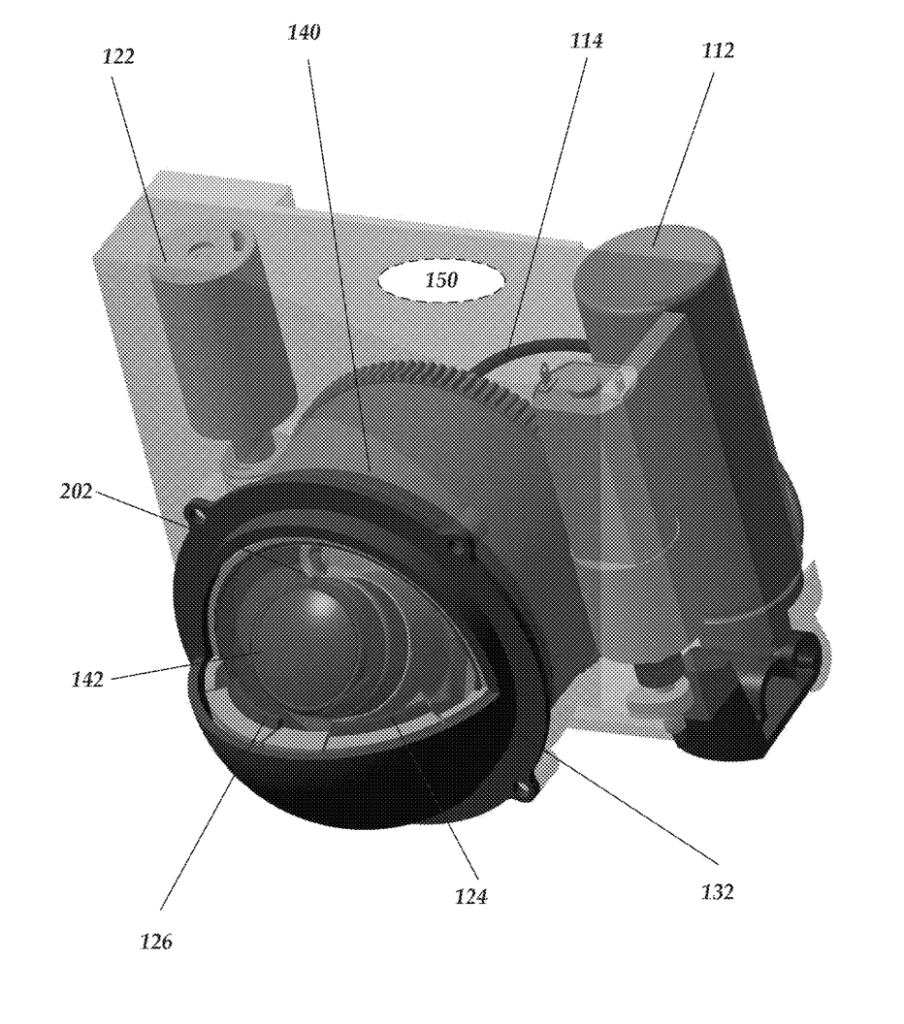
The system continuously monitors image quality from the camera feed itself. When dirt, water, mud, snow, or other debris degrades visibility, it automatically activates a cleaning sequence: spraying liquid onto the lens and sweeping it away with the wiper. It doesn’t rely on a fixed cleaning schedule — it only activates when it detects a problem.
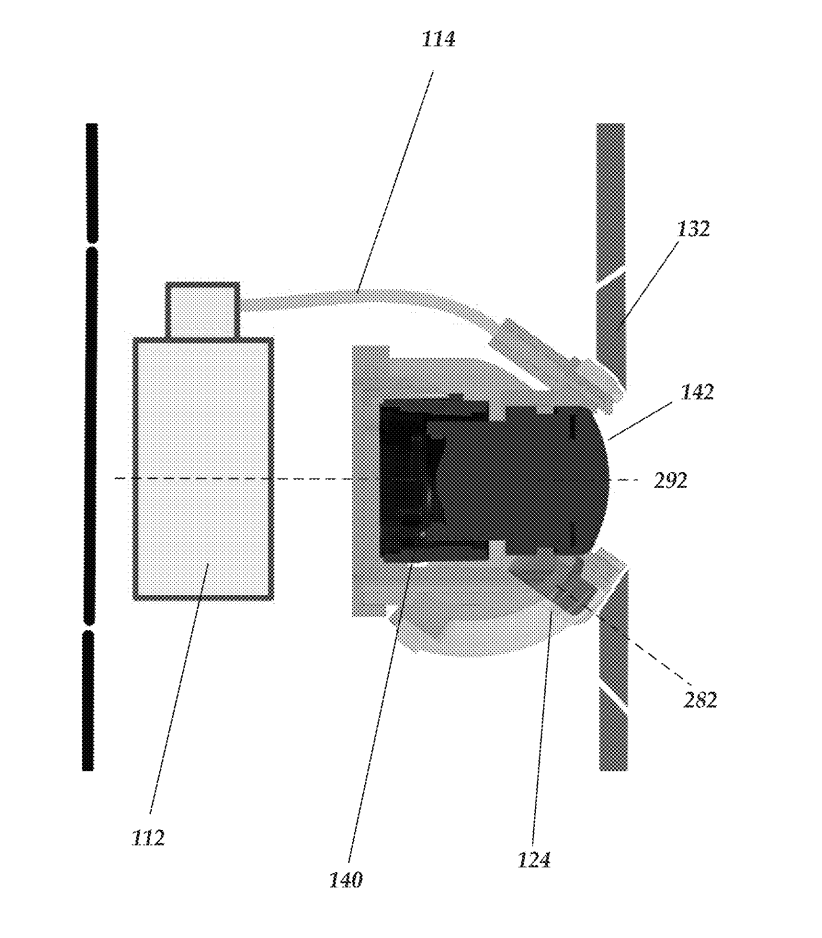
Tesla’s filing says the system can use various cleaning fluids, including water, alcohol-based solutions, washer fluid, or lubricants, depending on conditions. Because the hardware is integrated directly into the camera assembly, it stays compact enough to maintain Tesla’s current camera placements.
A well-known problem for FSD owners
Any Tesla owner who has used FSD or Autopilot, especially in winter, knows this problem intimately. You get constant notifications that “one or more cameras are obstructed” — a daily occurrence in rain, snow, or even dusty conditions. The system simply degrades significantly or stops working when cameras are dirty.
Tesla acknowledged the problem over a year ago when it said a new way to clean cameras was coming, initially focused on the Cybertruck. With FSD v14, Tesla introduced targeted camera cleaning using multiple wipes and fluid spraying for front cameras on the new Model Y, but exposed side and rear cameras have remained vulnerable.
For a vision-only system — Tesla removed radar and ultrasonic sensors years ago in favor of a camera-only approach that has raised questions about its self-driving promises — a blocked camera is essentially a blind spot. In an unsupervised autonomous scenario, there’s no human to wipe it off.
Robotaxis already have camera washers — consumer cars don’t
Here’s where it gets complicated. We already saw Tesla’s “Robotaxi” fleet in Austin using camera washers including the fender repeater cameras and B-pillar cameras. The repeater cameras have been redesigned, with the integrated turn signal light removed in favor of a washer jet. It’s not exactly the same system as this, but it does show that Tesla knows a solution is needed for a truly autonomous system
Consumer Model Y vehicles don’t have any of this. The hardware isn’t available on any production Model Y sold to the public, and it’s not retrofittable.
Tesla has made a significant point of saying its “Robotaxi” service uses the same Model Y vehicles it sells to consumers — feeding the hope that unsupervised self-driving would eventually come to customer-owned cars. But the camera washer hardware gap tells a different story.
This new patent describes a potentially more elegant, integrated solution than the external washer nozzles currently on the Robotaxi fleet. It could also prove critical for the Cybercab, which has started production and will need to operate fully autonomously without any human intervention. But whether it will make it into consumer vehicles, and when, remains an open question.
Electrek’s Take
Top comment by Realist
The mechanism may be compact but where does the fluid reservoir go? There will need to be a central tank and routing hoses, not a trivial installation task. There are 8 exterior cameras to route tubes to and a tank/pump assembly.
Not clear if it will fit in the cameras on the door B pillar.
We have been saying for years that Tesla needs to solve the dirty camera problem to enable true autonomy. Every Tesla FSD owner knows this, especially those who drive in climates with actual winters. You receive daily notifications to clean your cameras because FSD can’t see properly, it’s one of the most common complaints from FSD users.
This patent is a welcome development, but we can’t ignore the elephant in the room. Tesla has made a big deal about its “Robotaxi” service using the exact same Model Y vehicles that it sells to consumers, giving hope that it will finally deliver unsupervised self-driving to its entire fleet. But we’ve already seen a first generation of camera washers deployed exclusively on Tesla’s Robotaxis in Austin, hardware that no consumer vehicle has.
That’s not a good look. If camera cleaning is critical enough for Robotaxis to need it, and it clearly is, then it’s critical enough for any vehicle running “Full Self-Driving.” Tesla needs to bring this technology to consumer vehicles, not just patent it and keep the real hardware on its fleet vehicles.
Another “hardware problem” with FSD.
If you’re an EV owner, you can offset your charging costs by powering your EV with home solar. With electricity rates climbing nearly 10% last year, home solar protects you against future rate increases. And with lease and PPA options, you can go solar with zero upfront cost and start saving immediately. If you want to find the best deal, check out EnergySage. It’s a free service with hundreds of pre-vetted installers competing for your business, so you save 20 to 30% compared to going it alone. No sales calls until you pick an installer. Get your free quotes here.


FTC: We use income earning auto affiliate links. More.



Comments