
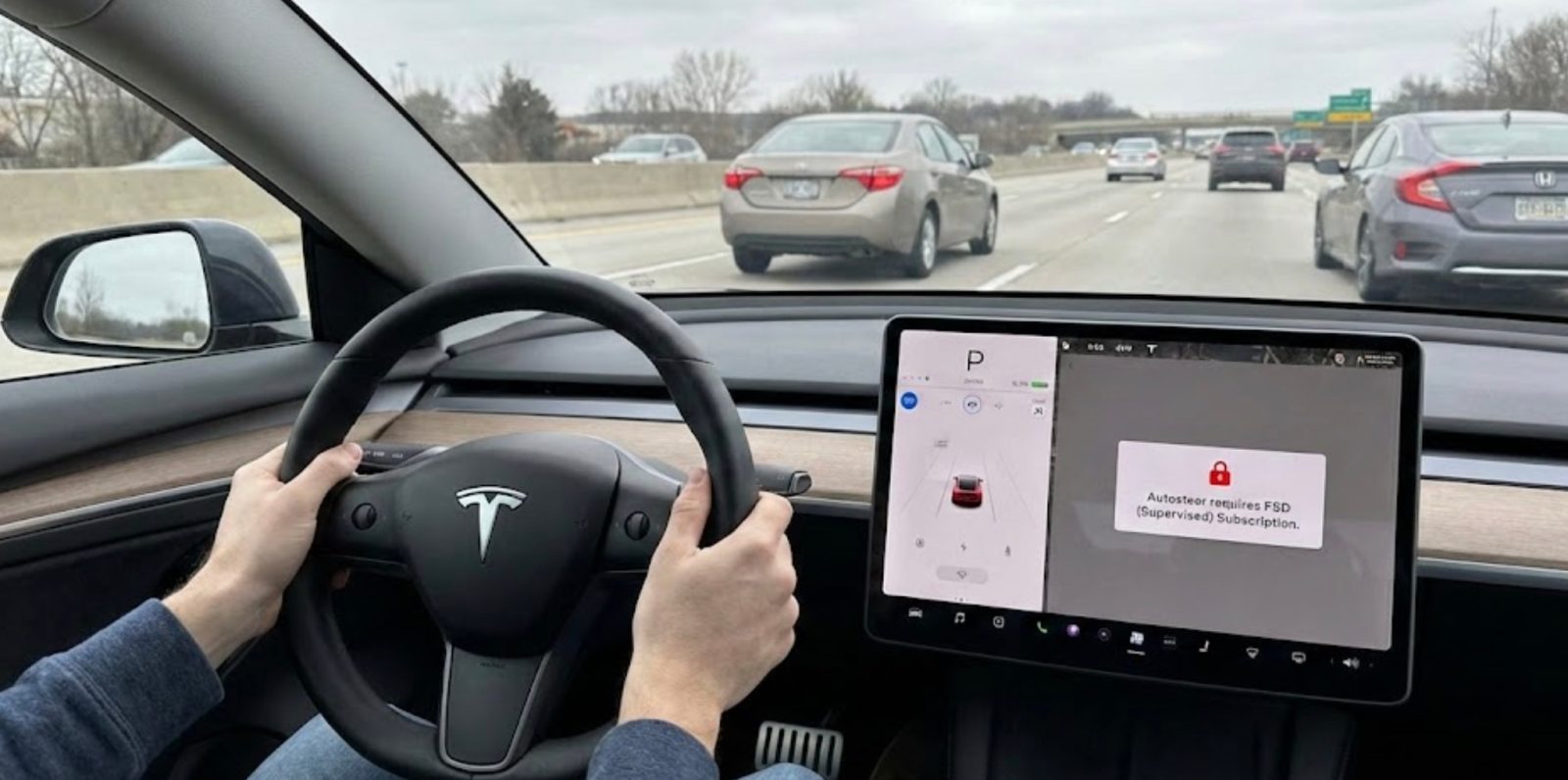
NHTSA announced today that the 2026 Tesla Model Y is the first vehicle to pass its new advanced driver assistance system (ADAS) benchmark tests under the updated New Car Assessment Program. The agency framed it as a milestone for vehicle safety.
The announcement is real progress, and credit where credit is due — Tesla passed all eight ADAS evaluations. But the context around this news is important, and it paints a more nuanced picture than the press release suggests.
What Tesla actually passed
The updated NCAP program added four new pass/fail ADAS evaluations: pedestrian automatic emergency braking, lane keeping assistance, blind spot warning, and blind spot intervention. The Model Y (manufactured on or after November 12, 2025) passed all four of those, plus the program’s four original ADAS criteria: forward collision warning, crash imminent braking, dynamic brake support, and lane departure warning.
NHTSA Administrator Jonathan Morrison said in the announcement that the Model Y “demonstrates the lifesaving potential of driver assistance technologies and sets a high bar for the industry.”
Here’s the thing: these are basic ADAS features. Blind spot warning, lane keeping assistance, and pedestrian automatic emergency braking are standard or widely available on dozens of vehicles from Toyota, Hyundai, Honda, BMW, and others. The Model Y being “first” to pass doesn’t mean it’s the only vehicle with these capabilities — it means it’s the first one NHTSA has formally tested under the new framework.
The reason is notable. NHTSA originally finalized these NCAP updates in late 2024 for model year 2026 vehicles. But in September 2025, the Trump administration delayed the full implementation by one year to model year 2027, after the Alliance for Automotive Innovation — the industry’s main lobbying group — asked for more time. That delay means most automakers haven’t submitted vehicles for these tests yet, not because they can’t pass, but because the testing timeline was pushed back.
Tesla, it appears, submitted the Model Y anyway and passed. That’s good. But calling it a “high bar for the industry” when the bar is literally blind spot warnings is a stretch.
The political framing
The press release title is worth reading in full: “Trump’s Transportation Department Announces Tesla Model Y Is the First Vehicle to Pass NHTSA’s New ‘Advanced Driver Assistance System’ Tests.”
It’s unusual for a NHTSA press release to lead with the president’s name in the title. Government safety announcements typically focus on the safety program itself, not political branding. The framing raises questions about whether this announcement is driven more by safety communication or by a desire to highlight Tesla — a company whose CEO has had a well-documented relationship with the current administration.
It also doesn’t help that these ADAS tests are pass/fail “checkmarks” on NHTSA’s website — they don’t affect a vehicle’s overall five-star safety rating, which remains based on crashworthiness. This is useful consumer information, but it’s not the same as earning a higher safety rating.
The irony of simultaneous FSD investigations
Perhaps the most striking context is what NHTSA is doing with its other hand. While the agency celebrates Tesla’s basic ADAS capabilities, it is simultaneously conducting an Engineering Analysis investigation into Tesla’s “Full Self-Driving” system covering approximately 3.2 million vehicles — the stage that typically precedes a recall.
That investigation found that FSD’s camera-based system fails to detect common road conditions that impair visibility — sun glare, fog — and doesn’t adequately warn drivers before crashes occur. NHTSA has also noted that Tesla may be under-reporting related crashes.
So the same agency is simultaneously saying “Tesla passes our new ADAS benchmark” and “Tesla’s more advanced driver assistance system has serious safety concerns we’re investigating.” Both statements can be true — the ADAS tests and FSD are different systems — but the juxtaposition is hard to ignore.
Tesla has also started Cybercab production without approval for unsupervised autonomous driving, adding another layer to the complex regulatory picture.
Electrek’s Take
We want to be fair here. The Model Y passing these ADAS tests is a legitimate achievement — it confirms that Tesla’s basic driver assistance features work as intended across eight safety categories, and that’s genuinely good for the roughly 2 million people who buy Model Ys every year. Every vehicle should have these features, and they should work well.
Top comment by Beario
The industry is still struggling to catch up to the features that are being pitched to consumers by car companies and explaining what those features actually do.
Automakers will label these features with names that don’t always describe what they do and most of the time there’s no government benchmark to tell how they perform.
But we can’t ignore how this announcement is packaged. The political branding in the press release title, the timing relative to the ongoing FSD investigations, and the fact that the NCAP updates were delayed at industry request all add up to an announcement that feels more like a PR win than a safety milestone.
The real test for Tesla isn’t whether the Model Y can detect a pedestrian in a crosswalk or warn you about a car in your blind spot — it’s whether “Full Self-Driving” can operate safely enough to avoid a recall in the safety investigations. That’s the question NHTSA should be focused on, and to its credit, the agency’s investigation arm appears to be taking it seriously even as the communications team drafts celebratory press releases.
Though I doubt there will be a safety recall.
We’d love to see NHTSA test every major vehicle on sale against these new ADAS benchmarks and publish the results. That would give consumers genuinely useful comparative data. A single pass/fail announcement for one vehicle, wrapped in political framing, doesn’t accomplish much.


FTC: We use income earning auto affiliate links. More.


Comments