
The US wind industry bounced back in a big way in 2025, installing 8.2 gigawatts (GW) of new capacity – up 49% from the year before – according to Wood Mackenzie’s latest US Wind Energy Monitor report.
And the momentum isn’t slowing down. Wood Mackenzie expects installations to reach around 11 GW in 2026, making it the strongest year for new wind buildout in five years.
The outlook through the end of the decade is solid, too. The report forecasts 48 GW of new wind capacity through 2030. A big reason for that confidence is a 15.4 GW pipeline of projects that have already cleared major commercial hurdles, giving developers a clearer path forward even as policy uncertainty, higher costs, and permitting delays continue to create obstacles.
Diego Espinosa, senior research analyst at Wood Mackenzie, said, “The strong rebound in installations, combined with a well-contracted pipeline through 2028, demonstrates that developers continue to prioritize projects that can secure tax credits under the OBBBA framework.”
Land-based wind is doing most of the heavy lifting right now. Around 24 GW is expected to come online between 2026 and 2028, and roughly 64% of that pipeline is already in advanced stages, including projects under construction.
Where those projects are getting built is starting to shift. Instead of being concentrated in traditional wind-heavy regions, development is spreading out more across the country.
The West is expected to dominate new connections in 2026, accounting for 64% of total capacity. That’s largely thanks to Pattern Energy’s massive 3.5 GW SunZia project in New Mexico. The Midwest is set to take the lead in 2027, with more than 40% of new connections driven by projects in Illinois, Minnesota, and Iowa. Texas is expected to return to the top in 2028, with around 2.5 GW of new capacity.
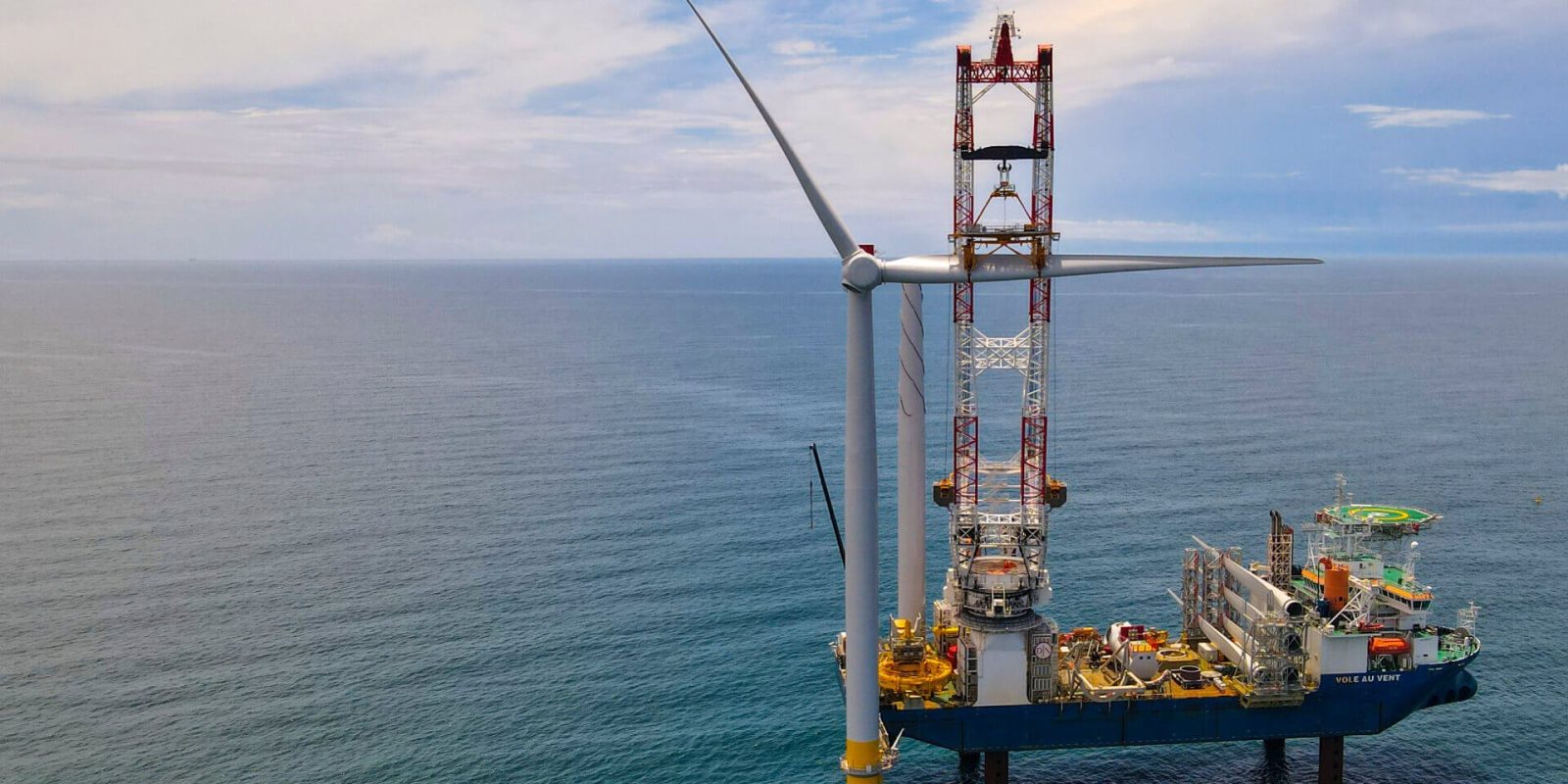
Offshore wind is also picking up speed, with projects moving through construction faster than previously expected. About 6 GW of offshore capacity is now expected to come online by 2027.
In 2025, Avangrid’s Vineyard Wind project installed 624 megawatts (MW), driving a 261% jump in total US offshore wind capacity. The project reached mechanical completion in the first quarter of 2026.
Other major projects are advancing as well. Revolution Wind and Coastal Virginia Offshore Wind (CVOW) have both hit first-power milestones and are continuing construction. Ørsted’s North American portfolio is also progressing, with Revolution Wind expected to be commissioned in the second half of 2026 and Sunrise Wind now targeting the second half of 2027, earlier than previously planned.
But it’s not all smooth sailing.
Federal policy uncertainty is still impacting investment decisions, especially for offshore wind. Onshore projects are also facing bottlenecks, particularly with permitting. Reviews by the Federal Aviation Administration (FAA) and the Department of Defense (DoD) are becoming a big problem.
According to Wood Mackenzie, about 60% of projects submitted to the FAA for a Determination of No Hazard end up triggering a DoD review. And the backlog is growing fast. The number of wind turbines waiting on final determinations jumped more than fivefold in 2025 to nearly 5,000.
If those projects don’t clear the DoD review process, it could have a real impact. Wood Mackenzie estimates that installations through the end of the decade could fall by about 17% – roughly 7 GW – if delays continue.
Costs are still a challenge, too. Turbine prices remain about 22% higher than they were in early 2022, and land-based wind capital costs in the US are expected to rise another 5% through 2029. Tariffs on materials and components, along with permitting delays and uncertainty around future project volumes, are all pushing costs higher.
There is some good news on the policy front, though. Clearer guidance on federal tax credits following the passage of the OBBBA and subsequent IRS rules has helped provide some near-term clarity.
Looking ahead, demand is shaping up to be a major tailwind for wind energy.
Wood Mackenzie points to 183 GW of large-load capacity – including projects with signed construction or long-term supply agreements – that will need power in the coming years. About 72% of that demand is in wind-rich regions such as ERCOT (Texas) and PJM (the mid-Atlantic and parts of the Midwest).
Electricity demand is also growing much faster than in the past, with annual growth expected to average around 3% through 2030, compared with just 0.7% over the previous decade. Data centers are a big driver of that increase.
Read more: EIA: New solar, wind + storage capacity will swamp fossil fuels in 2026
If you’re looking to replace your old HVAC equipment, it’s always a good idea to get quotes from a few installers. To make sure you’re finding a trusted, reliable HVAC installer near you that offers competitive pricing on heat pumps, check out EnergySage. EnergySage is a free service that makes it easy for you to get a heat pump. They have pre-vetted heat pump installers competing for your business, ensuring you get high quality solutions. Plus, it’s free to use!
Your personalized heat pump quotes are easy to compare online and you’ll get access to unbiased Energy Advisors to help you every step of the way. Get started here. – *ad


FTC: We use income earning auto affiliate links. More.



Comments