
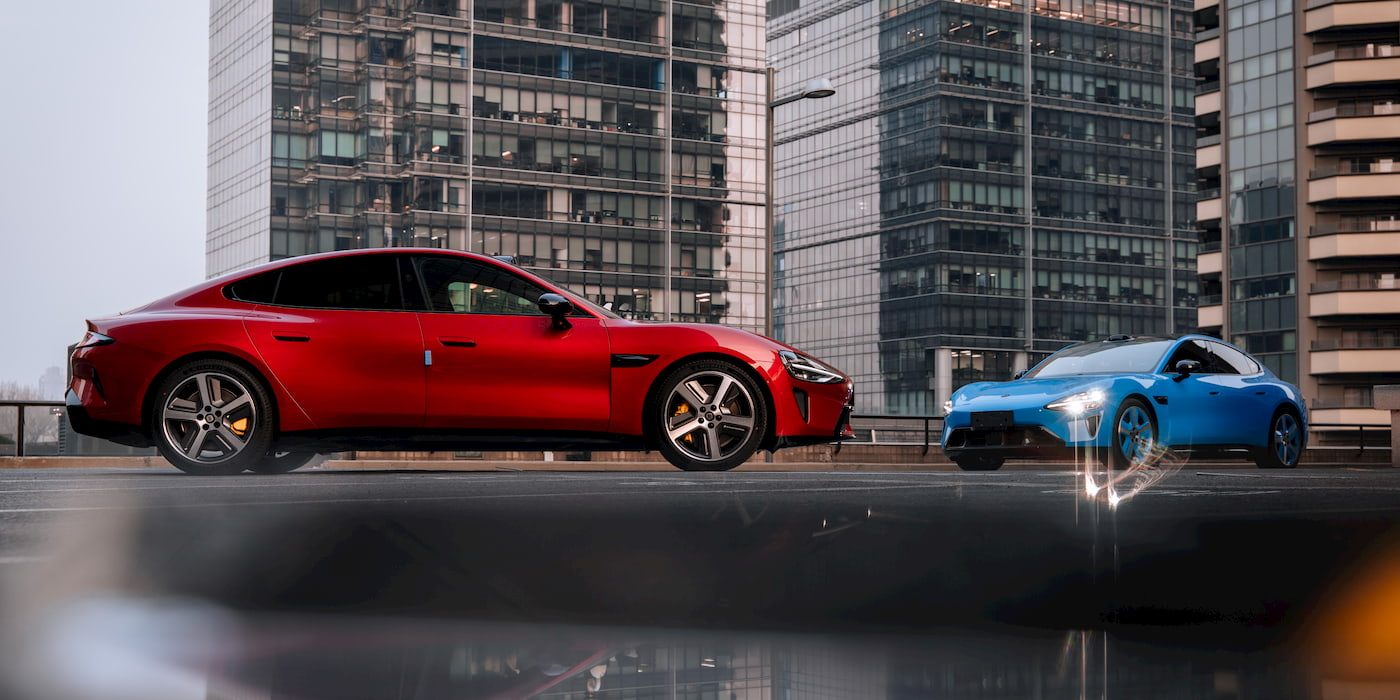
The updated Xiaomi SU7 and SAIC’s Z7 and Z7T just launched, and the new EVs are already racking up thousands of pre-orders in minutes.
New luxury EVs off to a hot start in China
After opening pre-sales for the updated SU7 on March 19, which is already China’s best-selling electric sedan priced above 200,000 yuan, Xiaomi announced it had locked in 15,000 orders in just 34 minutes.
To prepare for the rush of buyers, Xiaomi even had an initial batch of vehicles ready for customer delivery within one to five weeks after they place an order.
The new Xiaomi SU7 starts at 229,900 yuan ($33,400) and ranges up to 303,900 yuan ($44,000) for the top Max trim.
Although it’s 4,000 yuan ($580) more expensive than the outgoing version, it’s still over 5,000 yuan ($725) less than the Tesla Model 3, priced from 235,500 yuan ($34,200) in China.
Shangjie (SAIC), a new energy brand jointly launched by SAIC and Huawei, undercut both the SU7 and the Model 3 with the new Z7 and Z7T models.
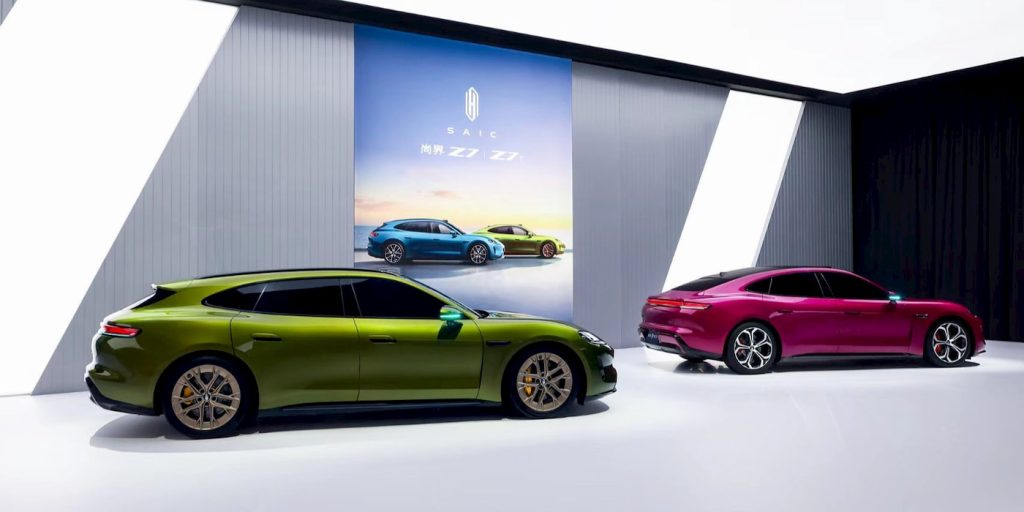
The Shangjie Z7 EV sedan and Z7T shooting brake launched in China on Monday, starting from 229,800 yuan ($33,300) and 239,800 yuan ($34,800), respectively.
According to ChinaEVHome, the new SAIC Shangjie Z7 and Z7T EVs secured 18,000 pre-orders within the first three hours of opening.
Since launch prices are typically even lower than their pre-sale price in China, it will be interesting to see how much they cost when they hit the market.
Got my first look at the SAIC (Shangjie) Z7T in the flesh today. Judging by the price, this is clearly the entry-level shooting brake in the entire Huawei-powered ecosystem.
— ChinaEV Home (@CNEVhome) March 23, 2026
The Z7 sits incredibly low. Not sure if it's the air suspension at work, but the stance is spot on—it’s… https://t.co/Wmovc4eWnL pic.twitter.com/GgvrlAq8iJ
The Z7 and Z7T draw power from a CATL-supplied 81 kWh LFP or 100 kWh ternary lithium battery pack, providing a CLTC range of up to 905 km (562 miles).
Both are equipped with Huawei’s Qiankun ADS 4.1 smart driving system and a 896-line LiDAR sensor, enabling it to spot a 5″ (14 cm) object at over 400 feet (122 meters) away at night.
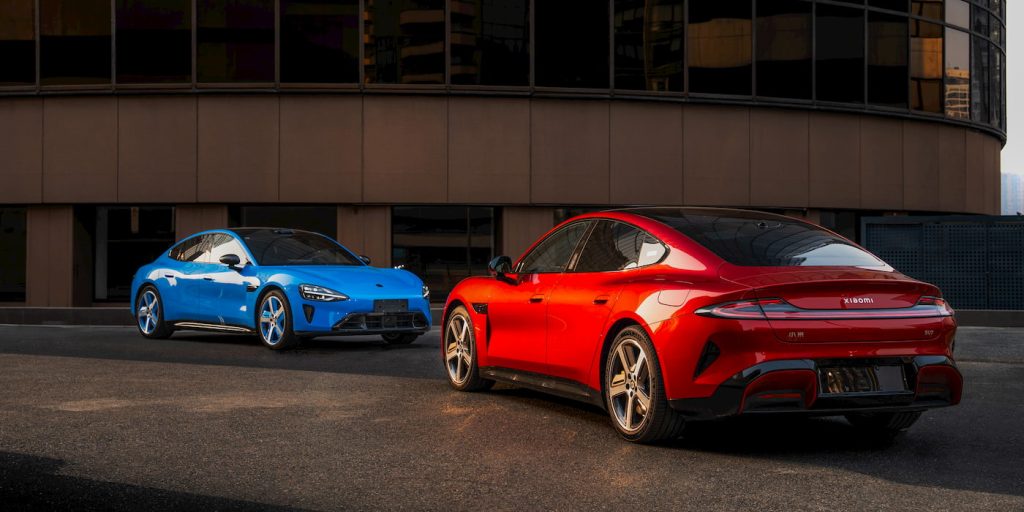
Measuring 5,036 mm in length, 1,975 mm in width, and 1,465 mm in height, with a wheelbase of 3,000 mm, the Shangjie Z7 is about the same size as the Xiaomi SU7 and Porsche Taycan. The Z7T is closer to the Porsche Taycan Cross Turbo.
SAIC’s new EVs will be sold under Huawei’s HIMA network, marking the first time Huawei and Xiaomi, two of China’s biggest tech giants, compete in the automotive industry. The Z7 and Z7T will also go up against the updated Luxeed S7, another luxury EV from Huawei and Chery Automotive.
Electrek’s Take
Over 7.87 million battery electric vehicles were sold in China last year, data from the China Passenger Car Association shows, up 24.4% from 2024 and solidifying its position as the world’s largest EV market.
The Xiaomi SU7 was the fifth-best-selling EV in China last year, with 258,164 units sold. Tesla’s Model 3 ranked sixth with just over 200,000 in sales.
Will the updated versions change the rankings in 2026? Or, will new models, like the Shangjie Z7 and Z7T, or Luxeed S7, shake things up this year? We’ll learn more soon as new sales data is released.
Source: ChinaEVHome, SAIC Motor, Xiaomi


FTC: We use income earning auto affiliate links. More.


Comments