
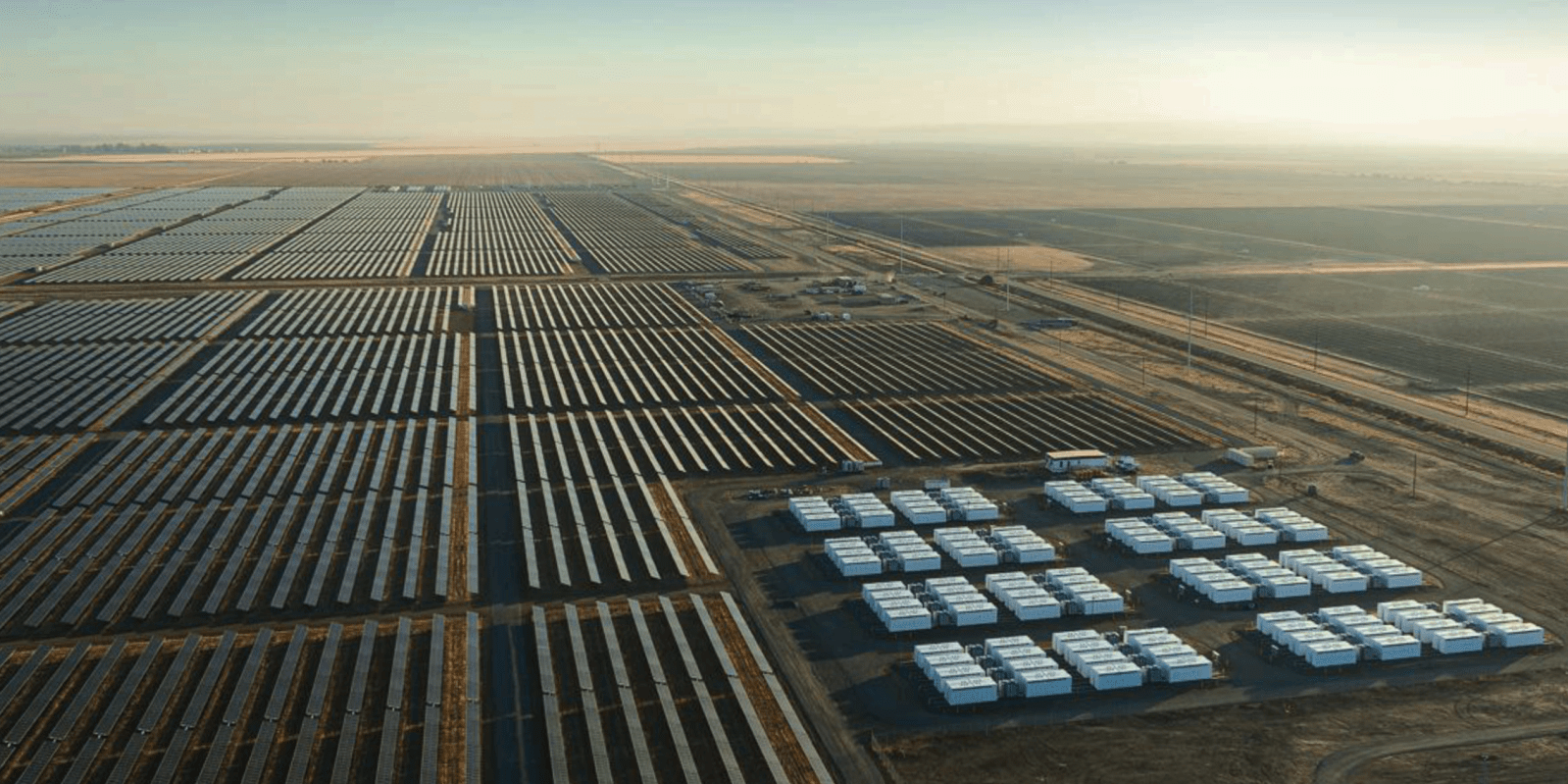
Elon Musk’s plan to build 100 GW of solar manufacturing capacity in the United States just got its first major price tag: $2.9 billion in equipment from Chinese suppliers, according to a Reuters exclusive.
If the deal closes, it marks the biggest concrete investment yet in Musk’s solar ambitions, and a stunning reversal for a company that effectively abandoned its solar business just two years ago.
The deal
Reuters reports that the equipment is valued at roughly 20 billion yuan ($2.9 billion) and that Tesla is in discussions with multiple Chinese suppliers. The frontrunner is Suzhou Maxwell Technologies, a Shenzhen-listed company that dominates the global market for solar cell screen-printing production lines.
Other potential suppliers include Shenzhen S.C New Energy Technology and Laplace Renewable Energy Technology.
The Chinese companies have been told to deliver the equipment before this autumn, with at least two sources indicating it would be shipped to Texas. That aligns with Tesla’s expanding Texas manufacturing footprint, which already includes its Austin Gigafactory and a new Houston Megafactory under construction for Megapack production.
One significant hurdle remains: Suzhou Maxwell needs export approval from China’s commerce ministry, and it’s unclear how quickly that clearance will come. Beijing has been tightening its grip on solar technology exports over the past two years, and China’s commerce ministry recently made export controls a top priority for 2026.
On the US side, the equipment faces a more favorable regulatory path. Solar manufacturing equipment was excluded from Section 301 tariffs in 2024 at the urging of American solar panel makers, and that exemption has been extended by the Trump administration through November 2026.
The 100 GW ambition
The $2.9 billion equipment purchase is tied directly to a goal Musk laid out at the World Economic Forum in Davos in January 2026. There, he announced that both Tesla and SpaceX are independently working to build 100 GW per year of solar manufacturing capacity in the US — covering the entire supply chain from raw materials to finished panels.
The company’s own job listings reinforce the scale of the ambition, explicitly referencing a target of 100 GW of “solar manufacturing from raw materials on American soil before the end of 2028.”
For context, total US solar installations in 2023 reached about 32 GW. Tesla wants to manufacture more than three times that, every single year, on its own.
The driving force behind the urgency isn’t climate policy, it’s AI. Data center construction and the broader electrification of transportation pushed US power consumption to a second consecutive record in 2025, and the projections keep rising. Musk has argued that no other energy source can scale fast enough or cheaply enough to meet those demands.
Tesla’s troubled solar history
The irony is thick. Tesla acquired SolarCity for $2.6 billion in 2016 and promised to revolutionize the residential solar market with its Solar Roof tiles. Musk set a target of 1,000 new solar roofs per week by the end of 2019. Tesla never came close. By Q2 2022, the company was deploying approximately 23 roofs per week — roughly 2% of the target.
Today, Tesla never talks about its solar roof; it’s essentially a dead product.
Tesla’s solar deployment declined steadily after the SolarCity acquisition. Panasonic, which had partnered with Tesla at the Buffalo Gigafactory to manufacture solar cells, exited the facility in 2020. By late 2024, Tesla stopped reporting solar deployment altogether, and the word “solar” didn’t appear once during the company’s Q3 2024 earnings call.
There were signs of a revival in early 2026 when Tesla launched a new US-made solar panel (the TSP-420) assembled at the Buffalo factory, featuring a proprietary 18-zone power optimization system. But the scale was modest — initial capacity at the Buffalo facility was just over 300 MW per year, a rounding error compared to the 100 GW target.
Energy storage is a different story
While Tesla’s solar business withered, its energy storage division exploded. Tesla deployed a record 46.7 GWh of energy storage in 2025, a 48% increase year-over-year, generating $12.8 billion in revenue with a 29.8% gross margin — nearly double what Tesla earns selling cars.
Energy storage now accounts for 13% of Tesla’s total revenue and 23% of its gross profit. The Lathrop Megafactory in California produces Megapacks at its full planned capacity of 40 GWh per year, and the new Houston facility targets 50 GWh of annual output by end of 2026.
The solar manufacturing push would complement this storage infrastructure — Tesla could theoretically pair its own solar panels with Megapacks and Powerwalls for integrated energy solutions, and potentially use the output to power its own operations and even SpaceX satellites.
Electrek’s Take
We’ve been tracking Tesla’s solar journey since the SolarCity acquisition, and the trajectory has been one of consistent underdelivery. The Solar Roof never materialized at scale. Solar deployments cratered. The entire solar business segment became an afterthought as energy storage consumed all of Tesla’s energy division attention.
So when Musk announced a 100 GW solar manufacturing target at Davos, our first instinct was skepticism — and it still is. Going from roughly 300 MW of annual solar panel capacity at the Buffalo factory to 100 GW is a staggering 300x increase, on a timeline of less than three years.
That said, the $2.9 billion equipment purchase suggests this isn’t just talk. That’s real capital being deployed (or at least negotiated), and the autumn delivery deadline for equipment in Texas suggests Tesla intends to move fast. The company also has genuine tailwinds: the tariff exemption on solar manufacturing equipment, surging electricity demand from AI data centers, and a proven energy division that can integrate solar with its storage products.
The biggest risks are execution, Tesla’s solar track record is dismal, and the Chinese export approval, which Beijing could use as leverage in the ongoing trade tensions. We’ll believe the 100 GW target when we see equipment on the ground and production lines running.


FTC: We use income earning auto affiliate links. More.



Comments