
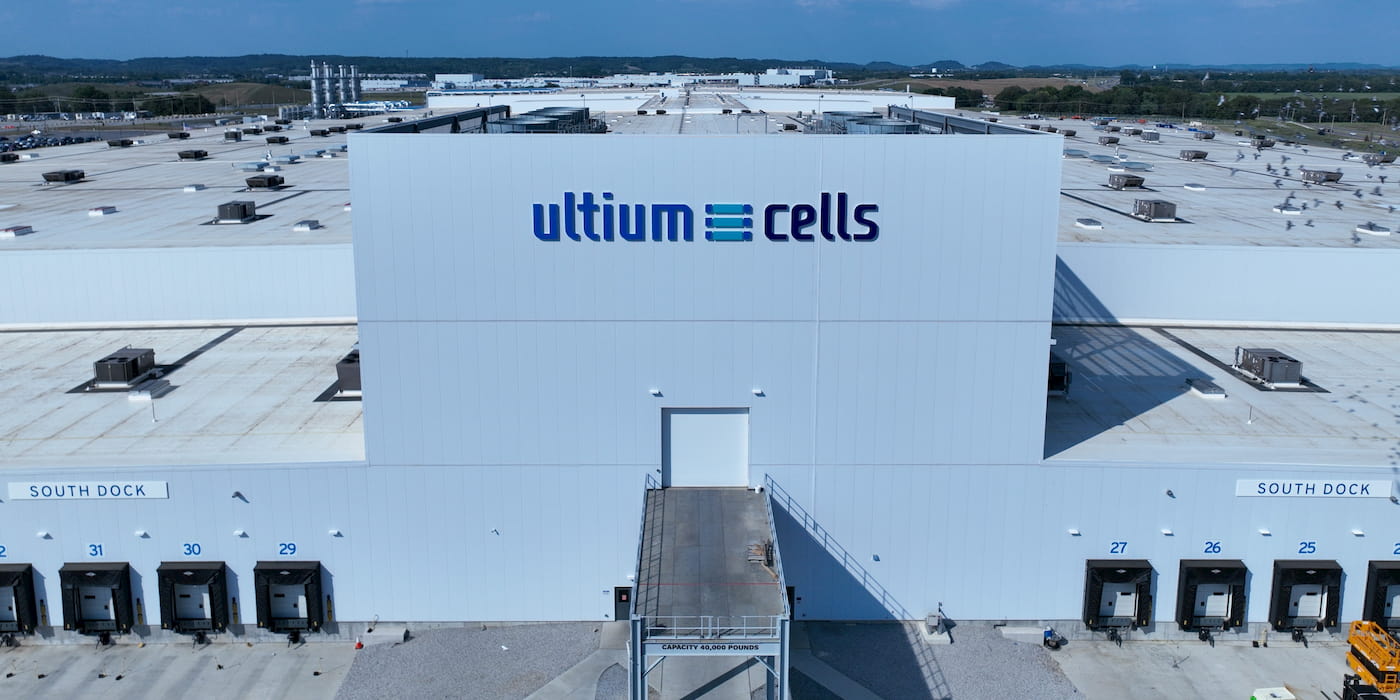
Ultium Cells, the joint venture between General Motors and LG Energy Solution, is shifting part of its US battery production from EVs to energy storage systems (ESS).
The company said it’s investing $70 million to retool its Spring Hill, Tennessee, factory to make lithium-iron phosphate (LFP) battery cells for ESS. The upgrade is already underway, and the plant is expected to start producing the new cells in the second quarter of 2026.
Ultium shifts to energy storage
The Spring Hill site will produce LFP cells that will be sent to LG Energy Solution Vertech, the company’s US energy storage division. From there, the cells will be assembled into large, US-made battery enclosures for grid-scale projects and data centers across North America.
LG Energy Solution is expanding its North American network to support this push. In addition to Spring Hill, it operates facilities in Holland and Lansing, Michigan, and in Windsor, Ontario, and operates a joint venture with Honda. By the end of 2026, all of those sites are expected to produce at least some of LG’s standard JF2 LFP pouch cells for energy storage.
The company says it plans to exceed 60 gigawatt-hours of global ESS battery production capacity this year, with more than 80% of that located in North America.
Why LFP, and why now?
LFP batteries are becoming the go-to chemistry for energy storage because they’re cheaper than the high-nickel batteries typically used in EVs. Since storage projects don’t need to worry as much about size and weight, cost matters more, and LFP wins on that front.
That shift comes as energy storage demand is booming. Batteries are increasingly used to stabilize the grid, smooth out renewable energy output, and accelerate the buildout of data center infrastructure.
LG Energy Solution North America president Bob Lee said the rapid growth in energy storage is helping balance out softer EV demand, while expanding the company’s customer base.
Jobs return as plant retools
The Spring Hill facility is already being retooled, and workers are being retrained to support LFP production. The 700 employees who were furloughed in January are now returning to work ahead of the new product launch.
Ultium Cells says the move is part of a broader strategy to stay flexible as battery markets evolve. Its manufacturing platform supports multiple chemistries, enabling it to shift production in response to demand.
As part of that shift, production of NCMA GEN1 battery cells for EVs has been consolidated at Ultium Cells’ Warren, Ohio, facility.
The bigger picture
This is a clear signal of where the battery market is heading right now.
EV growth hasn’t stopped, but it has slowed in the US due to hostility from the Trump administration and the cancellation of federal Inflation Reduction Act incentives. Meanwhile, energy storage is scaling fast, driven by renewables, grid constraints, and the surge in electricity demand from AI data centers.

If you’re looking to replace your old HVAC equipment, it’s always a good idea to get quotes from a few installers. To make sure you’re finding a trusted, reliable HVAC installer near you that offers competitive pricing on heat pumps, check out EnergySage. EnergySage is a free service that makes it easy for you to get a heat pump. They have pre-vetted heat pump installers competing for your business, ensuring you get high quality solutions. Plus, it’s free to use!
Your personalized heat pump quotes are easy to compare online and you’ll get access to unbiased Energy Advisors to help you every step of the way. Get started here. – *ad


FTC: We use income earning auto affiliate links. More.




Comments