

Electric bike maker Heybike has just officially unveiled its latest model, the Venus, a lightweight commuter-focused e-bike designed to bridge the gap between practical urban transportation and relaxed recreational riding. The new model launches with a starting MSRP of $1,499 and brings together a relatively powerful drivetrain, long-range claims, and a lighter frame package aimed at everyday riders.
The Heybike Venus is built around a step-through aluminum frame intended to make the bike approachable for a wide range of riders, with a recommended rider height range spanning from 4’11” to 6’2” (150-188 cm). The company describes the bike as a “dual-use lightweight e-bike,” meant to handle both the harder weekday commuting jobs and the more casual weekend cruising rides without forcing owners to choose between efficiency and comfort.
Power comes from a 750W rear hub motor that produces up to 70 Nm of torque, which should provide enough punch for quick acceleration in traffic or tackling moderate hills. The bike is capable of reaching speeds up to 28 mph (45 km/h), placing it squarely in the Class 3 category in the US when configured appropriately.
One of the more interesting elements of the Venus drivetrain is the use of a dual-sensor pedal assist system that combines both cadence and torque sensors. It’s a move we’re seeing more often, and according to Heybike, the dual sensor setup allows the bike to provide quick acceleration when starting from a stop while still delivering the smoother, more natural-feeling power delivery associated with torque sensing. The company claims a torque sensor response time of around 0.3 seconds, which should mean fairly minimal lag felt by riders.
That assist system can be tuned through the Heybike smartphone app, allowing riders to adjust pedal assist behavior and throttle settings independently. For example, riders could keep a lower pedal assist speed limit for relaxed riding while still allowing higher throttle speeds for quick bursts when needed.
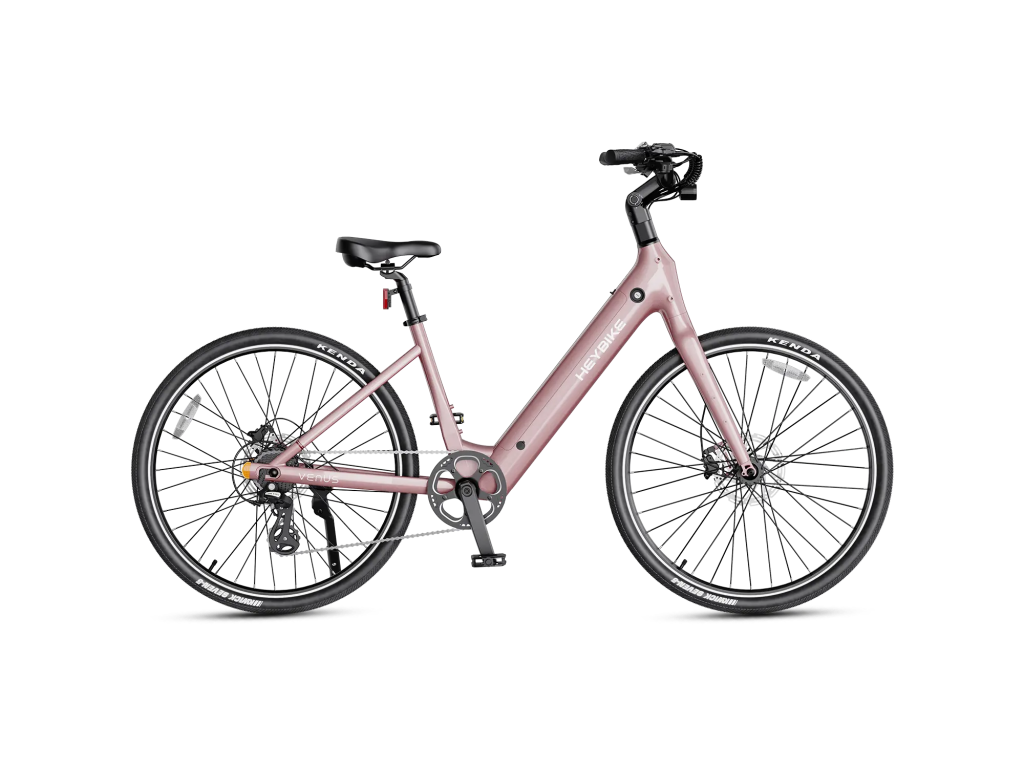
The Venus is equipped with a 680 Wh battery that is UL 2271 certified, while the entire bike carries UL 2849 certification. Those UL certifications are quickly becoming all but a necessity in the US e-bike market, where companies have begun coalescing around UL compliance for safety despite a lack of federal regulations for such standards. That battery capacity is claimed to deliver up to 85 miles (138 km) of range under ideal conditions, specifically with a 155 lb (70 kg) rider using the lowest pedal assist setting. As always with range claims, real-world riding conditions such as terrain, rider weight, and assist level will play a big role in the final number, but the relatively large battery should still provide plenty of range for typical commuting use.
Despite the sizable battery and fairly powerful motor, Heybike has kept the weight relatively low compared to many similarly priced commuter e-bikes. The Venus nearly 45 lb (20.4 kg) without the battery and just over 50 lb (22.7 kg) with the battery installed, making it easier to carry upstairs or load onto a car rack than many heavier hub motor bikes that tend to pack on the pounds.
The bike rolls on 27.5-inch wheels fitted with 2.2-inch Kenda tires designed for a balance of efficiency and comfort. A rigid aluminum fork keeps things simple up front, though Heybike offers an optional suspension seatpost for riders looking for a bit more bump absorption. The lack of frame or fork suspension may be a deal breaker for some, but if you can get past the rigid setup, the benefits of longevity as well as reduced weight may be worth it.

Stopping power comes from hydraulic disc brakes with 180 mm rotors, while the drivetrain uses a Shimano Altus 8-speed setup paired with an 11–32T cassette and 48T chainring. The Venus also includes integrated lighting and rear turn signals, along with a color LCD display that connects to the Heybike app for ride data, battery monitoring, and firmware updates.
Heybike is also leaning into modular utility with the Venus, offering multiple mounting points around the frame for racks, locks, and accessories. The company plans accessory packages aimed at commuting, comfort, and security that can be added depending on how riders want to use the bike.
Overall, the Venus appears solidly aimed at riders who want a lighter, more approachable commuter e-bike without giving up the speed and performance that many riders have come to expect from modern Class 3 designs.
I’ll actually be getting some time with the Heybike Venus soon, so stay tuned – I’ll be putting the bike through its paces and will report back with a full hands-on review once I’ve had a chance to test it out in the real world. Based on the previous great experiences I’ve had on Heybike’s latest models, I have high hopes for this model.


FTC: We use income earning auto affiliate links. More.


Comments